By: Chris ⎜ Last updated


Oslo is compact enough to walk across in an hour, but where you sleep changes how the city feels. Here's the short version. In Oslo for just a night or two? Stay in the city centre near Stortinget (not near the central station). Want quiet streets, good wine, and 19th-century architecture? Frogner. Waterfront living and contemporary art? Tjuvholmen/Aker Brygge. Food, bars, and actual locals? Grünerløkka. Modern architecture, waterfront and museum access? Bjørvika.
Prices drop on weekends when business travellers leave, so a Friday-to-Sunday stay often costs less per night than midweek. Summer (June through August) is peak season. Book at least two months ahead for the better hotels and rates, or pay a last minute premium for what´s left.
Winter visitors get lower prices and shorter museum queues, but outdoor waterfront areas like Aker Brygge and Tjuvholmen lose their appeal.
Download the Ruter app before you arrive. It handles tickets for every tram, bus, metro, and ferry in the city, and you need to buy your ticket before you board.
At a glance
| Hotel | Vibe | Price | Best For |
|---|---|---|---|
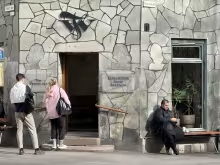
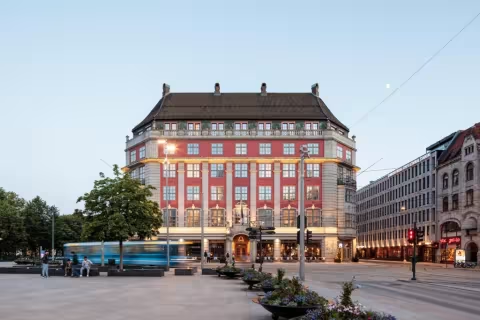
Amerikalinjen Michelin Key Boutique Hotel | Historic & atmospheric | High | Airport connections & cocktail bar |
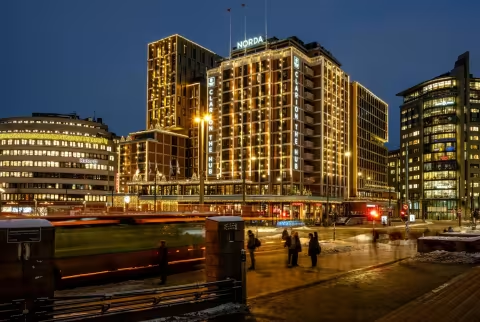
Clarion The Hub Business Hotel | Big & busy | Medium | Rooftop bar & ultimate convenience |
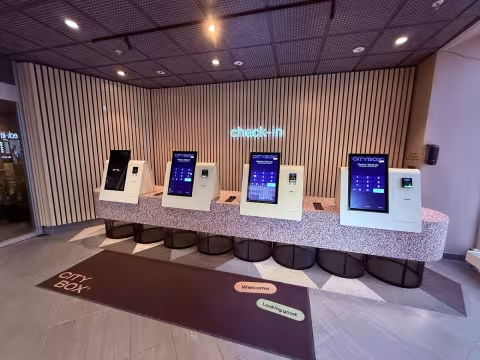
Citybox Oslo The Budget Pick Budget Hotel | No-frills & functional | Low | Central location on a tight budget |
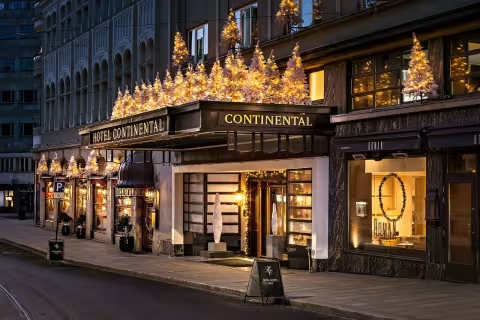
Hotel Continental Oslo The Splurge Classic Luxury | Grand & historic | Highest | Theatercaféen & private Munch collection |
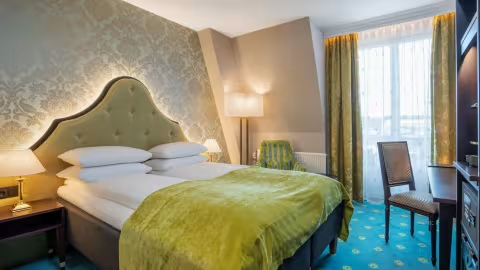
Hotel Bristol Oslo 1920s Time Capsule | Old-world charm | High | Live piano & enormous breakfast |
Revier Hotel Slick Aparthotel | Modern & app-driven | Medium | Spacious studios with kitchenettes |
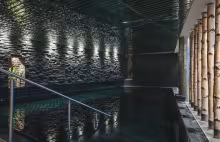
Sommerro Hotel Insider's Choice Art Deco Urban Resort | 1930s glam & buzzy | High | Rooftop pool & destination dining |
Saga Hotel Oslo Boutique Hotel | Calm & residential | Medium | Quiet luxury in Frogner & free parking |
Scandic Vulkan Modern Hotel | Hip & casual | Medium | Food halls & nightlife access |
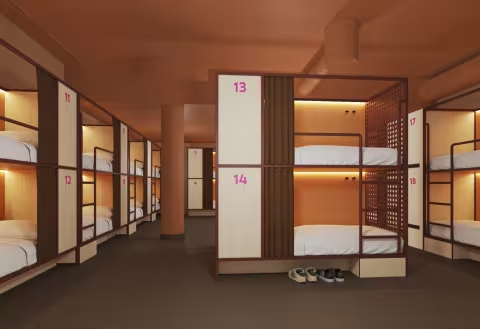
Bunks at Rode Modern Pods Hostel | Young & social | Low | Affordable dorms & rooftop terrace |
Clarion Hotel Oslo Design Forward Hotel | Sleek & waterfront | Medium | Munch Museum access & fjord views |
The Thief The Splurge Moody Art Hotel | Exclusive & curated | Highest | In-room art & Astrup Fearnley access |
Michelin Key Boutique Hotel
Business Hotel
Budget Hotel
The Budget Pick
Classic Luxury
The Splurge
1920s Time Capsule
Slick Aparthotel
Art Deco Urban Resort
Insider's Choice
Boutique Hotel
Modern Hotel
Modern Pods Hostel
Design Forward Hotel
Moody Art Hotel
The Splurge
Oslo S and Kvadraturen: Best for airport connections
Both the Flytoget express and the regular Vy train terminate at Oslo S, and they take the same 23 minutes from the airport. The difference is price: Vy costs roughly half, and your ticket covers Oslo buses and trams for 2.5 hours after purchase. The Opera House is a five-minute walk east, the fortress walls of Akershus to the south, and the Munch Museum in Bjørvika just a bit further than the Opera House.
The area immediately around the station is functional, not charming. Fast food, transit noise, and a vibe that clears out after dark. Walk south into Kvadraturen and it improves. Oslo's oldest planned grid of streets sits between the station and the fortress, cobblestoned and quieter than anything on Karl Johan. Small galleries and wine bars have moved into the ground floors of 17th-century buildings, and on a weekday afternoon you can walk these blocks almost alone.
For food, skip the station area entirely and head to Torggata, ten minutes north on foot. Oslo Street Food occupies a converted 1920s swimming pool, 16 food stalls and four bars crammed under the old tiled ceiling. The Korean fried chicken and the Venezuelan arepas are both reliable. On Friday and Saturday nights the empty pool basin turns into a dance floor. The corridor from Torggata up to Grünerløkka is where restaurants actually compete on quality, not tourist footfall.
Amerikalinjen: Oslo's Michelin Key boutique hotel
Clarion The Hub: Oslo's biggest hotel, for better or worse
Citybox Oslo: The best budget hotel in the city center?
City Centre (Stortinget/Nationaltheateret): A classic Oslo stay
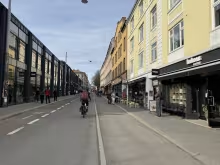
This is the heart of the city. The parliament building sits at one end, the Royal Palace at the other, and between them runs Karl Johans gate, Oslo's main pedestrian street. Ignore the chain restaurants lining it and look up instead. The architecture along here is some of the best-preserved 19th-century streetscape in Scandinavia.
The real appeal is what's just off the main drag. The National Museum, Norway's largest art collection, is a short walk toward the waterfront. The National Theatre is across the street from the Nationaltheateret station, which means you're on both the metro and the Flytoget airport express line without having to haul bags across town. This is the part of Oslo that works for everything: museums on foot, most attractions within 15-20 minutes walk, but also well connected with Metro, trams and buses.
Oslo has a long-standing east-west divide. The river Akerselva splits the city, wealthier west on one bank, grittier and more diverse east on the other. This neighbourhood sits squarely on the affluent western side, which is why it feels calmer and better maintained than the streets around Oslo S, even though the two areas are barely fifteen minutes apart on foot.
Hotel Continental Oslo: Classic luxury
Hotel Bristol Oslo: A luxurious 1920s time capsule
Revier Hotel: Oslo's slickest aparthotel
Frogner (West end): Best for Quiet Luxury
Wide streets under horse chestnut trees. Apartment buildings in muted yellows and greys. The smell of sourdough drifting from bakeries that have been here for decades. Frogner is where Oslo's old money lives, and the pace is noticeably slower than downtown. Norwegians have a word for it: ro. A deliberate, unhurried calm. Frogner has it in excess.
Vigeland Sculpture Park is here. Get there by 9 AM on a weekday, before the tour buses arrive, and you'll have the monolith plateau almost to yourself. The 36-metre column of tangled human figures casts long shadows across the granite in early light. Give it an hour.
Beyond the park, Frogner is about the everyday. Hos Thea on Gabels gate is a neighbourhood bistro with a French-leaning kitchen, 36 seats, and a dining room that fills with locals every evening. Book ahead for weekends. Åpent Bakeri draws half the neighbourhood for sourdough and flat whites from 8:30 AM, when the queue starts forming. For evening, walk the cluster of wine bars along Solli plass. They're small, dim, and unhurried. Pick up cheese and cured meats at the grocery stores along Bygdøy allé, find a bench in the park, and call that lunch.
Five to ten minutes by tram gets you to the centre. Or just take a scenic walk through the Royal Palace Park.
Sommerro Hotel: Oslo´s art deco urban resort
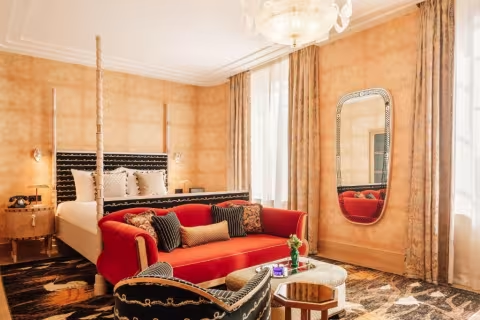
Saga Hotel Oslo: Boutique calm in Frogner
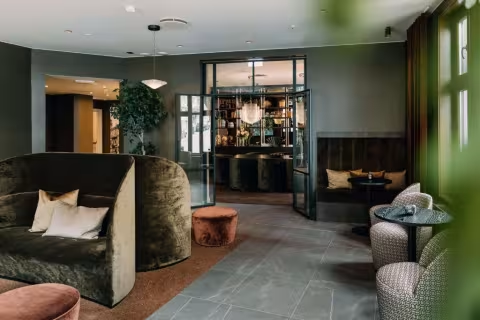
Grünerløkka (East End): Best for food, bars, and character
Locals call it "Løkka" and this is where many of them actually spend their weekends. The neighbourhood runs along the Akerselva river on Oslo's east side: a grid of streets packed with coffee roasters, vintage shops, record stores, and more good places to eat than you'll get through in a week.
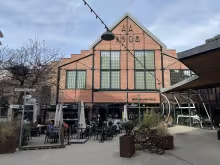
Start at Vulkan. Mathallen food hall might be smaller than you'd expect but carefully put together. Vulkan Fisk does a fish soup that's better than most restaurant versions. Anni's sells Norwegian cured meats and sausages that pack flat in a suitcase. Cheese stalls will let you sample brunost (brown cheese, polarising, but try it on a waffle with jam). Solberg & Hansen is a roastery selling excellent coffees. The air inside is thick with roasted beans, aged cheese, and warm bread. Hopyard keeps a rotating tap list heavy on Scandinavian microbreweries.
A few blocks east, streets around Birkelunden park turn residential. Smaller cafés, boutique shops. Tim Wendelboe on Grüners gate is where Norway's specialty coffee movement started. Tiny space. No food, no WiFi. Just a counter, an espresso machine and several coffee on Aeropress. Some of the most carefully roasted beans you'll find anywhere. Order, drink it slowly, leave.
Grünerløkka was working-class well into the 1990s. It's gentrified heavily since, but traces linger in the street art along the river and the old corner shops wedged between new natural wine bars. It doesn't feel polished. Good.
Not many hotels in the area, these two are pretty much your only options.
Scandic Vulkan: Basecamp in hipster Grünerløkka
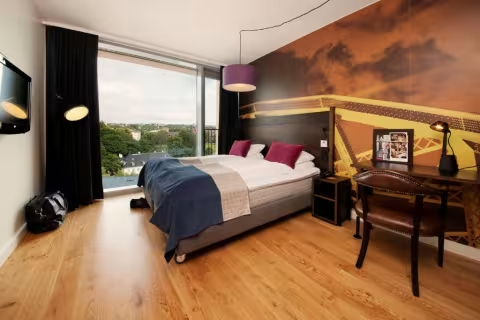
Bunks at Rode: Modern pods hostel in Grünerløkka
Bjørvika: Seafront, modern architecture
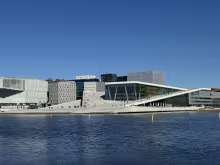
Fifteen years ago this was a container port and a highway interchange. Now it's home to the Munch Museum, the Oslo Opera House, and Deichman Bjørvika, the city's main public library. Deichman justifies a visit even if you never open a book. Top-floor terrace looking out over the fjord, a cinema, a recording studio, a 3D printing lab. All free.
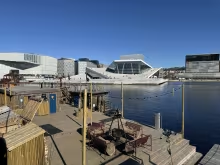
Walk up the angled marble roof of the Opera House at sunset. Shoes scrape against the white stone, the wind picks up off the water, and the whole Oslofjord opens in front of you. Islands scattered across the surface turn pink in low light. Ten minutes, no ticket, best free thing in Oslo.
Along the eastern edge, the Barcode row of office towers rises in sharp angles and coloured glass. Between them and the waterfront, the fjord promenade connects Bjørvika to the harbour. In summer the public bathing areas fill and the floating saunas (bookable through KOK Oslo or Oslo Badstuforening) are packed by late afternoon or weekends. Winter makes them better. Step from a 90-degree sauna cabin into black fjord water while snow falls around you. It sounds miserable. You'll book a second session.
Bjørvika is still maturing. Restaurants and bars are thin compared to other neighbourhoods, but improving, and once offices empty in the evening, stretches of it go quiet. Most impressive skyline in the city, least street life. But if the Munch Museum is a priority, or you'd rather wake up to glass and steel than 19th-century townhouses, nowhere else puts you closer.
Clarion Hotel Oslo: Munch museum at your doorstep
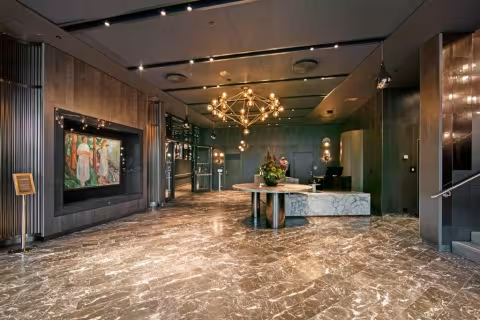
Aker Brygge and Tjuvholmen: Best for waterfront living
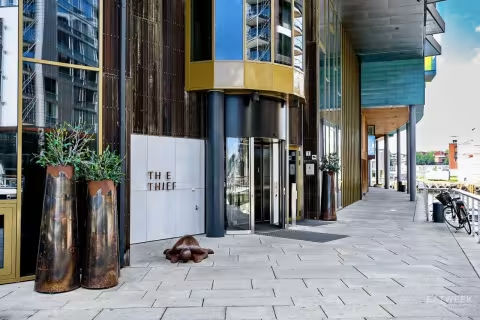
Twenty years ago, Aker Brygge was a shipyard. Now it's Oslo's waterfront promenade and some of the most expensive real estate in the country. The area runs from the converted wharf buildings of Aker Brygge out to Tjuvholmen, a small peninsula named after the thieves and smugglers who once used it as a hideout.
Two different moods. Aker Brygge is the commercial side: restaurants with outdoor terraces, shops, ferry terminals for the fjord islands. On warm days the promenade fills with people. Tjuvholmen is quieter. The Astrup Fearnley Museum (designed by Renzo Piano) sits right on the water, flanked by sculpture parks and car-free streets. On a still evening you hear seagulls, footsteps on boardwalk, and the clink of glasses from Hanami on the waterfront. The omakase is expensive. The terrace at sunset, watching ferries cross to the islands, makes it feel reasonable.
Polished, though, and it can feel a bit manufactured compared to Grünerløkka or the old centre. Restaurant prices are steep even by Oslo standards, and it's a 15-to-20-minute walk back to the centre. On a summer evening, though, just sit back watching the light stretch across the fjord at 10 PM from a Tjuvholmen bench.
To stay here you only have one option, but it´s good (and expensive).
The Thief: Oslo's moody luxury art hotel