By: Chris ⎜ Last updated
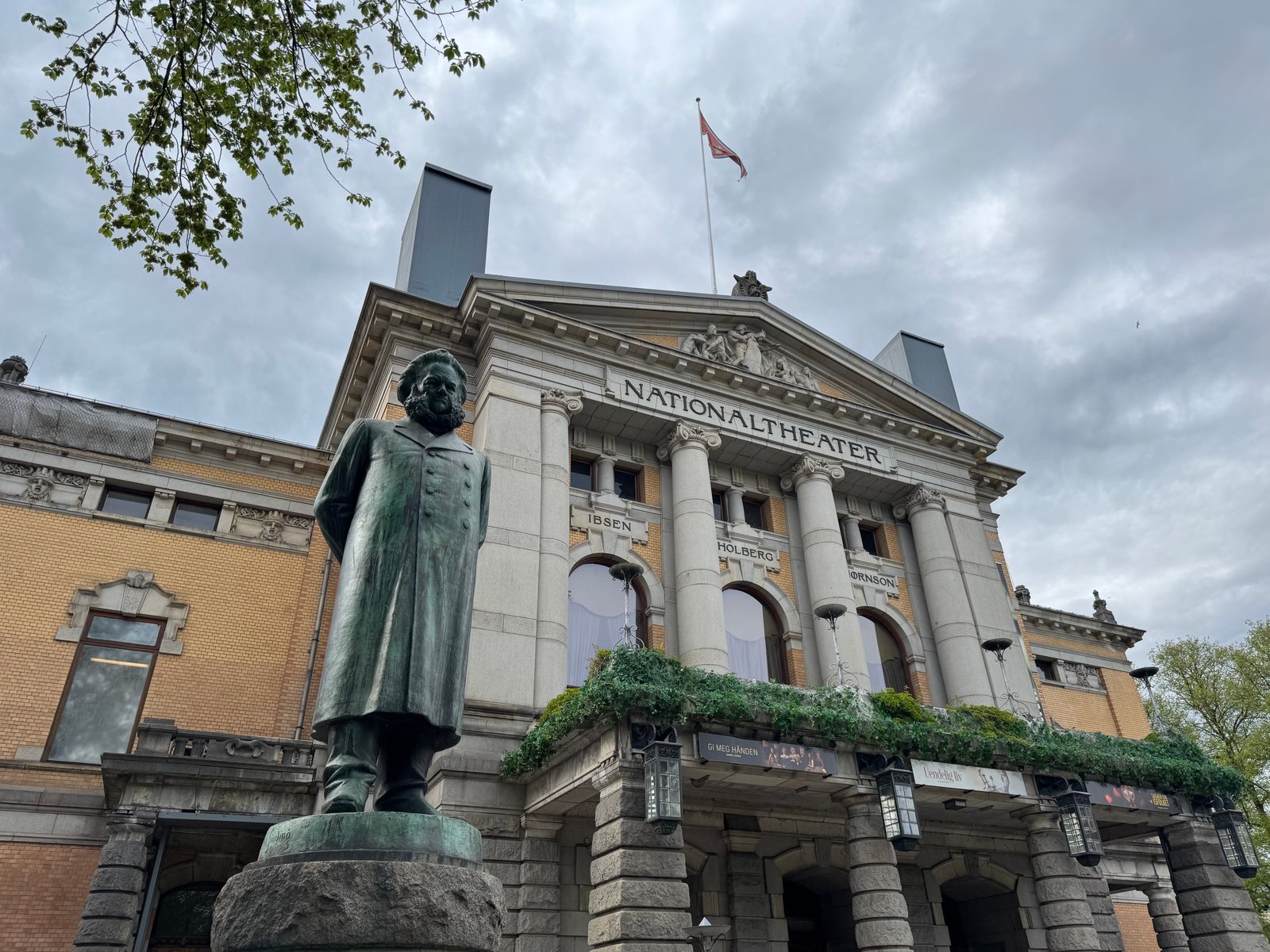
The National Theatre opened in 1899, designed in a mix of neo-Renaissance and Baroque styles by architect Henrik Bull. The main auditorium, Hovedscenen, is one of the most ornate theatre rooms in Norway. In the lobby and corridors you will find dozens of portraits and busts of Norwegian actors and writers from the past century.
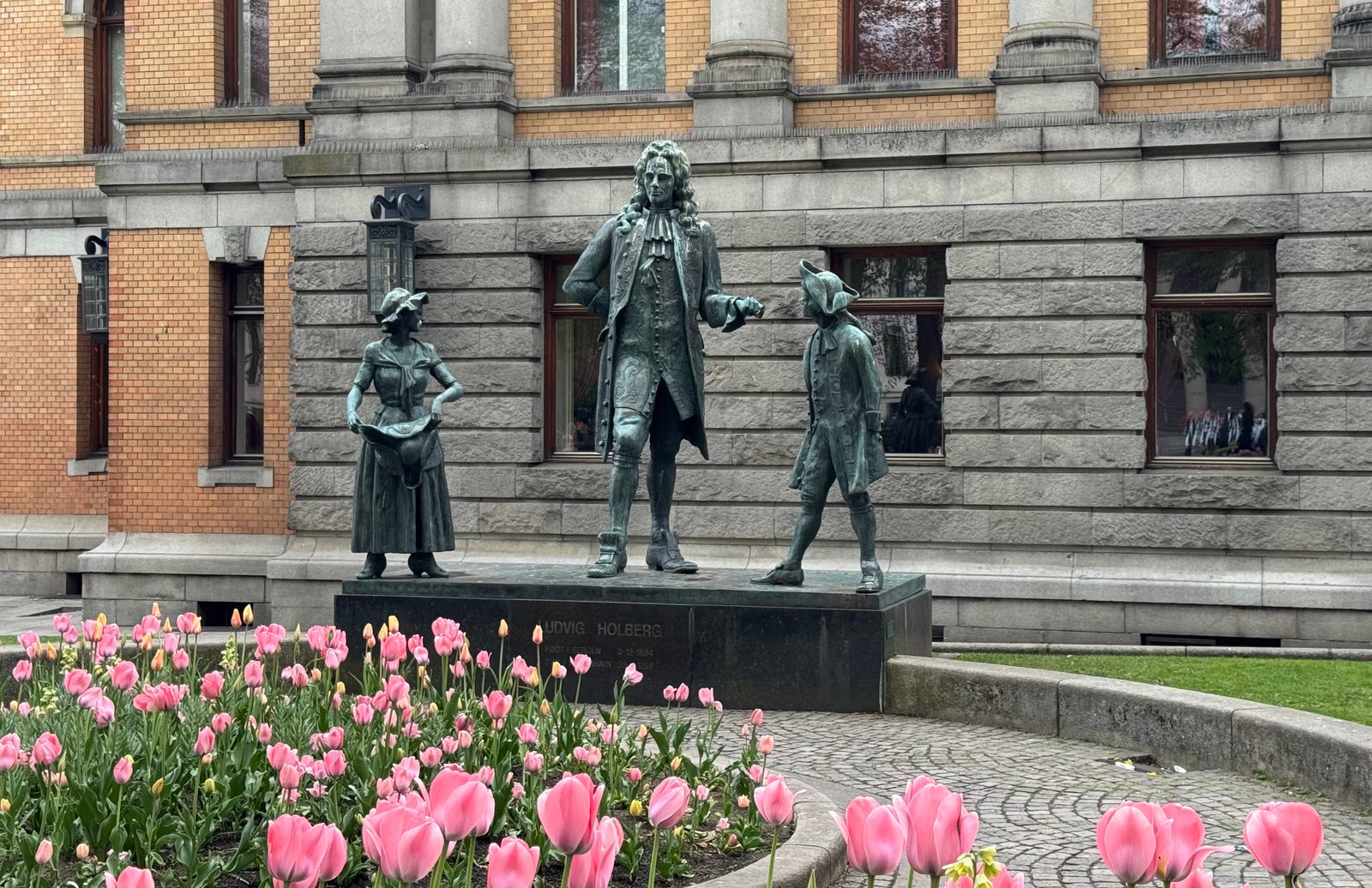
Henrik Ibsen campaigned for decades to have the theatre built. His statue stands to the left in front of the entrance alongside Bjørnstjerne Bjørnson's, and the names of all the great writers from the period, Ibsen, Bjørnson, and Ludvig Holberg, are carved into the façade. Ibsen's plays have been performed here since opening night.
The building is in need of a major renovation. The political fight over funding and indecisiveness regarding the solution for renovation of the National Theatre has dragged on for more than a decade, and there is still no confirmed start date. In the meantime, the theatre is fully functional.
The guided tour
This is the best way to experience the interiors of Nationaltheatret as an English-speaking visitor. You get to see the backstage, including workshops, costume storage, the main stage from behind the scenes, the historical rooms, and the art collection. The tours cover 125 years of the building's history. The scale of the building might be smaller than you might expect from such a theatre, which is part of the charm.
You can join English tours on occasional Saturdays at 13:00, with more dates available during the peak summer season. Dates are limited and they tend to sell out, so check nationaltheatret.no and book your ticket early.
Tours last 45 to 50 minutes. The building is from 1899 with narrow corridors and stairs throughout, so it might be difficult for anyone with mobility challenges. Strollers are allowed on the tour.
The exterior and Studenterlunden
Even without getting inside, the building is worth seeing from the outside due to its classical architecture. There are also statues of famous Norwegian writers such as Henrik Ibsen, Bjørnstjerne Bjørnson and Ludvig Holberg surrounding the building. Studenterlunden park wraps around the theatre, and on 17 May (Constitution Day) this is one of the best places in the city to see the children's parade as it walks up towards the Royal Palace.
Seeing a performance
All the plays on stage are in Norwegian. If the language does not put you off, this is Norway's top stage for spoken drama. Expect serious plays and strong acting, but no big-budget visual spectacle. Ibsen is the backbone of the Theatre, with new Norwegian writing alongside it.
The Ibsen Festival
The Ibsen Festival will be relaunched autumn 2026 after several years' pause. The new format contains international guest productions alongside the theatre's own Ibsen repertoire. Guest performances from companies like Berliner Ensemble tend to be easier to follow without knowing the Norwegian language, making the festival the best time for visitors who don't speak Norwegian to watch a play here.
There are two stages in the main building on Karl Johan: Hovedscenen (the large main stage) and Amfiscenen (a smaller, more intimate amphitheatre). A third stage, Torshovteatret, is in a separate venue in the Torshov neighbourhood, a few kilometres north of the city centre (about 10 minutes with the tram). Make sure you check at which venue the performance is taking place before booking. For the historic building on Karl Johans gate, you need to make sure the performance is on Hovedscenen or Amfiscenen.
Tickets are on sale through the official website or the box office, which is open Monday to Friday from 13:30 and Saturdays from 12:30 until performance time.
If you see a show
The seats are from 1899 and it's obvious they were made for shorter people. Legroom is an issue if you are over 180cm, and the balcony rows are particularly tight. Anyone 190cm or taller will experience their knees pressing into the seat in front.
The parterre (stalls) has the best legroom and the best sound. The side boxes look atmospheric but can block parts of the stage. Anyone with mobility needs should contact the box office in advance, as the 1899 building has limited step-free access.
Go to the toilet immediately when the interval starts. Unfortunately there are not enough facilities for the audience size, and the queues during interval are notoriously long. Go immediately when the lights come up.
The dress code is smart casual. Norwegians dress well for the theatre but not too formal, although a suit will not be completely out of place. But leave the hiking outfit at the hotel.
Theatercaféen
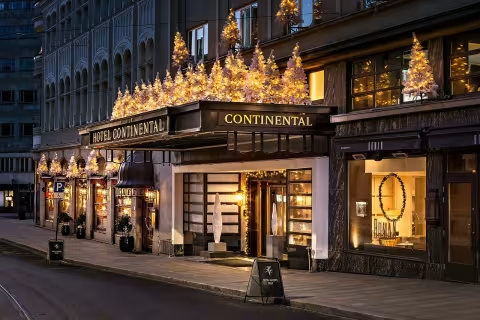
The name suggests a connection to the theatre, but there really is none, other than the fact that it is located across the street. Theatercaféen is an independent restaurant inside Hotel Continental which has been running under the same family management since 1900.
The dining room is the main reason to book at Theatercafeen. The Viennese grand-café atmosphere, dark wood, high ceilings, and 87 portraits of Norwegian cultural personalities painted directly on the walls. Every portrait that hangs on the walls is of a person who was a regular guest. They could be actors, writers, politicians or musicians.
The food is traditional Scandinavian-European brasserie cooking, and is well executed but not trying to reinvent anything. The seafood is the strong suit: oysters, toast skagen, and the fish dishes are staples here. The steak tartare has a loyal following. The cheese and charcuterie board is generous enough to work as a light meal on its own, or a pre-theatre snack.
What to do nearby
Hotels nearby