By: Chris ⎜ Last updated
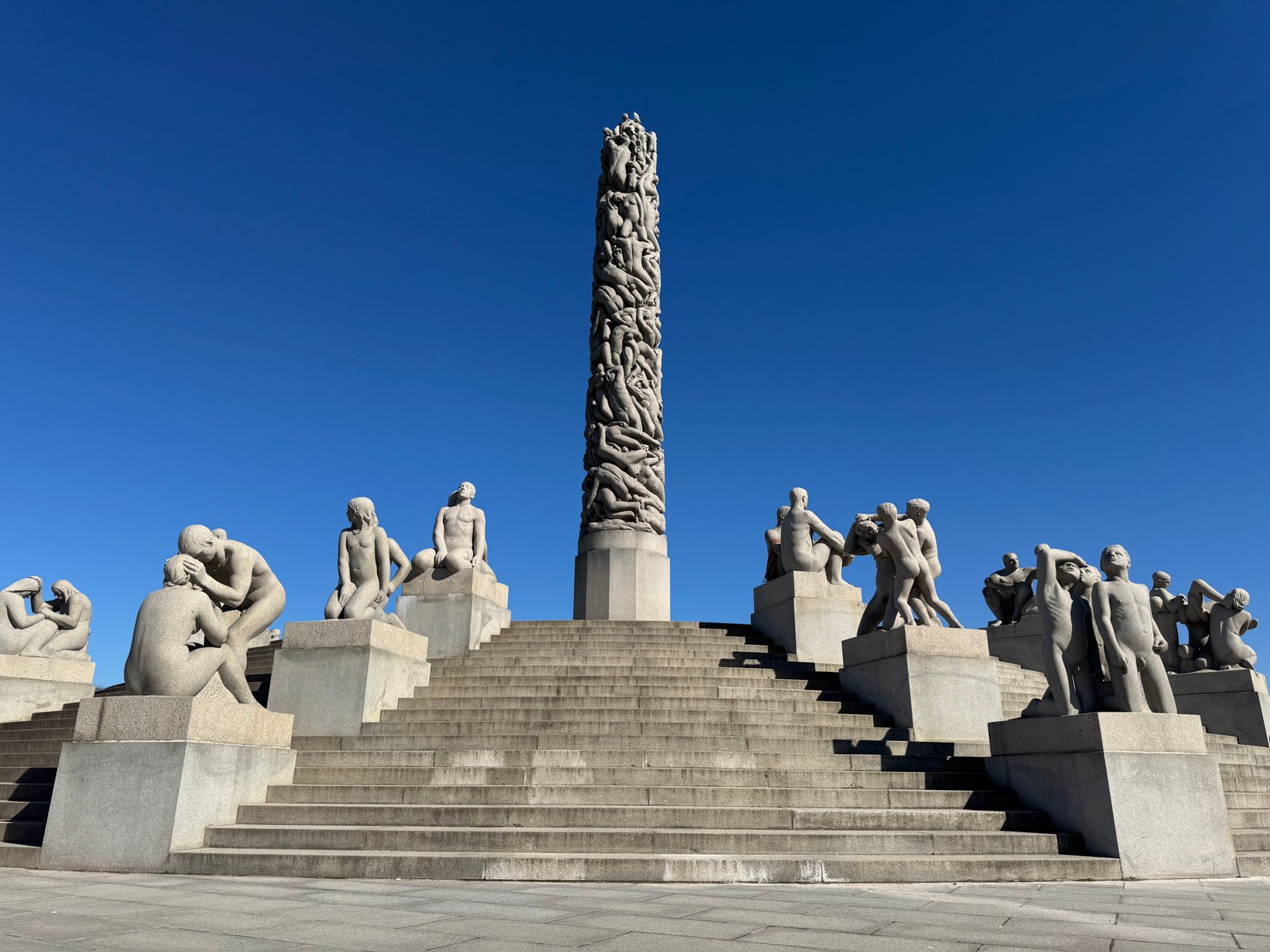
The Monolith is the centrepiece of Vigeland Sculpture Park. It's a 17-metre tall column carved from a single block of granite, covered in 121 human figures clinging to the column, and reaching upward. From a distance it seems like a pale, textured tower. You need to get up close to see what it actually is.
The name is literal: mono (one) + lith (stone). One single large block of stone, weighing around 260 tonnes, transported to the park in the late 1920s. Three stonemasons spent 14 years turning it into the artpiece you see today.
How to read it
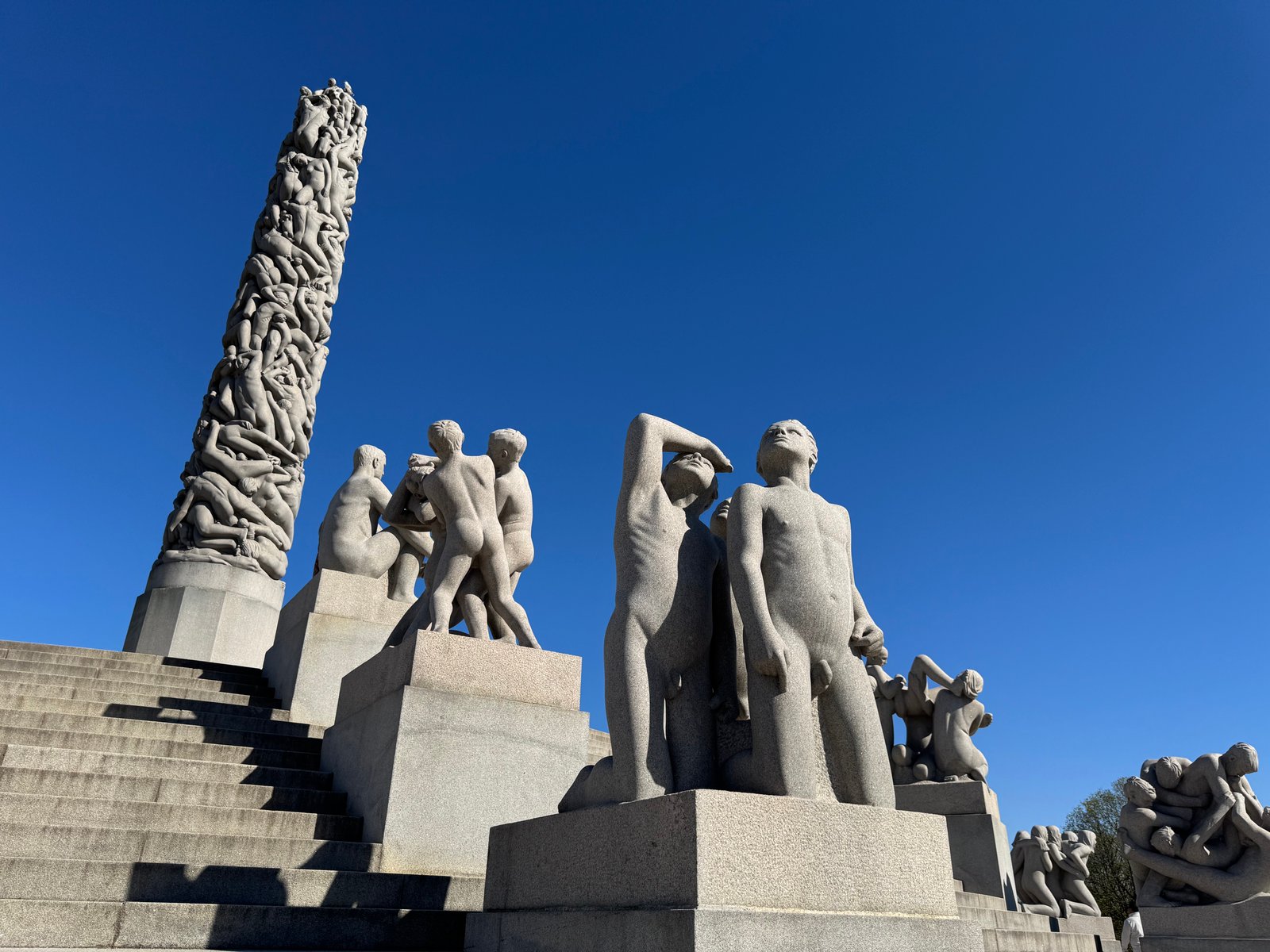
The figures at the bottom are heavy, weighed down, and some are looking lifeless. As your eye moves up, the bodies loosen, reaching towards the sky. The children are at the very top. The Vigeland Museum describes it as a vision of resurrection, of humanity's striving toward the spiritual. Vigeland himself did not want to explain it. He said the stone groups around the base depict life, and the column depicts the world of imagination. Each person need interpret on their own.
Some people see hope, others futility, while a few just see a slightly phallic granite pillar, which, fair enough, it does look like, at least at a distance. But spend a few minutes around the base and you will see the individual figures. You will see faces, people climbing, a hand gripping a shoulder, a child reaching over someone's back. The carving is remarkably fine for granite, which is one of the hardest stones to work with. Details that look blurry ten metres away become clear expressions when you're up close.
The 36 granite groups
The Monolith is surrounded by 36 separate granite figure groups arranged around the stepped platform below the column. You will see an elderly couple holding each other and a woman wrestling with a child. They're chunky, quite expressionless compared to the bronze figures on the bridge. The emotions are stripped back to the essentials.
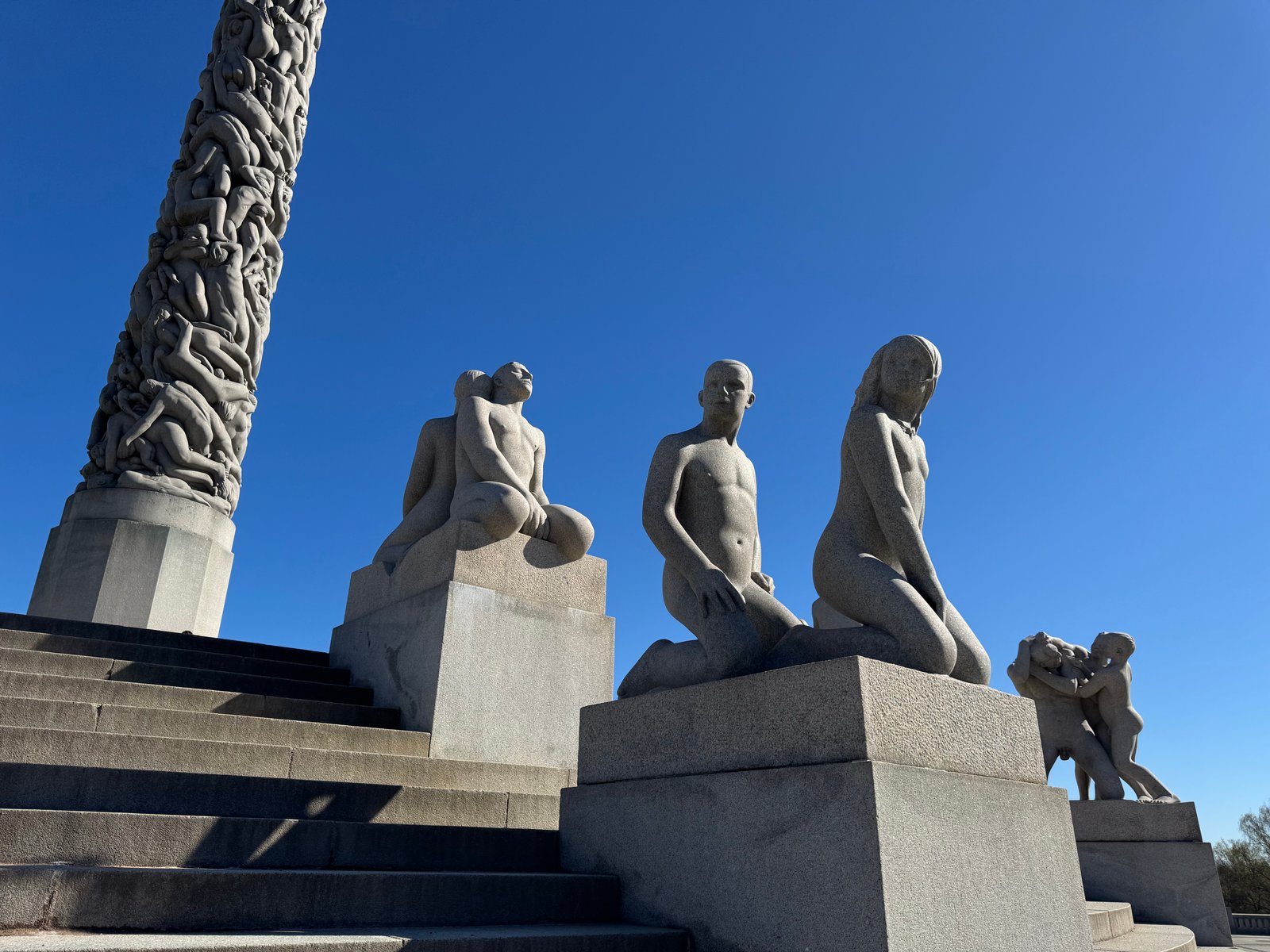
Most of the tour groups cluster on the south-facing steps, so the northern and western sides are often emptier. Some of the most affecting sculptures are the ones facing away from the main approach: an old woman and a skeleton, and a father lifting a small child onto his shoulders.
The wrought iron gates
Several wrought iron gates surround the plateau, each one is featuring human figures of different ages. Most people just walk right past them, because why would you look at a gate? Just like everything in the park they are deliberately designed by Vigeland himself. The ironwork is intricate, and the contrast between the metal figures and the massive granite sculptures on the steps behind is striking.
When to go
The park is open 24 hours and free, so you can go any time. Mornings and late evenings are best if you want to take photographies without many others in the shots.
At 08:00 on a weekday it's pretty empty. You'll share the plateau mostly with local dog walkers and joggers. The granite is beautiful in the soft morning light, and you can probably photograph without others photobombing your picture. The morning shadows bring out the depth of the carvings in a way that harsh midday sun doesn't.
Late afternoon and sunset look gorgeous, especially September through October when the autumn foliage surrounds the plateau. But expect company. Golden hour at the Monolith is well known among photographers.
Photography
The Monolith is surprisingly hard to photograph well. From a distance, it's a grey column against sky. Straight-on shots from below flatten the figures into an indistinguishable mass. What works better is getting close and isolating sections: a cluster of three or four figures, a single face, a hand reaching across a torso. A telephoto lens will help here. Overcast days or mornings are better for photography than a bright sun. The clouds create soft, even shadows that make it easier to separate the individual bodies from each other.
If you want to do the classic wide shot, the best angle is from the south-west steps (see main photo above), slightly below the plateau level, looking up with some of the 36 granite groups in the foreground for scale. Bring a longer lens or use your phone's zoom if you want to examine the expressions of the figures near the top, the figures up there are impossible to read with the naked eye from the ground.
"The column is my religion" - Gustav Vigeland
The backstory
There are no information plaques at the Monolith, or anywhere in the park for that matter, there's nothing explaining what you're looking at. This is the biggest complaint visitors have about the park. You're staring at something but you don't know what, and without context, you're looking at an impressive but confusing tower of bodies.
The short version: Vigeland modelled the entire column in clay over ten months in his studio (now the Vigeland Museum). He never touched the granite himself though, three stonemasons did the carving. They worked inside a wooden shed that was built around the erected stone, on scaffolding divided into 11 levels. They started at the top and worked their way down. When the shed was finally removed in 1944, 180,000 people turned up to see the finished column.
The project had a human cost. The masons worked without proper dust protection for over a decade, breathing granite particles daily, and two of them unfortunately developed serious lung disease.
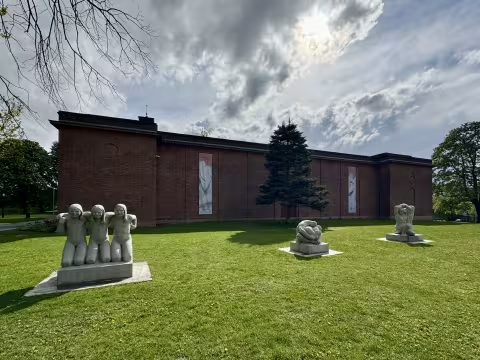
The Vigeland Museum, a five-minute walk south of the park, has the original full-size plaster model of the Monolith, broken into three sections. You can examine the individual figures in detail here, even see Vigeland's fingerprints in the plaster, and study a photo series documenting the granite block's journey from the quarry, which was no small feat in the 1920s. The Vigeland Museum is the place where you will find the context you might feel missing in the park itself.
Read our full walking guide to the Vigeland Sculpture Park. There is so much more to see here.
What to do nearby
Hotels nearby