By: Chris ⎜ Last updated
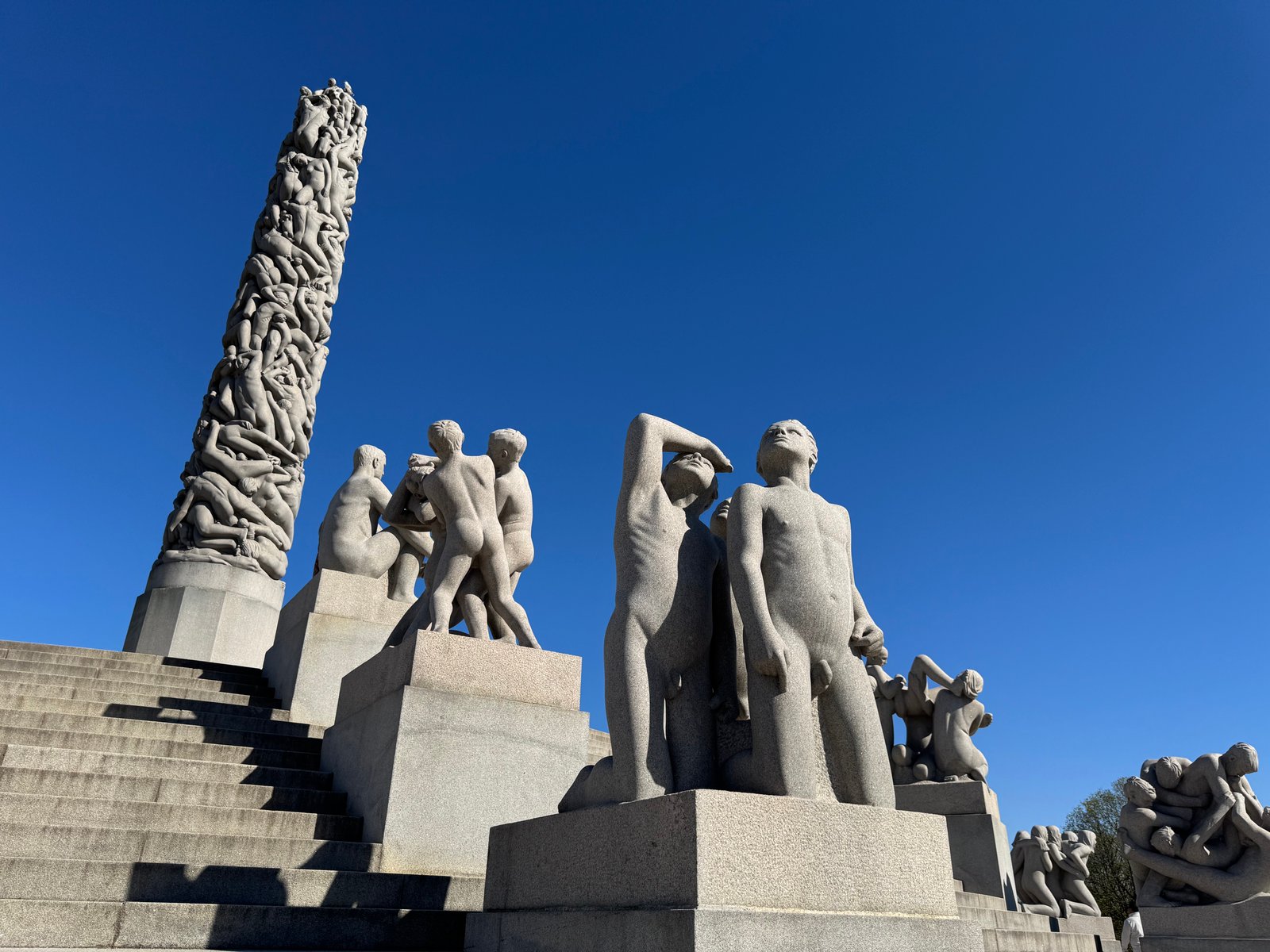
Locals call it Frognerparken, but most visitors know it as Vigeland Park. Either way, you're looking at more than 200 sculptures by one artist, spread across an almost kilometre long park, all free and open 24/7.
Gustav Vigeland spent the last two decades of his life on this. In 1921, the city of Oslo gave him a studio and living quarters, and in return every sculpture he made belonged to the city. He died in 1943 before the park was finished. The sculptures were installed from his plaster models anyway, and the last piece went up in 1949.
The sculpture installations are located inside Frogner Park, which is a regular public park that Oslo residents use. On a warm afternoon the lawns around the sculptures fill up with people on blankets having a picnic or chilling with some beers.
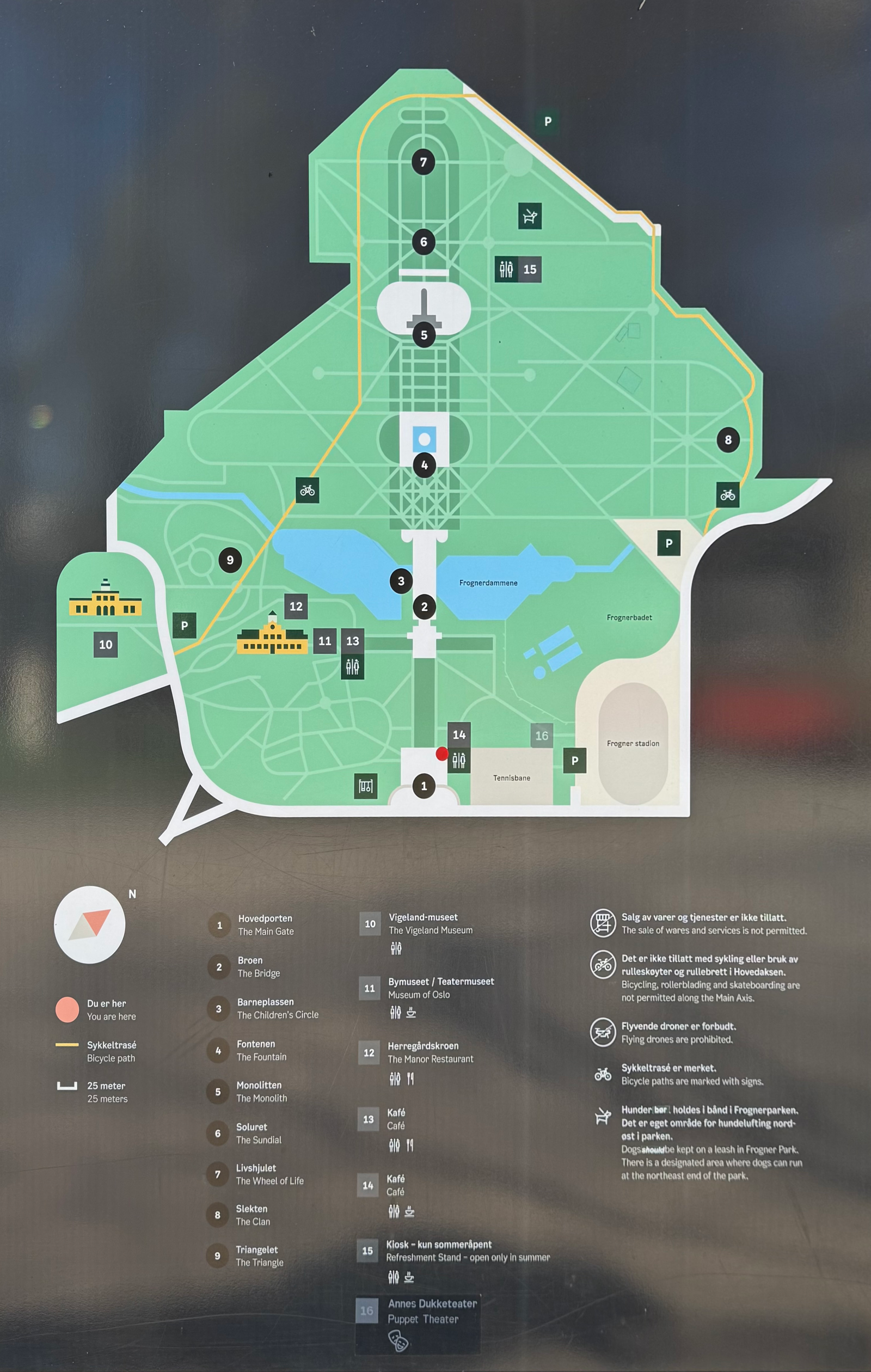
The walk from the main gate to the Monolith is about 850 metres in a straight line. None of the sculptures have titles or explanations. You just look.
Map of the Vigeland Park
Click on the map to expand and see it fully.
The main highlights are:
1: Main gates
2: Bridge (with Sinnataggen on the left)
4: Fountain
5: Monolith
The main gates
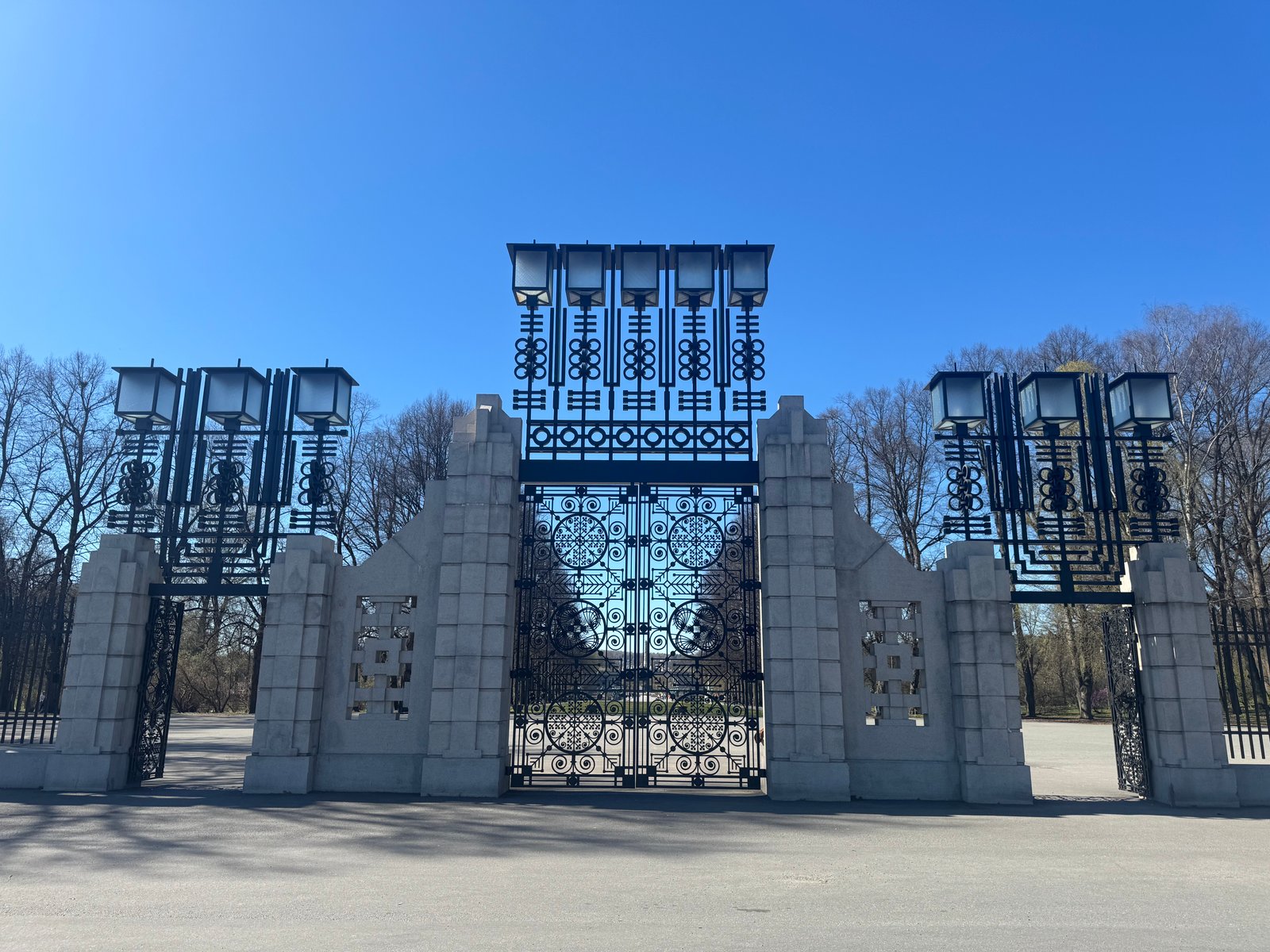
Five large wrought iron gates flanked by two smaller pedestrian entrances, all designed by Vigeland in 1926. Most people walk straight through the gates without a second look, but stop for a minute. On the lower panels you will find dragon-like figures pulled from Norse mythology. The upper sections are pure Art Deco, a later addition. The two styles sit next to each other with no effort to blend them together.
From the moment you walk through the gates, you will see the Monolith at the far end.
The bridge
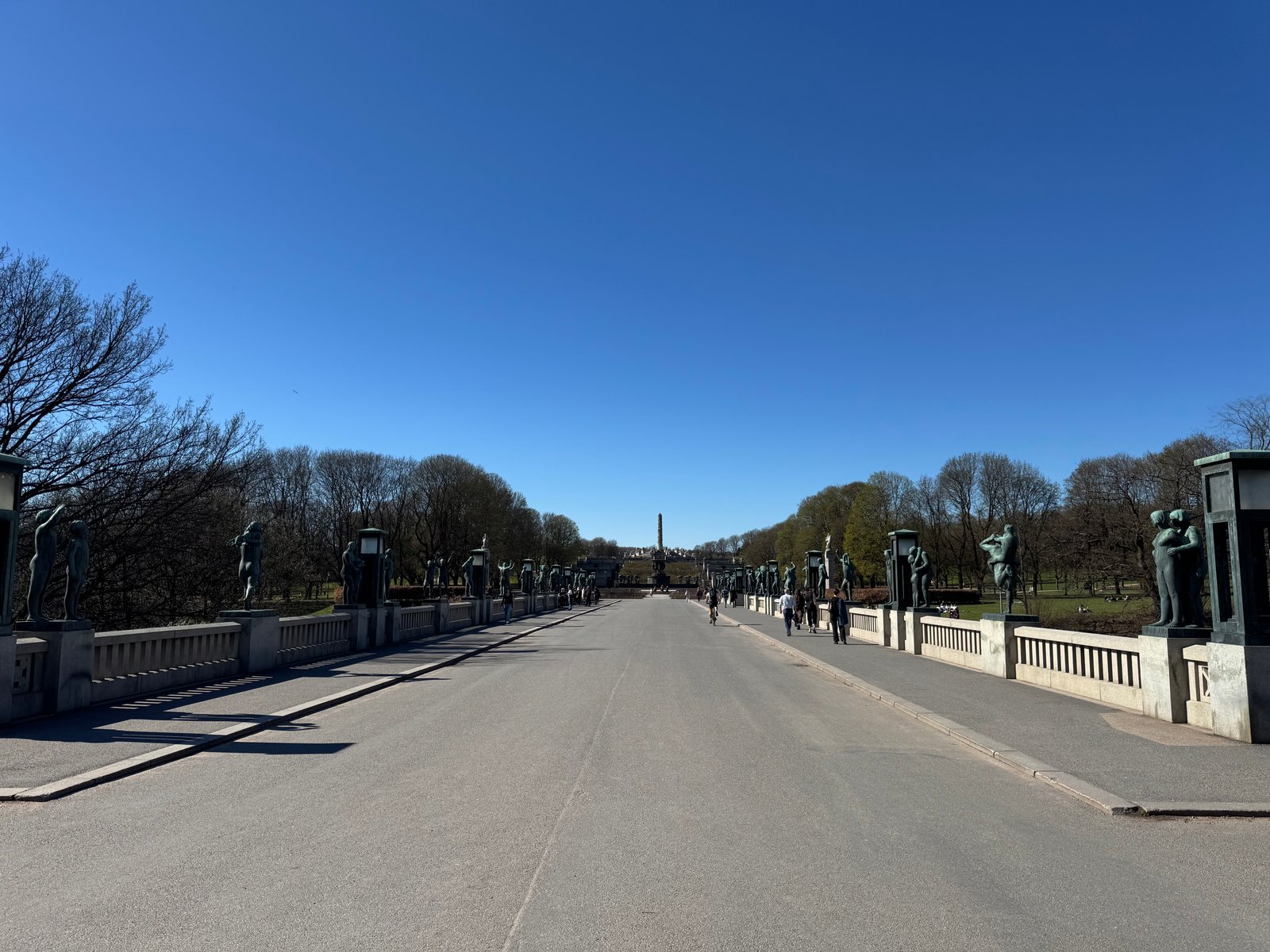
A hundred metres long and fifteen wide, lined with 58 bronze figures. This was the first part of the park the public saw when it opened in 1940, and it's still where visitors spend the longest.
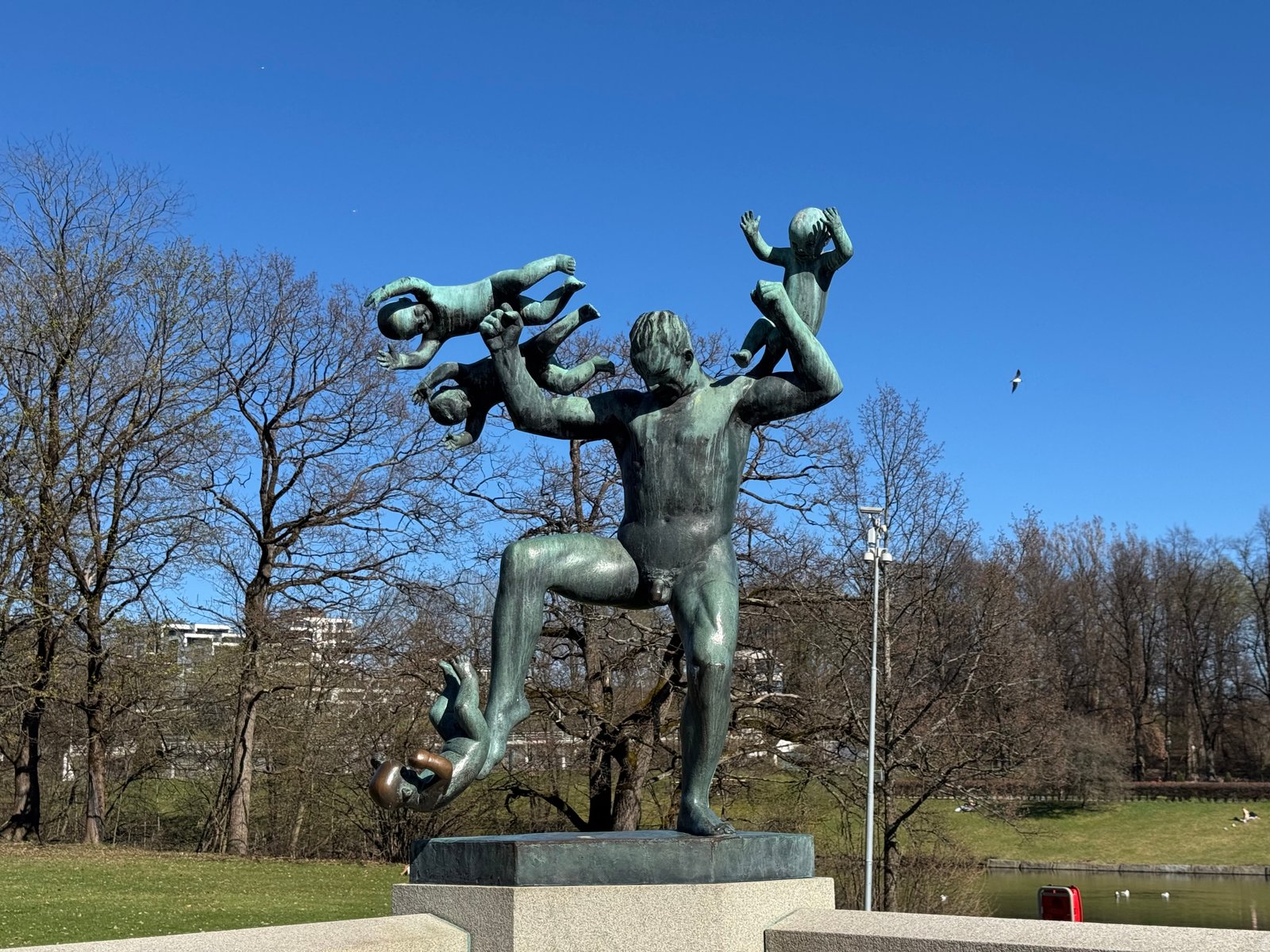
A couple leans into each other. A woman lifts a small child above her head. A man kicks and flings four babies off his body while they cling to his limbs. Another stands calm, holding a child under each arm like he's carrying firewood. Half the experience on the bridge is watching other visitors try to figure out what they're looking at.
Sinnataggen
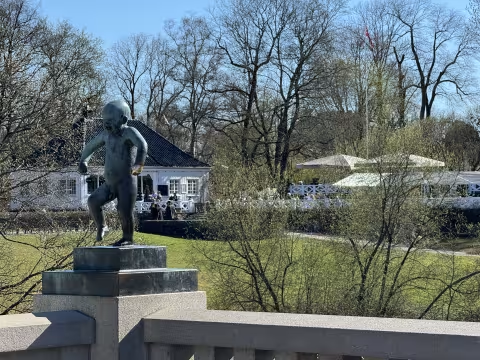
Sinnataggen (the Angry Boy) is the one everyone looks for, and you'll find him on the left side of the bridge, and there's usually a crowd. He's tiny, standing on the bridge railing with his fists clenched and one foot mid-stomp. His left hand is polished bright gold while the rest of him is dark green bronze. That's from thousands of tourists rubbing his hand for "good luck,". The acid from skin contact is slowly eating the metal, and conservators have been worried about it for years. Don't touch him.
For more about Sinnataggen, read our full article about the statue and its background.
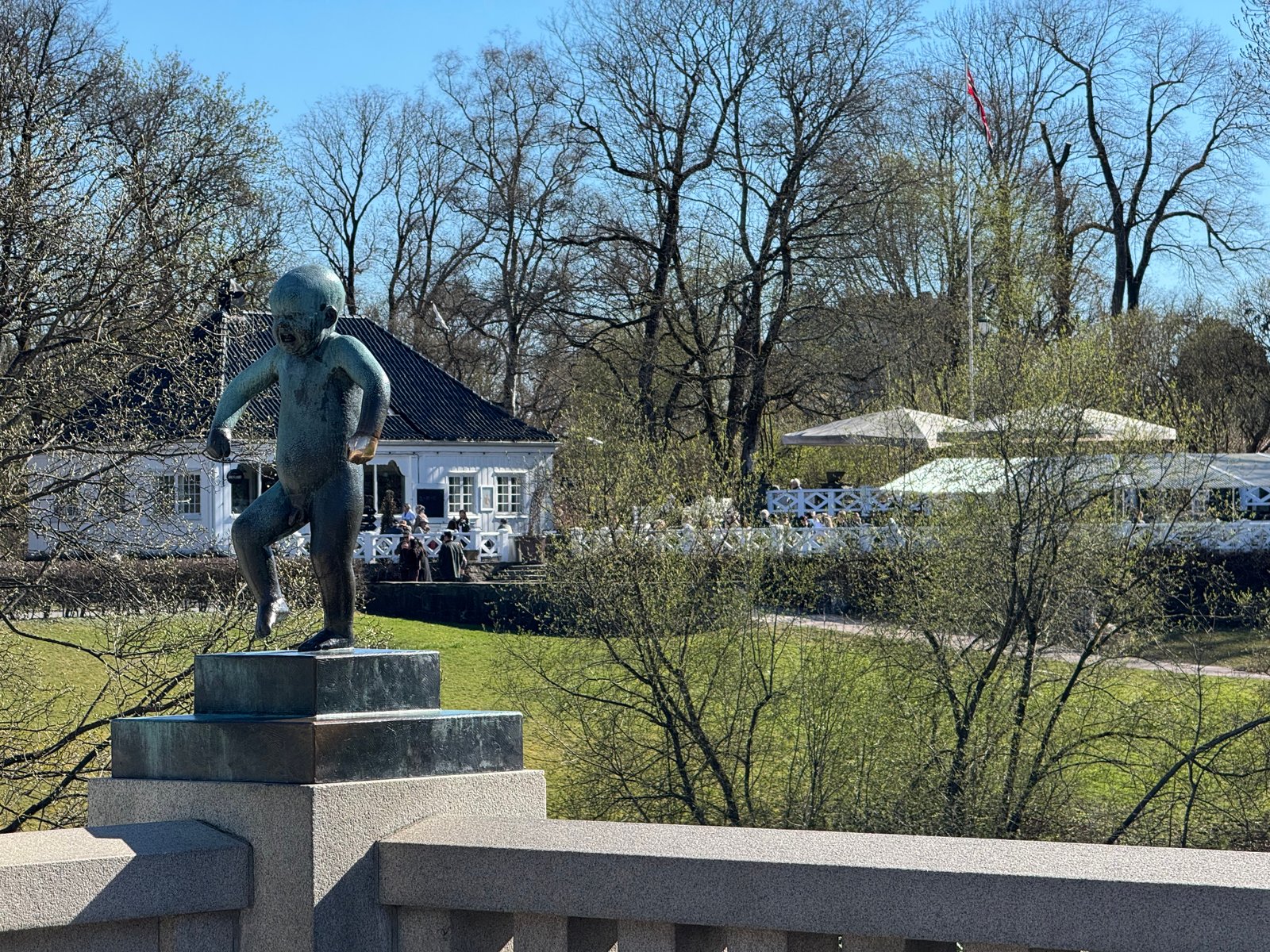
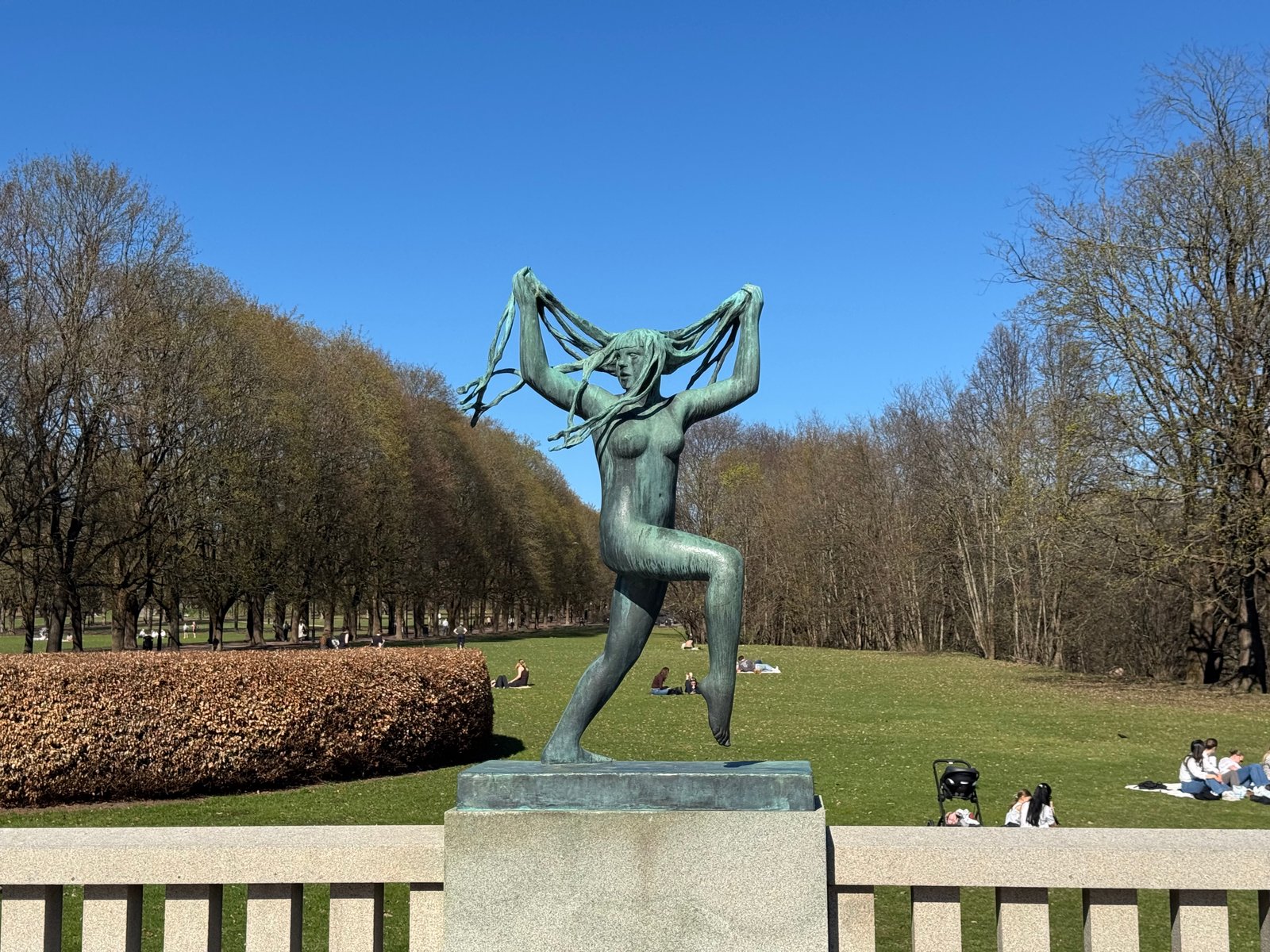
The bridge crosses Frognerdammane, the ponds that run through the park. On a sunny day you'll be looking at a bronze figure of a woman mid-dance while someone ten metres behind you is eating a sandwich on the grass.
The fountain
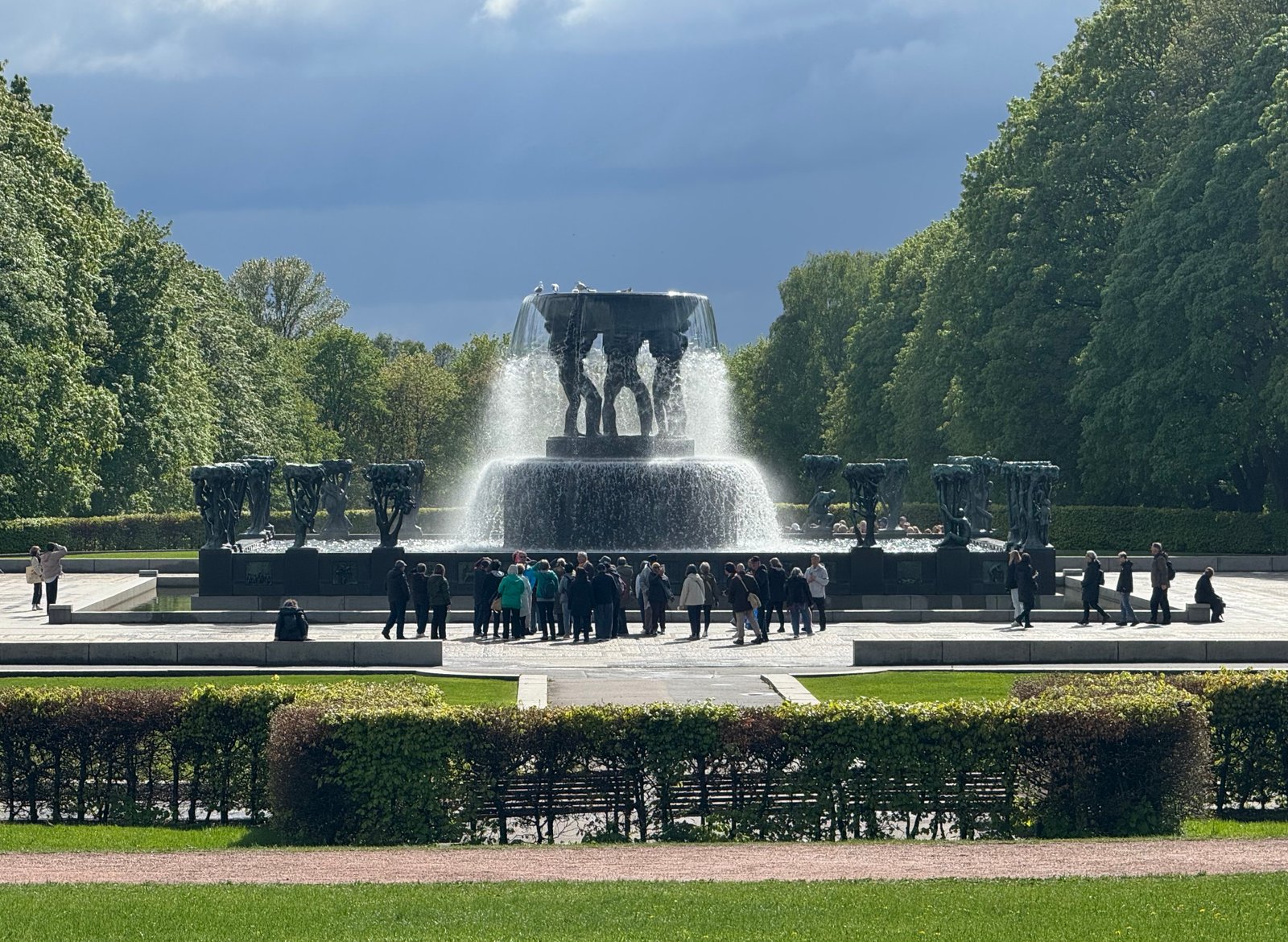
The fountain is between the bridge and the Monolith steps.
There are six bronze giants which hold up a massive basin with water cascading around them. That's what you notice first. Around the basin there are 20 bronze "tree groups" with people tangled inside.
The first tree is tangled with newborn babies. Each group shows figures slightly older, slightly more worn. The last one has a skeleton so merged with the tree that you almost don't see it. All in all it's an entire progression from birth to death.
On the outside of the basin, below the tree statues, 60 bronze relief panels wrap around the base.
The fountain was originally designed for the plaza in front of the Norwegian Parliament building, but the city decided it was too large. Vigeland designed an entire sculpture park around it instead.
The Monolith
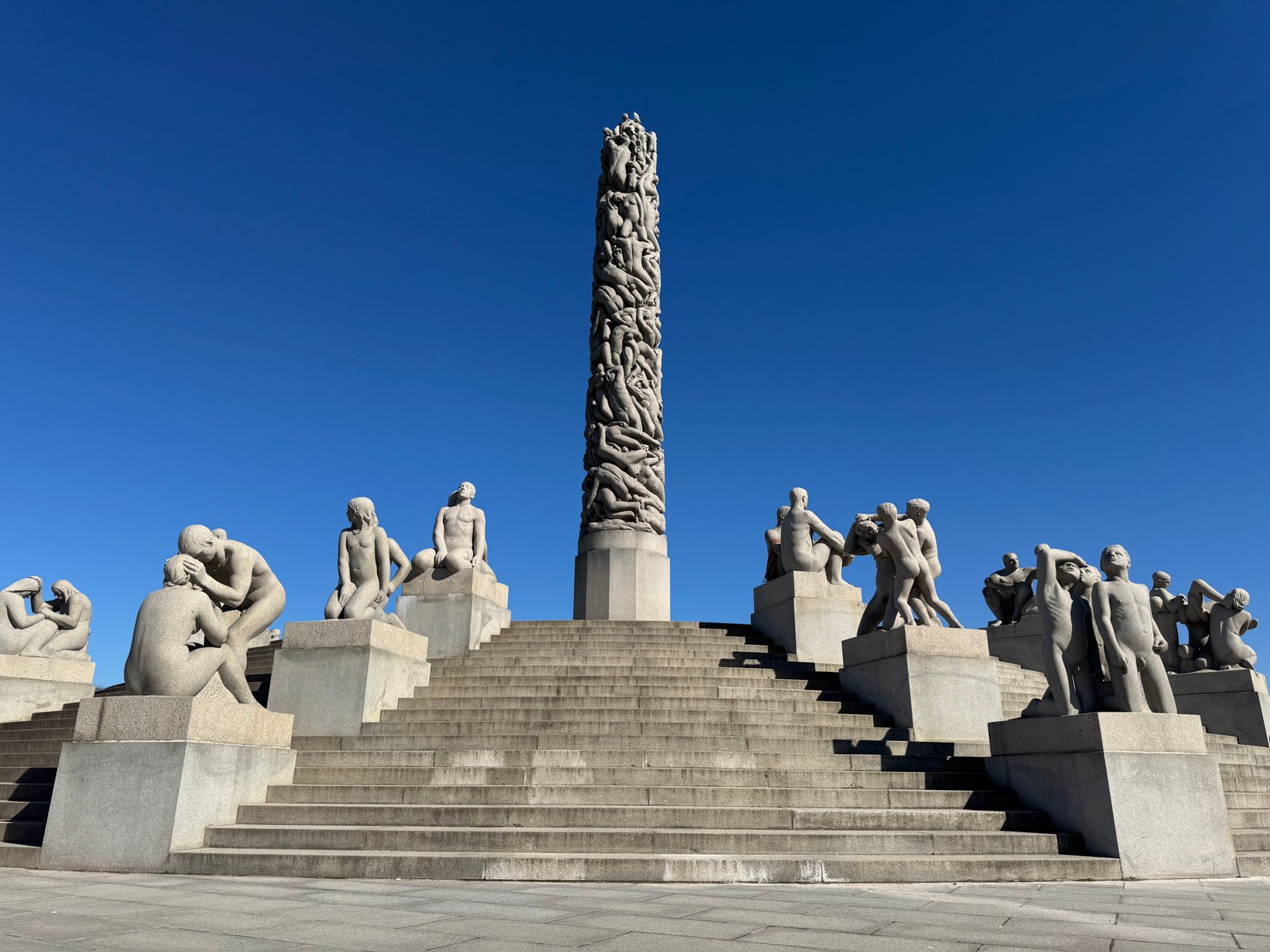
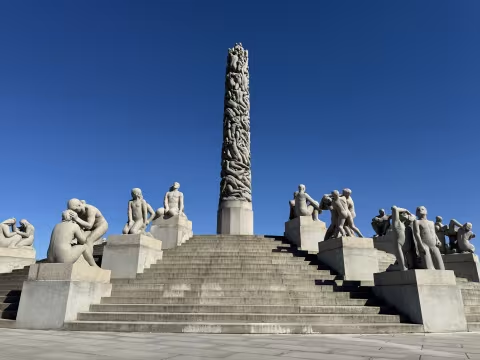
The stone steps leads through to one of eight wrought iron gates, each one incorporating human figures into the metalwork. At the top, the centrepiece is obviously the monolith with 36 granite figure groups arranged around the base. They're quieter than the bronzes on the bridge, including couples holding each other, a woman shielding a child, an old man sitting completely alone.
Then the Monolith column itself. It consists of seventeen metres of solid granite, a single 280-tonne block quarried in southeastern Norway and transported to the park in the late 1920s. The column depicts 121 human figures intertwined and spiralling upward. Three stonemasons spent fourteen years carving it from the single granite block hidden from the public in a wooden shed. Vigeland had made the original clay model in ten months but never actually carved the stone himself. Vigeland died in 1943, a year before the shed came down. When the public finally get to see it at Christmas 1944, 180,000 people showed up in the first weeks.
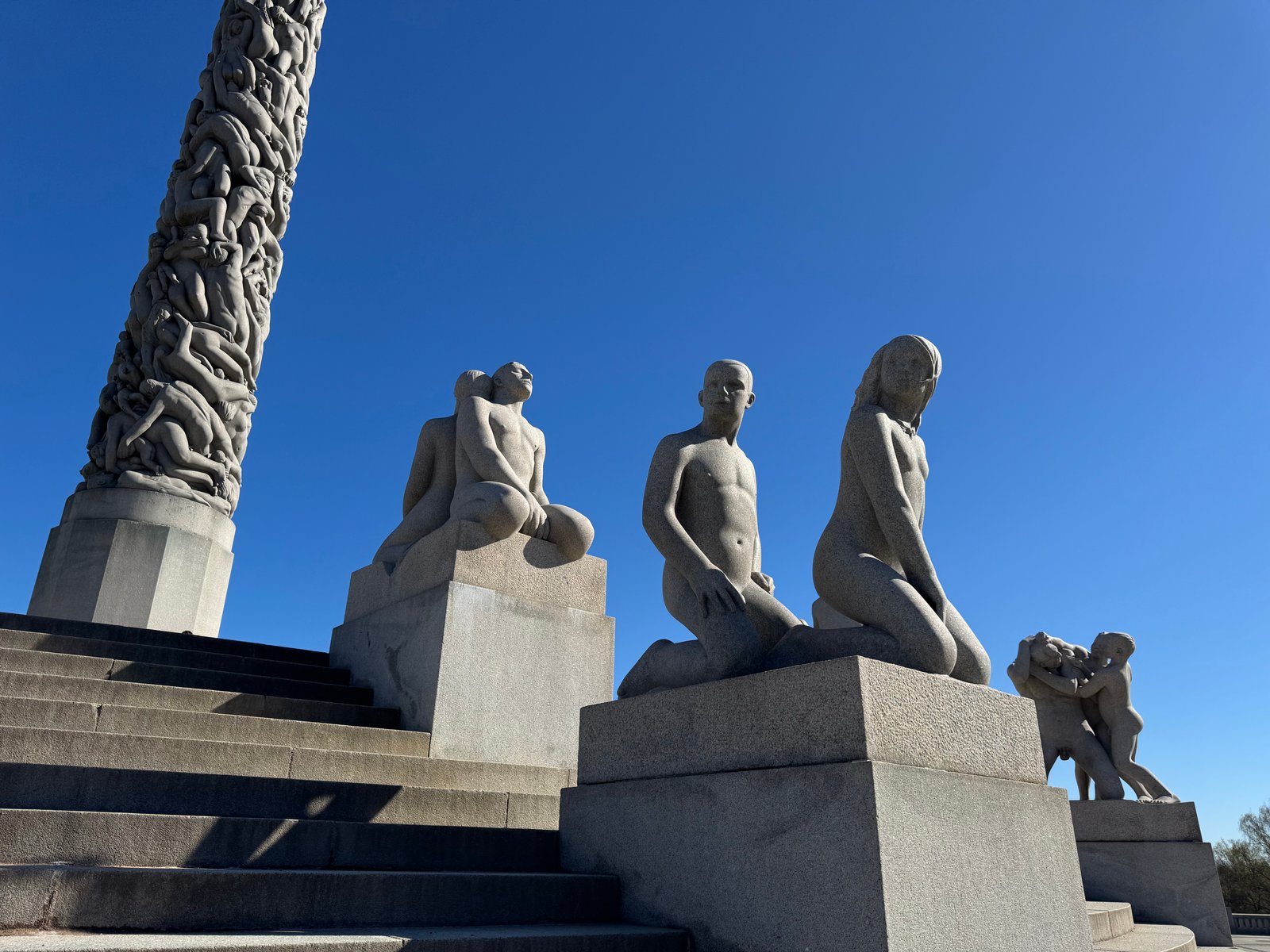
At the bottom, adults climbing over each other, clinging to anything they can reach. At the top, children. Vigeland never explained what it meant, and the museum doesn't try to either. Walk around the base slowly, because the composition looks completely different depending on where you stand.
At the far western end, beyond the monolith, there´s a bronze ring of men, women, and children holding onto each other in a continuous loop. This is the Wheel of Life, the last major sculpture installed in 1949.
Coffee at Anne på Landet
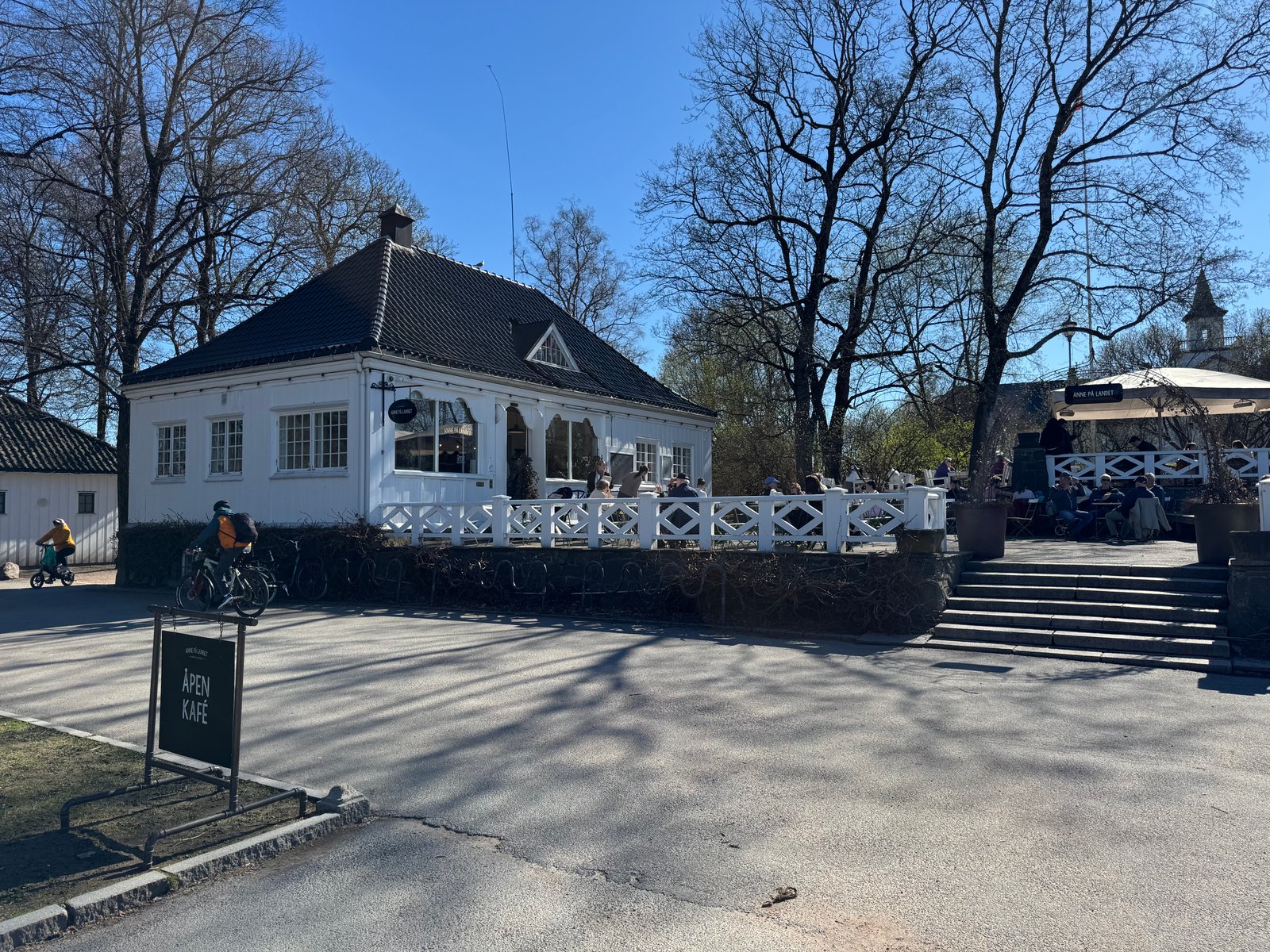
Anne på Landet is located right next to the bridge, a white building over a century old with a large outdoor terrace overlooking the ponds. On a warm day the outdoor seats are popular.
Everything is made in-house. The cinnamon rolls are the thing to get, thick and soft and not too sweet. If you want an actual meal, the lamb sausages with mash and fennel slaw are good, or the grilled mushroom sandwich with spinach and crème fraîche. Their brunch plate for two is a good tasting platter of local foods: scrambled eggs, smoked salmon, smoked reindeer, local cheese from Avdem dairy and fresh bread. The coffee is from Lippe, a local Oslo microroastery, and they serve beer and wine too.
The cafe is pen daily 11:00 to 17:00.
What to do nearby
Hotels nearby