By: Chris ⎜ Last updated



Jo Bøe Klakegg was chef de partie at Noma during its years at the top of the World's Best list. He came back to Oslo and opened Hot Shop in a former sex shop on Grünerløkka. It has a Michelin star now. Mikael Svensson trained at Quique Dacosta and Martin Berasategui in Spain before opening Kontrast at Vulkan, which now holds two Michelin stars and a Green Star. Bent Stiansen won the Bocuse d'Or in 1993 and has kept Statholdergaarden starred since 1998. The kitchens in this city have serious pedigree, even when the dining room is a concrete box with exposed pipes.
These 10 restaurants range from those tasting menus down to a family-run hot dog kiosk that's been going for close to a century. Book ahead for dinner, especially Thursday through Saturday. The city is small and the best tables fill up fast.
Comparison at a glance
| Restaurant | Vibe | Price | Best For |
|---|---|---|---|
Hot Shop Insider's Choice Casual Fine Dining (One Michelin Star) | Loud & buzzy | High | Clean, Nordic, vegetable-forward |
Kontrast Modern Nordic (Two Michelin Stars) | Industrial & open | Highest | High-end, blind tasting menu |
Smalhans Neighbourhood Bistro | Loud & packed | Medium | Affordable dining - modern and traditional Norwegian |
Arakataka Modern Nordic Gourmet | Sophisticated yet relaxed | Medium | Small plates & award-winning wine |
Vaaghals Contemporary Norwegian | Corporate but cozy | Medium | Hearty comfort food & house-cured meats |
Statholderens Mat & Vinkjeller Classic Fine Dining | Old-school cellar | High | Classic French-Nordic seasonal menu |
Fiskeriet Youngstorget Casual Seafood | Busy & chaotic | Low–Med | Fresh fish and chips or fish soup |
Nektar Vinbar Wine Bar | Cozy cabin with hip-hop | Medium | Natural wine and sharing plates |
Syverkiosken Street Food | Standing only | Low | Classic Norwegian hot dogs |
Elias mat & sånt Traditional Norwegian | Visitor-friendly | Low–Med | Hearty, home-style traditional dishes |
Casual Fine Dining
Insider's Choice
Modern Nordic
Neighbourhood Bistro
Modern Nordic Gourmet
Contemporary Norwegian
Classic Fine Dining
Casual Seafood
Wine Bar
Street Food
Traditional Norwegian
Eating without a reservation
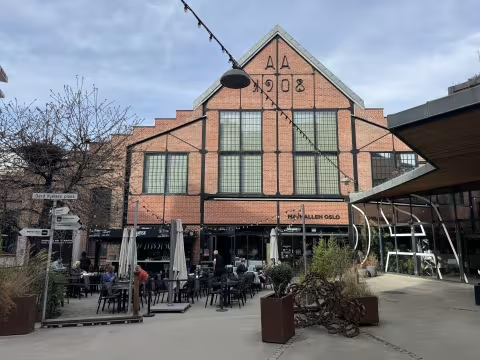
Not every meal in Oslo needs a booking. Mathallen at Vulkan is a food hall with around 30 vendors, open Tuesday to Saturday, no reservations. The duck confit sandwich at Galopin is the single best thing in the building. Vulkanfisk does proper fish soup from a counter that doubles as a fishmonger. Helt Vilt serves moose burgers and reindeer stew if you want to try Norwegian game meat without committing to a full restaurant dinner. Prices are still Oslo prices, but lower than most meals on this list.
Mathallen is a five-minute walk from Kontrast and right next to Grünerløkka, so it fits easily into a day that includes either.
Mathallen Oslo: The insider’s guide
The restaurants
Most of these are within walking distance of the centre or a short tram ride. The list runs roughly from most expensive to least. If you only have one dinner in Oslo and want to spend on it, start with Hot Shop or Kontrast.
1. Hot Shop
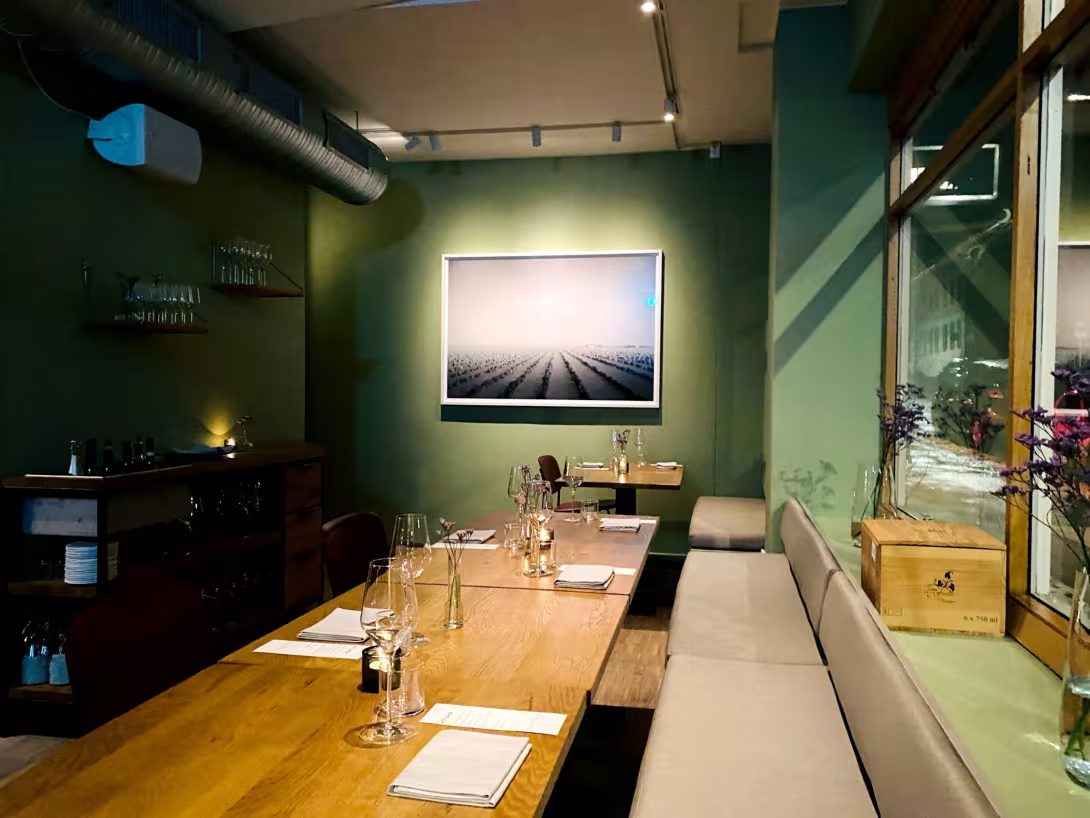
Hot Shop Oslo
The building used to be a sex shop. The name stayed. Chef Jo Bøe Klakegg, who was chef de partie at Noma during its years at the top of the World's Best list, runs a surprise tasting menu that changes with the seasons. He opened Hot Shop with his partner Siri Haslund (formerly of Smalhans), and they earned a Michelin star in 2022, two years after opening.
There is no à la carte. You commit to the set menu and let the kitchen decide. The cooking is clean, Nordic, and vegetable-forward, but richer than you'd expect. A grilled leek with hazelnut milk reduction. Raw scallops with fermented gooseberry juice. Celeriac tacos. Chicory chips with mussel dip. The sauces are a signature: smooth, broth-like, built from many elements but balanced enough to taste simple. The wine list won gold for Best Short Wine List at Star Wine List of the Year 2023.
Concrete floors, exposed pipes, light wood, big windows facing the street. About 30 seats. Loud.
Order: The set menu (there's no other option). Add the wine pairing. You can also grab individual plates and a glass at the bar if the main room is full.
Reservations go fast, usually months ahead, right after the booking window opens. The location on the northern edge of Grünerløkka is off the main tourist track.
2. Kontrast
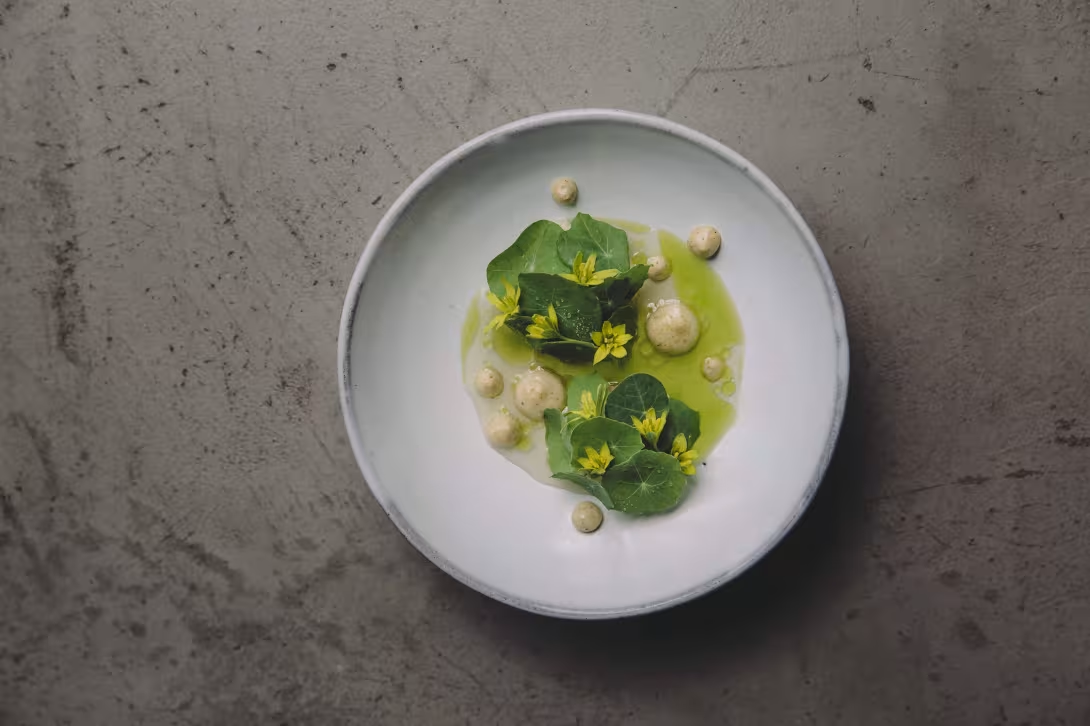
Kontrast Restaurant Oslo
Two Michelin stars and a Michelin Green Star for sustainability. Chef-owner Mikael Svensson grew up in Sweden's Skåne region, trained at Quique Dacosta and Martin Berasategui in Spain, then opened Kontrast at Vulkan. Around 98% of what reaches the plate comes from Norway.
The menu is blind. You don't know what you're getting until it arrives, which lets the kitchen cook whatever the farmers delivered that morning. Skate wing, reindeer heart, a dessert of spruce shoots. Through a sister company called b.culture, Kontrast turns its food waste into garum, vinegar powder, and fermented condiments, some of which end up back on the plate. The wine pairing leans biodynamic.
The restaurant sits in the Vulkan area, a short walk from the Mathallen food hall. Open kitchen, high concrete ceilings, floor-to-ceiling windows.
Order: The Kontrast set menu. You don't really have a choice here either.
The catch: Only open Wednesday to Saturday for dinner. The price reflects two Michelin stars. Book well ahead. The walk in through Vulkan is industrial, not scenic.
3. Smalhans
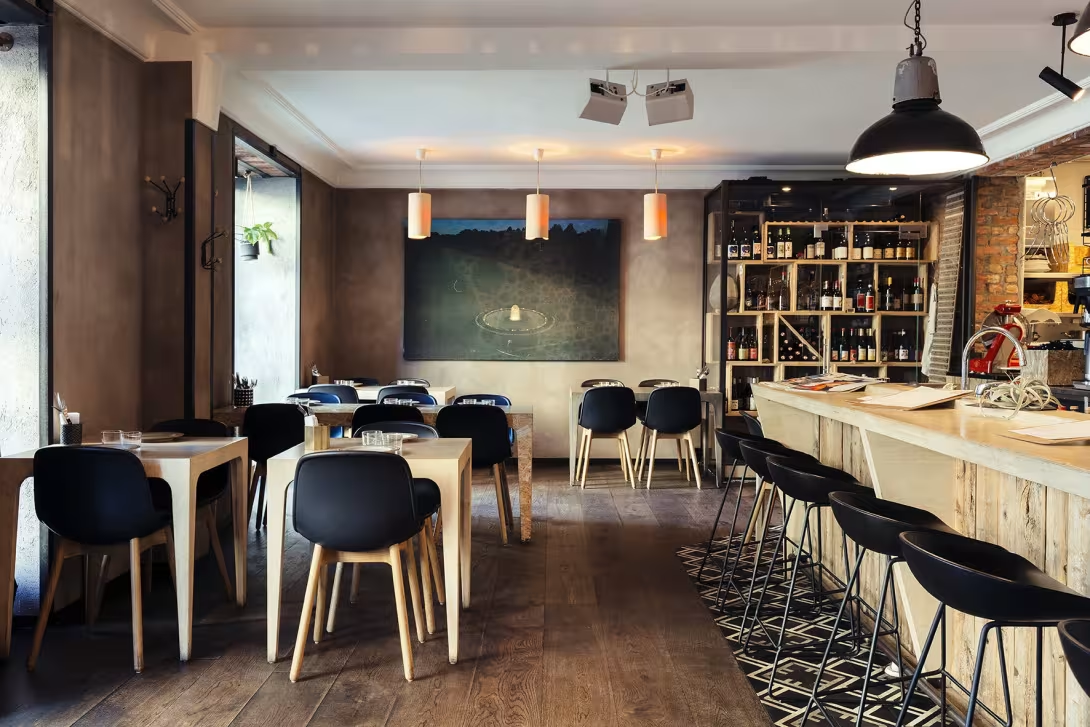
Smalhans
Smalhans opened in 2012 and set the template for the modern Oslo neighbourhood restaurant. It earned a Michelin Bib Gourmand in 2015 and has held it since. The name means "scarce way of life," and the philosophy matches: use every part of the ingredient, waste nothing, keep prices down.
Two concepts through the day. Before 18:00, they serve a single "husmannskost" dish, traditional Norwegian home cooking served family-style, for a fraction of what dinner costs. The evening is a set tasting of seven courses, nose-to-tail and stalk-to-tip. Steam buns with slow-cooked pork neck, chanterelle toast, bone marrow with fermented plums.
The room wraps around an open kitchen and bar. It's loud and packed, especially on weekends.
Order: The seven-course dinner (Krøsus) for the full experience. For something quicker and cheaper, the afternoon husmannskost before 18:00 is one of the best deals in Oslo.
4. Arakataka
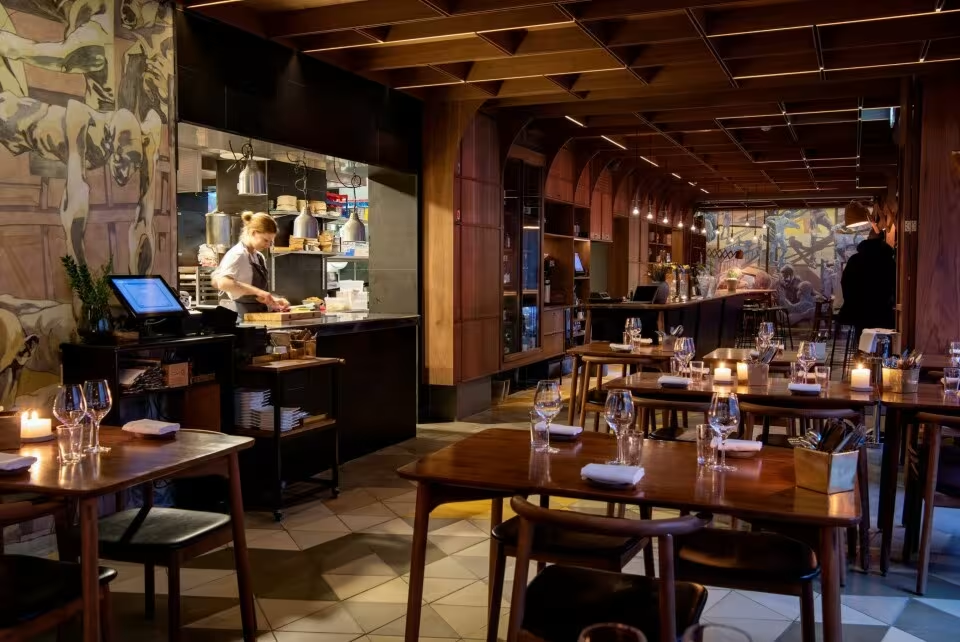
Arakataka
Open since 2001, Arakataka is listed in the Michelin Guide (no star) and on the 50 Best Discovery list. Won a Special Jury Prize at Star Wine List of the Year Norway 2024 for its wine selection.
The menu is built around small plates. Order four or six courses as a set, or pick individual dishes. The signature, which has survived every menu change for years, is spaghetti with løyrom (bleak roe) and sour cream. Rich, salty, kept on the menu by demand. The pepper crab is another long-runner: messy, spicy, order extra napkins.
The Matbaren (food bar) is a drop-in section with a separate menu of affordable small dishes, no booking needed. Useful after a gig at nearby Rockefeller, or if you haven't planned ahead.
Order: The spaghetti with løyrom. Then the pepper crab. Then whatever the waiter recommends from today's fish.
5. Vaaghals
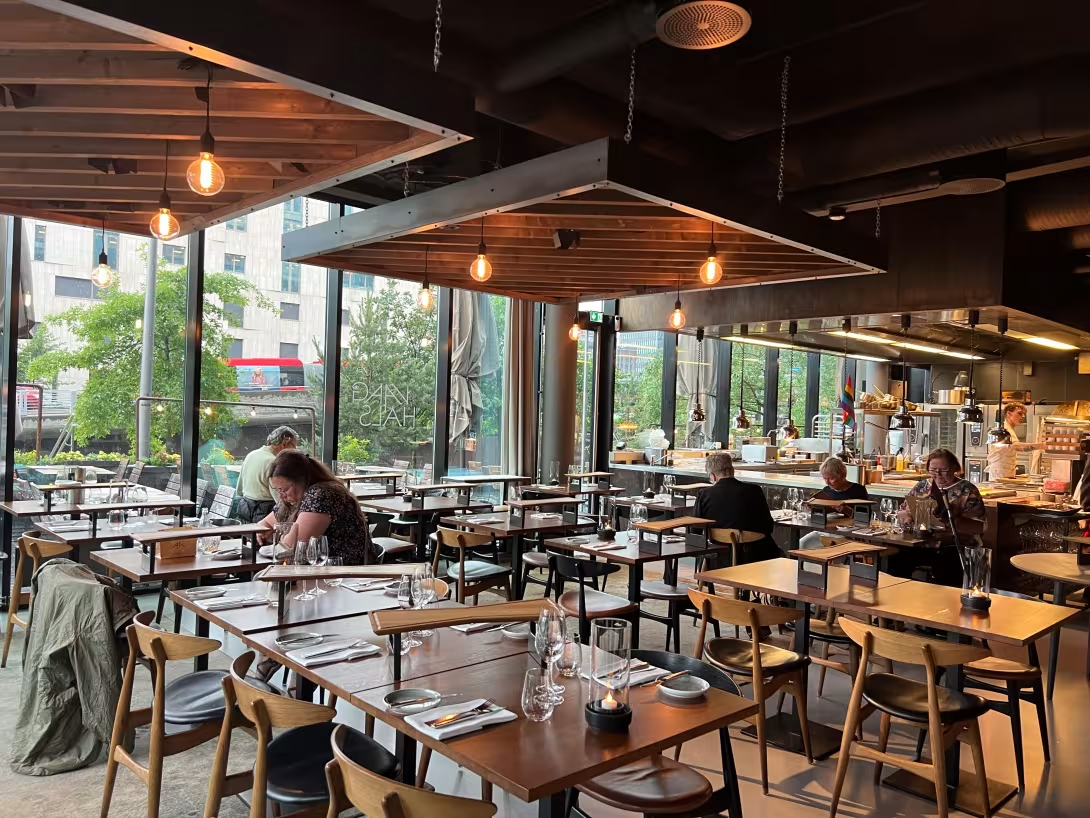
Vaaghals
Vaaghals is at the ground floor of one of the Barcode buildings. Listed in the Michelin Guide (no star), the kitchen takes traditional Norwegian recipes and refines them with French technique. They cure their own hams and sausages in-house, displayed in a cabinet by the entrance.
Warm bread with whipped Røros butter to start. Set menus run from four to eight courses, and you can also order a la carte. The cooking is hearty Norwegian comfort food with precision: slow-cooked lamb, dry-aged beef, seasonal root vegetables, rich gravies. High ceilings, wood and glass, open kitchen, terrace for warmer months.
Order: One of the set menus. The bread and butter alone justify the visit. The house-cured meats make a good starter.
6. Statholderens Mat & Vinkjeller
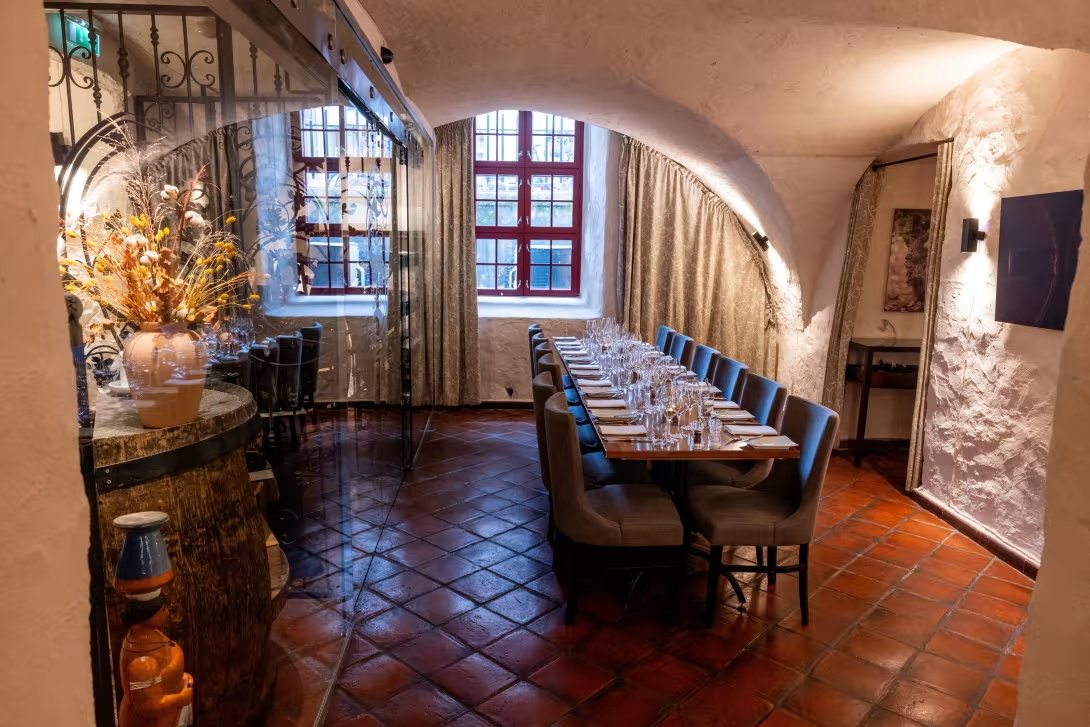
Statholdergaarden mat og vinkjeller
Upstairs at this salmon-pink 17th-century building sits Statholdergaarden, one of Oslo's longest-running Michelin-starred restaurants (starred since 1998). Downstairs, in the original vaulted brick cellar, is the more relaxed Vinkjeller (wine cellar). Same kitchen lineage, lower price, less formality.
Bent Stiansen, the first Scandinavian to win the Bocuse d'Or (1993), founded the restaurant in 1994. He's now semi-retired, with his daughter Natascha Stiansen and chef Torbjørn Forster running the kitchen. The food is classic French-Nordic: rich sauces, precise technique, no experimental fermentation or foraging philosophy. The rotating 10-course seasonal menu is the main draw.
You eat under original 17th-century vaulted arches, by candlelight.
Order: The 10-course seasonal menu. While you can also order a la carte, the 10 course menu is much better value. For lunch, they serve Danish-style smørrebrød (open-faced sandwiches), a nod to Bent Stiansen's late wife Anette, who was Danish.
Deliberately old-school. Not for anyone after cutting-edge Nordic food. Some find the cellar rooms cramped. Closed Sunday and Monday.
7. Fiskeriet Youngstorget
Half fishmonger, half restaurant. The fish you eat is the same fish being sold in the glass counter up front. Fiskeriet opened in 2010, taking over from Erling Moe's fish shop, which had been there for 75 years.
The fish and chips is the draw. Fresh cod, never frozen, crispy batter. The fish soup (fiskesuppe) is thick, creamy, and loaded with chunks of fish, shrimp, and mussels. They also do oysters and bacalao (salt cod stew with tomato, olives, and potato). Takeaway prices are cheaper than eating in.
Small, busy space on Youngstorget. High stools, shared tables, a line during lunch.
Order: Fish and chips (eat in or take away). Fish soup if it's cold. Oysters if you're feeling generous with yourself.
Seating is limited and it gets chaotic at lunch. Not a sit-down dinner venue.
8. Nektar Vinbar
Nektar opened in 2019 in a small, red wooden house and filled up from day one. Owner Veslemøy Hvidsten curates a wine list heavy on biodynamic, organic, and natural producers, with 15 to 20 rotating by the glass. The food is sharing plates, local produce, seasonal menu changes.
The anchovy toast is a house classic. The mac and cheese has a following. Beyond those, the menu shifts frequently: bone marrow, pig's head croquettes, mushroom gnocchi, homemade halloumi. The portions are sized for drinking.
Low ceilings, exposed beams, candlelight, mismatched details. It looks like someone's cabin. Hip-hop plays in the background, which somehow works.
Order: The anchovy toast. Then ask the staff to choose your plates and wines.
The place is popular. Book weeks in advance, especially for weekends.
9. Syverkiosken
The pølse (hot dog) is Norway's most democratic meal. Every petrol station, ferry, and corner shop sells them. Syverkiosken is the real thing: a tiny wooden kiosk at Alexander Kiellands plass, family-run for close to a century. The current owner, Erlend, took over from his father. The toppings are homemade and change with the seasons.
Order a wiener i lompe (wiener sausage wrapped in a potato flour pancake). Ask for it "med alt" (with everything): homemade potato salad, crispy fried onions, raw onions, mustard, ketchup. For heat, the Spicy Rabbagast adds jalapeños. Wash it down with a Solo (Norwegian orange soda) or a Tøyen Cola.
One small table. No indoor seating. You eat standing up.
Order: Wiener i lompe med alt. Add a Solo.
It's a 10-15-minute walk from Grünerløkka, or bus #54 from Oslo S. Nowhere to sit if the one table is taken.
10. Elias mat & sånt
Elias is where you go to try traditional Norwegian food without ending up in a tourist trap. Food is decent, you don't go here for a culinary highlight, but for hearty homemade style Norwegian food. Not really the food Norwegians themselves go out to eat though. Popular with tourists, so the atmosphere leans visitor-friendly rather than local.
Short walk from the National Museum, quiet street, menu focused on traditional dishes made from scratch. The reindeer stew (reinsdyrgryte) with brown cheese sauce, lingonberries, and mashed potato is the dish to order. The baked salmon, fish soup, and smoked whale are also consistent.
The staff explain ingredients like cloudberries and brown cheese without being asked, which helps if this is your first encounter with Norwegian food. They handle dietary restrictions well, including coeliac-friendly options (marked on the menu). Lunch has open-faced sandwiches and soup.
Order: The reindeer stew. For dessert, the cloudberry (multe) panna cotta. If reindeer is not your thing, the salmon.
Tipping
Oslo restaurants rarely add service charges, and tipping culture is different here than in the US or UK. Leaving the change or rounding up by 5-10% is normal when the food and service is good. Nobody will chase you out the door if you don't. Read more about tipping in our guide to tipping in Norway.
Tipping in Norway: What´s expected