By: Chris ⎜ Last updated
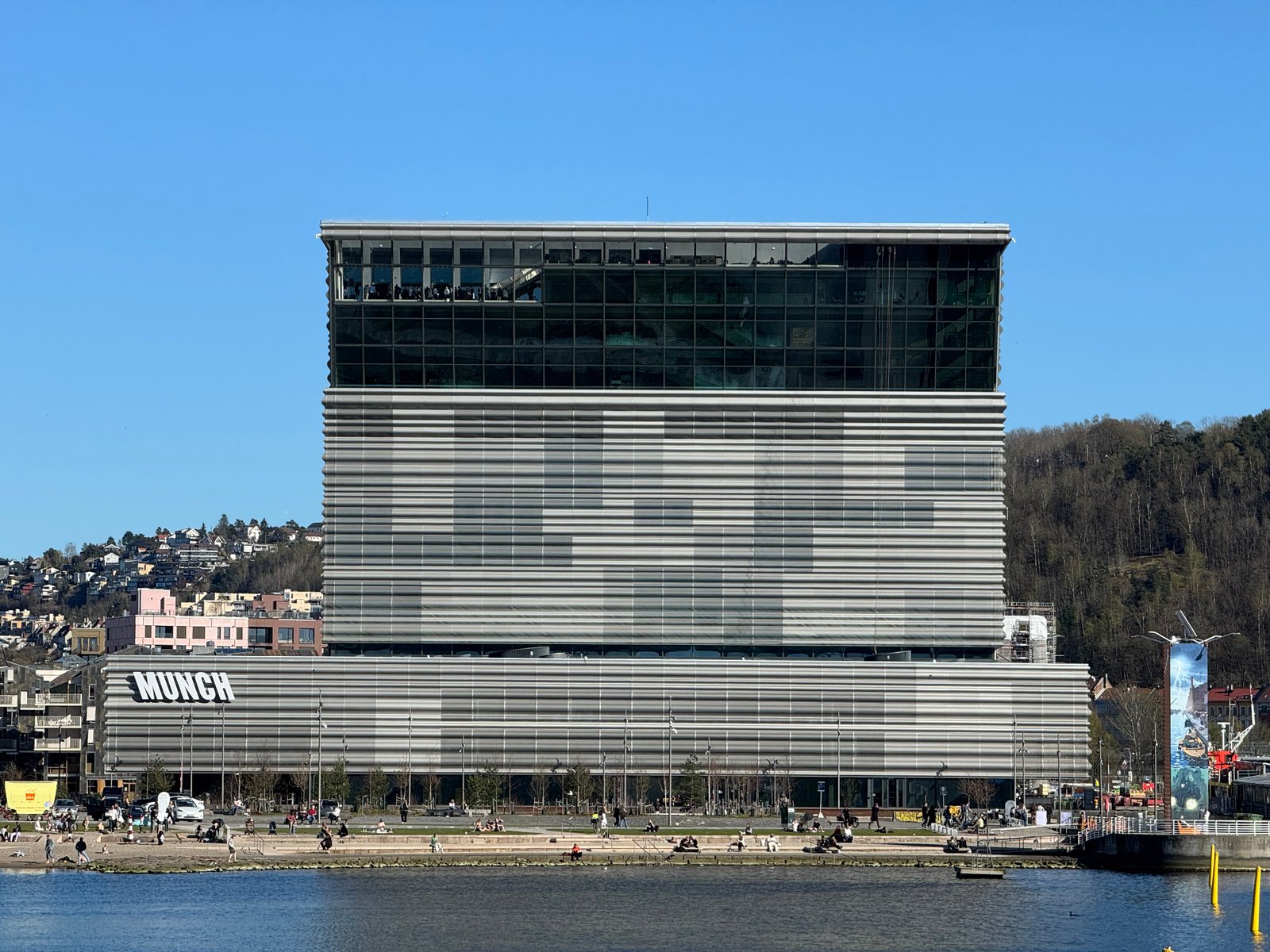
MUNCH is worth a visit if you care about Edvard Munch as an artist. Actually, the museum is so filled with great art that you don't really even need to care much about Munch to enjoy the visit. The museum has almost 27,000 of Munch´s works, and the permanent collection covers the complete range of his paining styles: anxiety, desire, jealousy, death, self-portraits, printmaking, and huge public commissions you won't have seen reproduced anywhere. The building is 13 storeys tall with a kink at the top which leans visibly towards the Oslofjord.
One important thing before you visit: the 1893 painted version of The Scream (the most famous version) is not here, that painting is at the National Museum. MUNCH has three other versions rotating, with one on display at a time, but you won't find the fierce orange-sky original in this museum.
The entrance fee is normally 220 NOK, but museum has free entry on Wednesdays after 18:00, all year except July and August
The Scream at MUNCH
The Scream room is on floor 4, inside the permanent exhibition called Edvard Munch Infinite. There are three versions that hang in a darkened space, but only one is visible at any time. The other two are hidden behind shutters and are changed hourly. Munch made all these paintings on cardboard or paper, and the paintings are being throughout the day to limit light exposure and slow deterioration.
The three versions are:
- A painting in tempera and oil on cardboard, probably from approximately 1910
- A crayon drawing on cardboard from 1893
- A lithograph from 1895
Each version gets shown for roughly an hour at a time. You should go to the Scream room when you arrive to see whichever version is on display, then return between viewing the other floors if you want to see the others. Give yourself at least two hours here if you want to see all three.
How to explore the building
Start on floor 4: Edvard Munch Infinite. This floor is the most important. It contains the Scream versions, Madonna, The Dance of Life, Vampire which are some of his most famous works. It will also be clear to you that Munch was not just an anxiety painter. If you have any preconception, this is the floor that changes how you might think about him.
Then go to floor 6: Edvard Munch Monumental. The large-format works are here. The Sun and The Researchers had canvases so huge they had to be lowered into the building by crane before the roof was put on. Seeing a two-metre Munch canvas in person is different than seeing a postcard reproduction.
Floors 7 and 11 are worth a visit if you have the time. Floor 7 focuses on printmaking and process, floor 11 places Munch among his artistic contemporaries. Neither of the floors is essential for a first visit, and floor 7 is the most interesting if you're limited on time. The prints are a side of Munch that many visitors don't know exists.
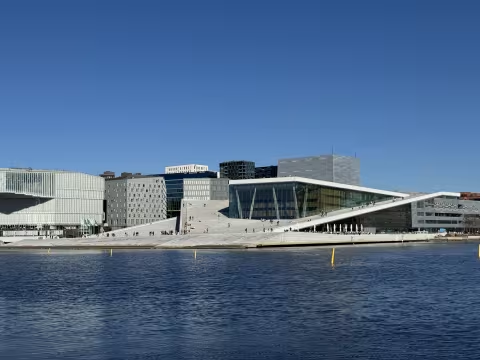
Finish on floor 12 or 13 for the view. The restaurant (Bistro Tolvte on floor 12) and bar (Kranen on floor 13) both face the Oslofjord, the Opera House, and the Bjørvika waterfront. Even if you're not eating or drinking, go up for the fjord view.
How long to spend
60 to 90 minutes is sufficient for floor 4, viewing of one to two versions of the Scream, floor 6, and a quick look at the view. It will be tight but workable if Munch isn't the highlight of your Oslo trip.
2 to 3 hours will give you enough time to see the main Munch exhibitions, all the different Scream versions and the temporary exhibition.
MUNCH or the National Museum
Should you do one, or both of these museums, and if doing only one, which one is right for you?
MUNCH is a deep-dive into a single artist. You get the world's largest Munch collection, three Scream versions, the full career from early paintings through printmaking to the monumental public works, all in a modern waterfront building. The downside is that it's a lot of just one artist. If you're only mildly interested in Munch, the building can feel larger than your attention span.
The National Museum has a much broader selection of art. There is Norwegian and international art across centuries, design, architecture, and the 1893 Scream painting that most people imagine when they hear the name. This is a museum that covers far more ground than MUNCH, including a good collection of other Munch works.
The museums area 25-minute walk apart, or one short tram ride, and together they give you the full picture about Munch as an artist: the full career at MUNCH, and his single most famous single painting at the National Museum.
What to pair it with in Bjørvika
Everything worth doing in Bjørvika within a few minutes from MUNCH, which makes it easy to spend half a day here.
The most natural sequence is the Opera House roof first (free), then MUNCH, then Deichman Bjørvika (Oslo's main public library, architecturally worth seeing even if you don't care about reading).
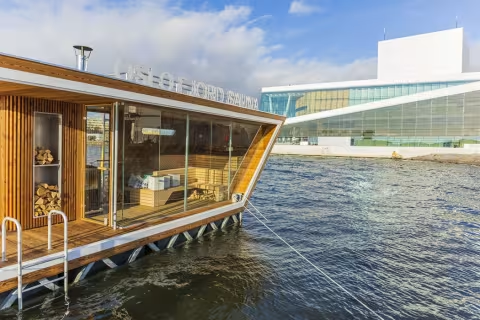
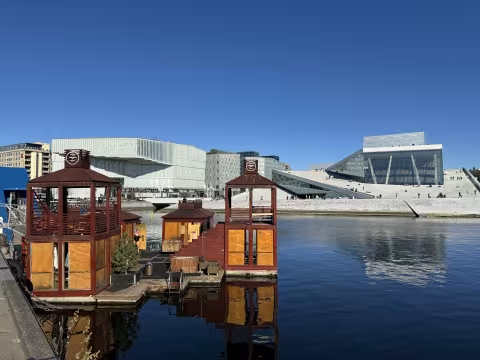
In summer, walk south from MUNCH to Sørenga for the public saltwater pool, the floating saunas, or a drink on the waterfront.
What to do nearby
Hotels nearby