
By: Chris ⎜ Last updated





The 300-odd kilometres between Oslo and Bergen is one of the great transfers in European travel. Every option, from a seven-hour train across a frozen plateau to a 55-minute domestic flight, comes with trade-offs worth understanding before you book. Here's how each one actually works.
Quick comparison
| Mode | Duration | Cost | Best For |
|---|---|---|---|
Train Insider's Choice Bergensbanen via Vy | ~7 hours | Medium | Scenery & comfort |
Norway in a Nutshell Train + Fjord Cruise + Bus | 12–14 hours | High | The full fjord experience |
Plane SAS, Norwegian, Widerøe | ~3.5 hours | Low–Med | Speed |
Car Rv7, E16, or E134 | 8+ hours | High | Freedom & flexibility |
Bus Vy Buss, Nor-Way | 10–13 hours | Low | Budget fallback |
Bergensbanen via Vy
Insider's Choice
Train + Cruise + Bus
SAS, Norwegian
Rv7, E16, or E134
Vy Buss, Nor-Way
The Train (Bergensbanen)
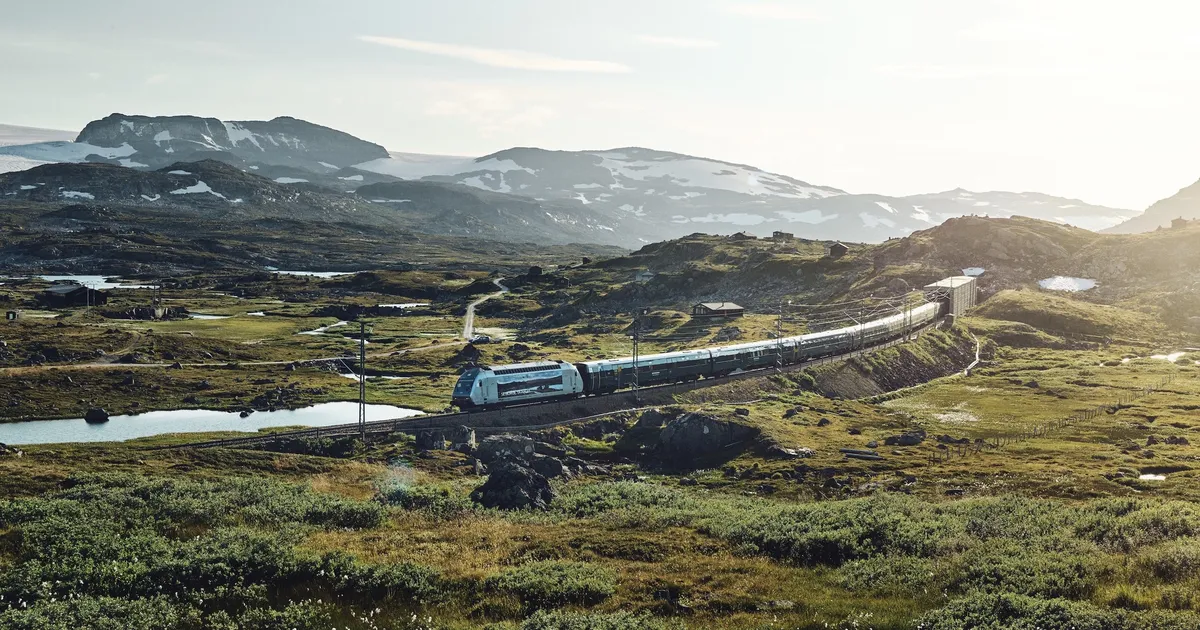
This is the one most people should take, at least in one direction. The Bergen Railway runs directly from Oslo's central station to Bergen's, with no airport transfers, no security queues, and some of the best scenery you'll see from a train window anywhere in the world.
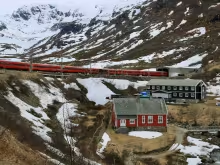
The route starts modestly. Forests and farmland for the first hour, the wide lake of Tyrifjorden off to one side. Then the landscape starts climbing. By the time you pass Geilo, the trees have thinned out and the terrain opens into the Hardangervidda, Europe's largest high mountain plateau. At Finse, the railway's highest point at 1,222 metres, the view is otherworldly. Flat, white, and vast. Star Wars fans will recognise it as the filming location for the ice planet Hoth in The Empire Strikes Back. The crew stayed at the Finse 1222 hotel in March 1979, and the hotel still has memorabilia on the walls.
From Finse, the train descends through increasingly green valleys toward Voss and then Bergen. The whole journey takes between 6.5 and 7.5 hours depending on the departure.
Book on vy.no or the Vy app. Tickets are released 115 days in advance, and the cheapest fares (called "Minipris") go fast, especially in summer. If you're travelling between June and August, book as soon as tickets open. There are typically four to five departures per day, with the first leaving Oslo around 06:25 and the last around 23:00.
The Night Train Option
A night train departs Oslo around 23:00 and arrives in Bergen at roughly 07:00. It has sleeper compartments. The obvious upside: you save a night's hotel cost and wake up in Bergen. The downside is just as obvious. You'll be crossing some of the most spectacular scenery in Northern Europe in the dark. If you're only making this journey once, take a daytime departure.
Norway in a Nutshell
This isn't transport. It's a full-day sightseeing route that happens to get you from Oslo to Bergen (or vice versa). The Norway in a Nutshell is a package of public transport tickets sold together by Fjord Tours, or you can book each leg individually for less.
The classic route from Oslo works like this:
- Train from Oslo to Myrdal (on the Bergen Railway, same line as above)
- Flåm Railway from Myrdal down to Flåm (a famously steep, 55-minute descent through mountain tunnels and past waterfalls)
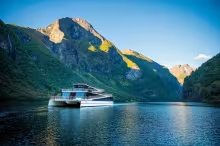
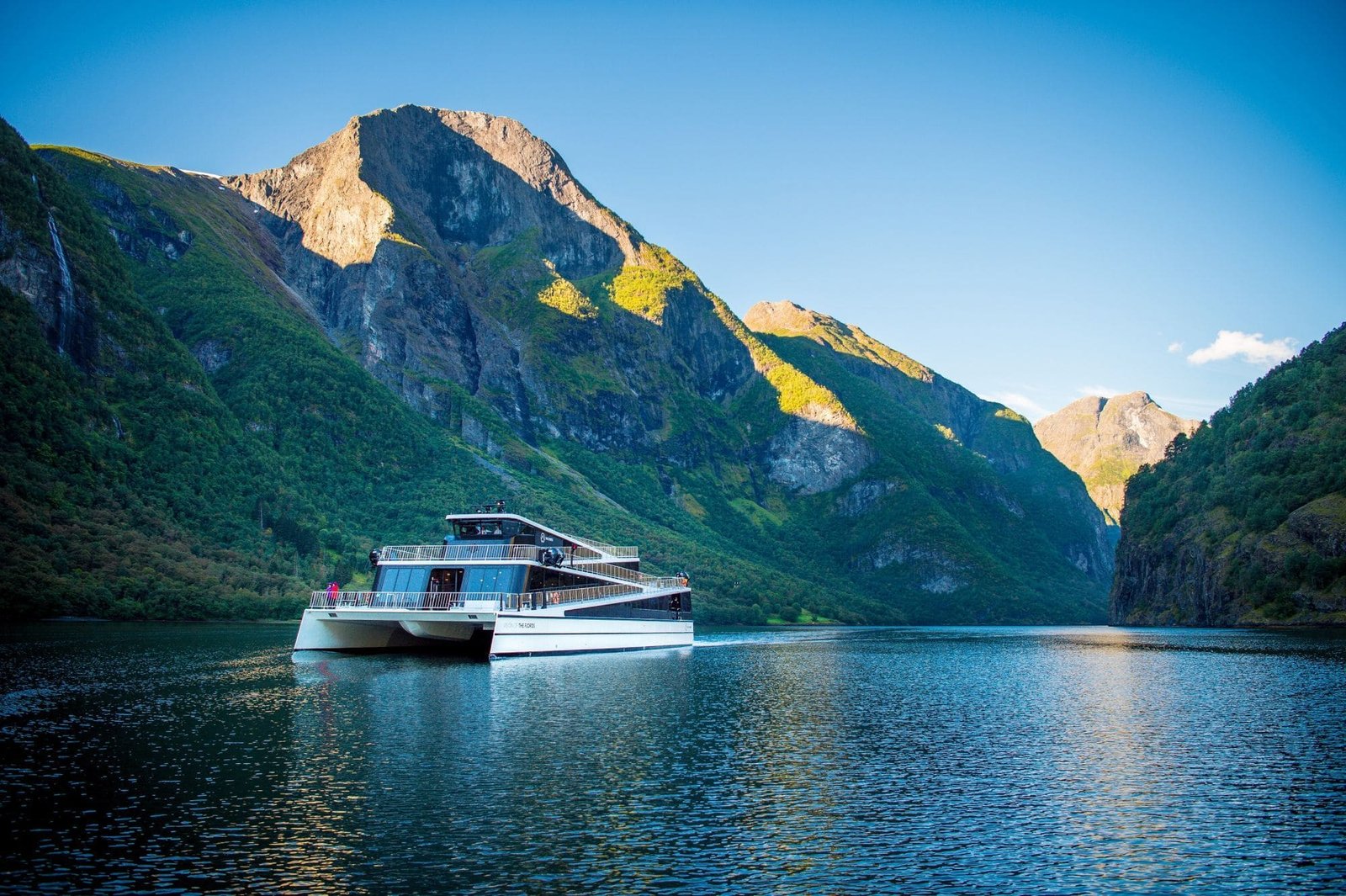
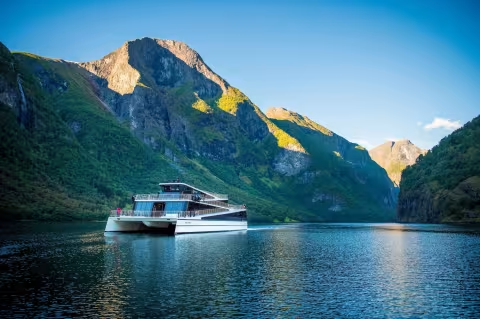
- Fjord cruise from Flåm to Gudvangen (a two-hour electric catamaran ride through the UNESCO-listed Nærøyfjord)
- Bus from Gudvangen to Voss
- Train from Voss to Bergen
RECOMMENDED: Read our full guide to Norway in a Nutshell
The fjord cruise is the centrepiece. The Nærøyfjord is narrow, steep-sided, and genuinely dramatic. The boats are fully electric, which means they're almost silent on the water. You hear the waterfalls before you see them.
Doing the full route in a single day is doable but exhausting, especially with luggage. A much better approach is to spend a night in Flåm. It's a small village, but it lets you take the fjord cruise at a relaxed pace and you won't arrive in Bergen feeling like you've been on the move for 14 hours straight. A luggage transfer service (porterservice.no) can move your bags between cities if you want to travel lighter.
Booking: You can buy the full package at fjordtours.com, or book each leg separately through Vy (trains), Norway's Best (fjord cruise), and Vy Buss or Nor-Way (bus). Booking individually saves roughly 400-700 NOK per person, but it takes more planning and you need to match the timetables yourself.
See our full guide to Norway in a Nutshell
Norway in a Nutshell - Oslo to Bergen: Make it a 2 day journey
By Plane
If you just need to get there, flying is the fastest option. SAS, Norwegian, and Widerøe all operate the Oslo Gardermoen (OSL) to Bergen Flesland (BGO) route, with roughly 15 departures per day. Flight time is under an hour.
But city-to-city time is what actually matters, and that's closer to 3.5 hours: getting to Oslo Airport (Flytoget express train from Oslo S, 20 minutes), security and boarding, the flight itself, and then the Bybanen light rail from Bergen Airport to the city centre (45 minutes to Byparken, the final stop near Bryggen).
The Bergen end is the slow part. The Bybanen is cheap (around 50 NOK) and runs every 5-10 minutes, but 45 minutes on a tram after a flight feels long. The Flybussen airport bus is faster at 20-30 minutes and costs around 150 NOK.
Flights can often be cheaper than the train if you're booking late. If you've already seen the fjords and just need to move between cities, flying is perfectly sensible.
Driving
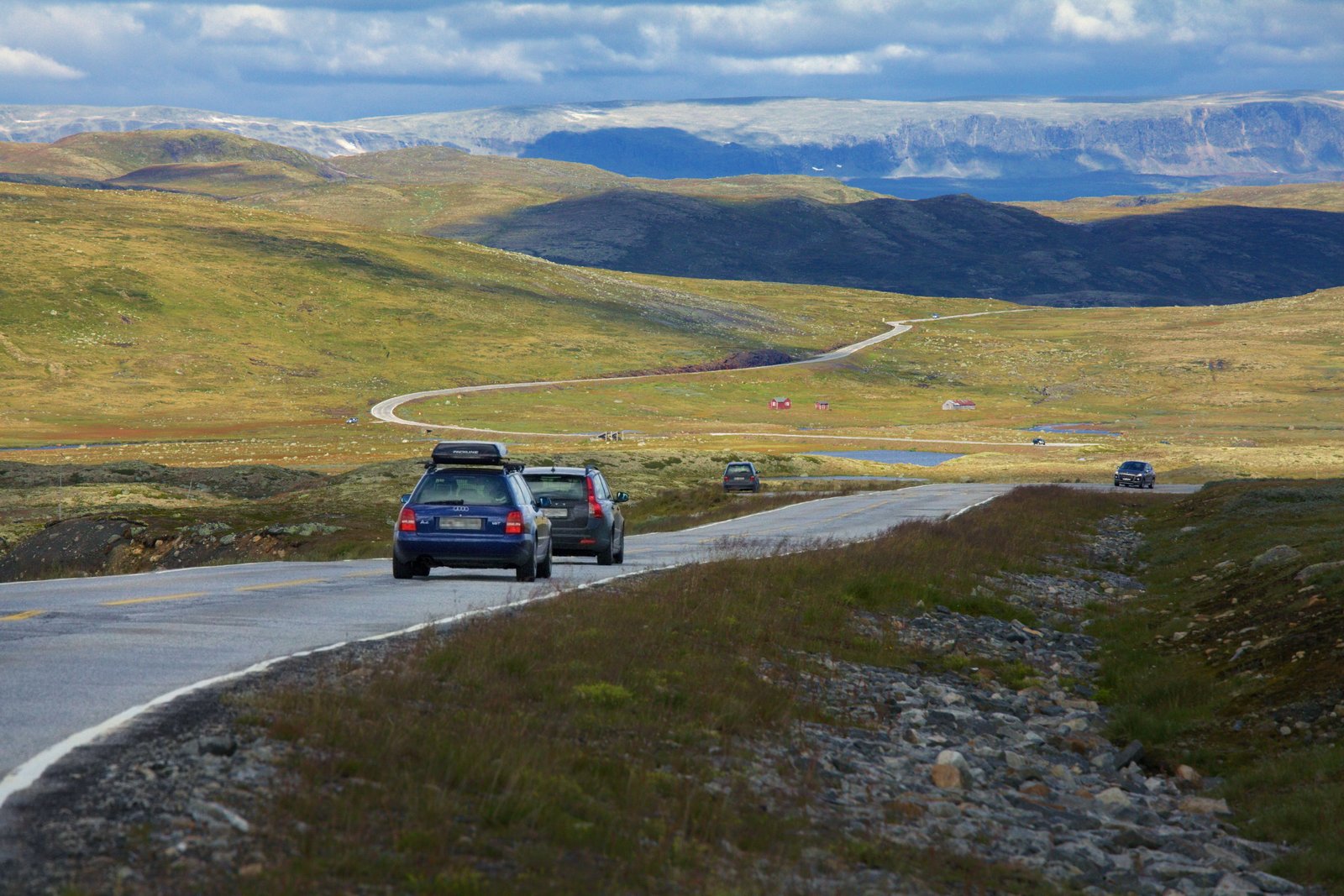
Driving only makes sense if you plan to explore outside the cities. If your trip includes something like Trolltunga, Vøringsfossen, or the Hardangervidda plateau, a car gives you the freedom to stop where and when you want. If you're just going from city centre to city centre, don't bother. Parking in Bergen is expensive, limited, and frustrating.
There are three main routes, each with a different character.
Route 1: Rv7 via Hardangervidda (the scenic route)
This is the most popular choice with tourists for good reason. It crosses the vast Hardangervidda plateau at over 1,000 metres, then drops down through Eidfjord and across the Hardanger Bridge (one of the world's longest suspension bridges) before winding into Bergen. The showstopper stop is Vøringsfossen, a 182-metre waterfall that plunges into the Måbødalen valley. Get there before midday to avoid the tour bus crowds. The viewing platform is free.
Route 2: E16 via Filefjell and the Lærdal Tunnel (the reliable route)
The E16 passes through the Lærdal Tunnel, the longest road tunnel in the world at 24.5 km. The tunnel has illuminated blue caverns at intervals to keep drivers alert. This route also passes Borgund Stave Church, one of the best-preserved medieval stave churches in Norway, which is worth a 45-minute stop.
Starting sometime in 2026, the Lærdal Tunnel is undergoing a multi-year renovation that closes it completely between 18:00 and 06:00 every night. If you're driving this route, you must pass through the tunnel during daytime hours or use alternative mountain roads that are slower and often closed in winter. Check road conditions at vegvesen.no before driving.
Route 3: E134 via Haukeli (the southern route)
Goes through Telemark and across the Haukeli mountains. It's slightly longer than the other two and less commonly used by tourists, but it passes through some striking terrain and connects to Odda if you're heading for Trolltunga.
For all routes: Budget roughly 300-400 NOK in tolls one way. The toll system is automatic (registered to your rental car or via autopass.no), so you won't see any toll booths. Petrol stations are well spaced but can be 30-40 minutes apart on mountain stretches, so don't let the tank get too low. One-way car rental fees between Oslo and Bergen are steep.
The Bus
The bus exists primarily as a backup plan. Vy Buss and Nor-Way Bussekspress (the Haukeliekspressen route via Seljestad) operate between the two cities, but the journey takes 10-13 hours depending on the route and stops. That's a long time in a coach seat.
The main reason to consider the bus: it usually has availability when summer trains are sold out, and last-minute fares are lower than train or flight. If you're stuck and just need to get there, the bus will do it.
The Haukeliekspressen (NW180) goes via the Haukeli mountains and requires a change at Seljestad for the connection to Bergen. The Vy express routes operate more directly.
What to Actually Book
For most visitors, the answer is the train in one direction and a flight the other. Take the Bergen Railway during the day so you get the full experience of the Hardangervidda crossing. If you have an extra day and want the fjords, swap the direct train for the Norway in a Nutshell route, ideally with an overnight in Flåm.
Whatever you choose, book the train early. Those "Minipris" low fares disappear fast, and paying full price for a flexible ticket feels like a waste.