
By: Chris ⎜ Last updated



Norway's two biggest holidays are intensely domestic. Christmas pulls families behind closed doors for days. Easter sends the entire country to mountain cabins. In both cases, the cities go quiet and the normal rhythm of shops, restaurants, and public transport scales back hard.
For visitors, that's either a problem or a selling point. Get caught unprepared and you'll spend Christmas Day wandering empty streets looking for an open restaurant. Plan around it and you'll have Oslo or Bergen almost to yourself, with shorter museum queues.
This article covers what Christmas and Easter look like on the ground in Oslo, Bergen and other cities, with practical advice for making the most of both. For the full breakdown of shop closures, alcohol cutoff times, and public holiday dates, read our shopping hours and public holidays guide. If you're heading to northern Norway for the northern lights or Arctic activities, that's a fundamentally different trip and deserves its own planning.
Shopping hours and public holidays in Norway
Early December
The weeks before Christmas are when Oslo and Bergen are at their most atmospheric. Christas markets are running, restaurants are fully operational, shops keep normal hours, and the cities are lit up.
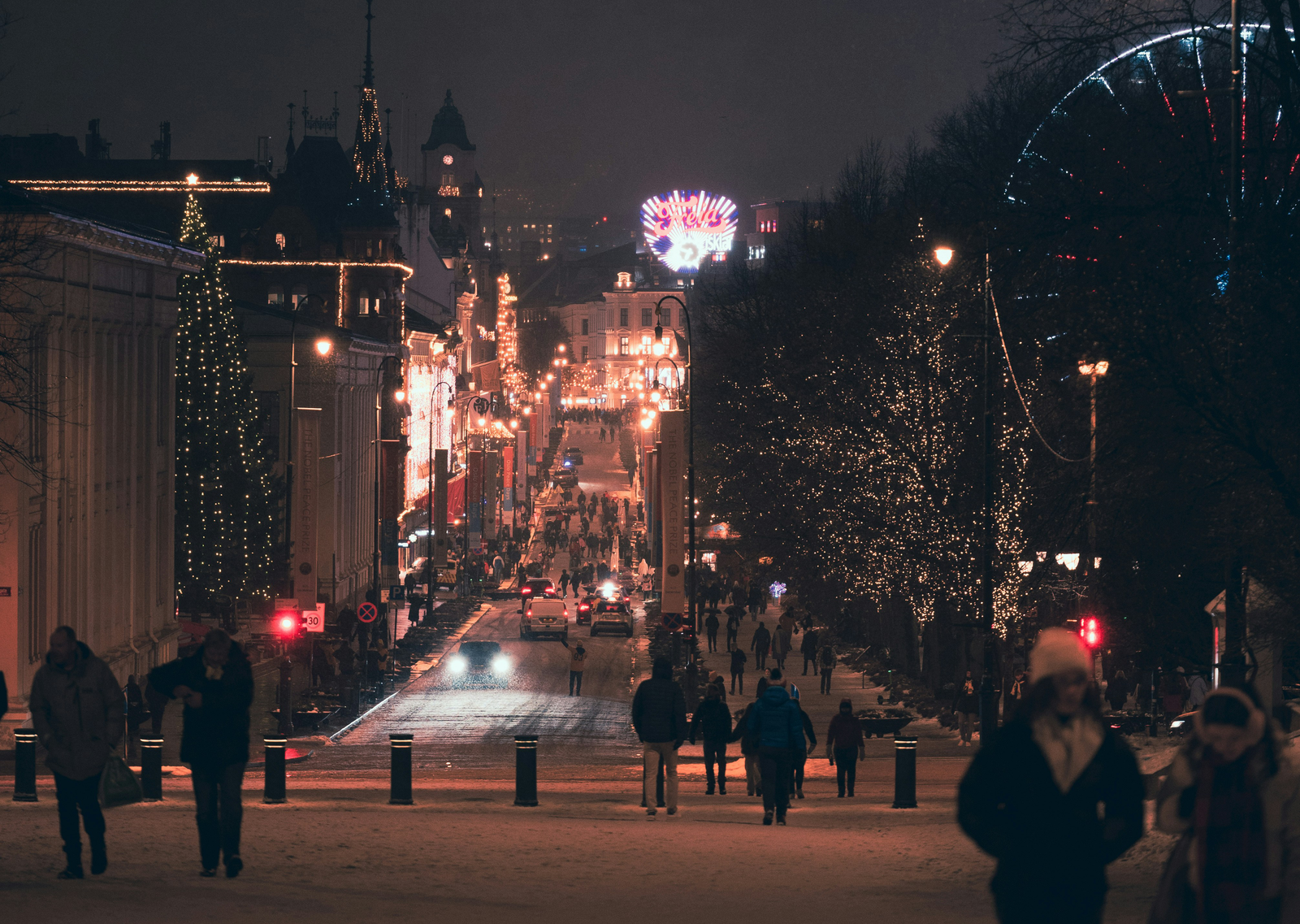
In Oslo, Jul i Vinterland takes over Spikersuppa, the park between Karl Johans gate and Stortingsgata. It opens in early November and runs through early January. There's a free ice-skating rink, a Ferris wheel, food stalls selling gløgg and fresh doughnuts, and a sprawling Christmas market. It gets crowded on weekends, but weekday evenings are more relaxed.
The Norsk Folkemuseum on Bygdøy hosts a Christmas fair over two specific weekends in early December. The open-air museum decorates its historic buildings for the holidays, spanning everything from 18th-century farmhouses to 1950s apartments, and more than 100 market stalls sell crafts, food, and gifts. Buy tickets online in advance to skip the queue at the gate.
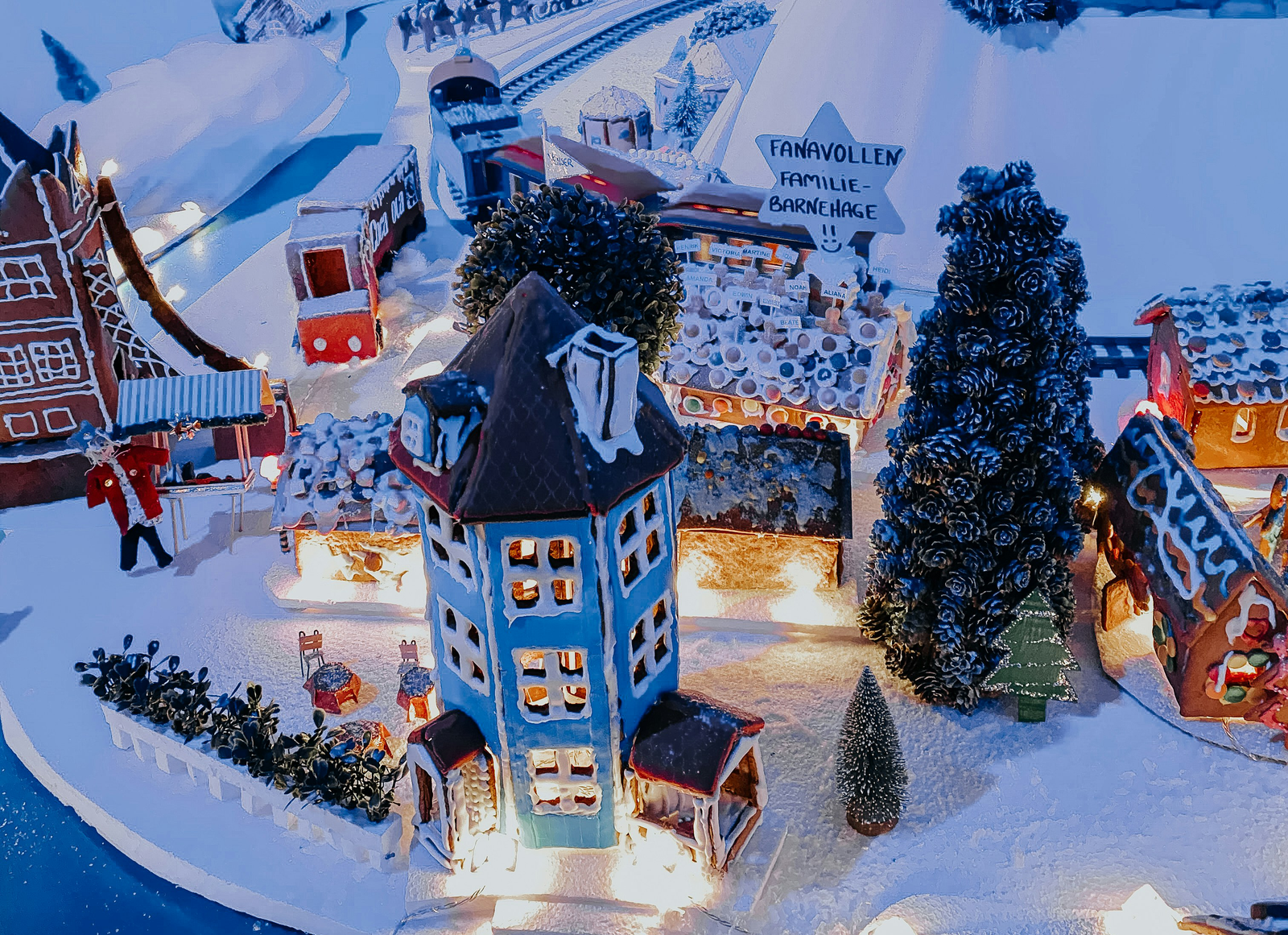
In Bergen, the Festplassen Christmas market fills the square by Lille Lungegårdsvannet from late November through December 22. Over 80 stalls, a Ferris wheel, and plenty of food vendors serving everything from reindeer sausage to gløgg. Bergen's real standout, though, is Pepperkakebyen, the world's largest gingerbread city. Every year, kindergartens, schools, businesses, and thousands of volunteers build roughly 2,000 miniature gingerbread structures. It's displayed at byROMMET on Kong Oscars gate 24-26, running from mid-November through early January. The room is lit in deep blue to mimic polar night, with miniature trains winding between the buildings. Worth noting: because Pepperkakebyen runs well past Christmas, it's one of the few festive attractions still open during the holiday week itself.
One practical detail regarding eating out: julebord (Christmas party) season. From November through mid-December, every restaurant in Oslo and Bergen is booked with corporate Christmas parties. Norwegians take these seriously. Expect large groups in formal attire, a lot of aquavit, and full dining rooms. If you're visiting during this period, book dinner reservations well ahead. You'll struggle to walk in anywhere decent on a Friday or Saturday night.
The three Sundays before Christmas Eve are the only Sundays of the year when regular shops open, typically 14:00 to 20:00. Outside of those, Sunday shopping follows the usual restrictions.
December daylight is short. You'll get roughly six hours in southern Norway, with sunrise after 09:00 and sunset before 16:00, and even less in the north. Oslo hovers around freezing, and snow is possible but far from guaranteed. Bergen is milder, usually 2-4°C, but it rains on roughly two out of every three December days. Bring proper waterproof gear for Bergen. In Oslo, icy pavements are common. Slip-on crampons (brodder), sold at pharmacies and outdoor shops, are worth the small investment unless you have acquired the skill of walking on ice.
Christmas Week
December 23 is Lillejulaften, Little Christmas Eve. Many families eat risengrynsgrøt (sweet rice porridge with a hidden almond, the finder gets a marzipan pig) and do last-minute preparations. The city is still functioning, the pace drops noticeably, but shopping malls are full of people scrambling for last minute gifts and stocking up for the holidays.
Christmas Eve is the main event. This is when the big dinner happens: ribbe (roast pork belly with crackling) in eastern Norway, pinnekjøtt (salt-cured lamb ribs steamed over birch branches) in the west. Gifts are exchanged around the tree after dinner. If you arrive on December 25 expecting a celebratory atmosphere, you'll find a country that already celebrated yesterday, and is now completely dead, on the sofa in wool socks.
December 25 and 26 are the hardest stretch for visitors. Almost everything closes. Most restaurants shut their doors, even in Oslo and Bergen. Hotels stay open, but their in-house restaurants may offer limited set menus or close entirely. Check with your hotel in advance if you're counting on eating there.
If you're self-catering, stock up on groceries before the afternoon of December 23. You won't get another proper shopping window until December 27 at the earliest, and even then hours are reduced.
Read more in our holiday shopping hours guide.
Romjul, the days between Christmas and New Year (roughly December 27 through 30), is when things gradually resurface. Some museums reopen with reduced hours. A handful of restaurants come back online. All shops are open. The word romjul translates loosely to "space around Christmas," and it describes the mood perfectly. The city is quiet, unhurried, and a little sleepy.
Some things work regardless of the holiday calendar. In Oslo, urban saunas along the Oslofjord stay open through the break. SALT, KOK, and Oslo Badstuforening all run sessions where you alternate between a wood-fired sauna and the freezing fjord. Book a private session or a regular slot well ahead; these fill up fast during the holidays.
Guide to the best fjord saunas in Oslo
Korketrekkeren is Oslo's toboggan run and it's open all winter. Take the T-bane (metro) to Frognerseteren, the last stop on line 1, rent a sled at the top, and ride 2km downhill through the forest. Then take the metro back up and do it again. It's free apart from the sled rental, and it's one of the best things to do in Oslo when everything else is closed.
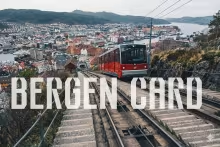
In Bergen, Fløibanen keeps running through the holidays and Pepperkakebyen stays open into January.
Vy trains and regional buses shift to reduced holiday timetables from Christmas Eve onward. Frequencies drop significantly, sometimes to one or two services per day on some routes. Domestic flights thin out too, especially on December 24-25 and January 1. Don't assume normal schedules. Check vy.no and the relevant transit authority before you head to the station.
New Year's Eve
The cities come back to life for one night. Restaurants that open for New Year's Eve typically offer fixed multi-course menus at premium prices, and they book up weeks in advance. If you want to eat out on December 31, start looking early.
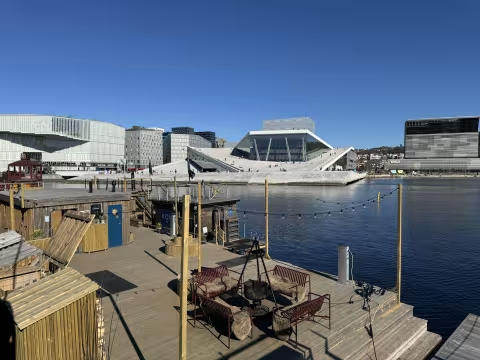
Oslo has no official city fireworks display. The municipality dropped them in 2022. What you get instead is thousands of private fireworks launched from suburbs, hillsides, and neighbourhoods outside the city centre (private fireworks are banned in the city centre). The effect, seen from an elevated vantage point, is a chaotic 360-degree show that fills the sky for a solid 20 minutes. Head for the sloping roof of the Oslo Opera House (open to walk on), the grounds of Akershus Fortress, or the Aker Brygge waterfront, and look outward.
Bergen and several other cities still stages a public fireworks display at midnight, visible from across the city centre. The best spots are the top of Fløyen (the funicular runs late on NYE) or along Bryggen, where the fireworks reflect off the harbour.
New Year's Day is a full red day. Everything closes again. One more day to plan around before normal service resumes.
Easter
Easter catches visitors off guard because of its scale. Four out of five days are public holidays where all shops are closed: Maundy Thursday, Good Friday, Easter Sunday, and Easter Monday. Easter Saturday is the sole non-holiday, and shops still close early.
The upside: Oslo and Bergen empty out. Norwegians pack their cars with skis, oranges, and Kvikk Lunsj chocolate bars and head for mountain cabins. Walk through Grünerløkka or along Bryggen on Good Friday and you'll notice the difference immediately. The cities feel spacious in a way they never do during the rest of the year. Museums are quieter. Restaurant bookings are easier for the places that stay open. If you've been meaning to visit MUNCH or the National Museum without fighting crowds, Easter is your window.
Most major museums in both cities keep holiday hours through the break. Fjord tours from Bergen run as normal. Fløibanen and the Ulriken cable car both operate.
Easter is a moving target. It can fall anywhere from late March to mid-April, which means the weather and daylight vary considerably. A late-March Easter might still feel like deep winter, with ice on the pavements and temperatures below freezing. A mid-April Easter can bring warm afternoons, long evenings, and the first outdoor terrace season at places like Aker Brygge.
Vy trains run holiday timetables during Easter, and Bane NOR sometimes uses the quiet period to schedule engineering works on major lines. That means buses often replacing train. If planning on catching a train, check vy.no before you travel. A replacement bus can add significant time, at significantly worse comfort, to what you thought was a straightforward rail journey.
For a completely different Easter experience: the Inferno Metal Festival takes over Rockefeller and John Dee in Oslo over the Easter weekend. It's one of the largest extreme metal events in northern Europe, drawing fans from across the continent. Thousands of people dressed entirely in black wandering the sunny, deserted Easter streets of Oslo is a contrast that only Norway could produce.
When to Visit
Early December (before around December 20) is the best window for Christmas atmosphere with full access to shops, restaurants, and markets. Book dinners early because of "julebord" season.
Christmas week (December 24 through January 1) suits visitors who want quiet cities and don't mind planning around closures. The romjul days from December 27 onward are when things start reopening. Stock up on food before December 23.
Easter works well for city visitors willing to handle the red days. Emptier museums, longer daylight than December, and cultural experiences you won't get at any other time of year.