
By: Chris ⎜ Last updated

Vinmonopolet (Polet for short) is the only place in Norway where you can buy wine, spirits, or any beer above 4.75% ABV. It's a state-run monopoly, the sole retail chain in the country licensed to sell strong alcohol, and it has operated that way since 1922. Supermarkets carry beer and cider under the 4.75% threshold, but everything else, every bottle of wine, whisky and craft beer above standard strength, goes through Polet.
The Norwegian liquor laws are highly restrictive in terms of when and where you can shop. But the quality of the retail experience is a different story. Staff are product specialists with no sales targets and no commissions. The selection runs to around 40,000 products from over 100 countries. And the pricing model often makes mid-range and premium wine better value here than in countries where alcohol flows more freely.
How to shop
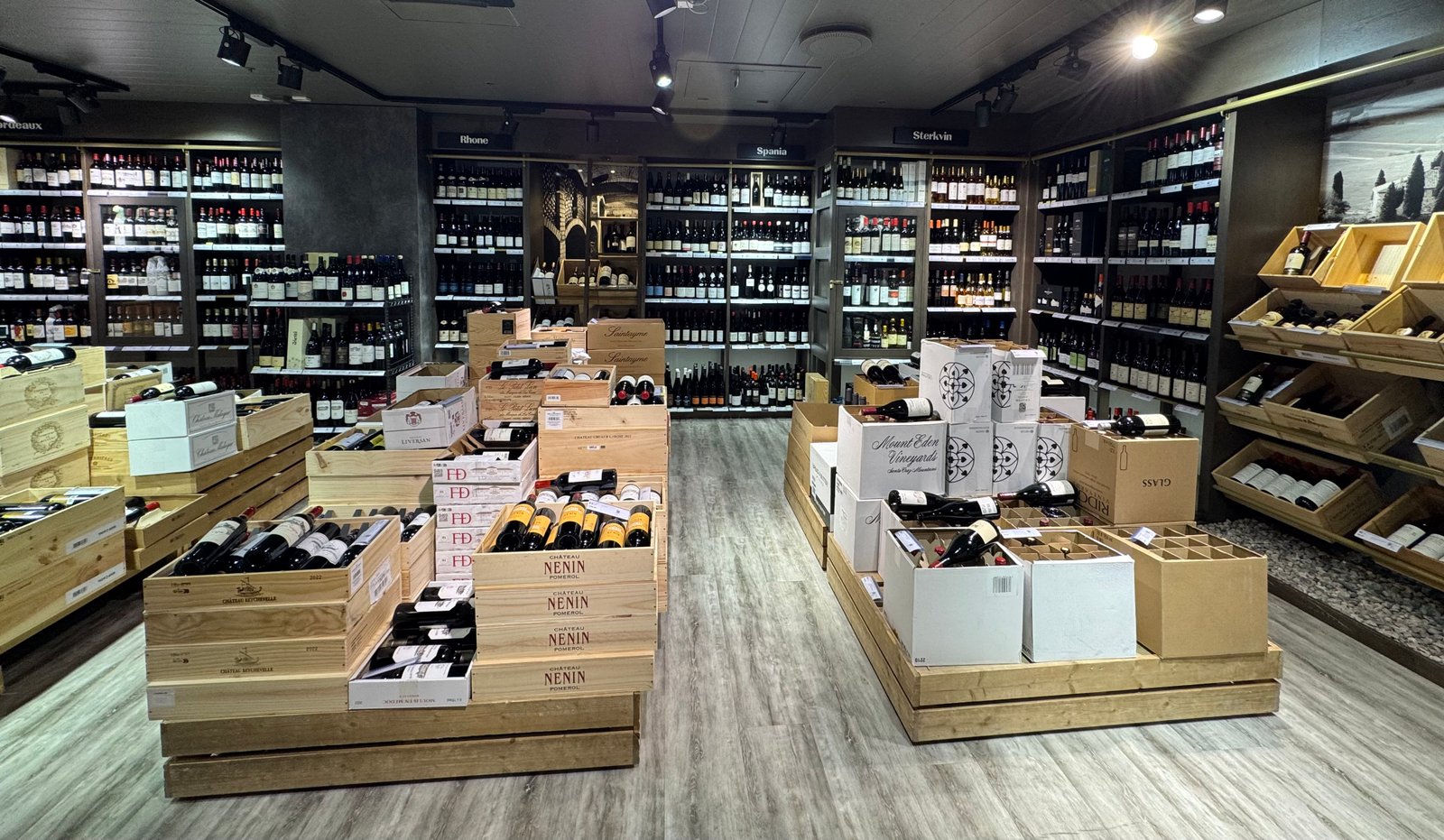
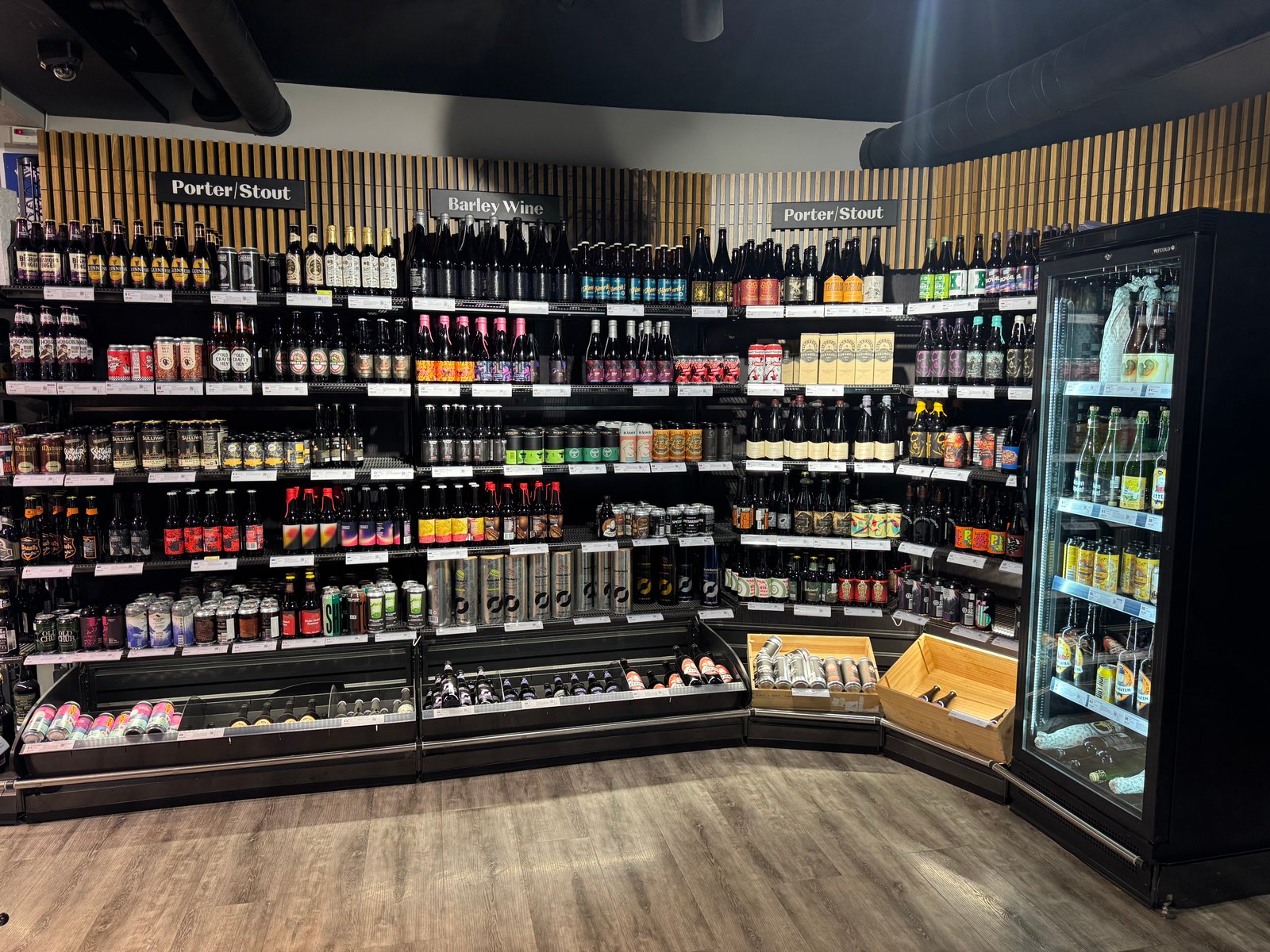
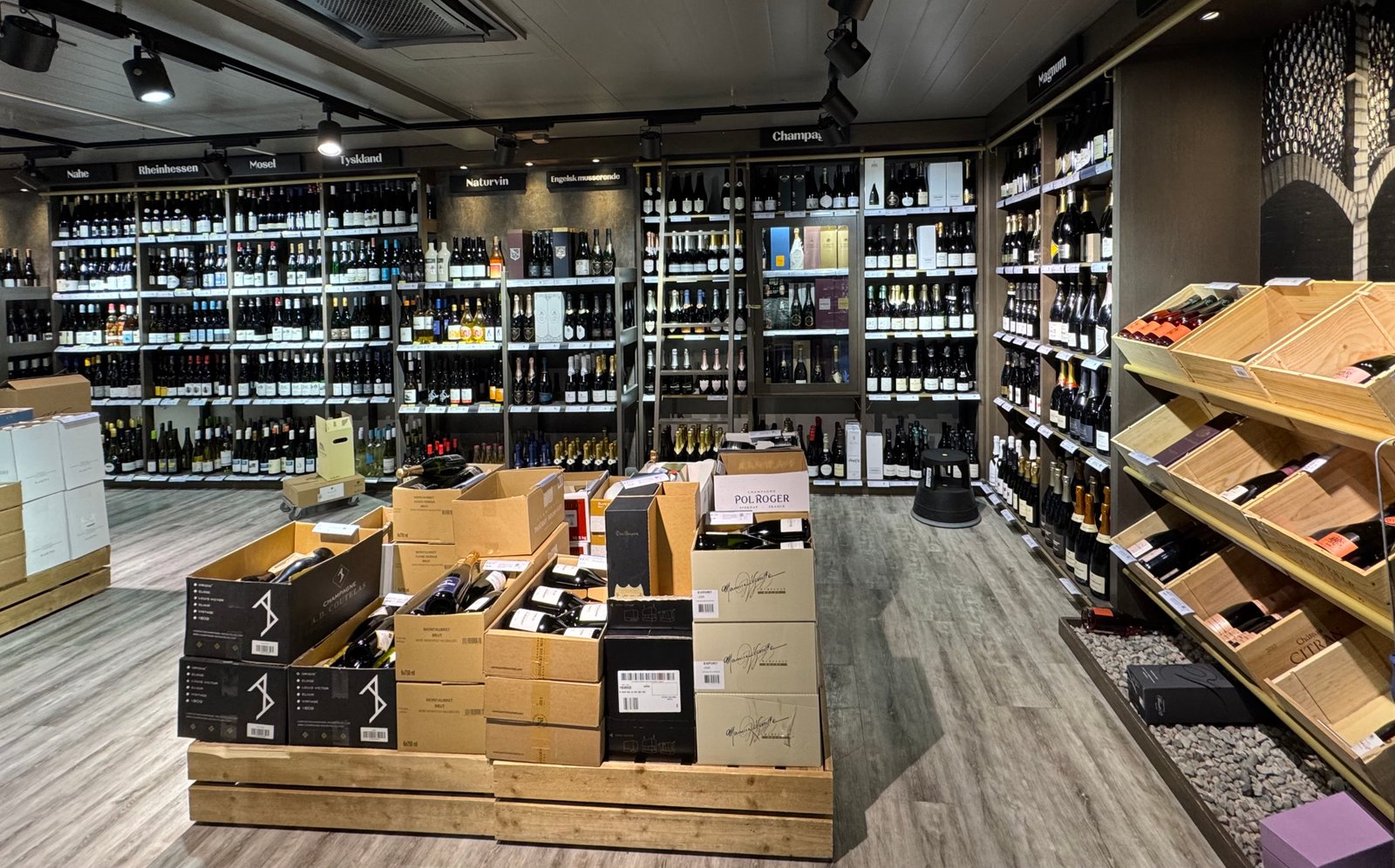
Walk in, browse the shelves, and pick up whatever you want. Vinmonopolet stores are self-service, laid out more like a well-organised bookshop than a traditional liquor store.
Wine is arranged by country, region or type. Beer is grouped by style. Spirits are sorted by category. The shelf labels carry more information than most retailers bother with: alongside the price and product name, look for the taste notes, small visual diagrams that map the flavour profile of each product. They show sweetness, acidity, bitterness, and body at a glance, and they're surprisingly useful when you're staring at an unfamiliar wall of bottles. Sustainability symbols flag organic, vegan, and environmentally friendly packaging options.
Staff have no reason to steer you toward anything expensive. There are no commissions, no volume targets, no end-of-month sales pushes. Ask for a recommendation and you'll get an honest one based on your budget and what you actually want to drink. This is one of very few retail environments in the world where that's reliably the case.
Store size and selection
Vinmonopolet operates over 350 stores across Norway, divided into six categories based on local demand. The smallest Category 1 stores in rural municipalities carry a limited core selection, enough for the essentials. Category 4 and 5 stores in larger towns stock considerably more. The biggest Category 6 locations in major cities carry thousands of products across wine, beer, and spirits.
Beyond category size, each store also has a demand profile that skews its selection toward either "light and bright" or "red and dark" products based on what the local customer base actually buys. Two stores in the same category can carry noticeably different selections because of this.
Every store maintains two layers of inventory: a fixed selection set centrally to ensure staple products are available nationwide, and a local selection chosen by the store manager. A Vinmonopolet in a wine-drinking neighbourhood will lean its local picks accordingly.
The central catalogue holds roughly 40,000 products. Any item from that catalogue can be ordered to any store for pickup, with no delivery fee, regardless of its category. A small-town Polet won't have an obscure Barolo on the shelf, but you can order one and collect it within about five working days.
Specialty stores
Beyond the standard category system, Vinmonopolet runs a network of specialty branches (spesialbutikker) with expanded selections in wine, beer, or spirits. These stores are staffed by people with advanced sommelier or cicerone qualifications and receive rare allocations and limited releases that never reach standard shelves.
The specialty network has been expanding in recent years. There are now around a dozen wine specialty stores spread across the country, from Oslo to Tromsø, plus separate networks of beer and spirits specialists. Aker Brygge in Oslo holds specialty status across all categories and is the most comprehensive alcohol retail location in the Nordic region. If you're visiting Oslo and want to browse the biggest selection, that's the one.
The full current list of specialty stores is maintained on vinmonopolet.no.
The app
Download the Vinmonopolet app before your trip. It works as a product search engine, stock checker, and shopping tool in one.
You can search the full 40,000-product catalogue, check real-time stock at any specific store, and scan the barcode of any bottle on the shelf to pull up tasting notes, production details, and food pairing suggestions. The app lets you save products and add your own tasting notes, which is useful if you're visiting several stores over a trip and want to track what you've tried. There's also a drink selector tool that suggests products based on what food you're cooking.
The app is the fastest way to check store hours, find your nearest branch, and confirm a product is actually in stock before you make the trip.
Why the wine is better value than you'd expect
Norwegian alcohol is expensive, or more correctly put, "cheap" alcohol is expensive in Norway.
Every bottle sold in Norway carries a flat tax per litre based on alcohol content. For wine and beer, the rate is 5.41 NOK per litre per percentage point of ABV. A standard 0.75-litre bottle of 13% wine picks up roughly 53 NOK in alcohol tax before Vinmonopolet adds a single krone. For spirits the rate is 9.23 NOK, which means a bottle of 40% vodka carries over 275 NOK in alcohol tax alone.
Vinmonopolet's markup sits on top of that: a flat fee of about 10.80 NOK per litre, plus 21% of the wholesale price, minus a degressive reduction that kicks in once the wholesale cost passes roughly 134 NOK. The higher the wholesale price climbs, the lower the markup in %. And the total markup on any single bottle is capped at 250 NOK, regardless of what the wine cost at wholesale. A private wine merchant in London buying a bottle for 500 NOK at wholesale might mark it up 40–50%. Vinmonopolet can't take more than 21% on that same bottle. On a 2,000 NOK wholesale bottle, still maximum 250 NOK.
Then 25% VAT goes on top of the total of the wholesale price, alcohol tax, and markup combined.
On a cheap bottle retailing for 130 NOK, the tax, markup, and VAT together eat more than half the price. The wine inside accounts for very little of what you paid. But the alcohol tax is a fixed amount that doesn't change as the wine gets better. The markup barely grows thanks to the cap. Only the VAT scales proportionally. So a bottle at 300-500 NOK would often would cost more at a retailer in London or New York, and above 500 NOK that gap keeps growing.
Hours and holiday closures
Standard hours across most stores: 10:00 to 18:00 on weekdays and 10:00 to 16:00 on Saturdays. Some smaller branches close earlier on Saturdays. Every store is closed on Sundays.
Holiday closures are where planning really is important. All stores close on public holidays. The critical ones to watch:
Easter is the biggest disruption. Stores close on Maundy Thursday, Good Friday, and Easter Monday, though they do open with reduced hours on the Saturday before Easter Sunday. Buy what you need by Wednesday at the latest.
May clusters several holidays close together: 1st May (Labour Day), Ascension Day (a Thursday, 40 days after Easter), 17th May (Constitution Day), and Whit Monday. When these fall adjacent to weekends, you can hit stretches of several days without access.
Christmas brings reduced hours in the lead-up and a full closure from Christmas Eve through Boxing Day.
Check the Vinmonopolet website or app for adjusted hours during any holiday period. The day before a multi-day closure is always busy.
Special releases
Twelve times a year, Vinmonopolet launches limited allocations of rare wines, spirits, and beers in events called Spesialslipp (Special release). These are themed drops, sometimes focused on a specific region like Burgundy, sometimes on a category like aged whisky or craft beer. Roughly six launches per year are wine, with the rest split between beer and spirits.
New products hit the physical specialty stores first on the launch day. The remaining stock goes live on the web store the following day. A digital queue manages the online traffic. Participating in the online queue requires a profile verified through BankID (Norway's digital ID system), which means tourists can't access the online releases. But the in-store launches are open to anyone. If your trip happens to coincide with a Spesialslipp and you're near a specialty store, check the release calendar on vinmonopolet.no.
Bringing ID
Vinmonopolet enforces a strict policy (according to Norwegian legislation) of asking for identification from anyone who appears to be under 25, and the list of accepted documents is narrow.
A physical passport is accepted everywhere. EU/EEA national identity cards work. Physical driving licences from EU/EEA countries are technically valid but can be refused at the cashier's discretion if they're unfamiliar with the format. Foreign digital driving licences, photos of passports on your phone, student IDs, and non-Norwegian digital wallets are all rejected. The system requires physical, government-issued documents.
The legal age is 18 for anything under 22% ABV (beer, cider, wine) and 20 for anything at or above 22% (spirits, strong liqueurs).
Ordering wine
You can order wine from the entire selection delivered to any store free of charge. You can also order with delivery but that requires a Norwegian phone number and address.
In-store pickup is free. Items ordered from the central warehouse take up to five working days.
Postal delivery to a local pickup point starts at about 100 NOK. If your postal code is more than 40 km from the nearest Vinmonopolet, the state covers the freight cost and you only pay a nominal packaging fee. Packages can only be handed over during Vinmonopolet's operating hours.
Home delivery starts at around 200 NOK and runs on weekdays between 09:00 and 18:00. The delivery driver will ask for ID and is legally required to refuse the handover if the recipient appears intoxicated.
Norwegian alcohol to try
Norwegian beer
Pilsner still dominates everyday drinking, but the craft beer scene has grown fast enough that Vinmonopolet now stocks hundreds of Norwegian craft beers and runs dedicated specialty stores for the category.
Salikatt from Stavanger is producing some of the best IPAs and NEIPAs in the country right now. The brewery focuses on mastering a handful of hop-forward styles rather than spreading across everything, and their beers appear regularly at the specialty stores. Lervig, also from Stavanger, has built international recognition for a wide-ranging catalogue covering everything from accessible pale ales, IPAs to heavy barrel-aged stouts. Their barrel aged stouts (Rackhouse series) are particularly worth chasing down. Amundsen in Oslo is known for rich dessert stouts. Nøgne Ø in Grimstad is the country's largest craft producer, but has recently become more mainstream and less innovative. 7 Fjell in Bergen draws on British brewing traditions and is the most prominent craft name in western Norway.
In Flåm, Ægir Bryggeri brews in a purpose-built Viking longhouse and is worth the stop if you're passing through on the Flåm Railway or driving the fjord route. There are better options at Vinmonopolet though.
Look for juleøl (Christmas beer) from late October. Every major Norwegian brewery releases several seasonal dark ales (traditionally bock ales), although recently the definition of juleøl has been expanded to include IPAs, stouts and sour ales. Every newspaper has juleøl reviews, and the debates over which one is best are a national pastime.
Aquavit
Aquavit (akevitt) is Norway's national spirit, distilled from potato or grain and flavoured primarily with caraway, though dill, fennel, and other botanicals vary between producers. It appears at Christmas dinners, and whenever something feels like an occasion.
Linie Aquavit is the most internationally known brand. Each batch crosses the equator twice in oak sherry casks aboard a ship before bottling, a tradition dating to the 1800s when the journey's movement and temperature shifts were found to improve the spirit. A side-by-side tasting with an unmatured aquavit makes the difference clear.
There are better aquavits available, but you need to know what to look for. The Linie Aquavit is a safe bet.
Beyond the major brands, Vinmonopolet carries small-batch aquavits from regional distillers that make excellent, distinctly Norwegian gifts. The staff at any store can recommend options in your price range.
Norway's craft spirits scene extends well beyond aquavit. Bareksten from Bergen produces internationally awarded gin using Nordic botanicals. Norwegian fruit brandies and apple spirits from smaller producers offer something you won't find outside the country.
Apple cider
Hardanger cider is another strong option, some of the best being sweet dessert wines such as Egge Gård Iseple and Alde Issider. The Hardangerfjord region is Norway's apple-growing heartland, and its ciders carry a protected geographical indication. Producers like Balholm make refined, well-travelled ciders in a range of styles. They're lower in alcohol than wine, pack well, and represent Norwegian agriculture at its best.