
By: Chris ⎜ Last updated
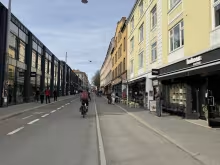
Three corporate groups control roughly 96% of grocery retail in Norway. NorgesGruppen runs Kiwi, Meny, Spar, and Joker. Reitan Group owns Rema 1000. Coop Norge operates Coop Extra, Coop Mega, and Coop Obs. There's no Aldi, no Lidl, no Walmart, no foreign competition at all. This is why the same handful of chains appear in every town from Oslo to Hammerfest, and why nobody's racing to undercut anybody on price.
The three discount chains
Kiwi, Rema 1000, and Coop Extra are the stores where most Norwegians do most of their shopping. They're 10–20% cheaper than the full range supermarkets, they carry everything you need for day-to-day meals, and you're rarely more than a five-minute walk from one in any city.
The price differences between the three are marginal. Newspaper price comparisons run these tests regularly and the winner changes depending on the week and the basket. For visitors doing a few shops during a trip, go to whichever is closest.
All three chains carry budget store brands that are significantly cheaper than the name-brand equivalents sitting next to them on the shelf. Look for First Price at Kiwi (and other NorgesGruppen stores), Xtra at Coop, and Rema's own-label lines. The packaging is plain, the quality is perfectly fine for most items, and the savings are real.
Meny and Coop Mega - full range supermarkets
Meny and Mega is where you go when the discount chains don't have what you need. It's Norway's premium supermarkets, with staffed deli counters, proper fish counters, a wider cheese selection, imported ingredients, and specialty items you won't find at Kiwi or Rema.
If you're cooking a proper meal in your rental and want a specific cut of fish, a decent olive oil, or something beyond the standard Norwegian shelf selection, Meny or Coop Mega is the place. You'll pay more, but the range justifies it for those occasions. For everyday bread-and-cheese shopping, stick with the discount chains.
Coop Obs - the hypermarket
Coop Obs is Norway's closest thing to a hypermarket. There are only about 30 of them around the country, usually in suburban retail parks, and they combine a full grocery section with household goods and electronics. Not something most visitors will seek out, but if you happen to be near one and need to stock up a cabin kitchen from scratch, they're useful.
Opening hours
On weekdays, most supermarkets in cities open between 07:00 and 08:00 and stay open until 22:00 or 23:00. Some central Oslo locations push to midnight. You'll have no trouble finding an open store after a late flight.
Saturday hours vary more than you'd expect. In Oslo and Bergen, many Kiwi and Rema stores stay open until 21:00 or even 23:00, almost the same as weekdays. In smaller towns, closing times of 18:00 or 20:00 are more common. Check the specific store before assuming you can do a late Saturday shop outside the major cities.
Shopping hours and public holidays in Norway
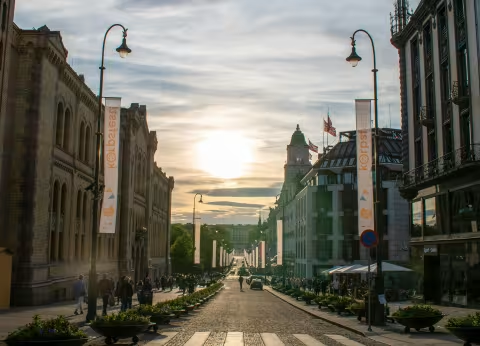
Sundays and the Brustad-bu
On Sundays, every large supermarket in Norway is closed. It's the law, but there is one exception.
The exception comes from a loophole named after Sylvia Brustad, the government minister who formalised it in the late 1990s. A grocery store can open on Sundays if its sales floor is 100 square metres or less. Norwegians call these shops Brustad-bu, "Brustad's shed," and the name has stuck.
Joker and Bunnpris are the chains you'll see open on Sundays most often. They're small-format grocers to begin with, so the size limit isn't a problem. Prices run about 10–20% higher than a weekday Rema 1000 shop, but these are still actual supermarkets with a reasonable range of the basics.
Narvesen, 7-Eleven, and gas stations like Circle K charge a genuine premium. The markup on most items hits 30–50%. That block of cheese you paid a reasonable price for at Kiwi on Friday will cost you nearly double at a 7-Eleven on Sunday. Use them for emergencies, not for stocking the fridge.
There's one major exception to the Sunday rule: December. From 1 December through 23 December, all grocery stores are allowed to open on Sundays. The Christmas shopping season overrides the weekly rhythm, and stores take full advantage.
Buying alcohol
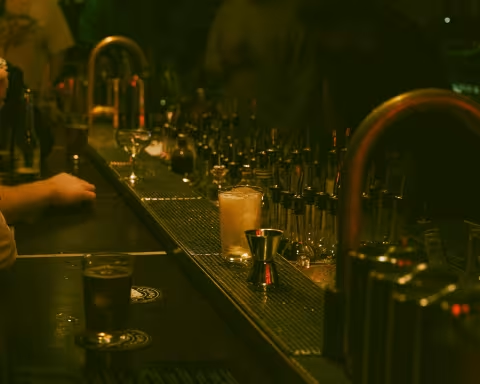
Alcohol is heavily regulated in Norway, and heavily taxed. You won't see alcohol advertising anywhere in Norway. No happy hour signs, no two-for-one promotions, no branded beer mats facing the customer. Bars can't even advertise drink specials. The promotional culture around alcohol that exists in most other European countries simply doesn't exist here.
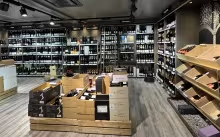
Supermarkets sell beer and cider up to 4.7% ABV. For wine, spirits, or anything stronger than 4.7%, you need Vinmonopolet, the state-run alcohol monopoly.
Note that alcohol sales does not follow the normal grocery store opening hours, and if you're too late on a Saturday evening you can wave goodbye to your weekend beer.
Read our full guide to Vinmonopolet liquor stores.
Read more about alcohol sales and opening hours in our shopping hours article.
Buying and drinking alcohol in Norway
What things cost
Norway is expensive across the board, and grocery prices are no exception. A weekly shop that costs €50 in Spain or Germany will cost you closer to €90 here.
Some categories sting more than others. Norway's growing season is short, most produce is imported, and it shows in the price. Meat and cheese are both expensive, due to very high import duties, and the cheese selection at discount stores is limited mostly to Norwegian varieties. Prepared foods and anything imported or specialty runs high.
On the other hand, bread is excellent and reasonably priced, especially the dense, dark whole-grain loaves that Norwegians eat daily. Potatoes, root vegetables, and eggs are among the better-value items. Canned and frozen fish are affordable and good quality. Fresh seafood, particularly salmon and cod, is outstanding and priced lower than you'd pay for equivalent quality in most other countries.
The single biggest way to save money is buying store brands. The gap between First Price or Xtra and the branded equivalent is often 30–50%, and for staples like butter, flour, pasta, rice, and canned tomatoes, the quality difference is negligible.
International grocery shops - cheaper fruits and vegetables
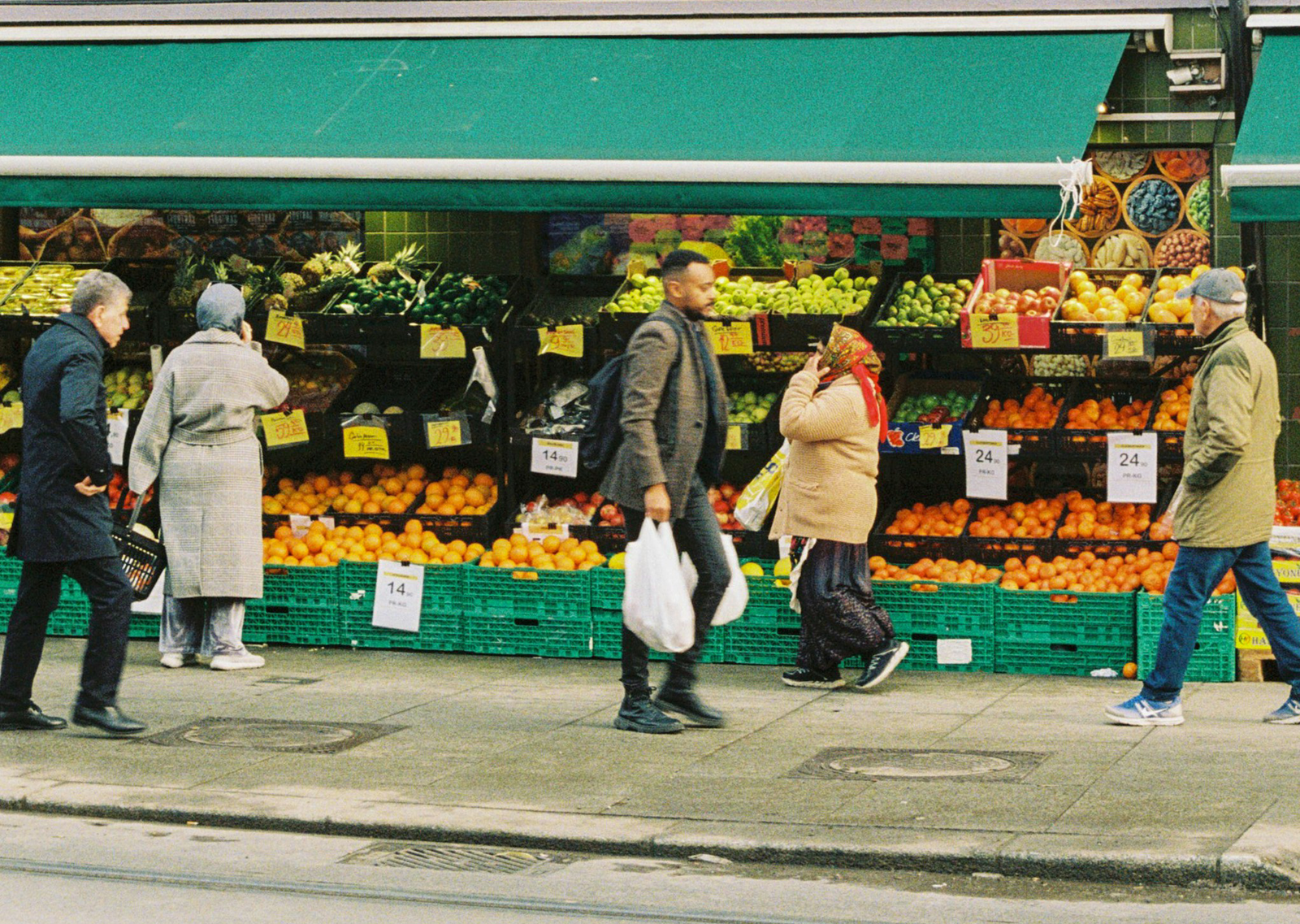
Every major Norwegian city has a cluster of independent international grocers. These are run by immigrant communities, they stock a different range from the chains, and they're consistently cheaper for certain categories.
Fresh produce is the main draw. The fruit and vegetables at these shops are often significantly cheaper than what the chains carry. Large sacks of rice, bulk spices, dried beans, and pulses are a fraction of chain-store prices.
In Oslo, the Grønland and Tøyen area has the biggest concentration. In Bergen, look around Strømgaten. Trondheim, Stavanger, and Tromsø all have their own clusters.
Personal care and household goods
For toiletries, cleaning products, and personal care, skip the supermarket. Two chains do this better and cheaper.
Normal is a Danish discount chain that has expanded across Norway over the past several years. Fixed low prices on branded personal care, shampoo, skincare, cleaning products, and makeup. The stores have a maze-like layout designed to make you browse, and prices are consistently lower than you'd pay for the same brands at Kiwi or Rema. Most Norwegian cities now have at least one.
Europris is Norway's discount variety store, roughly comparable to a dollar store but with better quality and a wider range. Household goods, cleaning supplies, seasonal items, storage, candles, snacks, pet supplies, and basic personal care. Over 280 stores across the country, often in suburban locations or retail parks. For anything you need around the house or rental that isn't food, check Europris first.
Norwegian supermarket items to try
Brunost is the brown cheese, made from caramelised whey. It's sweet, fudgy, and polarising. You slice it thin with a cheese slicer (ostehøvel, a Norwegian invention) and eat it on bread or crispbread. Gudbrandsdalsost is the most common variety. Buy a small block before committing to a large one. The natural pairing is knekkebrød, the crispbread that Norwegians eat in enormous quantities. Look for the dense, seeded varieties rather than the plain ones.
Kvikk Lunsj looks like a Kit-Kat. It's marketed as hiking chocolate and comes with mountain safety tips printed inside the wrapper. Showing up on a trail without one is a minor social transgression. Smash! is salty corn cones coated in milk chocolate, a combination that really works, and it's a reliably popular souvenir. Freia melkesjokolade is the standard Norwegian milk chocolate bar, and the quality is noticeably higher than mass-market chocolate in most other countries.
Then there's Grandiosa frozen pizza. Norwegians eat close to 50 million frozen pizzas a year, and Grandiosa has been the dominant brand since 1980. It's cheap, bland, the crust doesn't rise, and Norwegians often add extra cheese and toppings before eating it. About as much of a culinary highlight as a Bic Mac. Worth buying once if you want to try the single dish the average Norwegian eats more than anything else, but consider yourself warned.
At the checkout
Bring your own bag. A single plastic grocery bag costs around 7 NOK. Most locals walks into the supermarket with a backpack or reusable bag. You should too.
Self-checkout is available at most chain stores and works the same way it does everywhere else. Card payment is universal. Very few Norwegians carry cash, and you won't need it for groceries. Apple Pay and Google Pay work at most terminals.