By: Chris ⎜ Last updated

Shops in Norway have shorter opening hours than most of Western Europe. Most shops, but not all, are closed on Sundays and public holidays. Read on to see what shops are open and when. If you don´t plan properly, you'll spend a Saturday evening staring at a locked Vinmonopolet wondering where your weekend wine went.
When Shops Are Open
Most shops in Norway have shorter opening hours than you might be used to. Independent stores and most shops outside shopping malls typically open around 10:00 and close between 18:00 and 19:00 on weekdays. Some stay open a bit later on Thursdays while Saturday opening hours are shorter, with most stores closing by 16:00 to 18:00. Chains are often open a bit longer than independent shops.
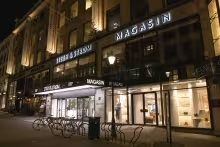
Shopping malls have somewhat longer opening hours, typically 10:00 to 20:00 or 21:00 on weekdays and 10:00 to 18:00 on Saturdays. All malls are closed on Sundays.
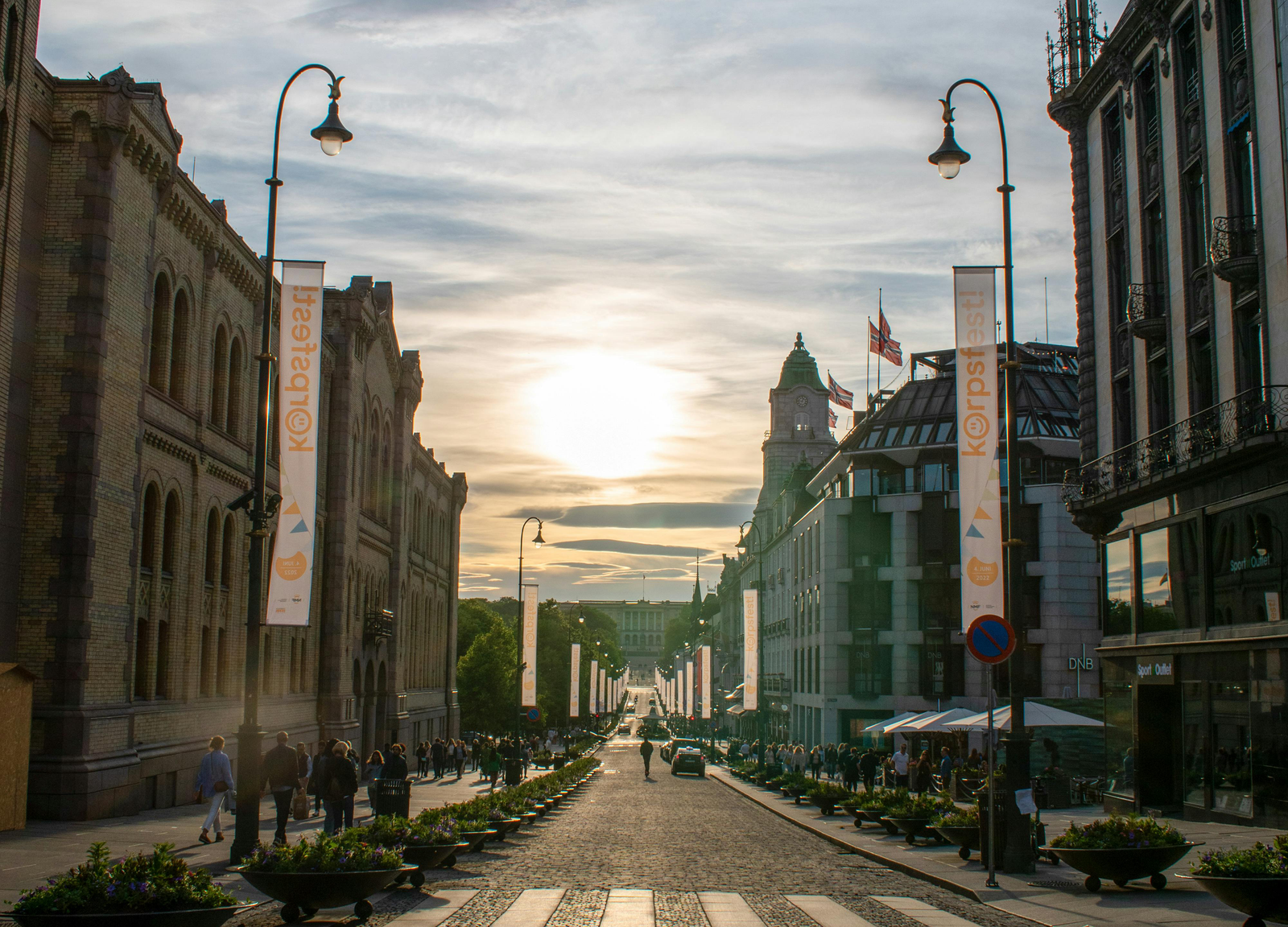
Supermarkets are open for much longer. In Oslo and other major cities, chains like Kiwi, Rema 1000, Coop Extra, and Meny open early (07:00 or 08:00) and stay open until 22:00 or 23:00 on weekdays. Some smaller stores, typically Joker, are open 24/7. On Saturdays they might close a bit earlier, typically between 18:00 and 22:00. In smaller towns, hours are a couple of hours shorter.
Supermarkets and Grocery Shopping in Norway
Sundays
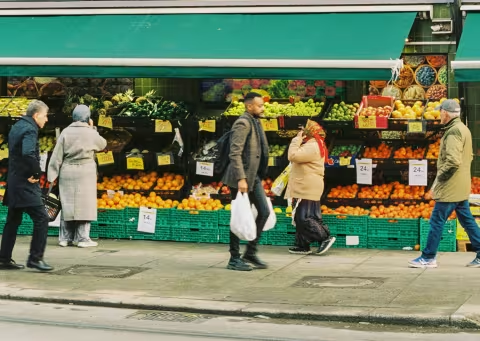
Sunday opening hours in Norway are heavily regulated and most shops are closed. All regular supermarkets, malls, department stores, and retail chains must stay shut on Sundays.
The only exception is stores with a sales area below 100 square metres, which can open on Sundays. You'll see chains like Joker, Bunnpris, and some Kiwi locations running small Sunday stores, sometimes called Brustadbu (named after the politician behind the rule). Some of these are purpose-built rooms walled off from the main shop with a separate entrance, while others simply are tiny grocery stores.
The selection in the Sunday stores is slim and the aisles are typically cramped, while prices usually are 10 to 25% higher than at a full-size discount store during the week.
Gas station mini-markets (Circle K, Shell, Esso) and 7-Elevens stay open too.
Restaurants, cafés, bakeries, and museums all are open on Sundays. Food delivery apps such as Foodora and Wolt are open for orders on Sundays and most public holidays too. Locals typically spend Sundays at home, at their cabins, outdoors in the woods or going to cafes. Only the shops close, everything else in the cities stays open.
Buying Alcohol
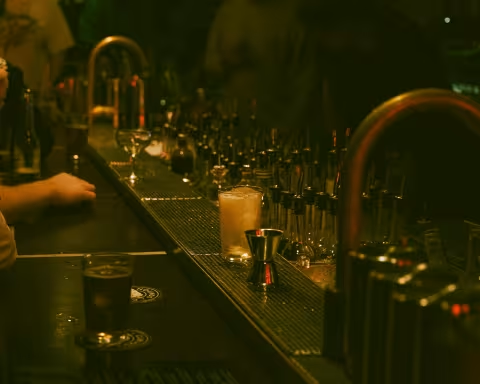
The grocery stores might be open until 23:00, but the beer sales shut off well before that.
Beer and cider in supermarkets
Beer and cider up to 4.75% ABV are sold in ordinary supermarkets, but sales cut off at these times regardless of the store's opening hours:
- Weekdays: 20:00
- Saturdays: 18:00
- Eves of public holidays (the Wednesday before Easter, New Year's Eve, etc.): 18:00
- Whit Saturday: 16:00 (18:00 for shops under 100 square metres)
- Christmas Eve: 16:00 (18:00 for shops under 100 square metres)
- Sundays and public holidays: nothing at all
The hours are not flexible. The tills are programmed to shut down at these times and there's nothing the cashier can do about it. If you show up at the checkout at 18:02 on a Saturday you'll have to put the beer back in the fridge. There's no need to argue with the cashier at all.
Buying and drinking alcohol in Norway
Vinmonopolet (wine & liquor)
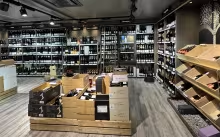
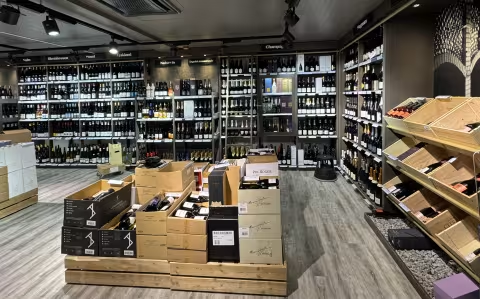
Anything above 4.75% ABV (all wine, spirits, and stronger craft beers) is sold exclusively through Vinmonopolet, the state-run liquor stores.
- Weekdays: 10:00 to 18:00
- Saturdays: 10:00 to 16:00
- Sundays, public holidays and Christmas Eve: closed
While these hours are applicable to most stores, some stores have shorter hours. You need to be 18 to buy beer and wine, and 20 for spirits (anything above 22% ABV).
Vinmonopolet liquor store: The complete guide for visitors to Norway
Public Holidays
Public holidays are marked in red on Norwegian calendars, which is why locals call them "red days." Treat every red day like a Sunday, with the same closures and the same exceptions for small stores and gas stations. Public transport runs on reduced schedules.
Visiting Norway During Christmas and Easter
Easter
Easter causes the most disruption with Maundy Thursday, Good Friday, Easter Sunday, and Easter Monday all full public holidays. Shops are closed on four out of five days during Easter. Only Easter Saturday is not a public holiday, but stores close early, typically by 15:00 or 16:00.
The same goes for Vinmonopolet, which is open on Easter Saturday.
Museums in Oslo and Bergen typically keep shorter holiday hours through Easter. Some, but not all restaurants stay open. In smaller towns and fjord villages, finding a meal on the actual holiday days may be difficult.
Easter is also the biggest domestic travel week in the country. Norwegians head to mountain cabins for the last days of the ski season. Oslo and Bergen get noticeably quiet. If you're self-catering, stock up before Wednesday afternoon.
May public holidays
May have five public holidays in a single month. Labour Day (May 1), Ascension Day, Constitution Day (May 17), Whit Sunday and Whit Monday. Shops are closed on all these days. Ascension Day, Whit Sunday and Whit Monday are all variable holidays with no fixed date.
Constitution Day (17 May)
In addition to shops being closed, city centres shut to car traffic for the children's parades on the 17th of May. In Bergen, the Bybanen light rail skips its last two city-centre stops until around 15:00. Public transport runs on diverted holiday routes everywhere.
Restaurants stay open, but book well in advance, it's the most popular day of the year for eating out. If you're in Norway for 17 May, the parades are worth seeing. Just don't count on buying anything except street food and ice cream.
Christmas and New Year
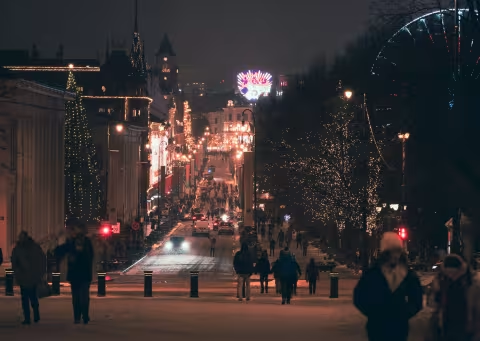
The weeks before Christmas shops are open 7 days a week, with extended weekday evening hours, and the last three Sundays before Christmas Eve shops are allowed to open 14:00 to 20:00..
Shops close early on Christmas Eve, typically by 16:00. Christmas Day (25th) and Boxing Day (26th) are full red days, so everything is closed. Most restaurants close as well, even in Oslo and Bergen. Most attractions shut.
Read more about visiting Norway during Christmas and New Year.
The days between Christmas and New Year, known locally as romjul, are when things slowly reopen. Some shops and restaurants open with reduced hours, but full normal service doesn't resume until early January.
Shops are closing early on New Year's Eve, and New Year's Day is a public holiday.
Tourist Zones
Places classified as "typical tourist destinations" get an exception. In these areas, shops of any size can open on Sundays and holidays.
To get this status, sales in the area have to be primarily to tourists. The status is often seasonal (May through September is common) and each store still decides individually whether to bother opening.
This mostly applies to small resort and fjord towns: Geiranger, parts of Hvaler, Gamlebyen in Fredrikstad, Kragerø. In ski resort towns like Hemsedal and Geilo shops are open on Sundays during winter. None of Norway's major cities have the status. Oslo's city council tried to get Karl Johans gate classified as a tourist zone in 2025 but the application was turned down, ruling that a city centre can't claim its trade is "mainly to tourists." Bergen doesn't have it either.
If you happen to pass through a designated tourist town in peak season, you might find shops open on a Sunday, but don't count on it.
More about Norway
Tipping in Norway: What´s expected

Where to stay in Oslo: Guide to the best neighbourhoods & hotels
Norway in a Nutshell - Oslo to Bergen: Make it a 2 day journey