
By: Chris ⎜ Last updated
The Baseline: Service is Already Paid For
Norway does not traditionally have a tipping culture. Service workers in the hospitality sector are unionised, earn a living wage, and receive national healthcare. When you look at a restaurant menu or a hotel tariff, the price you see fully covers raw materials, overhead, staff wages, and a 25 percent Value Added Tax on dine-in meals.
In short: Pay the advertised price and walk away guilt-free.
Because the staff are already paid properly, you are never expected to leave a standard 15 or 20 percent gratuity just for someone doing their job.
However, tipping is not entirely absent. The local consensus is that gratuities are a bonus for genuinely good service, not a subsidy for the worker's survival. If you have a sit-down meal and the service is attentive, it is common to round up the bill or leave a tip of around 5 to 10 percent. If your dinner comes to 840 NOK, and you are satisfied, leaving 900 NOK is a standard, polite acknowledgement.
The Digital Tip Screen
Norway is effectively a cashless society. You will pay for everything from a high-end dinner in Oslo to a remote ferry crossing with a card or digital wallet.
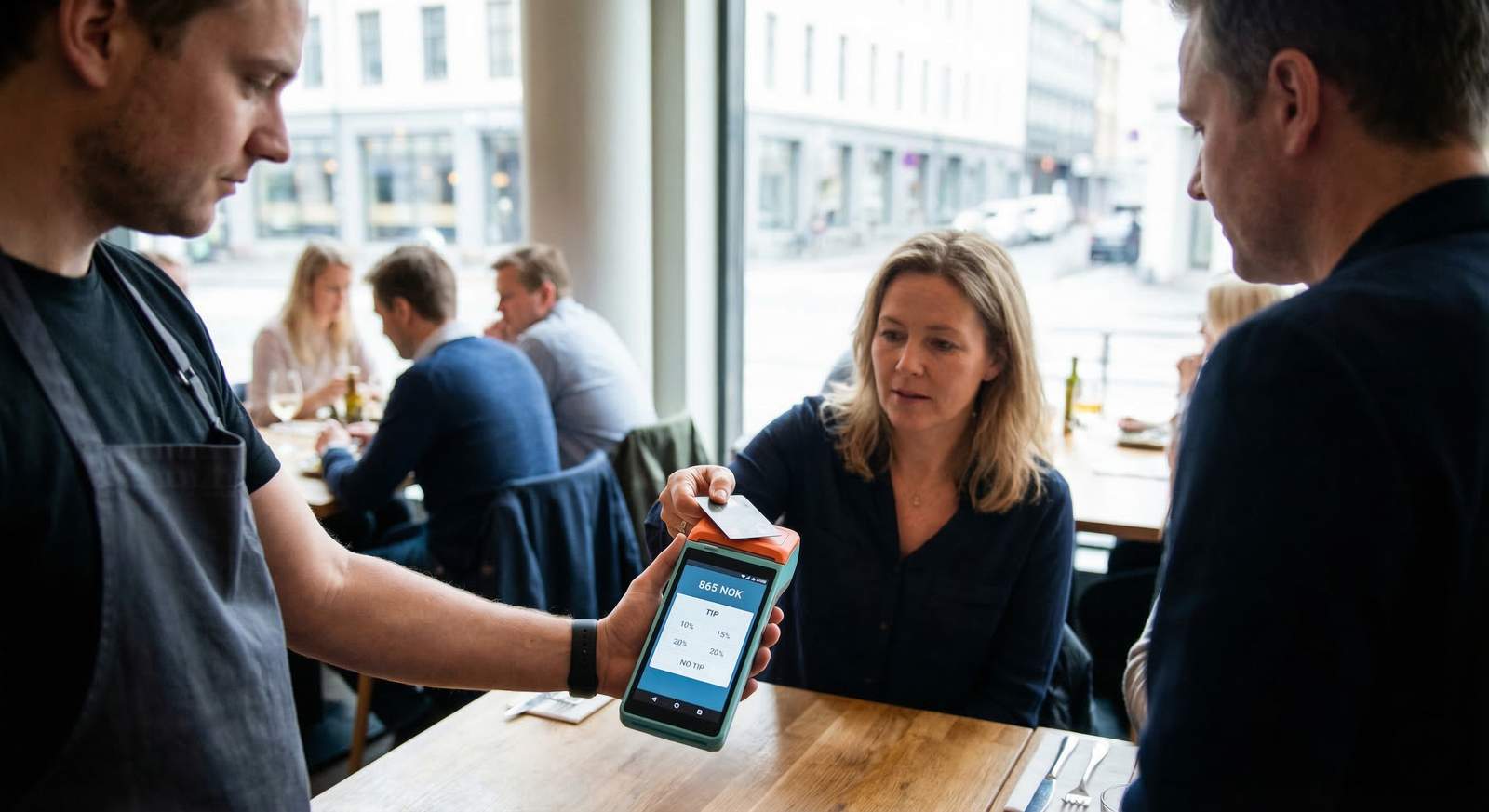
This creates a major point of friction. Almost every payment terminal in bars, restaurants and cafes will hand you a screen requesting you to select a 5, 10, 15, or even 20 percent gratuity before you even receive your order. This is not a cultural shift. This is imported payment software. The machines default to asking for extra money because the payment processors take a fractional cut of the total volume.
Bypass the screen. Press zero or select "no tip". The server will not be offended.
The Sector-by-Sector Playbook
You need to separate the act of paying for an exceptional experience from the habit of subsidising someone's rent.
Restaurants and Dining
Fine Dining and Table Service: If the service is standard, paying the exact amount is fine. If the sommelier was outstanding or the kitchen accommodated a complex allergy, rounding up the bill or adding 5 to 10 percent is the standard local way to show appreciation.
Cafés, Bakeries, and Fast Food: Skip it entirely. Never tip for a transaction that happens over a counter. Hit the zero on the terminal and move on.
Food Delivery (Wolt/Foodora): The app will push you to tip. You may want to consider it. Delivery drivers are independent contractors and are generally not paid very well. Tariff salaries do not apply to contract workers.
Bars and Nightlife
Alcohol is expensive in Norway due to heavy taxes. A standard draft beer in a major city often exceeds 120 NOK.
Standard Bars: You are already paying a premium. Do not tip a bartender for pulling a tap or uncorking a bottle. At most round up the bill to the nearest 10.
Premium Cocktail Bars: If a mixologist spends ten minutes crafting a bespoke drink from scratch, leaving an extra 10 to 20 NOK on the bar is a polite acknowledgement of their specific trade.
Hotels
This one is the easiest, you don´t tip workers at hotels. For hotel restaurants and bars, the two sections above apply.
Transport and Excursions
Taxis: Drivers are well-compensated, so a percentage tip is unnecessary. The standard local practice is simply to round up to the nearest even number for convenience. If the fare is 285 NOK, you can make it 300 NOK. But by no means is this expected.
Guided Tours and Fjord Cruises: Guides are salaried employees. Tipping is completely unnecessary.
The Bill Splitting Hack
Splitting a bill multiple ways is a nightmare in most countries. In Norway, it is the default.
Do not waste time doing napkin mathematics at the table. Just tell the server that you want separate bills. The server will stand at the table with the terminal and run everyone's card sequentially for their exact items.