
By: Chris ⎜ Last updated

Norway is not a shopping destination the way Paris or Milan is. Nobody flies here to hit the boutiques. But some categories of purchases are worth paying attention to: Norwegian-made knitwear and outdoor gear bought at the source, select luxury goods, and premium wines at the state-run Vinmonopolet at prices that some of the world's top wine critics have called remarkably competitive. The weak krone amplifies savings. And the 25% VAT refund, if you ensure to claim it, stacks on top.
Paying in Shops
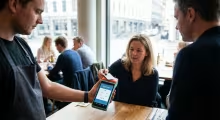
Every shop, restaurant, museum, taxi, ferry, and market stall in Norway accepts Visa and Mastercard, including contactless payments through Apple Pay and Google Pay. American Express has limited acceptance. Norway is one of the most cashless countries on earth. You could spend your entire vacation here without touching a single banknote. Do not exchange money at your home airport before flying. You won't need it.
Americans should set up Apple Pay or Google Pay before departure. Unmanned terminals like gas pumps, parking machines, and ticket kiosks require a chip-and-PIN card, and chip-and-signature cards often fail at these. Contactless payments bypass the PIN issue entirely. You might want to keep some kroner as emergency backup, but don't plan around cash. Norwegians don´t want to handle cash, it´s seen as a nuisance.
Shopping hours
For opening times, Sunday closures, and public holiday schedules, see our guide to shopping hours and public holidays in Norway.
Shopping hours and public holidays in Norway
The Weak Krone
Norway's reputation as the most expensive country in Europe was built when the Norwegian krone was much stronger against western currencies. It isn't anymore. The krone has lost significant ground against the dollar, euro, and pound over the past decade, and the country is now much more affordable for foreign visitors.
This matters most for goods priced in NOK that don't adjust quickly to currency movements. For anything Norwegian-made, the weak krone means the price is often lower in Norway. International luxury brands are less affected because they reprice across all markets periodically. However you can still get some good deals for luxury brands in Norway both due to the weak krone, but also the significant VAT refund.
Norwegian Brands
Norwegian Knitwear
Dale of Norway has been making wool sweaters since 1879 and has supplied the Norwegian Alpine Ski Team since 1956. Their sweaters cost less in Norwegian shops than on their US or UK webstores, and the selection is broader. Sizing runs the full range, not the limited export inventory you find abroad. Dale has centrally located outlets in Oslo, Bergen and several other cities.
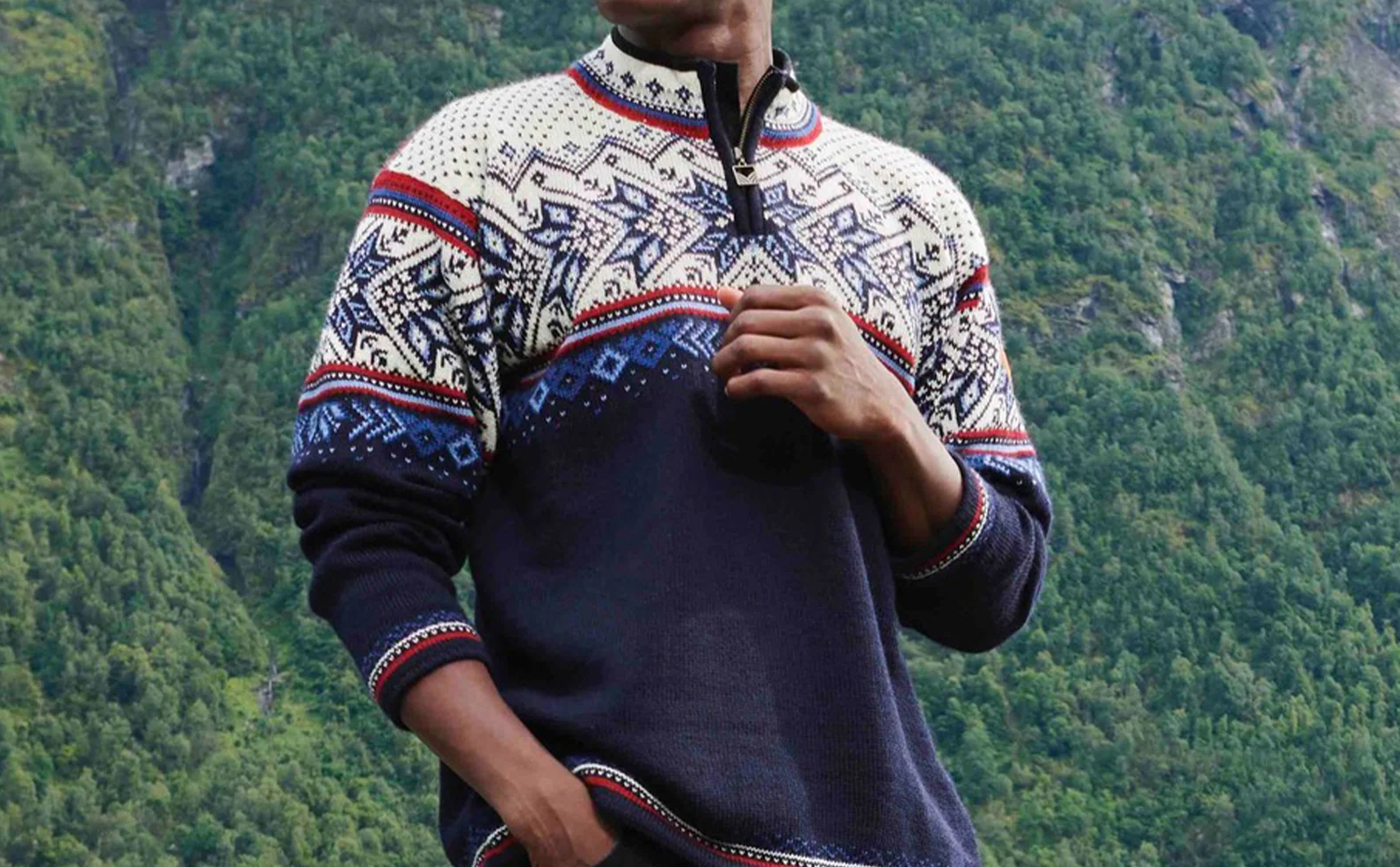
Oleana produces handmade merino and silk knitwear at their factory in Ytre Arna, on the outskirts of Bergen. The production floor is open to visitors on weekdays, and the factory shop carries pieces you won't find anywhere else. Most of their range is barely available outside Norway. Buying here isn't just cheaper; for many pieces, it's the only option. Both brands participate in the Tax Free shopping scheme, so the VAT refund applies on top. They also have a flagship store in Bergen city center, but no outlets in Oslo or other Norwegian cities.
The savings stack: lower domestic base prices, the weak krone converting those NOK prices into fewer dollars, euros, or pounds, and the VAT refund clawing back 12-19% at departure. Together, you're looking at 20-30% less than buying the same sweater through an international retailer.
Norwegian Outdoor Brands
Norrøna is Norway's answer to Arc'teryx, a premium outdoor brand with a devoted following among Scandinavian skiers and mountaineers. Norrøna have several outlets across Norway, with a flagship store in the center of Oslo near Stortinget. Bergans of Norway, Helly Hansen and Devold (known for their merino base layers) are other quality brands worth checking out.
One distinction worth noting: Dale of Norway and Oleana actually manufacture in Norway. The others are Norwegian-owned brands that design domestically but produce mostly overseas, like most global outdoor companies. The pricing advantage still holds because you're buying at domestic NOK prices with full range and sizing. But if you want an authentic Norwegian souvernir, the knitwear is where that claim holds up.
Luxury and designer brands
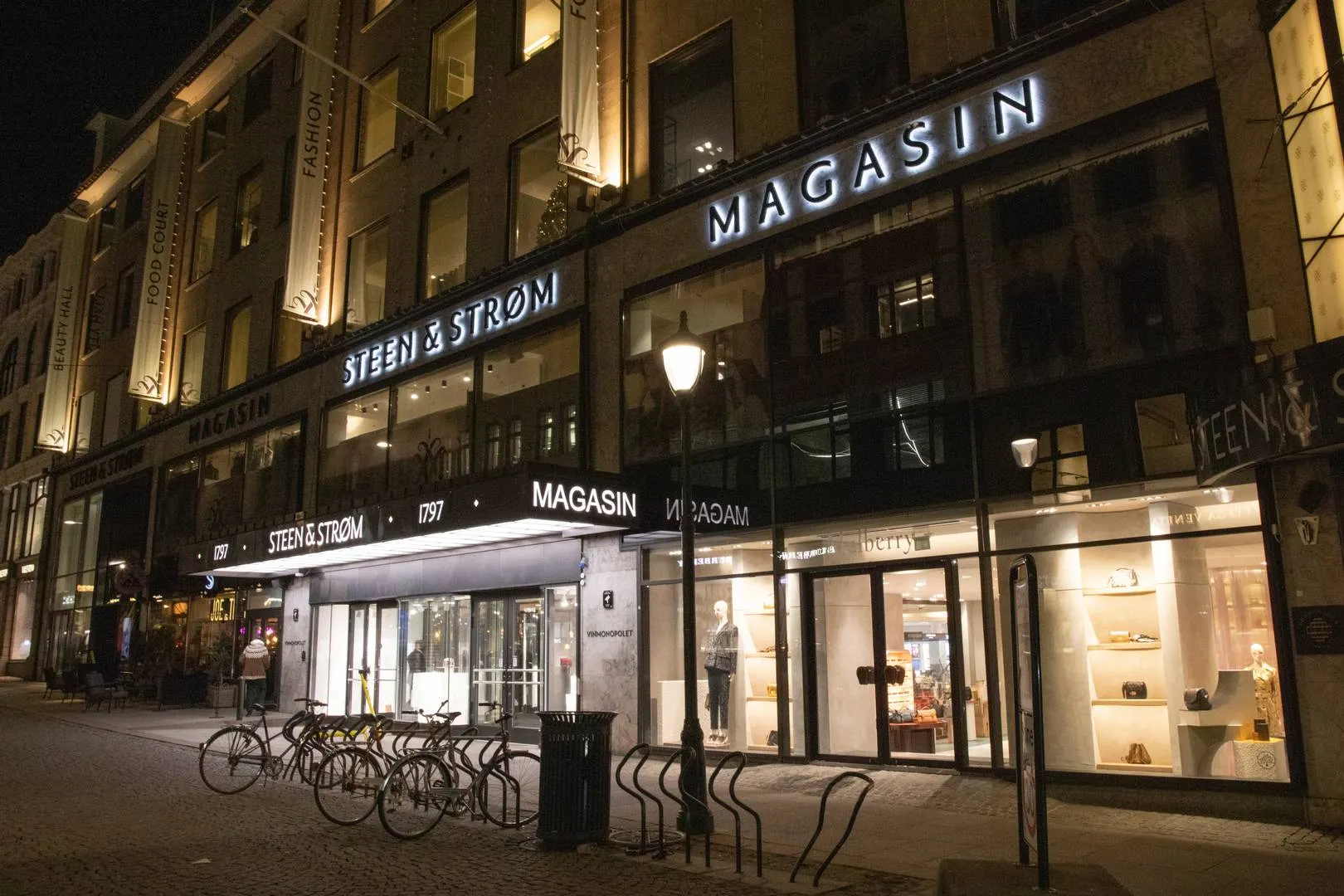
Oslo's Promenaden Fashion District, centred on Nedre Slottsgate and the surrounding streets, has assembled most of the world's top luxury houses within a few blocks. Hermès, Louis Vuitton, Chanel, Dior, Gucci, Saint Laurent, Bottega Veneta, Burberry, and Moncler all have flagship stores here. Steen & Strøm, the anchor department store, has been trading for over 220 years. Urmaker Bjerke recently opened Bjerke House in the neighbouring Eger quarter, a three-floor space spanning nearly 3,000 square metres that bills itself as Europe's largest luxury watch house, with dedicated areas for Patek Philippe, Cartier, and Omega among others.
Norway has two structural advantages for luxury shoppers that most visitors don't realise. The first is the VAT refund. Norway's 25% VAT rate is among the highest in Europe, which means the refund for non-resident tourists, 12-19% of the purchase price, is also among the highest.
The second is the krone. Luxury brands set their Norwegian prices in NOK and don't reprice fast enough to keep pace with currency movements. Combine the lower converted price with the higher VAT refund, and Norway can undercut Paris on certain luxury purchases.
This is exchange-rate dependent. If the krone strengthens or brands adjust their Norwegian price lists upward, the gap narrows. Check the NOK price of the specific item you want on the brand's Norwegian website before you travel and compare it to the price on the French or US site, factoring in the VAT refund.
Buy expensive wine at Vinmonopolet
Norway's state alcohol monopoly, Vinmonopolet, is one of the most expensive places in Europe to buy a cheap bottle of wine. It is also, paradoxically, one of the cheapest places to buy an expensive one.
The pricing model is what makes this work. Unlike wine shops in London or New York, which apply percentage-based markups that scale with the wholesale cost of the bottle, Vinmonopolet applies a capped markup. There's a small fixed component plus a percentage of wholesale, but the total markup hits a ceiling regardless of how expensive the wine is. On top of that, Norway's excise duty on alcohol is charged per unit of alcohol in the bottle, not per unit of value. The same flat tax lands on every 750ml bottle of the same strength, whether it's a mass-produced table wine or a premier cru Burgundy.
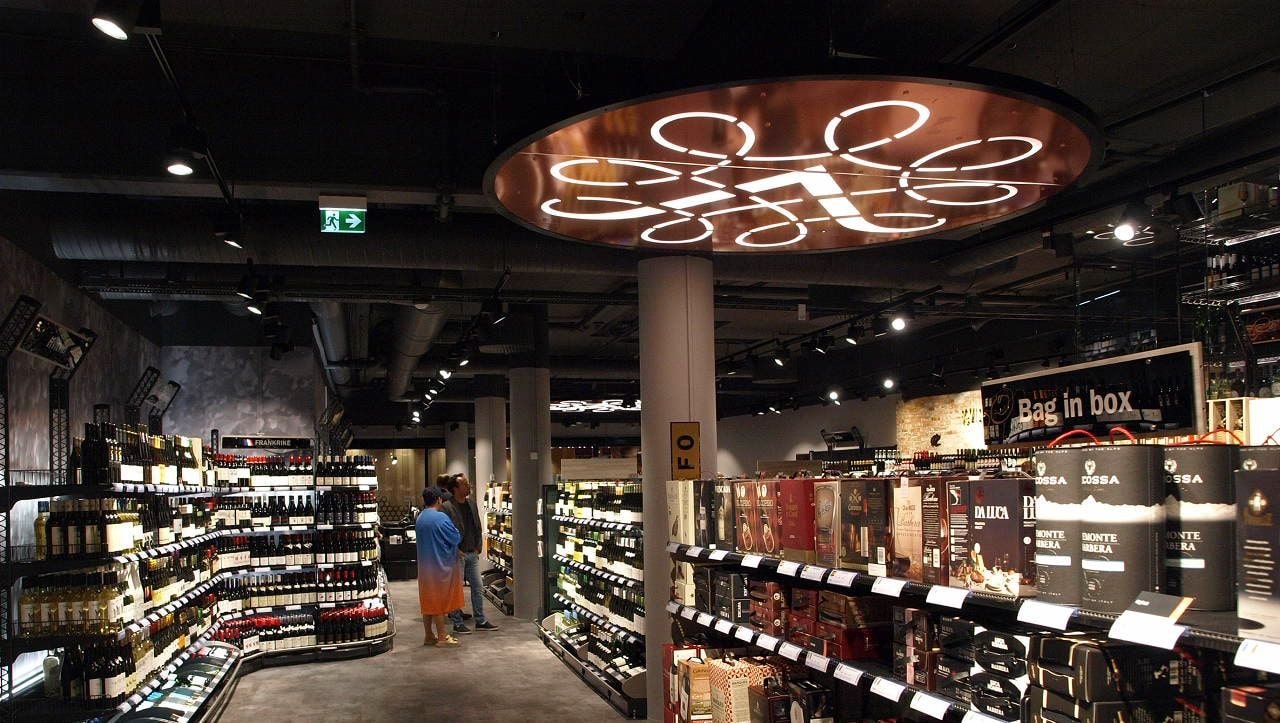
At the bottom of the market, this is brutal. A basic wine that costs a few euros in Spain or France carries the same flat tax as everything else, pushing the retail price far above what you'd pay in a country with normal alcohol taxation. Don't buy cheap wine at Vinmonopolet.
But move up the price scale and the equation flips. A bottle that retails for the equivalent of £50 or more at a London merchant has had 50-100% added in retail margin on top of wholesale. At Vinmonopolet, that same bottle carries the same capped markup as everything else. Jancis Robinson, widely regarded as the world's most authoritative wine critic, devoted her Financial Times column to this subject after visiting Oslo.
In short: In Norway cheap wine is expensive and expensive wine is cheap
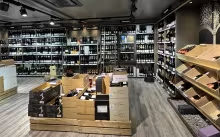
The categories where this matters most are top Burgundy and Barolo, prestige Champagne, and German Riesling. The flagship store at Aker Brygge in Oslo reportedly carries the world's largest retail selection of top German Riesling producers. Vinmonopolet lists tens of thousands of products, works with hundreds of importers, and blind-tastes every wine in its basic range through an accredited sensory panel.
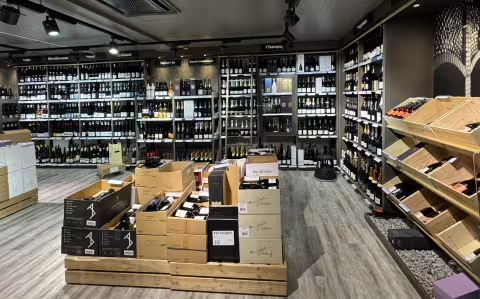
The stores don't look or feel like government depots. The best locations, particularly Aker Brygge and Vika in Oslo, operate more like curated wine boutiques with knowledgeable staff, many of them trained sommeliers. Use vinmonopolet.no to search inventory and check stock at specific stores before you visit. Order in advance and get your bottles delivered to the nearest Vinmonopol if you see something you want that is not stocked. Opening hours are limited, particularly on Saturdays, and they're closed on Sundays. See our guide to shopping hours for specifics.
Vinmonopolet liquor store: The complete guide for visitors to Norway
The VAT Refund
Norway charges 25% VAT on most goods, one of the highest rates in Europe. Non-resident tourists can claim a significant chunk of that back when they leave the country.
Who Qualifies
Anyone who lives outside Norway, Sweden, Denmark, and Finland. US, UK, and EU residents all qualify. You need to spend at least 315 NOK in a single transaction at a participating store. Look for the Tax Free logo near the entrance or checkout.
How It Works
Ask the shop assistant for a Tax Free form when you pay. You'll need your passport. The two refund operators are Global Blue and Planet Tax Free; the shop determines which. Download the Global Blue or Planet app before your trip and link your passport digitally. The assistant scans a barcode on your phone instead of filling out paper forms. Keep the form, the receipt, and the goods together. Do not wear or use the items before you leave Norway.
At the Airport
Norway is not in the EU, which means you must process the refund before leaving Norwegian territory. You cannot do it at your final destination. At Oslo Gardermoen, the refund desk is in the departure hall. Items in checked luggage must be validated before check-in, so arrive with time to spare. Hand-luggage items can be processed after security. Refunds go to your credit card (higher percentage, 2-6 weeks) or as cash at the desk (lower percentage, immediate).
What You Get Back
The 25% VAT rate doesn't translate to a 25% refund. After operator commissions and processing fees, expect 12-19% back depending on the purchase value. Higher-value purchases yield a higher percentage. On a premium Dale of Norway sweater or a luxury item, that's a meaningful amount. On a single small souvenir, it probably isn't worth the queue.
Border Crossings by Car
If you're driving out of Norway, you need a staffed border crossing to validate your forms. Svinesund on the E6 to Sweden is always manned. Many smaller crossings are unstaffed and can't process VAT refunds.