By: Chris ⎜ Last updated
The Norwegian Museum of Cultural History (Norsk Folkemuseum) is a massive open-air time machine. Imagine if someone airlifted 160 buildings from every corner and century of Norway and dropped them into a forest on the Bygdøy peninsula. That is Norsk Folkemuseum. It covers everything from 13th-century stave churches to a fully furnished 2002 immigrant apartment, and you can walk through most of them.
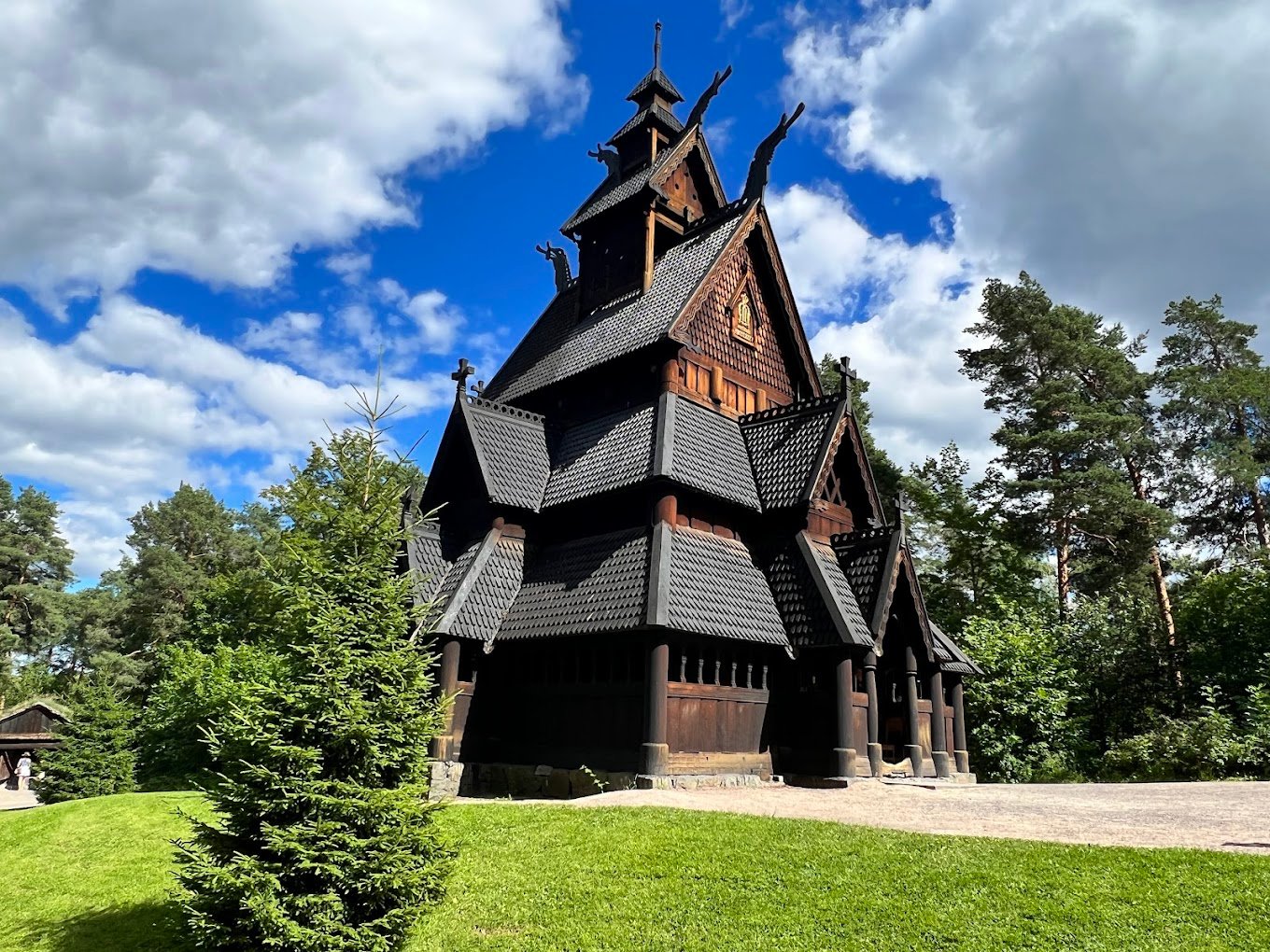
The grounds are divided into three outdoor sections. King Oscar II's Collection includes the Gol Stave Church, easily the most popular thing on the grounds. It sits on a small hill with views out beyond the museum. The Countryside is the biggest section, with farmsteads grouped by region, each with sod-roofed buildings, livestock pens, and outbuildings arranged as they would have been in Setesdal or Telemark or Numedal. The Old Town (Gamlebyen) reconstructs the streets of 19th-century Christiania, the old name for Oslo, with brick buildings, workshops, and a grocery store that still sells old-fashioned candy in paper cones.
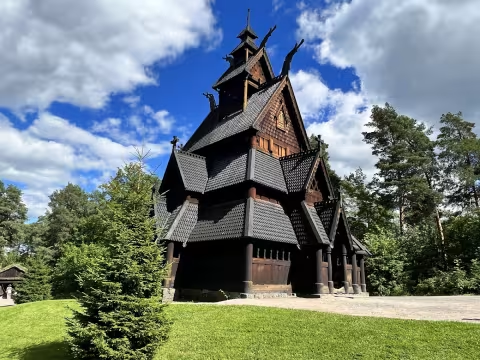
The Gol stave church
The Gol Stave Church is the building most people primarily come here to see. It was built around 1200 in the village of Gol in Hallingdal, and dismantled and moved to Bygdøy in 1885 to save it from demolition. The interior is dark, low-ceilinged, and heavy with the smell of old tar and timber. Intricate carvings cover the doorways and posts. It takes about ten minutes to look around, and you'll probably want to stand here just absorbing the atmosphere. Guided tours run daily year-round, including in winter when most other buildings on the grounds are closed.
There's a full article on the Gol Stave Church with more on its history and what to look for inside.
The old town
The standout in the Old Town is Wessels gate 15, a three-storey brick apartment building originally built in 1865 in central Oslo and relocated to the museum after housing cooperative OBOS donated it in 1998. Inside, eight apartments have been furnished and frozen at different points in time, from 1879 to 2002. You walk through floor by floor, decade by decade. The 1879 apartment is themed after Ibsen's Et Dukkehjem (A Doll's House), a bourgeois home that's comfortable but not extravagant, with servants' quarters tucked behind the front rooms. Jump forward to 1935 and you're standing in a single modern woman's flat. By 1965, it's an engineer's family with a teenage son, a TV, and teak furniture everywhere. The final apartment, from 2002, belongs to a first-generation Pakistani immigrant family and is one of the few museum exhibits anywhere in Scandinavia that has an exhibit of contemporary immigration.
The building also has three smaller exhibitions on its ground floor, including a recreation of a 1932 Vinmonopolet (state alcohol shop) where you can see how alcohol was sold in Norway until the 1999, when the first self service shop was opened.
Indoor exhibitions
If you have time to spare after walking the grounds, and seeing the stave church and the old town, several permanent exhibitions fill the buildings around the main square near the entrance. These should not be your first priority here though. TIMESCAPE 1600–1914 is the largest and the best, a walk through three centuries of elite Norwegian life with beautiful objects and digital displays. There's a free audioguide you can access on your phone via the museum's WiFi (password: museum365). The Sámi Culture exhibition covers daily life in Sámi communities from the 19th century through to the post-war era, including reindeer herding and traditional clothing from different Sámi regions. Unless you're heading north to Tromsø or Finnmark, this is your best chance to engage with Sámi history in any depth. Other permanent exhibitions cover Norwegian folk dress, folk art, church art, and the old Storting (parliament) chamber.
Summer vs. winter
Summer, or during the Christmas market (see below), is the best time to go. From May through September, the museum is fully alive. There's staff in traditional costume welcome you into farmhouses, there's folk dancing, lefse (flat cake) baking, a working blacksmith, and farm animals grazing in the fields. Most buildings are open and you can walk through them. The museum runs daily guided tours in English, and there are special events like the Midsummer Festival. The core experience is outdoors, which also means that it will not be that enjoyable if it rains. If the forecast looks bad, save it for another day.
In winter (October through April), the outdoor buildings are only accessible from the outside. You can still walk the grounds and look through windows, and the snow-covered sod roofs look fantastic, but you won't get inside most of them. The indoor exhibitions stay open year-round, and guided tours of the Gol Stave Church run daily even in winter. The December Christmas market is extremely popular and one of the few winter events that draws big crowds. The Christmas market is normally on during the first 2 weekends of December, with lots of stalls selling everything from crafts to foodstuffs. You need to book your ticket in advance for the Christmas market.
Bygdøy
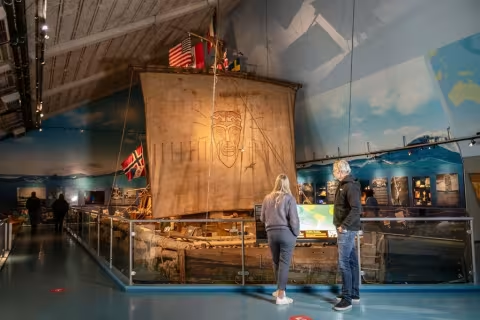
If you are planning on seeing the Fram Museum or Kon-Tiki Museum, it would be smart to combine with the visit to Norsk Folkemuseum to avoid having to make the journey out to Bygdøy again. Both museums are within walking distance. Start at Norsk Folkemuseum when it opens, spend two to three hours, then walk over to the Fram Museum area. There's a ferry stop at Bygdøynes, right next to those museums, so you can take the ferry back to the city afterwards.
Practical details
Plan two to four hours here. The grounds are big and there's a lot to see, especially in summer when buildings are open and activities are running.
Entry is free with the Oslo Pass and free for everyone under 18. Check the museum's official website for current prices and seasonal opening hours.
What to do nearby
Hotels nearby