By: Chris ⎜ Last updated
Why the stave church matters
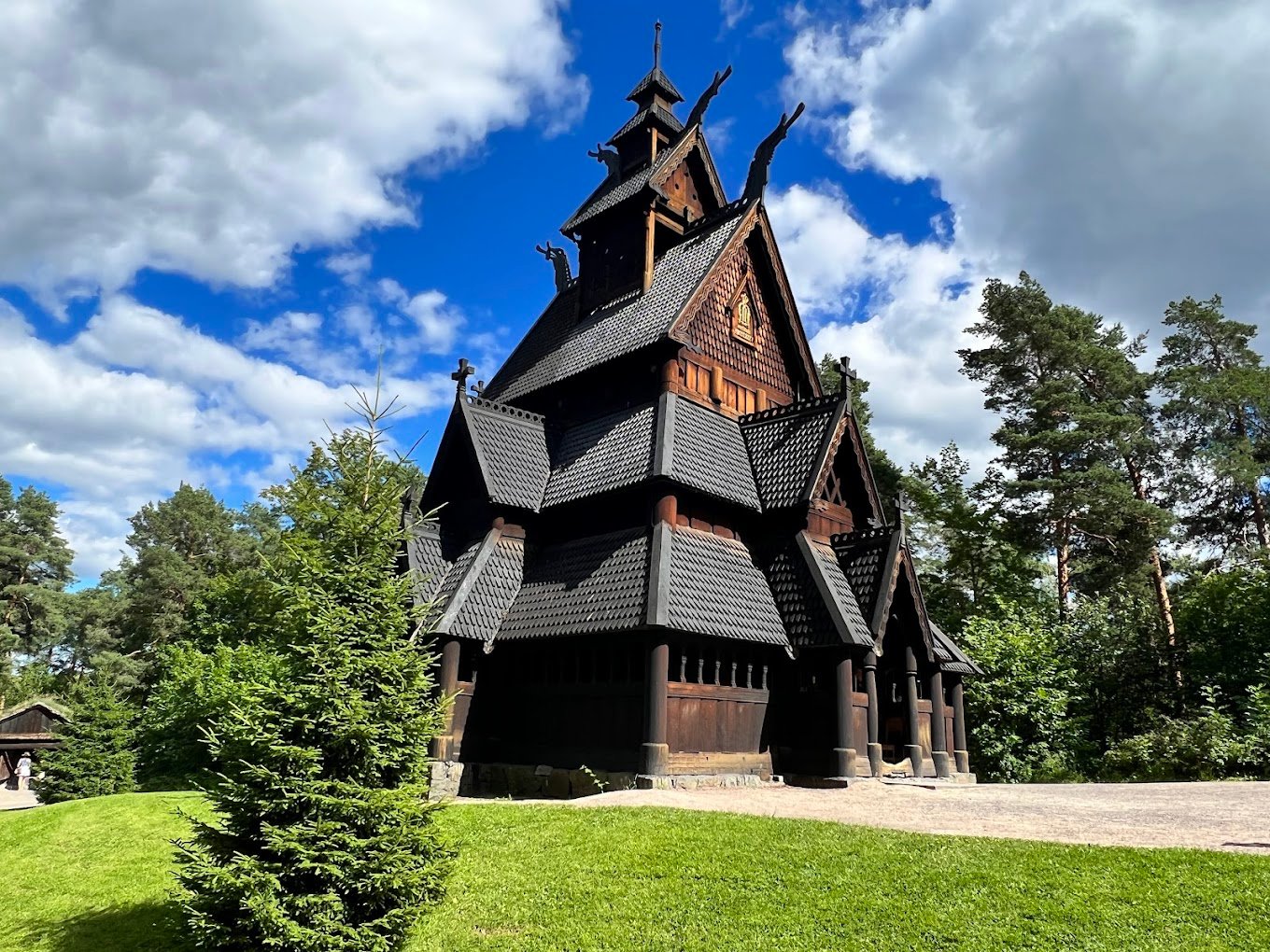
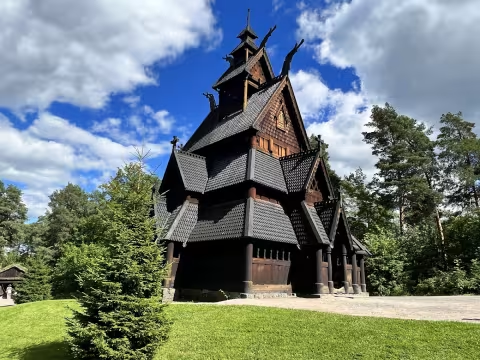
Norway once had over a thousand stave churches. Around 28 survive. The Gol Stave Church inside Norsk Folkemuseum is the only one you can visit without leaving Oslo, and it's a proper medieval original, not a replica. The main timber structure dates from around 1200, saved from demolition in the 1880s when the congregation in Gol wanted a bigger, more modern building. King Oscar II paid to have it dismantled, shipped to Bygdøy, and rebuilt as the centrepiece of what became the world's first open-air museum.
The exterior is largely a reconstruction from that 1880s restoration, modelled after Borgund Stave Church. But step inside and you're standing in 800-year-old woodwork. The load-bearing staves, the chancel walls, the carved portals on the west side, those are the real thing.
What it's like inside
Small. Dark. And it smells extraordinary. The pine tar that coats the timber fills the whole space, and if you've spent any time around old Norwegian boathouses or seaside cabins, you'll recognise it immediately. On warm days the scent is stronger.
Light comes in through narrow slits high up in the walls, barely enough to see by. Give your eyes a minute to adjust. Once they do, look up. Carved heads sit on top of the staves, half-hidden in the gloom. The chancel has animal figures, geometric patterns, and 17th-century wall paintings that survived the move from Gol. Most visitors walk in, look around for 30 seconds, and walk back out. That's a mistake. Spend a few minutes and let the silence settle.
Look closely at the wooden beams in the nave. There are medieval runic inscriptions carved into the wood, left by people who stood in this same space centuries ago. One of the more famous ones translates roughly as "Kiss me, because I struggle", likely referring to a saint's figure that once hung on the stave. Join a guided tour, the guides can point out the ones that are hardest to spot.
Take the guided tour
The museum runs free guided tours of the stave church daily, included with your admission ticket. In summer, tours run in English at 11:00, 12:00, 15:00, and 16:00, meeting at the Square (Torget) near the entrance. In winter, the schedule drops to 12:00 and 14:00. The guides wear period clothing and know the building well. They'll explain the construction techniques, point out details you'd walk straight past, and put the whole thing in context. Without the tour, it's a dark room with old wood. With the tour, the engineering and the history come alive.
If you can only do one thing at the Folkemuseum, do the Gol stave church. Get to the church before the bus or cruise ship tour groups arrive and ruin your experience. Early morning in summer, or any time outside the 11:00 to 14:00 window, gives you the best chance of having the interior to yourself. The building holds maybe 20 people before it starts feeling cramped, and mid-day in July, you'll be sharing it with a coach group or two. For the guided tour your best bet is 11:00 and after 15:00.
When to go
For the stave church it doesn't really matter what time of the year you go. The church is open all year and guided tours are run all year. However, for full experience of Norsk Folkemuseum summer is better.
If you want a stave church in the countryside
The Gol Stave Church is an excellent introduction, but it's a relocated building in a museum setting. If you're heading west or north on your trip, consider visiting one in its original landscape. Borgund Stave Church in Lærdal (the best-preserved in Norway, still standing where it was built around 1180) and Urnes Stave Church in Luster (UNESCO-listed, the oldest surviving stave church) are both in the fjord country and worth a significant detour. Heddal Stave Church in Telemark is the largest of them all and the easiest to reach on a day trip from Oslo.
The Gol church gives you the context to appreciate what you're looking at when you encounter one in the wild. Think of it as the warm-up.
For more on what to do at Norsk Folkemuseum or nearby at Bygdøy, read our guide to Norsk Folkemuseum.
What to do nearby
Hotels nearby