By: Chris ⎜ Last updated
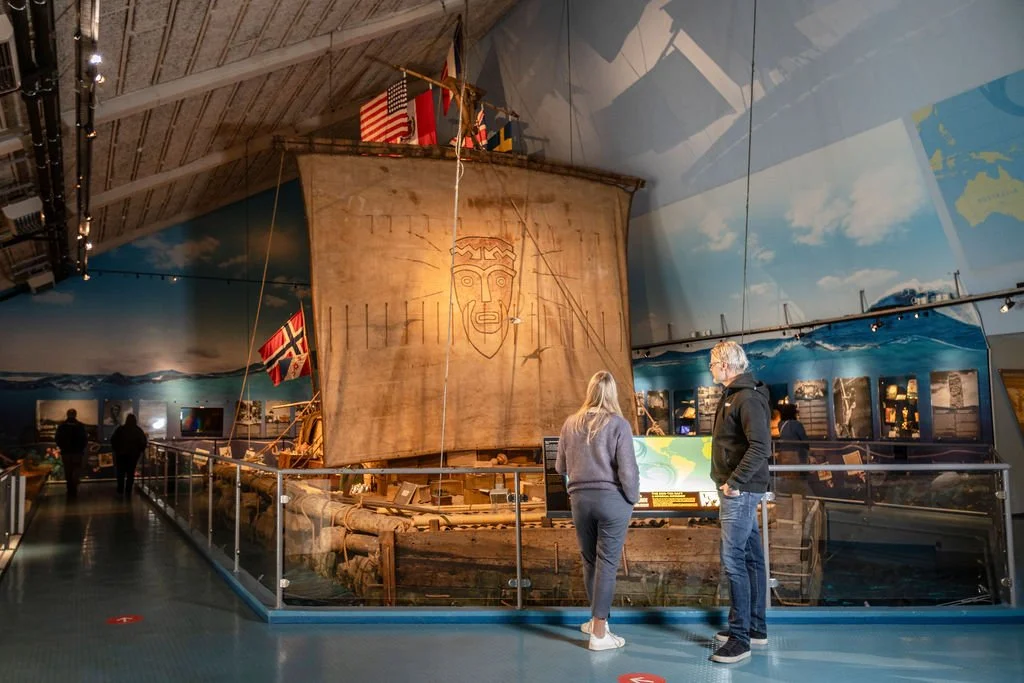
The Kon-Tiki museum on the Bygdøy peninsula houses the original vessels from Thor Heyerdahl's expeditions, the ones that proved ancient peoples could have crossed oceans on craft built from balsa wood and bundled reeds. In 1947, Heyerdahl and five crew members sailed 8,000 km from Peru to Polynesia on a raft lashed together with hemp rope. The museum opened three years later because everyone wanted to see the thing. Close to 20 million people have visited since.
The Kon-Tiki raft is right there when you walk in. No corridor of introductory panels to wade through first, no slow build. You walk up a short flight of steps and the raft fills the hall. It's bigger than most people expect, and the balsa logs still look disturbingly rough and improvised for something that spent 101 days on the Pacific.
A major renovation over winter 2025/2026 has transformed the main exhibition. The raft now sits in an immersive setting with projected sky and ocean, cycling between calm sunny stretches, dramatic storms, and starlit nights to recreate the changing conditions the crew experienced. New interactive stations let you explore the expedition route, compare the ancient statues that inspired Heyerdahl's theories, and get closer to the crew's personalities and decisions. The official opening of the new exhibition is 5 May 2026. Check the museum website before your visit to confirm the full exhibition is open.
What to prioritise
The raft is (obviously) the highlight here. Spend most of your time with the Kon-Tiki raft itself and the new immersive exhibition around it. The logbook excerpts displayed throughout detail terrifying storms and close encounters with sharks in the crew's own words. These fragments hit harder than any curated panel because they're written by people who clearly thought they might not survive the next page.
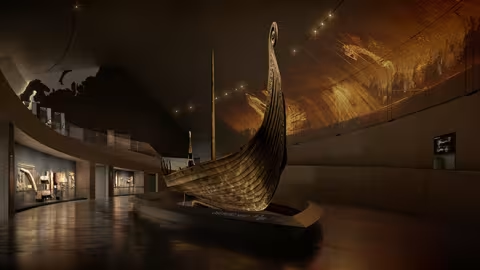
The Ra II, a reed boat Heyerdahl sailed across the Atlantic in 1970, sits in a separate hall. It's surprisingly elegant and far larger than you'd guess from photographs. The first Ra broke apart mid-ocean. The Ra II made it, and the exhibition covers both attempts, including Heyerdahl's documentation of oil pollution they encountered floating in the open Atlantic decades before most people were paying attention to ocean contamination.
Below the Kon-Tiki raft, the underwater exhibit creates the illusion of walking beneath the ocean surface. A 10-metre model of the whale shark that famously shadowed the raft during the voyage hangs overhead. The museum doesn't oversell this section, but kids in particular tend to love it.
The documentary
The museum cinema on the lower level screens the 1950 documentary daily at 12:00. This is genuine expedition footage filmed by the crew on the raft, and it won the Academy Award for Best Documentary in 1951. The actual Oscar is on display in the museum. If you're even mildly interested in the story, time your visit with the showing and watch it, it´s worth it. The footage of the whale shark surfacing beside the raft, shot by a man standing on balsa logs in the middle of the Pacific, gives you a gut-level understanding of the expedition that the museum's displays alone don't quite manage.
Outside the noon screening, a shorter version of the documentary runs on a loop throughout the day.
Watch the 2012 dramatised Kon-Tiki film (available on streaming platforms) before your visit. It massively increases the emotional connection to the physical artefacts. Standing in front of the actual raft after watching a feature film about the voyage is a different experience from walking in cold.
When to go
Weekday mornings right at opening or late afternoon after 15:00 are your best bet. The museum gets noticeably crowded between 11:00 and 15:00, especially on weekends and through June to August when tour buses arrive. The walkways around the large vessels are relatively narrow, so midday congestion makes it harder to read the exhibit panels or take decent photographs.
Compared to the Fram Museum next door, the Kon-Tiki tends to be quieter at any given time. If both are on your list, do the Fram first (it draws the bigger crowds early) and move to the Kon-Tiki afterward.
Shoulder season, April to May and September to October, is noticeably calmer. You'll share the halls with far fewer people and the ferry across to Bygdøy is running.
How long to spend
Plan for 60 to 90 minutes. The museum is reading-heavy, with detailed informational panels throughout. If you're a maritime or anthropology enthusiast, stretch that to two hours, especially if you want to watch the full documentary at noon. With kids who engage with the children's storyline (following Johannes the crab and Safi the monkey), 60 minutes is realistic before attention wanders.
Combining with Fram Museum
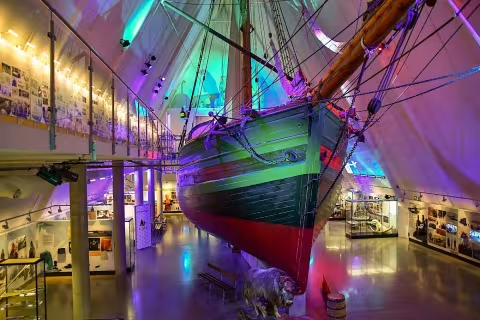
The Fram Museum sits directly next door. Doing both together is the obvious move, and a combo ticket saves about 10% over buying separately. Budget 2 to 3 hours total for the pair. The two museums complement each other well: Fram covers polar exploration (you can board the actual ship), Kon-Tiki covers ocean crossings on primitive craft. Different eras, different oceans, same Norwegian compulsion to sail into things that should probably kill you.
What to do nearby

Hotels nearby