By: Chris ⎜ Last updated
The Lofoten Islands stretch roughly 170 kilometres along a single road. Where you sleep each night determines what you can do the next day. Stay at the wrong place and you'll burn the day on the road.
The E10 highway from Svolvær in the east to Å at the western tip takes about two and a half hours without stopping, and you will stop. The road is narrow, it winds through tunnels and over bridges between islands. You need a car. Public buses exist but they're designed for locals commuting, not for visitors trying to reach trailheads and fishing villages. or how to actually get to the islands, including flight routing and the Bodø ferry, see our getting to Lofoten guide.
Some rough drive times to keep in your head: Svolvær to Henningsvær is about 30 minutes. Henningsvær to Ballstad is about an hour and a half. Ballstad to Reine is another hour and a half. Reine to Å is about 15 minutes. All of these assume summer conditions and no dawdling.
How to get to Lofoten: Car, ferry or flight?
How to split your stay
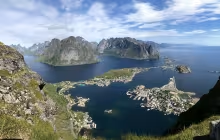
For five to seven nights, split your time across two or three bases to avoid too much backtracking. The archipelago has two distinct halves. The eastern islands are gentler and more built-up. The western islands are where the mountains go vertical and the fishing villages shrink to a handful of cabins on stilts. Staying in one place and driving back and forth across the whole chain every day is exhausting and eats your time.
Recommendation: 1 to 2 nights in the east (Svolvær or Henningsvær), then 2 nights in the centre (Ballstad), then 2 to 3 nights in the west (Reine, Hamnøy, or Sørvågen area). Moving east to west saves the most dramatic scenery for last.
If you only have three or four nights, skip the multi-base approach and stay in Ballstad. It sits roughly in the middle of the archipelago and puts everything within about an hour's drive.
Whatever you decide, book early. Summer accommodation across the islands sells out months ahead, and the best units at the best properties go first. Booking in February for a July stay is not unusual.
Svolvær: Best without a car
Svolvær is the best place to base yourself if you don't have a car. The largest town in the archipelago. Most restaurants, the best supermarkets, one of the two Vinmonopolet (liquor) stores, and the departure point for most boat and bus tours, including sea eagle safaris into Trollfjorden. If you're arriving via Svolvær Airport or the Hurtigruten, this is your first night.
Svolvær sits at the northeastern end of the chain. Reine is over two hours away. Don't base your whole trip here or you'll spend half of it driving. One or two nights, then move on.
Svinøya Rorbuer
Svinøya Rorbuer sits on a small island connected to the town centre by a footbridge. The rorbuer are traditional fisherman's cabins with real history, and the setting on the water gives you something Svolvær's hotels can't. Børsen Spiseri, the on-site restaurant, is one of the best in town: stockfish, pinnekjøtt, serious Nordic cooking served in a rough-hewn timber dining room.
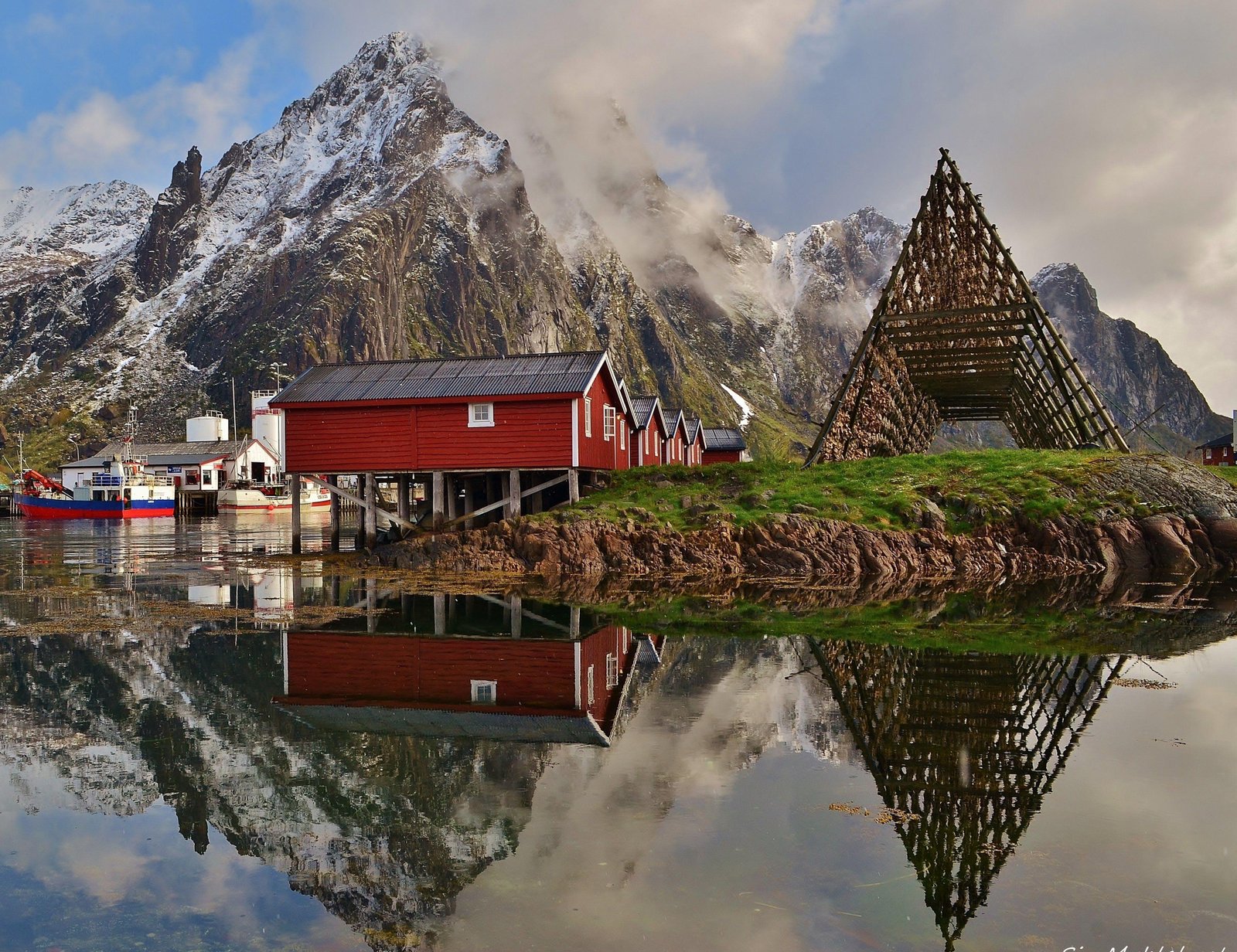
Thon Hotel Svolvær
Thon Hotel Svolvær is the sensible choice if you've just arrived after a long travel day and want a hotel that works like a hotel. Modern rooms, harbour views from the upper floors, breakfast buffet in the morning. Nothing remarkable, nothing wrong.
Henningsvær: For art, food & vibe
Henningsvær is built across a cluster of small islands connected by bridges, and it feels nothing like the rest of Lofoten. Art galleries, a contemporary glass-blowing studio, good restaurants, and the famous football pitch wedged between rock and sea at the edge of the village. By Lofoten standards, this is the cosmopolitan end of the archipelago.
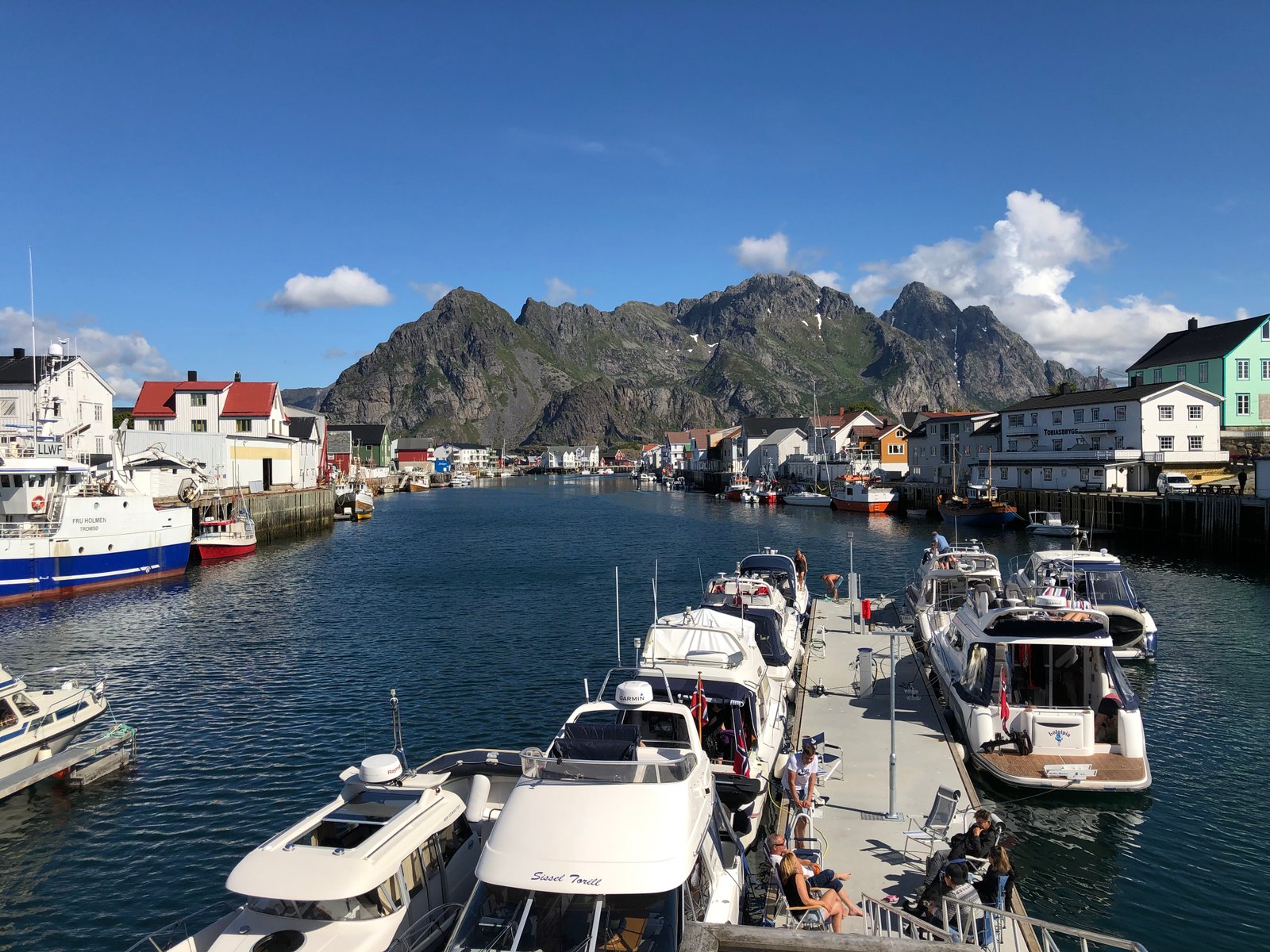
Henningsvær Bryggehotell
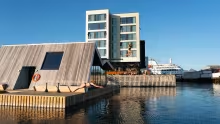
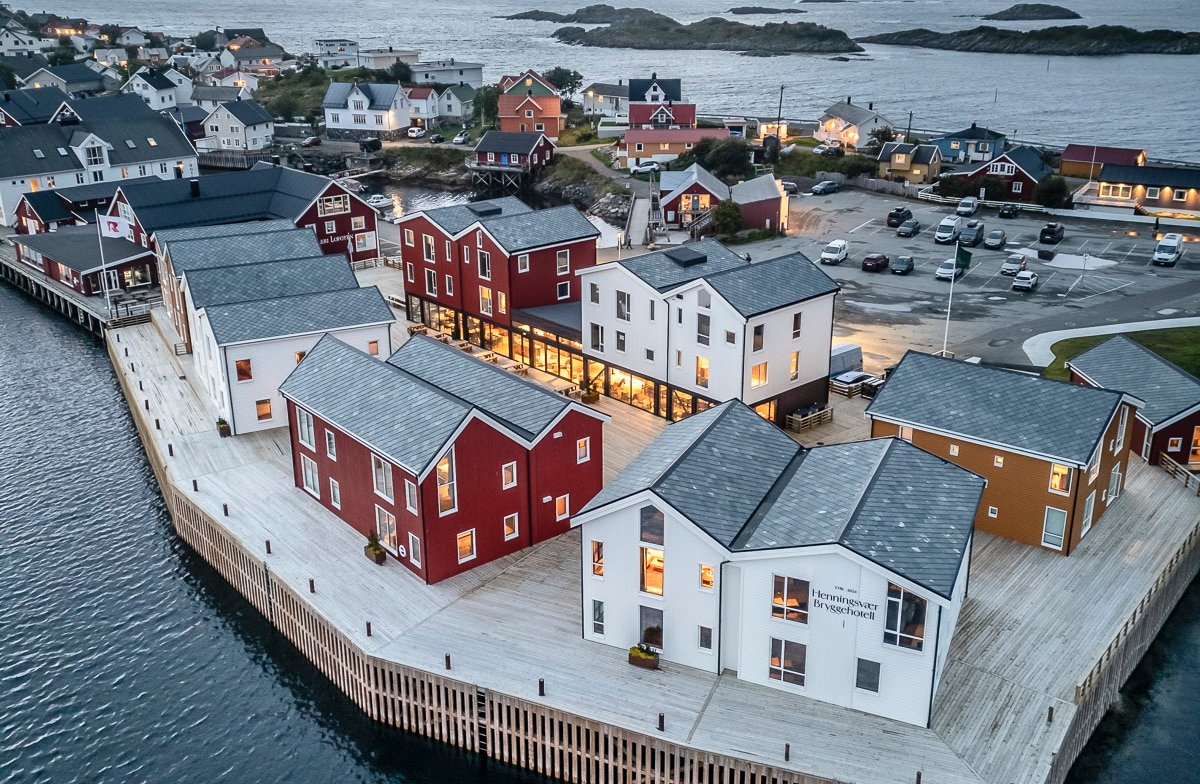
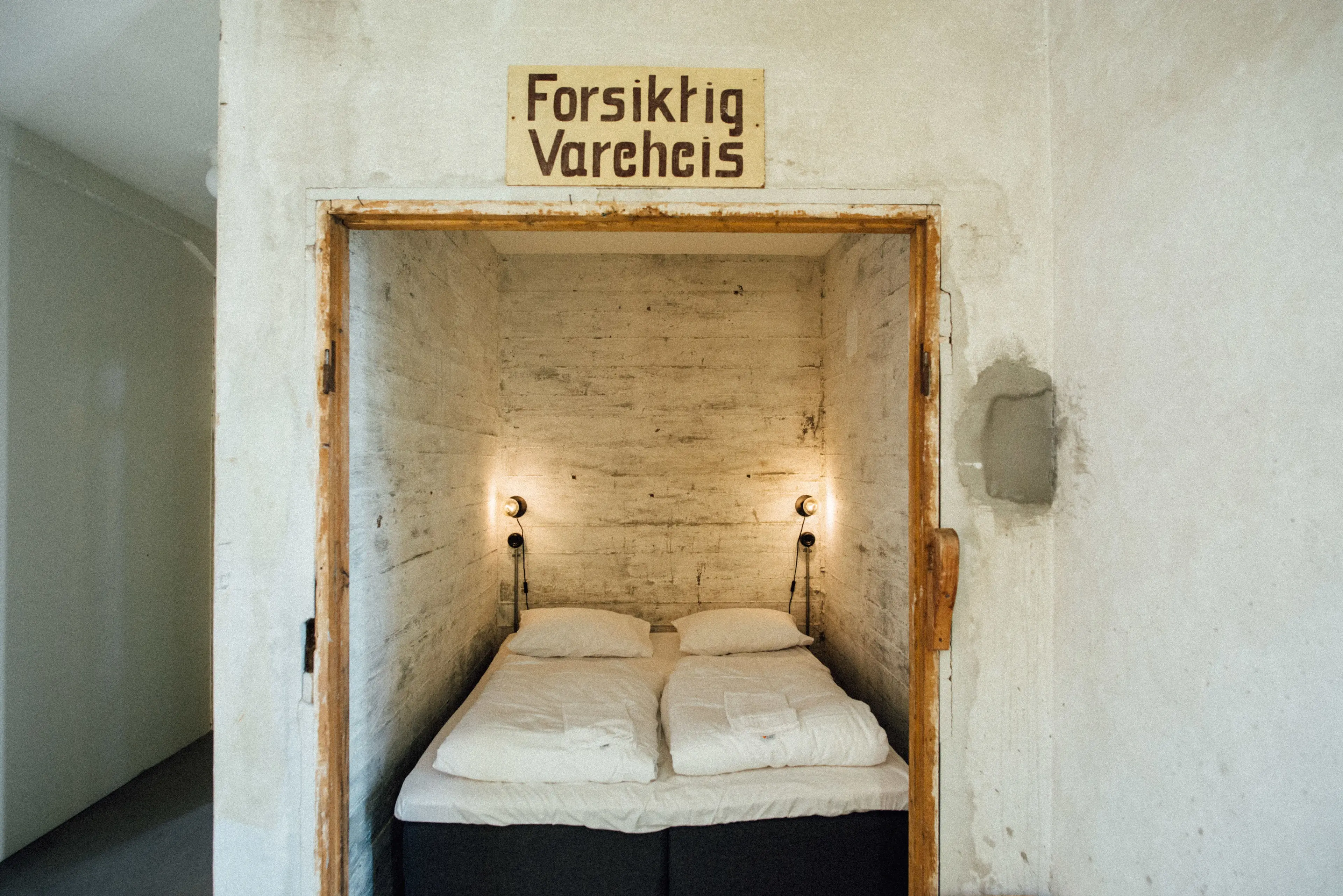
Henningsvær Bryggehotell opened in July 2024 and is the best hotel in the village. Classic Norway Hotels built 39 rooms across eight harbour-front buildings designed to echo traditional wharf architecture, but everything inside is new. Loft suites with ocean views, proper bathrooms, minibars, good beds. Vind Brasserie on-site handles both breakfast and dinner. If you want a hotel that feels designed rather than just renovated, this is the only option in Lofoten that delivers at this level.
Fiskekrogen is the serious seafood restaurant in Henningsvær. Reserve well ahead for summer evenings. Lysstøperiet does excellent daytime coffee and pastries alongside its candle-making shop. The KaviarFactory is a contemporary art gallery in a converted warehouse on the harbour. Rotating exhibitions, and worth an hour even if contemporary art isn't usually your thing.
Trevarefabrikken
Trevarefabrikken is the other option. A group of friends bought an abandoned carpentry and cod liver oil factory in 2014 and turned it into a hotel, restaurant, bar, sauna, and cultural venue. The rooms are on the upper floors, built around the original factory bones: reused brick, ash flooring, big industrial windows. It's not a luxury stay. The rooms are comfortable but simple, there's no lift, and the vibe is more creative commune than boutique hotel. What Trevarefabrikken does better than anywhere else in Henningsvær is atmosphere. Summer evenings on the waterfront terrace with a beer, live music some nights, film screenings, yoga in the mornings.
Henningsvær sits at the end of a dead-end road off the E10. Parking in peak summer is tight. Day-trippers pack the narrow streets from mid-morning through the afternoon, but by evening the village empties and becomes properly peaceful. The Festvågtind hike starts nearby and gives you a panoramic view back over the village and the surrounding islands.
Ballstad: Centrally located in Lofoten
Ballstad is a working fishing village on the south coast of Vestvågøy and the best single-base location in the archipelago. The town itself is not pretty, but it puts you within about an hour of everything worth seeing in both directions.
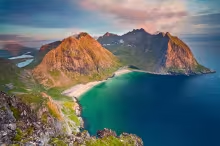
Svolvær is about an hour to the east. Reine is about 45 minutes to the west. Leknes, with proper supermarkets and one of the two Vinmonopolet locations, is 10 minutes up the road. The white-sand beaches at Haukland and Uttakleiv are about 25 minutes north. The Ryten hike, which gives you the famous view down over Kvalvika beach, starts about 30 minutes west. Nusfjord is a half-day trip.
Hattvika Lodge
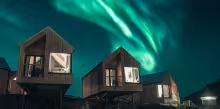
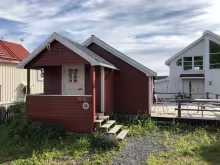
Hattvika Lodge is the standout. Kristian and Guri Bøe rebuilt a collection of 1870s rorbuer on the harbour and added the Hillside units in 2020, ten freestanding rooms raised on the slope above with floor-to-ceiling windows and views over the fishing village and the sea. The Hillside rooms feel like a Scandinavian design hotel dropped onto a hilltop. Roof windows, window-seat nooks, modern bathrooms, a clean studio layout. The traditional rorbuer down on the water are different. Full kitchens, heated bathroom floors, the sound of the harbour through the walls, and enough weathered timber to remind you this was a working fishing station. If you want space and a view from bed, book a Hillside unit. If you want to hear the boats or cook yourself, book a rorbu. If you're booking for a special occasion, ask about the Bendiksenbua unit, which has a private outdoor jacuzzi. It's named after Guri's grandfather Tor Bendiksen, who worked in that exact cabin for over 50 years.
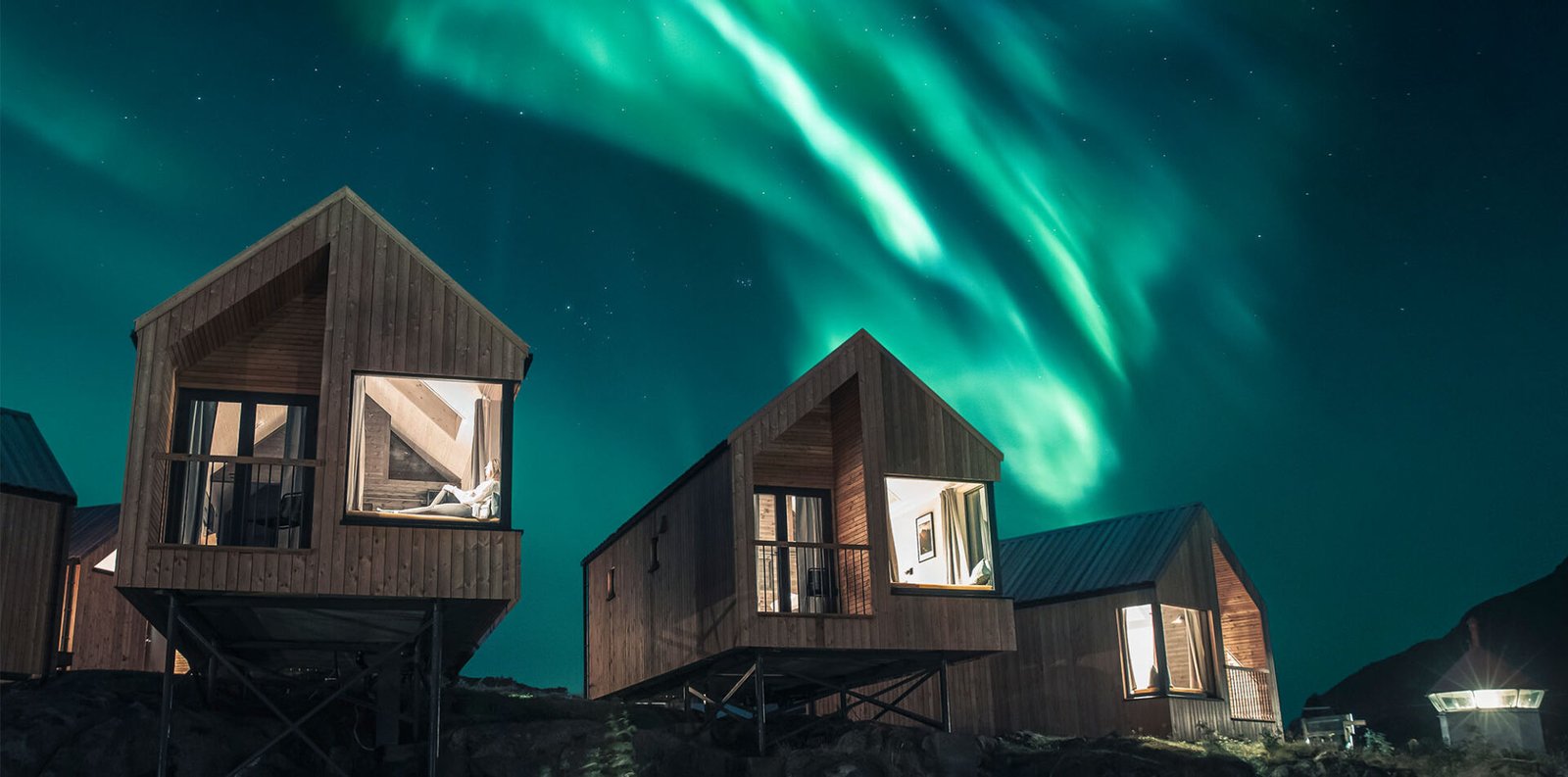
Restaurant Fangst operates on-site, sourcing its seafood from the boats that unload at the dock directly in front of the property. There's a sauna on the harbour (not included) with a cold-plunge option. The lodge arranges guided kayaking, fishing trips with local captains, and hiking in the surrounding mountains. The property works because the hosts actually know the islands. Kristian will tell you which hike to do on which day based on the weather, and where to park to avoid the crowds.
The single best meal in Lofoten is also in Ballstad. Lofoten Food Studio is a 12-seat chef's table run by Roy Magne Berglund in a converted garage in his backyard. One chef, no staff, 7 or 9 courses of hyper-local seafood with wine pairing. He cooks everything in front of you, washes the plates himself, pours every glass. The menu changes with the season and whatever he's sourced that day. It runs about four hours and feels closer to Japanese omakase than anything you'd expect to find above the Arctic Circle. The 7-course tasting menu is around 2,000 NOK before wine. Book as far ahead as you can. He only seats 12 people at a time, and word has been out for a while.
Nusfjord
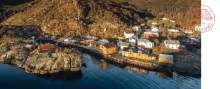
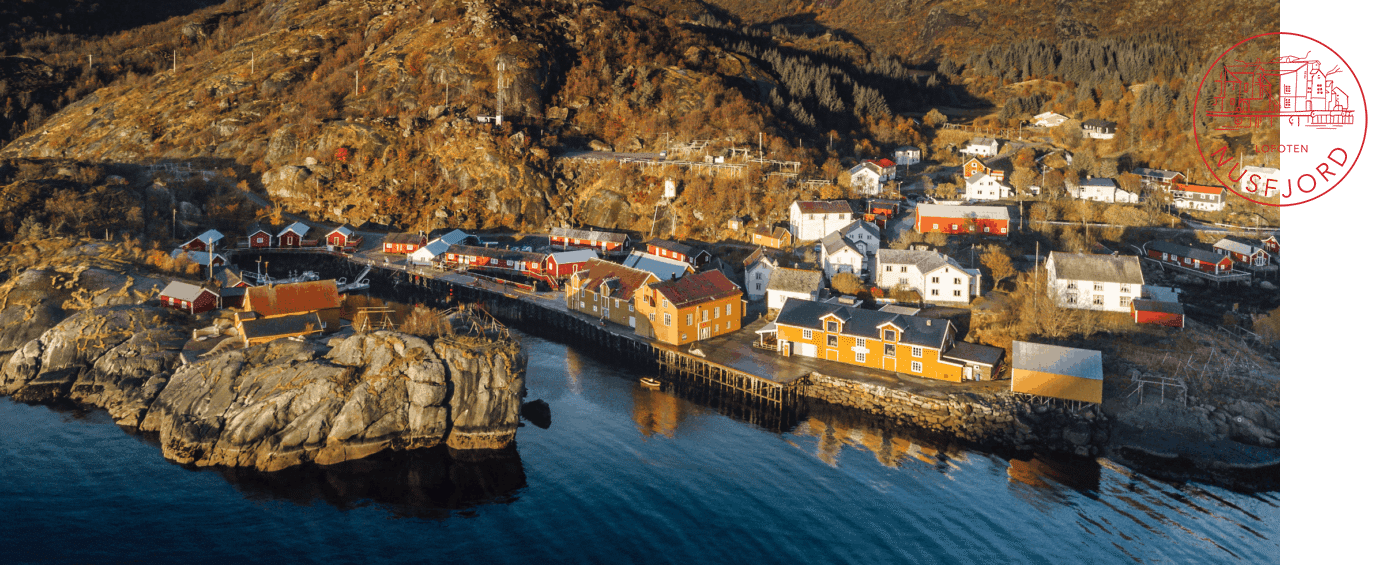
A one- or two-night stay, not a full base. Nusfjord sits at the end of a narrow road that drops into a sheltered fjord on Flakstadøya, about 30 minutes from Leknes. It's one of the oldest preserved fishing villages in Norway, with only 19 permanent residents and a harbour lined with restored red and yellow rorbuer. Day visitors pay a 100 NOK entrance fee, which funds the preservation work and filters out some of the casual traffic. If you're staying overnight, the fee is waived.
Nusfjord Arctic Resort
Nusfjord Arctic Resort manages all the accommodation in the village. It's a member of Small Luxury Hotels of the World. The restored harbour cabins look out over the fjord. There's a Nordic spa with a hot tub above the water. Restaurant Karoline operates in the old dried-fish loft, and the stockfish prepared from locally air-dried cod is the specialty. Oriana Tavern does pizza in a former whiskey cellar with three tables. Landhandleriet Café sits in the old general store and serves waffles and coffee.
The setting is extraordinary, especially in the mornings and evenings when the day tourists have left. The entrance fee creates a buffer that most villages on the islands don't have, and by 18:00 the harbour belongs to overnight guests and the handful of locals.
The "luxury" label sets expectations high, and at times it feels that the hospitality doesn´t match the branding. The buildings are immaculate and the fjord setting is hard to beat, but the experience can lean toward polished efficiency rather than warmth. Nusfjord works best as a short stopover between Ballstad and the western villages. Don't plan three or four nights here.
Reine & the western villages: Iconic scenery
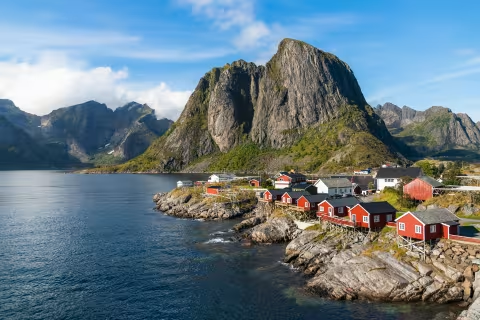
West of Nusfjord, the E10 crosses onto Moskenesøya and the landscape changes. The mountains are steeper here and the villages are smaller. Reine, Hamnøy, Sakrisøy, and Sørvågen are all clustered within about 20 minutes of each other along the final stretch of highway before it dead-ends at Å. This is the Lofoten that people photograph and post and pin to mood boards, and for once the photos aren't lying.
The villages are tiny. Dining options in the west are sparse and fill up fast. But by evening, when the tour buses and day-trippers have driven back toward Svolvær, the western end of the archipelago empties out. It gets very quiet.
For lunch in the west: Anitas Sjømat in Sakrisøy, the small island between Hamnøy and Reine. A deli and seafood counter rather than a sit-down restaurant. The fish burgers are the draw, and the smoked salmon is excellent. Not a dinner destination, but the best daytime food stop on this end of the islands.
Staying in the west also puts you closest to the Reinebringen hike (the trailhead is near Reine, walkable from Hamnøy), the passenger ferry from Reine to Vindstad for the hike out to Bunes beach on the exposed outer coast, and kayaking in the Reinefjord. The ferry crossing takes about 20 minutes and runs only a few times daily in summer. Check the schedule with Reine Fjordcruise before planning your day around it. From the eastern or central villages, a Bunes trip means three-plus hours of driving on top of the hike. If it's on your list, you need to be sleeping nearby.
Reine is the largest of the western villages, which still isn't large. It has more restaurants than Hamnøy or Sørvågen, a grocery store, and the closest access to the Reinebringen trailhead.
Reine Rorbuer
Reine Rorbuer is the main property, with cabins right on the harbour. A solid option if you want to be in the middle of the western cluster with the most dining options within walking distance. The cabins vary a lot. Some are renovated to a high standard with good bathrooms and proper kitchens; others feel older and more basic. Book the waterfront units, which have the best views and tend to be the most recently updated. The location is the draw here. Reine has more restaurants than anywhere else in the western villages, there's a grocery store, and you can walk to the Reinebringen car park instead of fighting for a spot in it. Gammelbua, just along the harbour, does solid traditional seafood. If you want the most practical western base with the least logistical friction, Reine Rorbuer is the safe pick. It doesn't have the drama of Eliassen or the kitchen of Holmen, but you won't spend your evenings wondering where to eat.
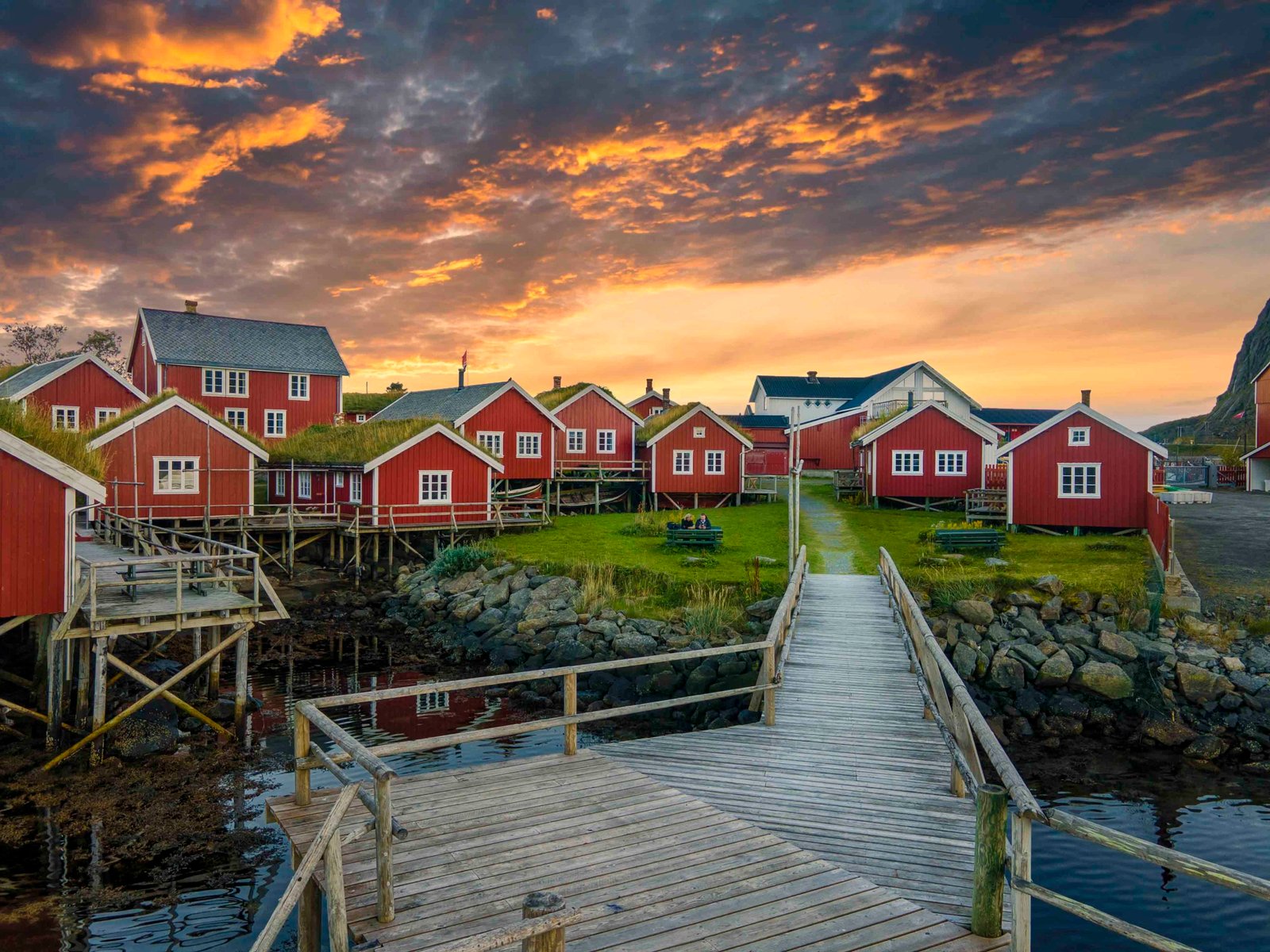
Å, at the very end of the road, has the Norwegian Fishing Village Museum and a well-known bakery with traditional cinnamon buns. Worth a half-day visit but not a base.
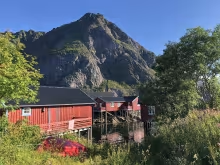
Eliassen Rorbuer, Hamnøy
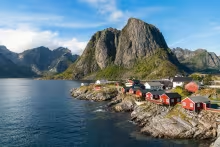
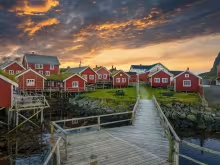
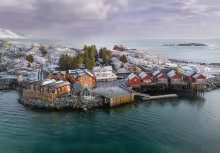
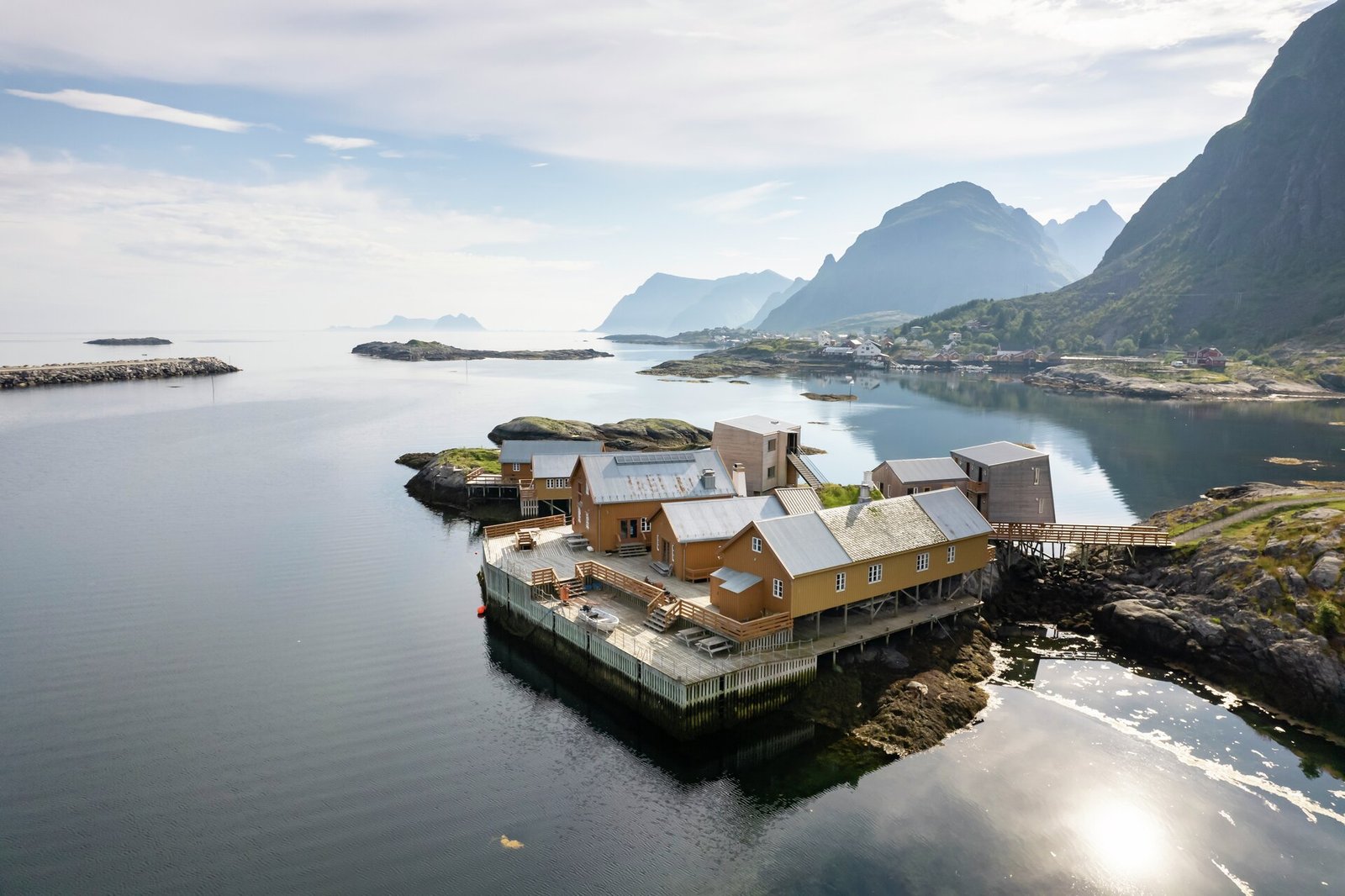
The most photographed accommodation in Norway. Renovated fisherman's cabins on stilts over the water, backed by a wall of granite peaks. The view from the Hamnøy bridge is the one you've seen on book covers and Instagram. The location is as good as the photos suggest.
The cabins are not. This is 3-star accommodation at a premium price. The walls between units are thin enough that you'll hear your neighbours. The property is dense, not private. Photographers line the bridge throughout the day, cameras pointed at the cabins.
None of that necessarily means you shouldn't stay here. It means you should book with your eyes open. At 06:00 or 22:00, when the bridge is empty and the tidal current is running under your cabin and the peaks are lit from the side, none of it will bother you.
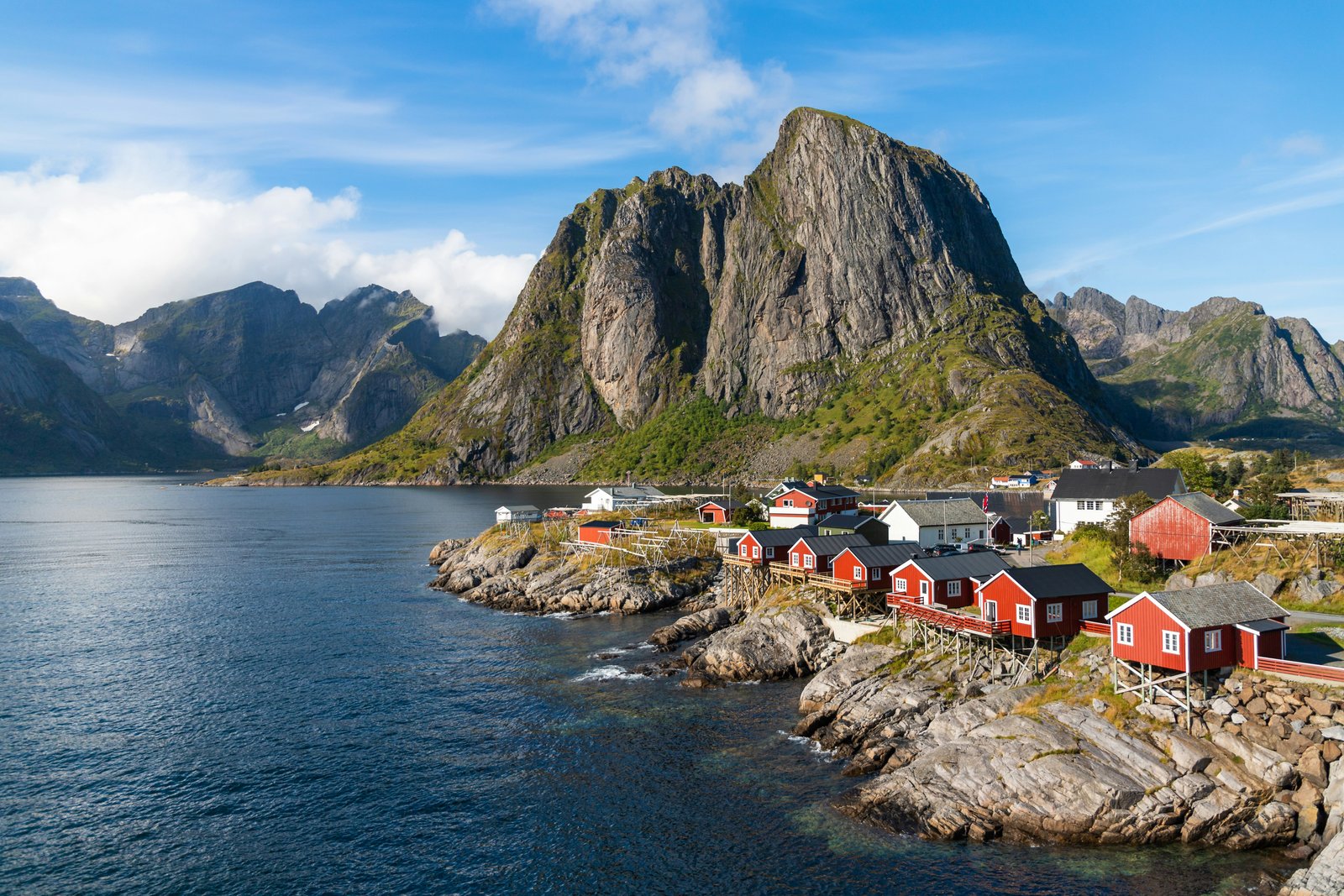
The booking advice that matters: Only the over-water cabins with sea views are worth the money.
Gadus is the on-site restaurant, an Italian-Norwegian fusion spot that changed ownership in May 2025 and appears to be continuing the established menu and quality. It is the only restaurant within walking distance, and it fills every night in summer. Reserve a table the day you book your cabin.
Reinefjorden Sjøhus, Hamnøy
The most contemporary option on Hamnøy, and the newest rorbuer complex in the area. Floor-to-ceiling glass facing the Reinefjord, clean Scandinavian interiors, floor heating, dishwashers, proper storage, and wide terraces you can actually step onto. It's the closest thing to a high-end holiday rental in the area.
The Deluxe Studios and the sea-front Fisherman's Cabins are the ones to book. Both get the panoramic glass and the unobstructed fjord views.
Buying food and alcohol
Most rorbu in Lofoten have a kitchen, so if you want to cook the opportunity is there.
The two proper supermarket towns are Leknes and Svolvær. Both have Rema 1000 and Coop stores with decent selections. Stock up whenever you pass through. In the western villages, the nearest grocery options are small and limited.
The archipelago has exactly two Vinmonopolet liquor stores: one in Leknes, one in Svolvær. They close at 18:00 on weekdays, 16:00 on Saturdays, and are closed all day Sunday. Foreign visitors regularly get caught out by this. A Saturday weekend in Hamnøy with no wine and no liquor store within 45 minutes is a problem. Plan properly and this won't happen.
Restaurant kitchens across the islands typically close by 21:00, often earlier. Capacity is tiny everywhere. If a place takes reservations, make one.
When to go
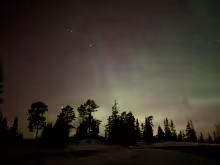
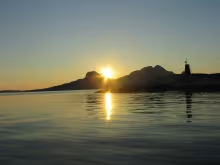
Late June or late August into early September is the best to avoid the largest peak season crowds. The midnight sun runs from roughly late May to mid-July in the Lofoten Islands, so late June puts you right in the middle of 24-hour daylight with fewer visitors than the July peak and mostly hikeable trails. Late August and early September bring quieter roads, easier accommodation booking, and the return of properly dark skies, but still plenty of daylight. Northern lights become possible once the dark nights return, typically from mid-September through March.
July is the worst month for crowds. Norwegian school holidays fill the E10 with campervans. Trailhead parking at Reinebringen fills by mid-morning. The Bodø to Moskenes ferry queue becomes a test of patience if you did not secure a pre-booking. If July is the only window you have, book everything at least six months ahead and plan to start every day early, before the day-trippers arrive from the east.
Hiking is generally accessible from late May through October, with snow lingering at higher elevations into June. Winter, from November through March, is northern lights season, but many trails become inaccessible, some properties shut down entirely, and driving conditions on the E10 can be dangerous. That's a fundamentally different trip, and a good one, but it's not this article.
Book your rental car early for summer. A compact hatchback handles every road in the islands and fits into parking spots that an SUV won't. Prices spike hard in July and August.
Explore the locations