By: Chris ⎜ Last updated
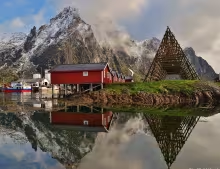
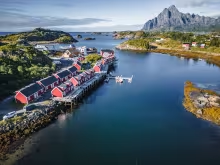
Every converted fisherman's cabin in Lofoten calls itself a rorbu. The word just means "rower's dwelling," and it covers everything from a drafty 1890s heritage cabin with bunk beds and an outdoor toilet to an architect-designed waterfront suite with heated floors and a rain shower. The gap between the worst and the best is enormous, and the photos on booking sites don't always make it clear which one you're getting.
This is not a complete list of every rorbu in Lofoten. It's the ones worth the money, sorted by what you're actually paying for. The where to stay in Lofoten guide covers which village to base yourself in. This article covers the best of this quintessential Lofoten accommodation.
One thing worth knowing upfront: at most of these places, the specific cabin you get matters more than the property itself. A waterfront deluxe at Eliassen Rorbuer and a land-view standard at the same property are two completely different holidays.
Book early or book what's left
The best waterfront cabins at popular properties sell out six to twelve months ahead for June through August. If you're planning a peak summer trip and you have a specific property in mind, book as early as you can. Shoulder season (May, September) is more flexible, but top properties still fill up three to four months out.
At places like Eliassen or Reine Rorbuer, the difference between a waterfront cabin and one facing the car park is the difference between an extraordinary stay and a forgettable one.
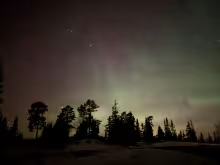
Winter has changed too. January through March used to be quiet, but northern lights tourism and ski touring have turned early Q1 into a second peak. Budget three to four months of lead time for premium winter stays.
The best rorbuer
Nusfjord Arctic Resort
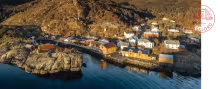
Nusfjord operates as a paid open-air museum during the day. Visitors buy tickets, walk around the preserved harbour, eat at the café, and leave. After closing time, the day-trippers disappear and you have a UNESCO-protected fishing village to yourself. That evening transition is the thing that sets Nusfjord apart from everywhere else on this list. The harbour goes quiet. The light hits the water. You're standing in one of the oldest preserved fishing villages in Norway and nobody else is around.
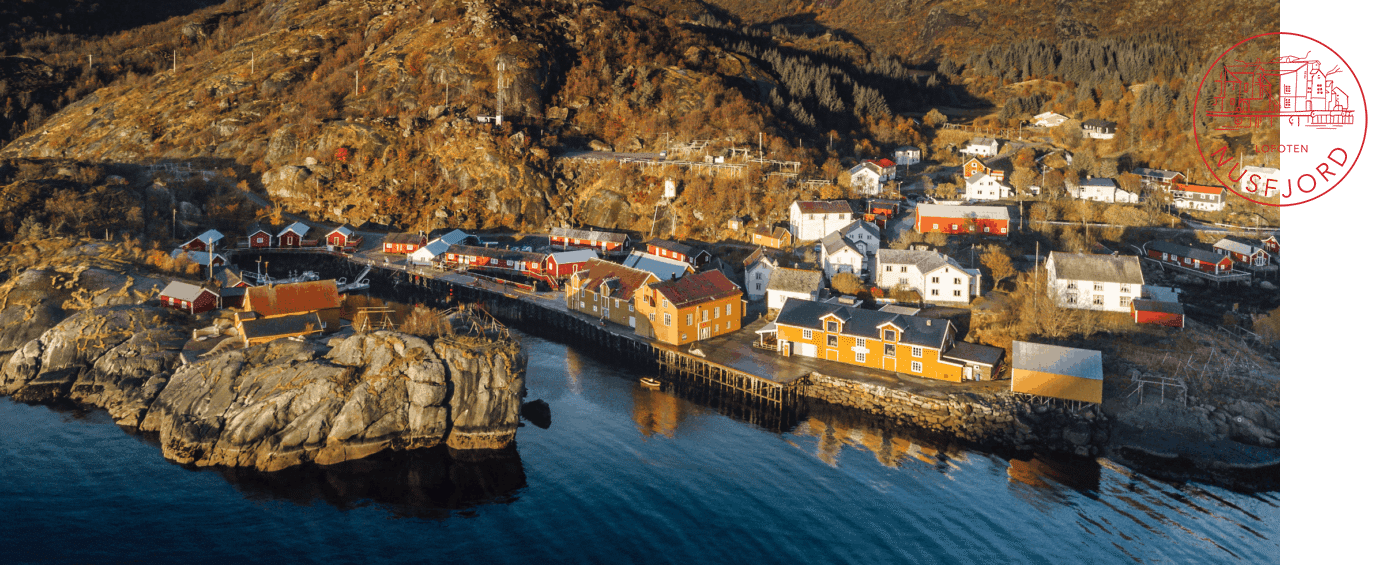
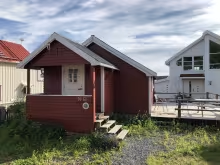
The accommodation splits into several tiers. The harbour cabin suites are the ones to book. They sit directly on the waterfront with views across the historic harbour, modern bathrooms with heated floors, fully equipped kitchens, and high-end toiletries. At the other end of the spectrum, Nusfjord still has four government-protected heritage cabins that haven't changed since 1890. No running water, outdoor toilet. These exist more as museum pieces than as serious accommodation options for most travellers.
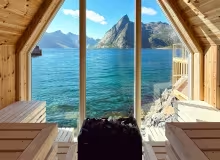
Restaurant Karoline handles the fine dining, with a seasonal menu built around local seafood and Lofoten lamb. The Oriana Tavern does Nordic-style pizza, and the Landhandleriet Café covers daytime coffee and waffles. There's a spa complex with wood-fired hot tubs and a sauna overlooking the water.
The catch: breakfast isn't included and it's expensive. Spa access hasn't always been bundled with every cabin type either, so check what's included when you book.
Hattvika Lodge
The restaurant, Fangst, on-site at Hattvika, serves one of the best meals on the islands. Locally caught seafood, short menu, quality that would justify a separate trip to Ballstad even if you weren't staying here.
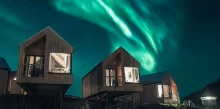
The accommodation runs three distinct room types. The heritage rorbuer date to the 1870s and 1880s, restored with full kitchens, heated bathroom floors, and comfortable beds while keeping the original timber character. The Hillside cabins are a completely different product: modern hotel rooms with panoramic windows positioned so you can lie in bed and watch the northern lights or the midnight sun without getting up. The Seaside Suites sit somewhere between the two. All three are good, but they suit different priorities. The Hillside cabins include breakfast at Fangst. The heritage rorbuer don't, but you can add it.
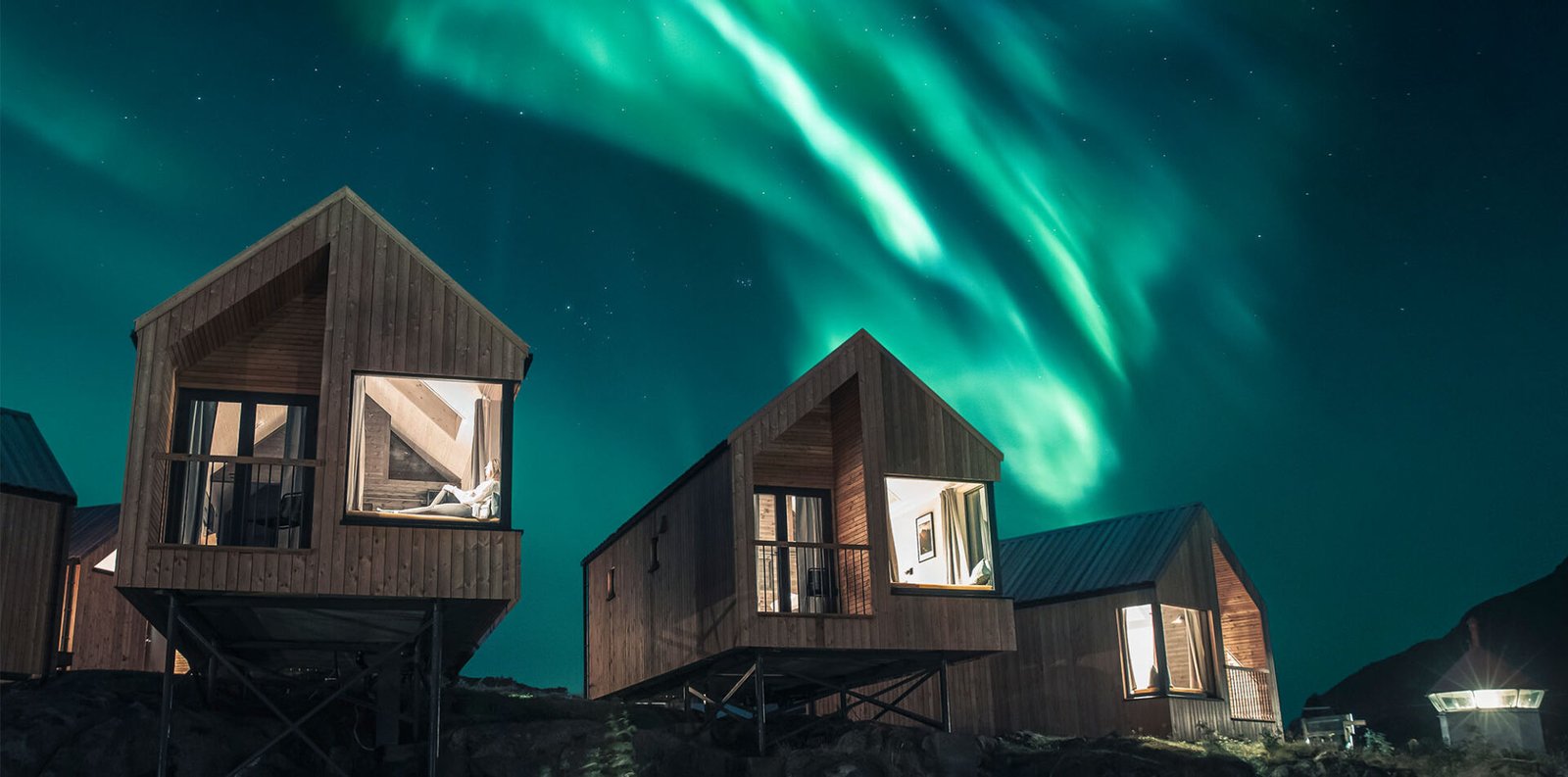
Hattvika is owned and run by Kristian and Guri. Guri's family has been in Ballstad for six generations, and Kristian is the kind of host who texts you driving tips before you arrive and meets you with your bags. That personal investment shows up in small details throughout the property. There's a sauna on the dock, hot tubs, and a Møller's cod liver oil tasting depot across the harbour (the original factory is right there).
Ballstad sits in the middle of Lofoten, which means roughly equal driving distance to Svolvær to the east and Reine to the west. For a week-long stay where you want to explore in both directions without relocating, it's hard to beat as a central base.
Reine Rorbuer
The 39 cabins at Reine Rorbuer range from one-bedroom Comfort units to three-bedroom Deluxe waterfront cabins, and the quality gap between the bottom and top of that range is stark. The smaller "Sport" category cabins are cramped, with bunk beds placed awkwardly in the main living area and not much room to move around. They don't justify the price you'll pay during summer, and they're the ones most likely to be available because visitors avoid them.
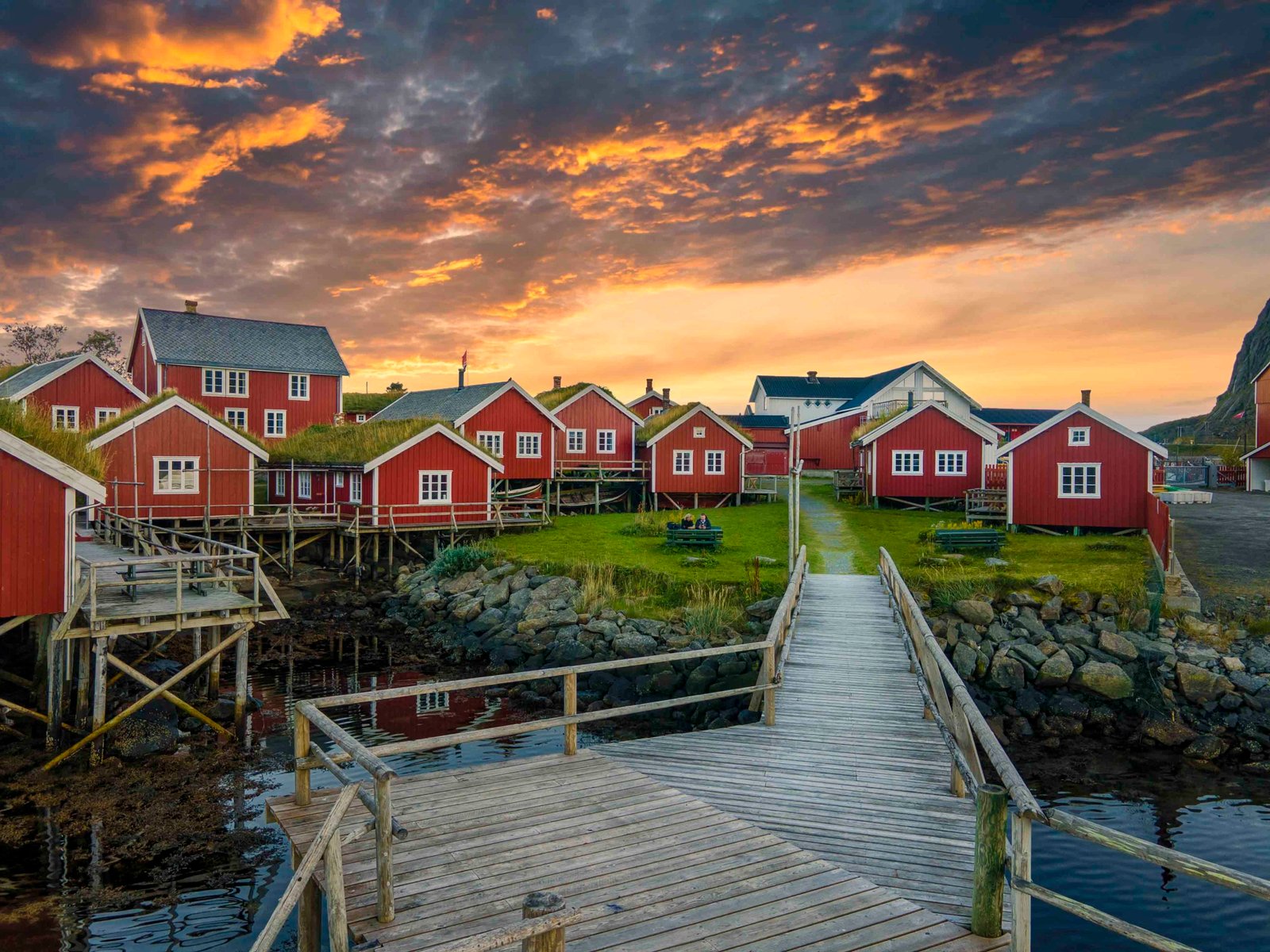
The Deluxe cabins with fjord views are spacious, well-maintained, properly furnished, and positioned for the views that made Reine famous. If you book here, spend the extra and get the right category. If unsure, confirm the specific cabin type in writing before commit.
Reine Rorbuer is run by Classic Norway Hotels, which means it operates more like a hotel than the independent properties. There's a staffed reception, breakfast is available, and the Gammelbua restaurant occupies a building that dates to the late 1700s. Traditional Norwegian dishes, seasonal menu, worth a dinner reservation even if you're staying elsewhere. Open February through October, with a two-night minimum from June through September.
Eliassen Rorbuer
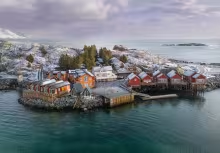
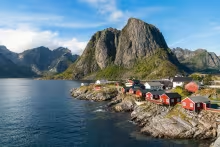
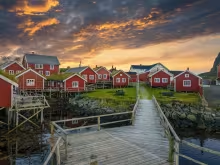
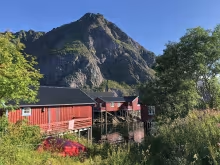
Likely the most photographed rorbuer in Norway, and some of the oldest. The earliest cabins at Eliassen date to the 1890s, and the red timber against the sheer granite walls of Reinefjord has been on the cover of Lonely Planet. Eliassen has 34 cabins, and the critical thing to understand is that only two categories deliver the experience in those photos: Waterfront Superior and Waterfront Deluxe. These sit on stilts over the water with direct views of the fjord and mountains.
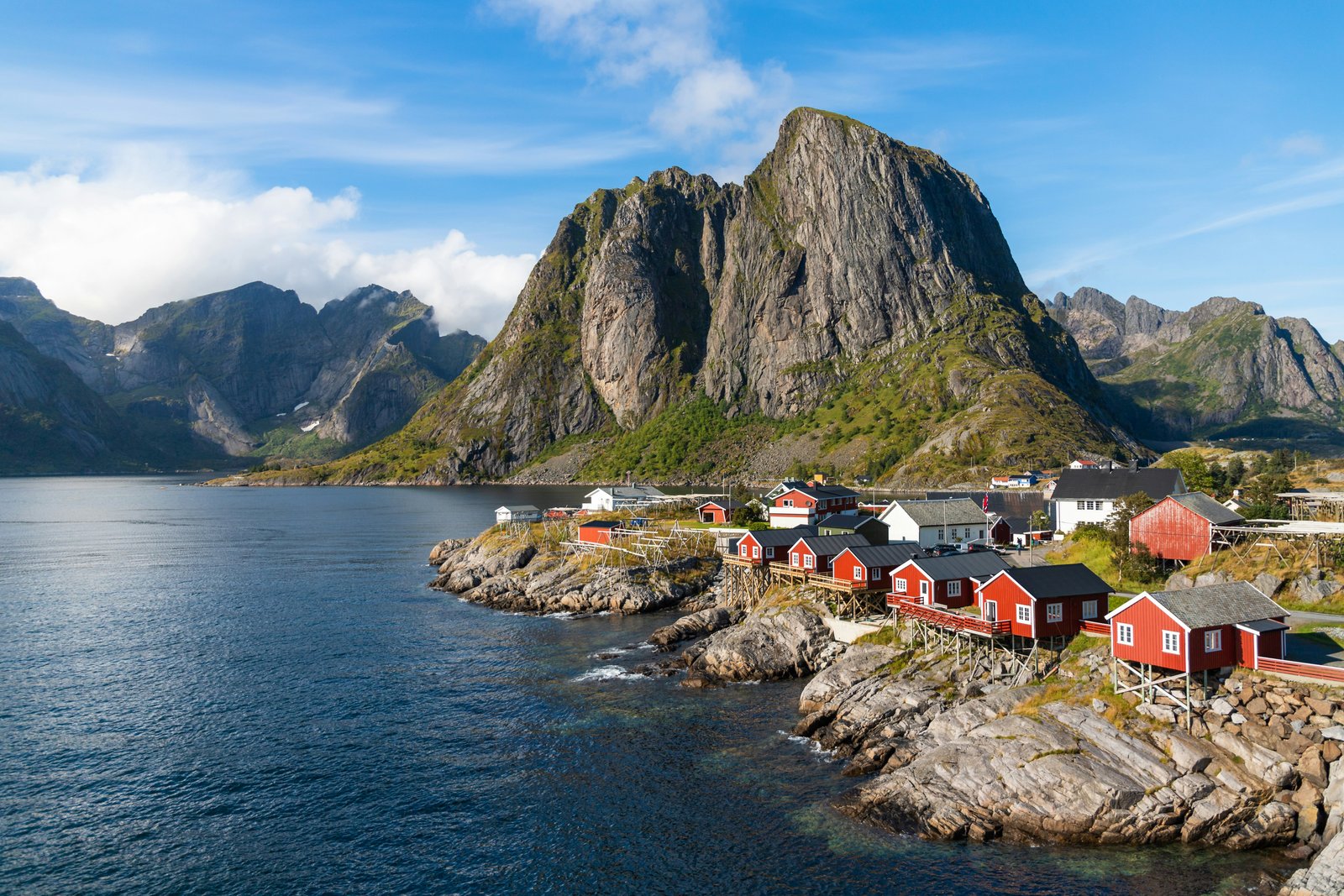
The standard and land-view cabins face other cabins, not the water. The views are ordinary, and some still have bunk beds rather than doubles. For couples, confirm a double bed explicitly when booking.
Eliassen operates more like a high-quality Airbnb than a hotel. Check-in is via an app. There's no reception desk, no daily housekeeping, no one coming to turn down your bed. The on-site restaurant, Gadus, does an Italian-Norwegian fusion menu that's worth a reservation.
Book the waterfront category. The land-view cabins at Eliassen are a basic self-catering stay with a famous postcode.
Reinefjorden Sjøhus
The newer, quieter alternative next door to Eliassen. Reinefjorden Sjøhus is a smaller operation with a mix of traditional rorbuer and modern sea houses, and the sea houses are the draw. Large windows designed to frame the fjord rather than peek at it through small heritage-style openings. The aesthetic leans contemporary Scandinavian: clean lines, lots of glass, light interiors.
The property recently expanded with new cabins and two saunas with direct ocean plunge access and a hot tub. No on-site restaurant, but Gadus at Eliassen is a short walk, and there are several options in Reine ten minutes away by car.
Sakrisøy Rorbuer
Yellow cabins instead of red. That's not a random colour choice. Historically, the more expensive ochre paint signalled a wealthier fishery owner, and Sakrisøy's buildings have been yellow for generations. The property has been family-run by the Gylseth family since 1874, and it feels it. Small scale, personal, no pretensions.
The cabins date to the 19th century, restored with kitchenettes, private bathrooms, and WiFi. No spa, no restaurant on the property, but Anita's Seafood is right next door and worth a stop. The Deluxe Waterfront cabin and the Olstind cabin (named for its view of Mount Olstind) are the ones to request.
Svinøya Rorbuer
The reason to stay at Svinøya is Børsen Spiseri. The restaurant sits in a quayside warehouse from 1828, and stockfish is the speciality. If you've never eaten stockfish properly prepared, this is the place. Book a table even if you're staying somewhere else.
The rorbuer spread across a tiny island connected to Svolvær by a short bridge. The range of cabin quality is wide. The original timber cabins have authentic dark-wood interiors with slanted attic ceilings and small windows. The modern Rorbu Suites are spacious, bright, and face the harbour. Ask for cabin S+ if it's available. The property also has a floating sauna with ocean plunge access, and there's a 200-year-old Manor House that sleeps up to 17 for group bookings.
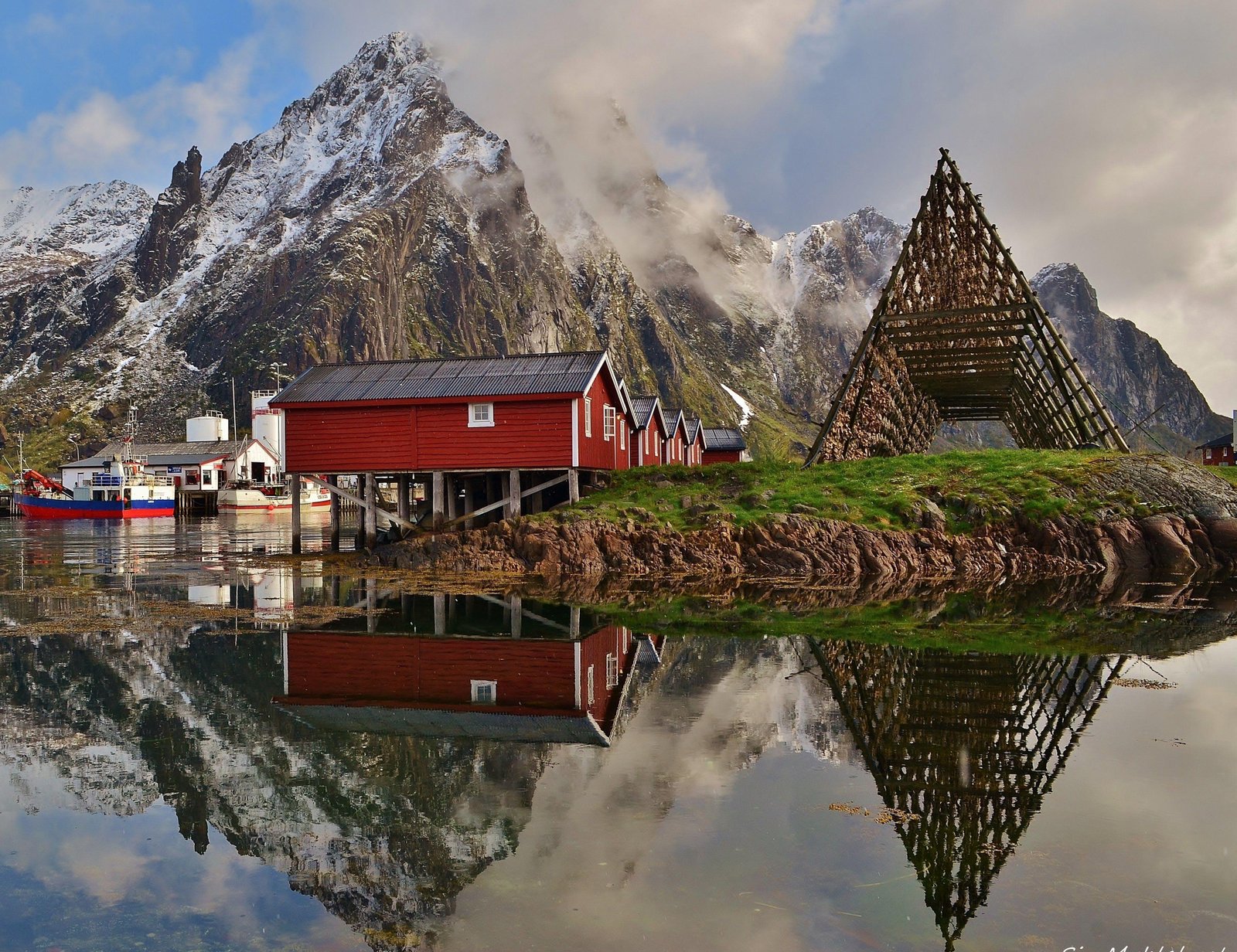
The big caveat: Svinøya defaults to a traditional self-catering model. No daily housekeeping in most categories. At checkout, you may be expected to strip your own bed linens, take out the rubbish, and tidy the kitchen. The premium suites sometimes waive this. It's completely normal in Norwegian cabin culture, but if you're paying top rates and expecting hotel service, it lands as a surprise.
Anker Brygge
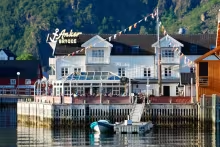
Anker Brygge sits on a small island 150 metres from the Svolvær town square, with 27 rorbuer built into a former 1860s fish factory. Walk to restaurants, supermarkets, the Hurtigruten dock, and tour departure points without starting the car.
The key design detail that sets Anker Brygge apart from traditional multi-bedroom rorbuer: each bedroom has its own private en-suite bathroom. Kitchens are fully equipped, living areas are comfortable, and the breakfast buffet is consistently well-reviewed.
Restaurant Kjøkkenet ("The Kitchen") serves traditional northern Norwegian food in a setting designed to feel like an old-fashioned family kitchen. Bryggebaren, the pub downstairs, is lively but also loud. Ask for a cabin away from the bar when you book, especially if you're a light sleeper.
Nyvågar Rorbuhotell
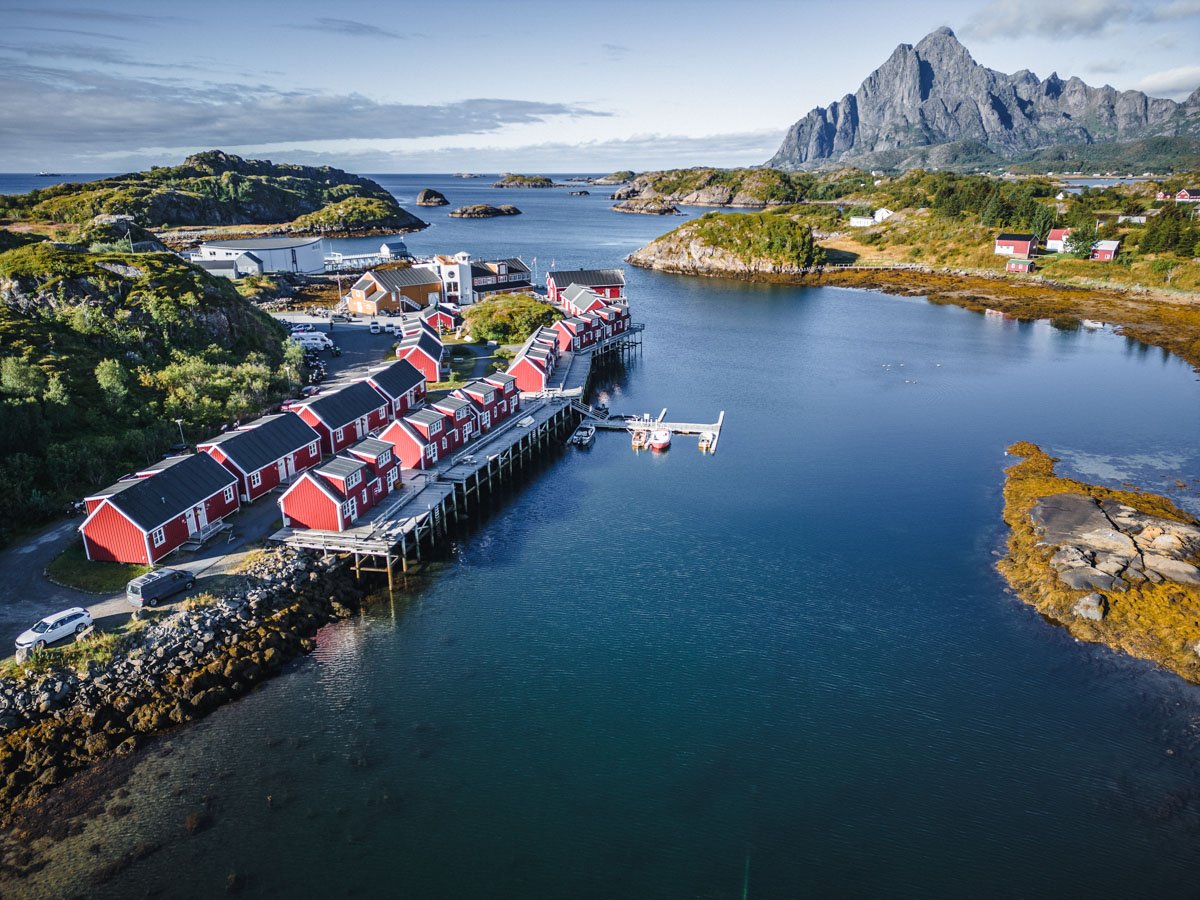
Thirty identical cabins, all the same layout: 50 square metres over two floors, two bedrooms, kitchenette, private bathroom. The uniformity is a feature, not a bug. You know exactly what you're getting, and the standard is solid across the board.
What distinguishes Nyvågar from the other Svolvær-area options is Lofotspa. Outdoor hot tubs facing the mountains, a sauna with floor-to-ceiling sea-view windows, and an ocean plunge from a floating jetty. It's a paid add-on (not included in the room rate), but it's proper. The Aquavit Loft Bar upstairs has roughly 300 varieties, which is either a novelty or a dangerous temptation depending on your relationship with Norwegian spirits.
The restaurant serves local produce with good reviews, and the property sits next to the Lofoten Aquarium and Lofoten Museum. Kabelvåg centre is a short walk. Spa facilities at roughly half of what Nusfjord charges for a night.
Before you book
Self-catering is the norm. Most rorbuer, even the ones charging well over 2,000 NOK per night, operate as self-catering accommodation. Don't expect turndown service or daily housekeeping. Many properties ask you to strip the beds and start the dishwasher before checkout, and some charge a flat cleaning fee per stay regardless of how many nights you book. Properties run by Classic Norway Hotels (Reine Rorbuer, Nyvågar) lean more toward hotel-style service. The independent properties lean more toward "here are your keys, enjoy."
Check the beds. Bunk beds and single beds persist even in recently renovated cabins. The rorbu was originally built to pack in fishermen, and some layouts still reflect that. If you're a couple and want a double bed, confirm it explicitly when you book.
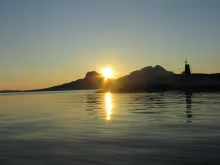
Pack a sleep mask. From late May to mid-July, the sun doesn't set. Many heritage cabins have small, historically accurate windows without proper blackout curtains. Even some modernised properties fall short here. A decent sleep mask is the cheapest upgrade you'll bring.
Winter stays need insulation. The modern builds and recently renovated properties (Hattvika Hillside, Reinefjorden Sjøhus, Lofoten Basecamp near Leknes) handle Arctic storms well. Some older timber cabins on stilts can get cold when coastal winds push underneath. The better properties have addressed this with underfloor heating and heavy insulation, but not all of them have.
Stock up before you arrive. "Fully equipped kitchen" means different things at different properties. Some are excellent. Others have a two-burner hob, a fridge, and nothing in the cupboards. Pick up basics at a supermarket in Leknes or Svolvær before you drive out to the more remote villages, because the nearest shop to places like Nusfjord or Hamnøy is a 15 to 20-minute drive.
Accessibility is limited. Most rorbuer involve steep wooden stairs, narrow doorways, high thresholds, and uneven boardwalks over water. Very few properties are wheelchair-accessible, and bedrooms at many traditional cabins are on the second floor. If mobility is a concern, contact the property directly before booking. Nyvågar and Anker Brygge, with their more uniform modern construction, tend to be the most navigable, but even these have limitations.
Explore the locations