By: Chris ⎜ Last updated
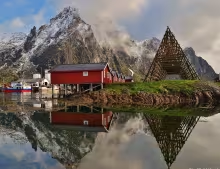
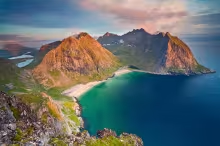
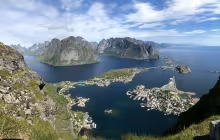
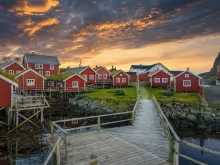

A car gives you the most freedom, and for most visitors it's the right call. But it's not the only way to do Lofoten well. If you'd rather not drive, especially in winter, flying into Svolvær and building your trip around guided tours is a solid alternative to consider. Public transport exists, but the bus network is designed for locals and school runs, not for tourists trying to reach remote beaches and trailheads. It works for getting between the main towns on the E10. Beyond that, you're on your own.
Driving yourself
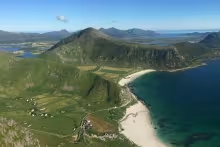
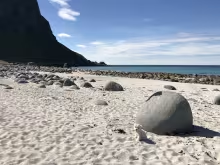
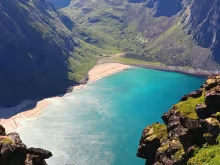
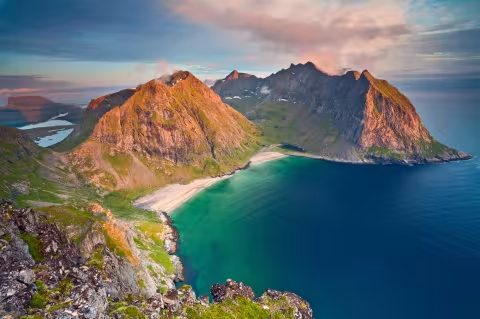
A car gets you to the places that make Lofoten worth the trip in the first place. The trailhead for Kvalvika and Ryten sits at the end of a side road with no bus service. Uttakleiv and Haukland beaches are off the E10 on the far side of Vestvågøy. Unstad, Eggum, Nusfjord, all require detours down narrow roads that no public bus covers in any useful way. If you want to photograph the northern lights, you need to be able to drive to a dark beach at midnight.
The roads are good. The E10 runs the full length of the archipelago, and most of it is two lanes with decent surfaces. A few single-lane tunnels and narrow stretches through fishing villages will slow you down, but nothing that requires special driving skills in summer. The drive from Svolvær to the village of Å at the far end takes about 2.5 hours without stops.
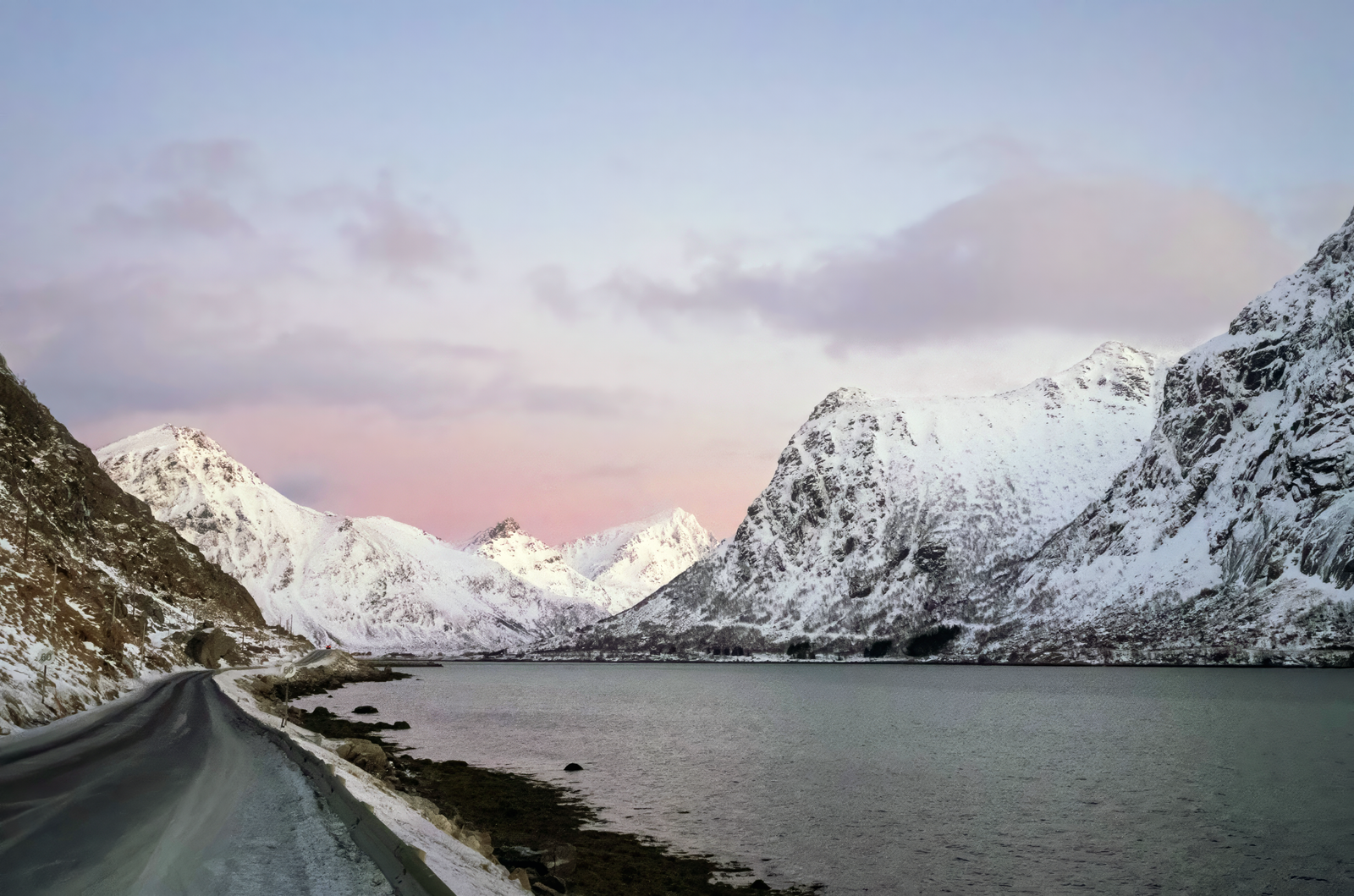
Winter is a different story. The roads are frequently icy, sections can be closed during storms, and you're driving in near-total darkness from November through January, unless you drive during a narrow window mid-day. Narrow mountain roads with no guardrails feel very different when they're covered in compacted snow or ice. If you've never driven in Arctic winter conditions, you should skip the car entirely and base yourself in Svolvær with guided tours instead.
Campervans are popular in summer and they work fine on the E10, but be aware that some of the side roads to beaches and trailheads are narrow enough that passing oncoming traffic in a large motorhome gets uncomfortable.
If you're renting, book early. Lofoten has limited rental stock, and summer availability dries up months ahead. You can pick up a car at Evenes Airport (Harstad/Narvik), at Svolvær, or at Leknes. Evenes gives the most choice. Check out getting to Lofoten article for further information. For detailed route planning, the 7-day Lofoten itinerary covers the full self-drive trip. Where to base yourself, what to see and do. Most of the highlights, however, can also be covered on guided trips from Svolvær.
7-day Lofoten scenic route self-drive itinerary
Basing yourself in Svolvær with tours
If you're not driving, Svolvær is where you want to be. It's the largest town in Lofoten, with proper restaurants, supermarkets, and the departure point for almost every tour operator working the archipelago. Fly into Evenes Airport and take the airport bus to Svolvær, or come in on the express passenger boat from Bodø.
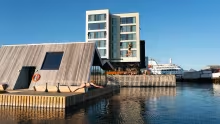
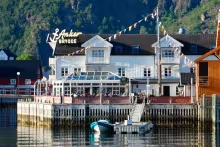
For accommodation, it depends on what you're after. If you want the classic rorbu experience, Svinøya Rorbuer sits on its own island connected by a bridge, atmospheric and slightly outside the centre. Anker Brygge offers rorbuer right on the waterfront within walking distance of everything. If you'd rather have a normal hotel room, both Thon Hotel Lofoten and Thon Hotel Svolvær are solid, different options but both well-located. Read more about each option on the specific hotel pages.
With Svolvær as your base, you can cover most of Lofoten's highlights through a combination of boat trips and guided day tours without ever sitting behind a wheel.
Trollfjord by boat
Trollfjord is one of those places you can only reach by water. No car will get you there anyway. The entrance is barely 100 metres wide, flanked by mountains that drop straight into the sea, and the whole thing feels like sailing into a crack in the earth. Two very different ways to see it, both departing from Svolvær harbour, both popular and well regarded.
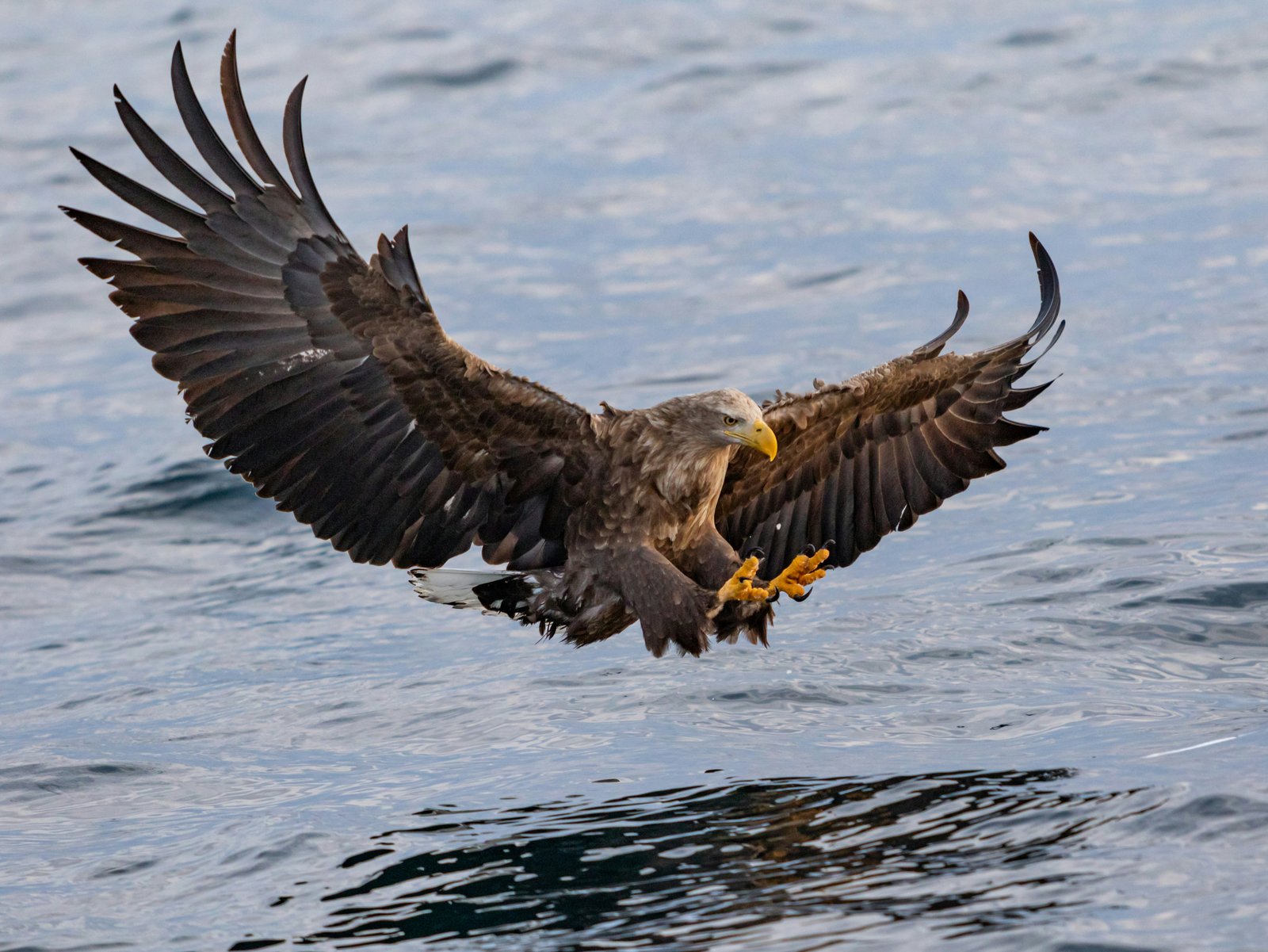
The silent electric cruise is the comfortable option. Run by Brim Explorer, it's a three-hour trip on a modern hybrid-electric catamaran with indoor lounges, outdoor decks, and a café. The boat switches to electric power as it enters Trollfjord, so you glide through in near-silence. White-tailed sea eagles are common overhead, and if conditions allow, the crew deploys an underwater drone to show what's happening beneath the surface. It runs twice daily from February through October, with a third evening departure added in summer. This is a good first-day activity while you're settling in, especially if you've just come off a flight.
Seeing the southern villages without driving
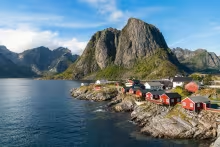
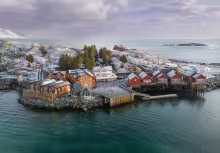
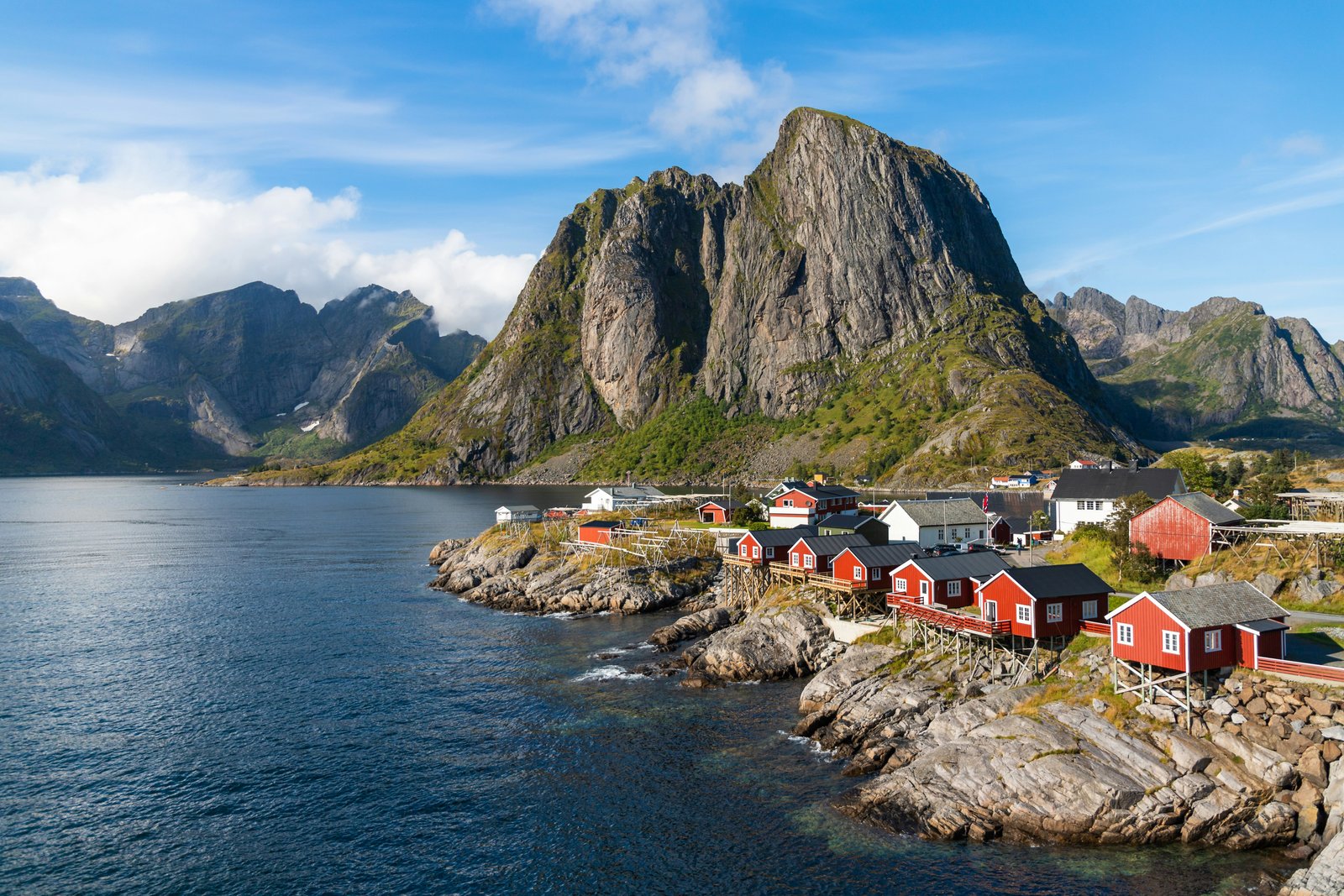
The most photographed places in Lofoten, the red rorbuer at Hamnøy, the harbour at Reine, the yellow cabins at Sakrisøy, the stockfish racks at Å, are all in the southwestern end of the archipelago. From Svolvær, that's roughly 2.5 hours of driving each way. Without a car, a guided day tour is the most practical way to see them.
Several operators run full-day trips from Svolvær that drive the length of the E10 and stop at the major viewpoints along the way. A typical route covers Henningsvær, Haukland or Ramberg beach, the Fredvang Bridges, and then the big draws in the south: Hamnøy, Sakrisøy, Reine, and often Å at the very end of the road. Lunch is often at Anita's Seafood in Sakrisøy, which does decent fish soup and fish burgers. Most run in small groups of 7 to 8 people, so you're in a minibus, not a coach.
The RIB sea eagle safari is the adrenaline version. About two hours in an open rigid inflatable boat, thermal suits provided, bouncing across the waves at speed. The guides throw fish into the water and sea eagles dive down to grab them, sometimes just a few metres from the boat. It runs daily year-round. Not recommended if you're pregnant or have back problems, and it's cold in an open boat even in summer, but the eagle encounters are closer and more dramatic than from a larger vessel.
Lofoten Lights is one of the better-regarded operators and runs several variants. Their full-day tour to Reine and Å covers the whole E10 from end to end. They also offer a photographer-focused tour that prioritises viewpoints and light over village walks, and a two-day version that splits north and south Lofoten across separate days, giving more time to actually explore. One a one day tour you are spending a lot of time on the bus. All are good options, but do the two-day tour if you can.
Getting around without a car
Buses
The backbone of public transport in Lofoten is Bus 300, known locally as the Lofotekspressen. It runs the full length of the E10 from Narvik and Evenes Airport through Svolvær, Leknes, Ramberg, and Reine, all the way to the village of Å. There are two departures per day, year-round.
A handful of local routes branch off the main line. Bus 741 connects Svolvær and Leknes. Bus 742 covers Å to Leknes. Both run a few times a day on weekdays. Henningsvær is reachable via a connecting bus from a transfer point at Rørvik Beach, and the connection is timed to work, but it still requires planning.
The list of what you cannot reach by bus is longer and more important:
Nusfjord has no tourist-usable bus service. The only option is a school bus that runs once in each direction. Unstad is effectively unreachable. The trailheads for Kvalvika and Ryten are a 4 to 5 kilometre walk from the nearest bus stop at Fredvang Kryss. Eggum and Gimsøya have no regular service. Northern lights viewing spots and midnight sun beaches are impossible to reach by bus at the hours you'd actually need to be there.
One exception: in summer (roughly late June through late August), bus line 765 runs from Leknes to Haukland and Uttakleiv beaches twice daily, but outside that window there's nothing.
Weekend service drops sharply everywhere. Saturday schedules are thin, Sunday can be almost nonexistent depending on season and route.
Cycling
Cycling Lofoten is doable but demanding. The E10 has no separated bike lane for most of its length, and the single-lane tunnels are particularly unpleasant on a bike. Wind is a constant factor, and it rarely blows in the direction you want. That said, the distances between towns are manageable (Svolvær to Kabelvåg is about 5 km, Leknes to Haukland Beach about 12 km), and on a calm summer day the side roads to beaches are beautiful riding. You can rent bikes in Svolvær. This works best as a supplement to buses, not a replacement for them.
Practical details
Download the Reis app for real-time schedules, route planning, and tickets. Buying tickets through the app saves 20 NOK per trip compared to paying on the bus. You can pay by card on board, but you'll be charged the surcharge every time.
If you're planning to use buses and express boats extensively, the Travel Pass Nordland offers seven days of unlimited travel across the entire Nordland county network. Check current pricing on the Reis Nordland website.
Hitchhiking works in Lofoten. Locals are used to picking up stranded tourists, and it's about as safe as hitchhiking gets anywhere in the world. But building a trip itinerary around it is optimistic at best.
Explore the locations