By: Chris ⎜ Last updated
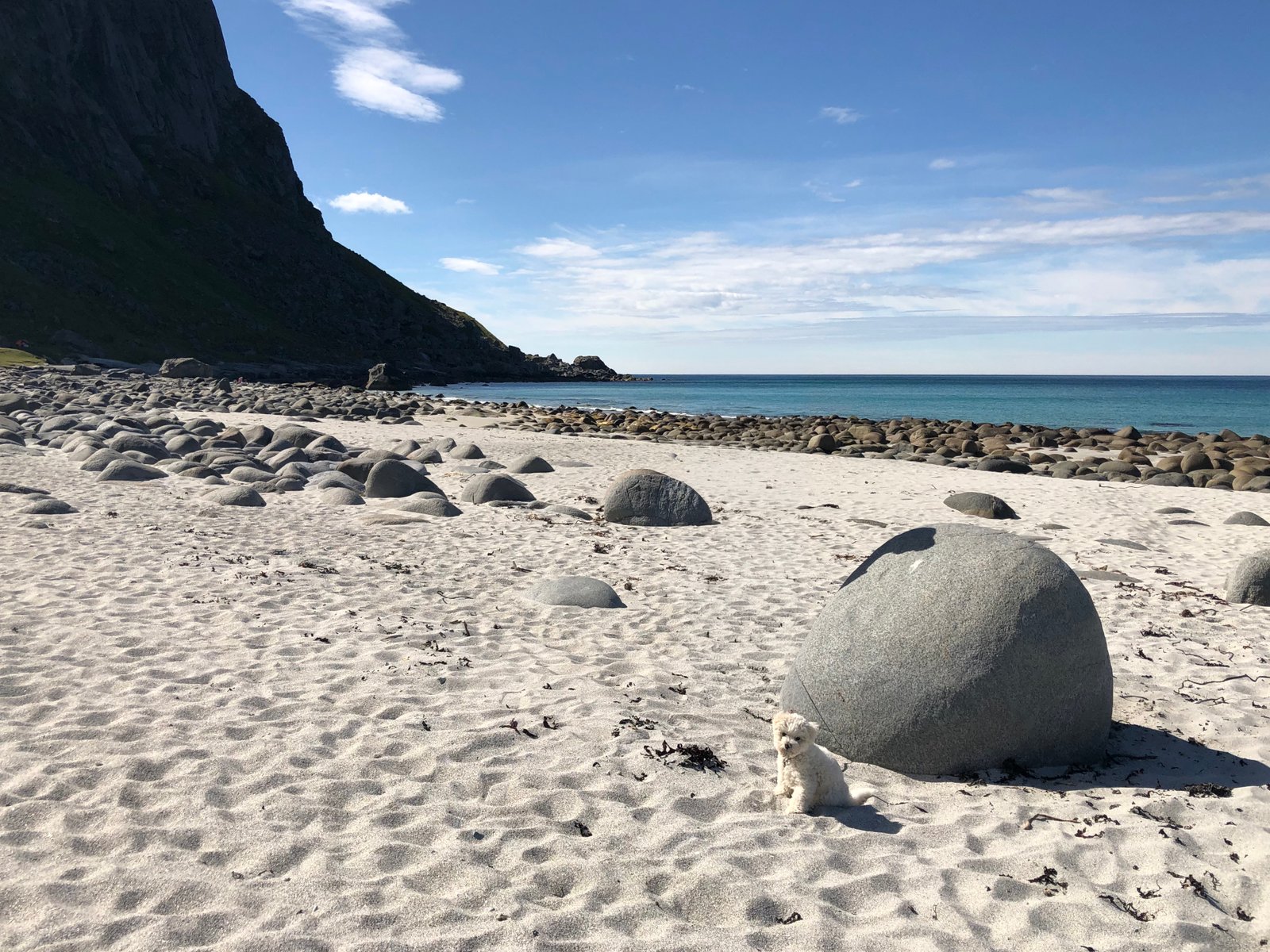
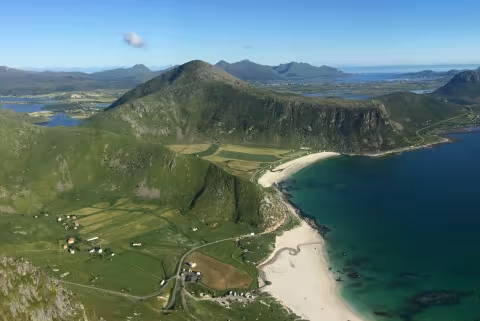
Uttakleiv is a north-facing beach on Vestvågøy where white sand meets smooth, rounded boulders and steep mountains drop straight to the Norwegian Sea. Green pastures roll right up to the shoreline, sheep graze behind the dunes, and the rock formations on the left side of the beach have drawn photographers from around the world. The most famous is the Dragon's Eye, a natural glacial pothole in the rock that holds a boulder at its centre, ringed by sand and algae. At low tide, it looks exactly like a reptilian eye staring up at the sky.
The beach is fully exposed to the open ocean. Even in summer, the air carries a bite. Mountains on three sides, open sea to the north, and a sky that in June and July never fully darkens. That northern exposure makes Uttakleiv reliable for the Midnight Sun in summer and for Northern Lights in winter, with no light pollution and nothing between you and the dark polar sky.
Getting the timing right
Uttakleiv's reputation means crowds. July and August bring a steady stream of campervans that pack the grassy areas behind the beach. If you're visiting in peak summer, arrive later in the evening. The daytime tour buses and day-trippers thin out, and you get the low light anyway. The Midnight Sun hangs low over the sea between roughly late May and mid-July, casting a golden wash across the boulders and sand.
Winter is a different beach entirely. Snow covers the surrounding peaks, the air is sharp and cold, and the wind off the Norwegian Sea can be brutal. But the roads and the single-lane Uttakleiv tunnel stay cleared, so access is reliable. Northern Lights season runs roughly September through March. The beach's north-facing orientation and total absence of artificial light make it a consistent viewing spot, and you won't be jostling for position the way you would at the more accessible stops along the E10.
The coastal walk to Haukland
The old coastal path connecting Uttakleiv to neighbouring Haukland Beach follows the shoreline for about 4 km each way, with virtually no elevation gain. Budget 45 to 60 minutes in each direction. It's an old road that locals used before the tunnel was built, wide enough for prams, and it delivers continuous ocean views without requiring you to climb anything. You can walk it or cycle it.
If you want elevation, Mannen (about 400 metres) rises above Haukland and gives you a panoramic view down over both beaches. It's a moderate hike rather than anything technical, but it adds two to three hours to the day if you loop from Haukland over the ridge and back via the coastal path. Veggen (489 metres), the steeper peak on the Uttakleiv side, is quieter and offers the better view of Uttakleiv itself.
Photography
The Dragon's Eye sits on the left side of the beach as you face the water, up on the rocks past the boulder field. It's only properly accessible at low tide. When the water recedes, the eye clears of sea foam and shallow reflective pools form around the surrounding rock. High tide and rough weather can completely obscure it, so check both tide tables and the forecast before you go. A late evening arrival combined with a low tide window is what you're aiming for in summer.
The rounded boulders scattered across the beach make strong foreground for wide-angle compositions at any tide. In winter, the Dragon's Eye works for aurora shots too, since you're already pointing north.
Getting there and parking
Public transport doesn't reach Uttakleiv. You need a car. From Leknes, take the E10 and turn onto Fv826. You pass Haukland Beach first, then drive through the Uttakleiv tunnel. The tunnel is single-lane with passing bays, short but tight with oncoming traffic. Use the bays, go slow, and you'll be through in a minute.
Parking uses automatic licence plate recognition. The cameras log your plate as you drive through the tunnel, and you pay online or through the app within 48 hours. Fees vary by vehicle type and season. Check the signs at the lot and register promptly. Basic toilet facilities and rubbish bins are at the parking area, but no shops or cafés. Bring whatever snacks you need, pack a lunch if hiking.
Budget one to three hours for a standard visit. Add two hours if you're doing the round-trip coastal walk to Haukland.
If the Uttakleiv car park is full or you'd rather skip the parking fees, leave your car at Haukland Beach (free parking, larger lot) and walk the coastal path in. It's the same distance you'd walk at the beach anyway, and the trail itself is half the reason to come.
In peak season, the grassy camping area behind the beach fills up with campervans by late afternoon. If you want the beach without the crowd, come early morning or visit between September and May. The beach is large enough that even on busy days, walking past the boulder field to the left puts real distance between you and the parking lot.
What to do nearby