By: Chris ⎜ Last updated
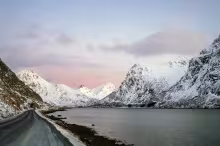
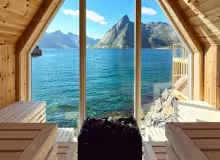
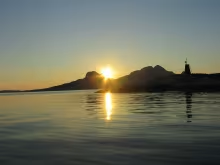
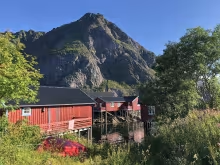
Lofoten sits under the auroral oval, which means with the right weather conditions you will normally be able to see the northern lights. Some hotels or rorbuer will allow you to see it from the comfort of your own room, glass of wine in hand.
However, that does not mean seeing northern lights is guaranteed, actually far from it. The same Gulf Stream current that keeps Lofoten's winter temperatures surprisingly mild (hovering around -5°C to 0°C when inland Arctic regions hit -20°C) also pumps moisture-laden air straight into the archipelago. Warm maritime air colliding with cold Arctic air creates persistent, heavy cloud formation. The result is one of the cloudiest coastal regions in northern Europe during winter.
Reality check: You need a clear sky to see the northern lights.
Inland locations like Alta and Skibotn, sheltered by mountain ranges and sitting in stable, dry cold air, have significantly better cloud statistics. Tromsø sits somewhere in between as a coastal city, but aurora tour operators there drive inland to escape the cloud cover, and they report that clouds rather than low aurora activity are responsible for the vast majority of failed sightings.
Lofoten is not the place to go to if watching northern lights is your primary reason for visiting, then you should go to Tromsø. However, none of this means aurora in Lofoten is a lost cause. The weather changes fast, sometimes within minutes, and microclimates across the archipelago mean it can be cloudy in Reine while Ramberg is clearing up. But planning a single night and expecting a show is a gamble. Most experienced aurora chasers recommend staying in the region for at least four to six nights to give yourself a realistic chance of catching a clear window. If the weather closes in, a 30-minute drive to a different part of the islands can make a difference.
Northern light tours (see below) will increase your chances of seeing it.
Why weather isn´t enough
On a quiet night with low geomagnetic activity (Kp 1 or 2 on the aurora forecast), the northern lights show up as a faint arc low on the northern horizon. That's when compass direction and mountain walls make or break the view. A cabin with a mountain blocking the north at this point might as well have no windows at all.
But aurora doesn't always stay low. When solar activity picks up to Kp 3 or higher, the display climbs higher into the sky, sometimes reaching directly overhead. On the strongest nights, Kp 4 and above, the lights can fill the entire sky and spill into the southern horizon.
A north-facing window, not blocked by mountains, is non-negotiable for catching the weaker displays.
South-facing rorbuer
Many traditional rorbuer have small windows often facing south. These are generally not suitable for viewing northern lights from inside. The small window will obstruct the view, the northern lights will appear behind the cabin, in the sky you can't see from inside, or even behind the mountain with weaker activity.
This is by design. The original rorbuer were built by fishermen who needed shelter from the brutal northern winds, so they oriented their cabins south and tucked them behind mountains. That protected them from the Arctic gales.
Reine Rorbuer sells its guests a four-hour guided aurora tour at extra cost. Guided tours might be preferable anyway if you want the greatest chance of seeing the northern lights, but seeing it from the comfort of your own room is a different experience altogether.
If aurora is your priority, book one of the properties below.
The hotels
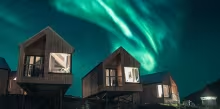
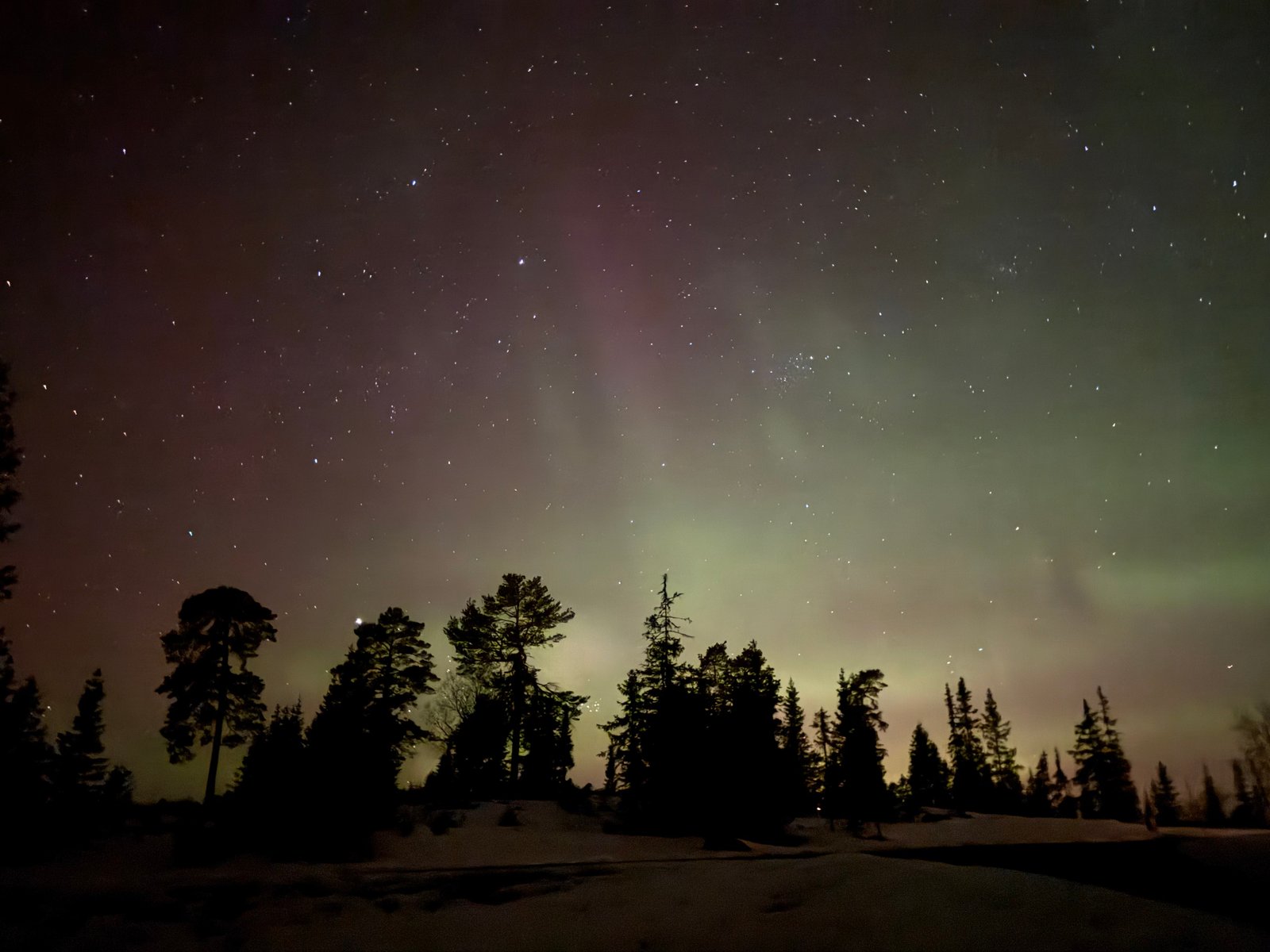
Hattvika Lodge, north-facing Hillside cabins
The Hillside cabins at Hattvika are newer builds (added in 2020), elevated on the rocky slope above Ballstad harbour. Ten freestanding cabins, each perched on steel supports at slightly different angles, which means orientation varies from one cabin to the next. When you book, you can choose which specific cabin you want, and the property shows each one's viewpoint. Pick one that faces north over the water rather than back toward the mountain.
If the conditions are right, you will be able to see the northern lights from the Hillside cabins without getting up. The huge picture windows and window seats were designed for watching, and the elevation above the harbour gives you a cleaner sightline than the traditional rorbuer down at water level.
The traditional rorbuer lower down on the property (dating back to the 1880s, fully renovated) are worth considering if you want a kitchen and more space, but their viewing angles are worse because they sit at water level in the sheltered harbour. Stick with the Hillside cabins for aurora.
Hattvika Lodge also runs guided aurora tours for their guests at additional charge to maximise your chances of seeing the northern lights.
Ballstad sits in a moderately sheltered position on the south coast of Vestvågøya. Light pollution is low but not zero, coming mainly from the fishing harbour itself. The Hillside cabins' elevation helps lift you above the worst of it.
Hattvika Lodge: Beautifully restored rorbu cabins
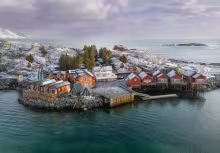
Reinefjorden Sjøhus, Reine
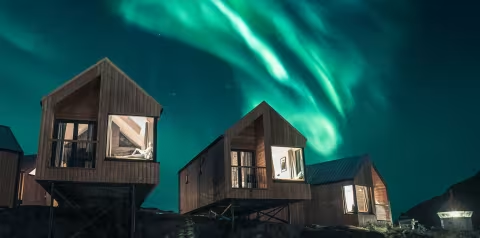
The cabins are arranged along the fjord with picture windows facing northeast across the water toward Hamnøy. The Sea Houses have wide windows, which the property markets specifically for aurora viewing, and guest reviews confirm they work. On a night with moderate activity, you can track the lights through the northeast windows as they arc low, then watch through the skylight as they climb overhead.
Reinefjorden Sjøhus is the operator to book in the Reine area if aurora is the goal. Certain units also have outdoor jacuzzis on the water's edge, which gives you another option for sub-zero viewing.
The property manages its boardwalk lighting during winter, dimming or turning off exterior lights during aurora-active nights. That puts it ahead of most rorbu resorts in Lofoten on the light pollution front. When you book, book the mentioned Sea houses with a wide northeast-facing picture window.
The catch with any property in the Reine area is the mountains. Steep peaks close in on three sides, which narrows the visible sky. On weak aurora nights, the display might stay below the ridgeline. On stronger nights, the mountains become part of the composition rather than the obstruction.
Reinefjorden Sjøhus: Modern rorbuer on the fjord
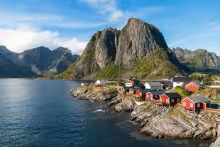
Eliassen Rorbuer, waterfront cabins on Hamnøy
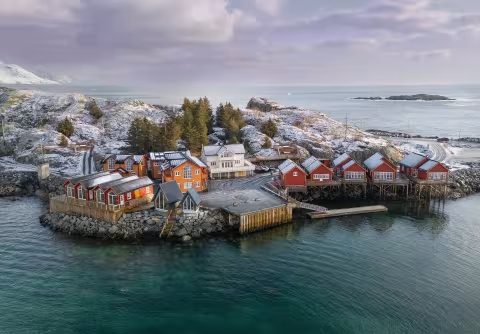
Eliassen sits on Hamnøy island with cabins on stilts over the water. The waterfront cabins facing the open fjord (away from the mountain side of the island) have unobstructed views and almost no ambient light from the property itself. Photographers stay here for exactly this reason; the Hamnøy bridge overlooking Eliassen is one of the most photographed aurora locations in Norway. Specify a waterfront cabin facing away from the mountain at booking; the mountain-side units lose the view entirely.
Eliassen Rorbuer: Lofoten's most iconic rorbu cabins
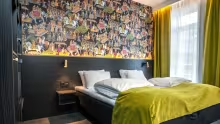
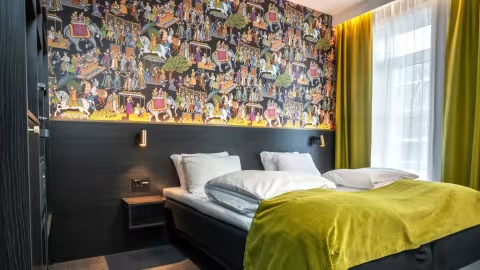
Thon Hotel Lofoten, upper floors
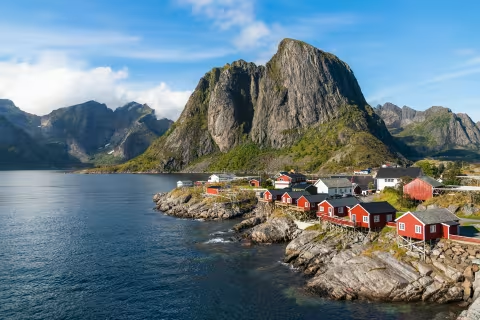
If you're already in Svolvær for other reasons (accessibility, conference, easier transport), Thon Hotel Lofoten works as a fallback. Upper floors with rooms facing north away from the main harbour reduce the light pollution problem, and the hotel's own aurora information acknowledges that town lights interfere but confirms the lights are sometimes visible.
The hotel itself recommends driving roughly 40 minutes outside the city to locations like Hov on Gimsøya or Laukvika for proper dark-sky viewing. That tells you what you need to know about the in-room experience. This is the workable compromise option when aurora isn't the primary reason you're in Svolvær.
Thon Hotel Lofoten: Svolvær's best breakfast
Planning around the weather
Aurora season in Lofoten runs from late September to early April. The equinox months of October and March sit at the statistical peak of geomagnetic storm activity because of how the Earth's magnetic field aligns with the solar wind during those periods. March hits the best balance for most visitors: strong aurora probability, more manageable temperatures than deep winter, and enough daylight to do things during the day.
February and March also tend to have somewhat more stable weather than the autumn months, though "stable" is relative for a group of islands in the Norwegian Sea. Use yr.no for short-range forecasts (anything beyond three days is unreliable in Lofoten), and keep an eye on aurora forecast apps like the NorwayLights app for real-time Kp predictions.
You need a car, flexible plans, and the patience to check the cloud forecast constantly. Accept that the best aurora sighting might happen at 2 AM after three overcast nights, in a car park you drove to on short notice because the sky looked slightly less terrible to the west. That's how it works here. The payoff, when it comes, is an aurora display framed by some of the most dramatic mountain scenery in Europe, reflected in dark Arctic water, with nobody else around.
Guided aurora tours
If the weather shuts down your in-room viewing, a guided tour is a good backup worth booking. Local guides monitor cloud forecasts in real time and will drive you across the archipelago chasing clear patches, sometimes covering 100+ kilometres in a night. That mobility is the whole advantage: you're not stuck staring at the cloud ceiling above your cabin, hoping for a gap. Two well-reviewed options run out of Svolvær. Experience the Magic of the Northern Lights is a five-hour small-group tour with pickup from several Svolvær hotels (Thon, Svinøya, Scandic), hot drinks, a bonfire when conditions allow, and professional photos emailed after the trip. Chase the Northern Lights with a Photographer runs for a similar duration but leans harder into the photography angle: the guide teaches you camera settings, helps with tripod placement, and takes you to spots like the beach at Gimsøya and the Gimsøy bridge, which face north over open water with almost no light pollution. Both return well after midnight on active nights.
Almost every guided aurora tour in Lofoten departs from Svolvær. If you're staying in Reine or further south, that's a 90-minute to two-hour drive each way before the tour even starts. Some of the better accommodations offer their own guided tours. Check with your accommodation if not staying in Svolvær.
Explore the locations