By: Chris ⎜ Last updated
Finding a room in Lofoten that will block out the midnight sun to ensure you get a good night's sleep is much harder than it should be. This is not something that's being advertised by hotels (honestly, many locals don't really see the issue), nor will the major booking sites tell you.
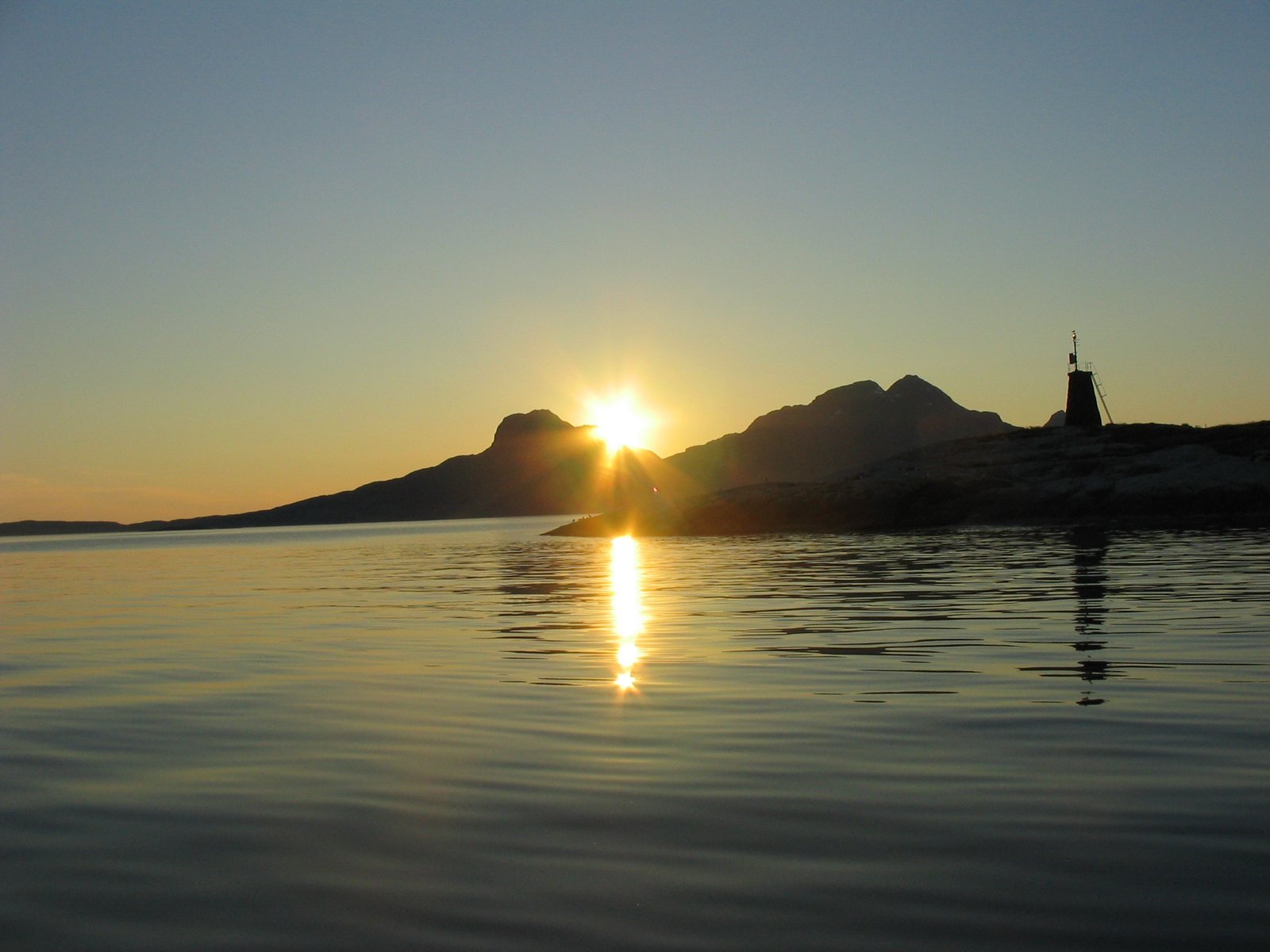
From late May to mid-July the sun physically stays above the horizon 24/7. It tracks low across the northern sky, and may be reflecting off the water, pouring through any thin curtain or unsealed window edge directly onto the bed.
Because the sun sits low, it comes in almost horizontally, bouncing off the fjords and straight through windows at bed height. Roof overhangs and eaves do nothing. Standard interior curtains become glowing panels rather than barriers. If your room faces north or northwest, you'll get the full force of it at exactly the hours you're trying to sleep.
Why most rorbuer are bad at this
Rorbuer were built for the winter cod fishing season, the Lofotfisket, which runs January to April. Thousands of fishermen needed shelter during the darkest, coldest months of the year. The point of these cabins was trapping heat from a wood stove and keeping Arctic storms out. Summer comfort wasn't a consideration for anyone, because nobody was there in summer.
The traditional timber cabins were not made with summer tourists in mind, and retrofitting the windows with blackout curtains almost never gets a tight seal, so the light tends to bleed in from the top, the bottom, and both sides.
The curtains themselves are also often the wrong kind. Unlined fabrics chosen to match a cosy nautical aesthetic look fine during the day but function more as lampshades when the midnight sun hits them. Northern Norwegians don't see this as a problem, though. They grew up with the midnight sun and consider it a welcome feature after months of polar darkness.
So where should you stay to ensure you get a good night's sleep? Check out these places that take sleep quality seriously.
Trevarefabrikken, Henningsvær
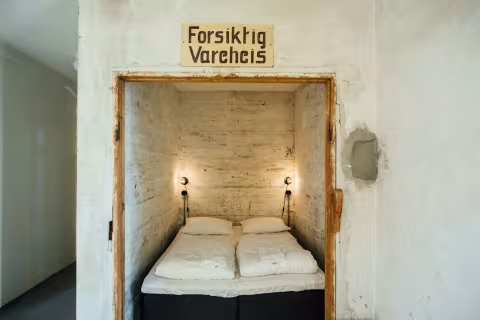
Trevarefabrikken is a 1940s concrete factory building that produced cod liver oil and housed a carpentry workshop for decades before it was abandoned. Four friends from Bergen bought the derelict shell in 2014 while on a hiking trip, and spent years gradually converting it into a hotel and cultural hub.
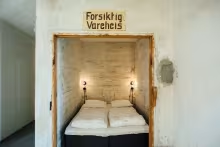
The building's industrial bones are what make it work for sleeping, with thick concrete walls that absorb and moderate heat far better than thin timber, and the deep window reveals allow for properly fitted shutters. The rooms feature hand-crafted concertina wooden shutters that fold across the windows and close solidly against the frame. Heavy, opaque, and built into the architecture. When closed, they block the light completely.
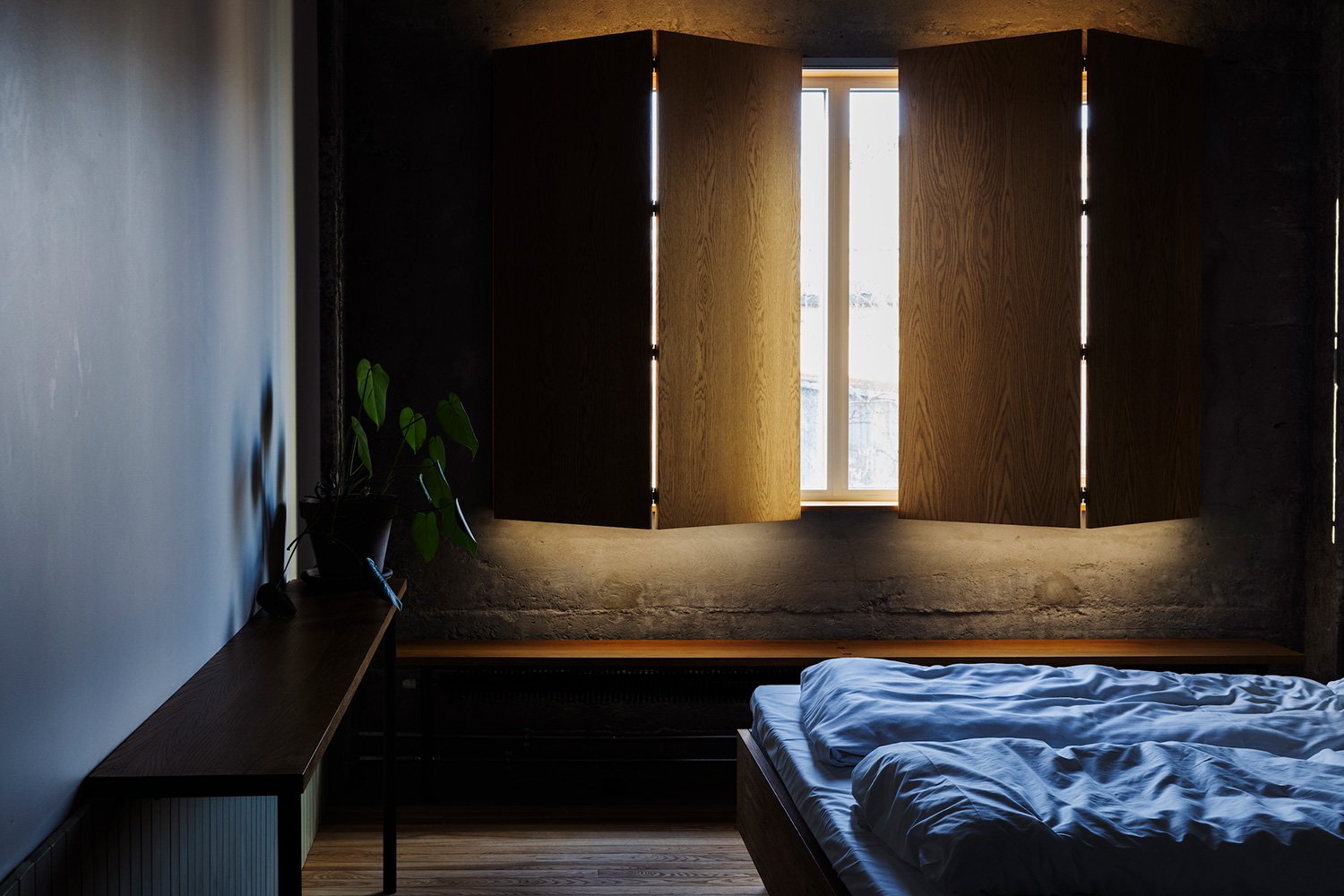
Note that you need to select the right room as not all rooms have shutters. Some rooms are fitted with yellow curtains instead. When booking, request specifically a room with the wooden shutters.
The Hermetikken restaurant on site is worth eating at regardless of where you're staying in Henningsvær. The building also houses an ocean sauna, yoga studio, and wood-fired pizza oven, and it hosts Trevarefest, a music festival, each summer.
Trevarefabrikken: Lofoten's coolest hotel
Hattvika Lodge, Ballstad
Hattvika is located in the middle of Lofoten in a sheltered inlet at Ballstad, a working fishing village about 15 minutes from Leknes airport.
There are two very different types of accommodation here, and you need to select the right one.
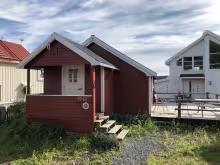
The original fishermen's cottages along the harbour date back to the 1880s. They've been nicely renovated with heated tile floors, modern kitchens, and contemporary artwork, but they're still 140-year-old timber structures with traditional windows, which is good for atmosphere, but not built for blocking out the midnight sun.
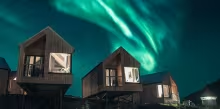
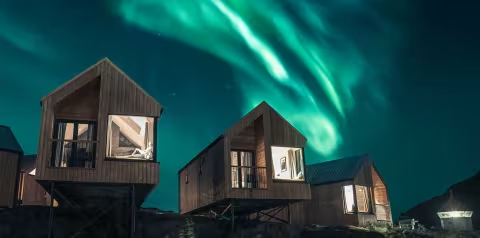
The Hillside cabins are what you want to book. These are ten newly built freestanding cabins, set on a rocky outcrop above the harbour. The design is contemporary with huge picture windows angled toward the sea and mountains, and with properly fitted blackout shades. The Hillside cabins were specifically designed so you can watch the northern lights and midnight sun from bed, then close up with the shades when it's time to sleep.
Hattvika Lodge: Beautifully restored rorbu cabins
Svinøya Rorbuer, renovated cabins only | Svolvær
Svinøya is the oldest part of Svolvær, first settled in 1828, and the property is in what's still a working fishing village on a small island connected to town by a short bridge. The cabins are of widely varying age, renovation status, and comfort level. The property holds the Olavsrosa quality label from Norwegian Cultural Heritage for its preservation work, which tells you the priority here is authenticity first.
That authenticity is the problem when it comes to light. The older traditional cabins preserve original timber, traditional craftsmanship, and the compact layouts that fishermen used over a century ago. A light-coloured unlined curtain illuminated by the midnight sun ensures you will get a bright room.
The Rorbu S+ units are the ones to book. These are original fishermen's cabins that have been comprehensively adapted to modern standards, but there are only two cabins in this category, so book early. Beyond the S+ tier, recently renovated cabins and the newer builds also tend to have proper blackout curtains, but "tend to" isn't good enough when sleep is at stake. If unsure, ask the property before booking.
Svinøya Rorbuer: Stay in a fishing village
Eliassen Rorbuer, Superior cabins only | Hamnøy
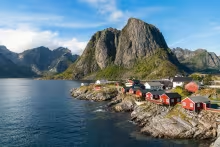
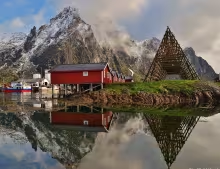
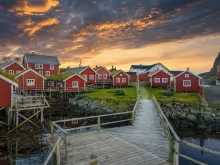
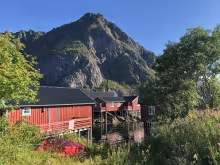
You've probably seen these cabins already. The red rorbuer at Hamnøy with granite peaks towering behind them are probably the single most photographed scene in all of Lofoten. Every Norway travel brochure and travel Instagram account has used this angle.
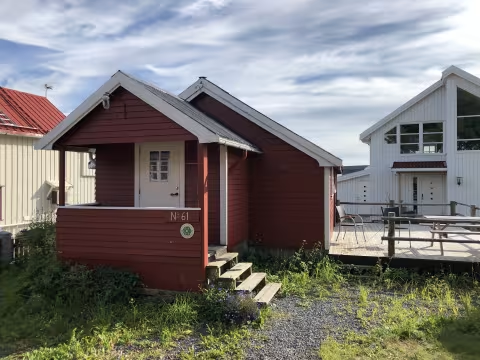
The traditional cabins are the photogenic ones, but they will come with a sleep problem as there are no blackout curtains in the lower-tier units. The property markets the "genuine character and décor" of the original fisherman's cabins, and that character includes thin curtains and old window frames.
The Superior tier, including the Waterfront Superior cottages and Superior apartments, uses more contemporary window treatments that work well for light blocking.
If the traditional tier is all that's left by the time you book, bring your own blackout solution (more on that below) and treat the cabin as a spectacular base camp rather than a sleep sanctuary.
The Thon hotels in Svolvær
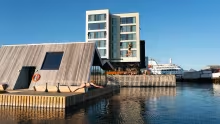
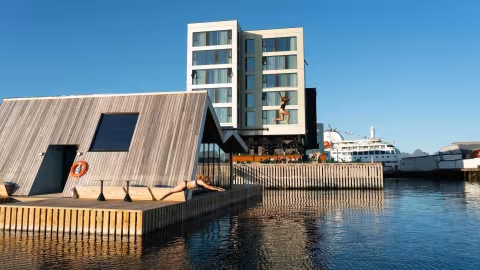
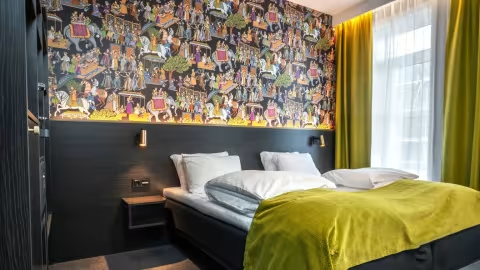
There are two Thon hotels in Svolvær. Thon Hotel Svolvær opened in 2021 and is the best one for sleep comfort. It's a purpose-built modern hotel with 211 air-conditioned rooms and blackout curtains fitted to precise modern window frames. The older Thon Hotel Lofoten, down by the Hurtigruten dock, dates from 2009 and is a perfectly fine conference hotel, but it doesn't have the same level of climate control.
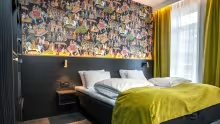
The newer Thon Hotel Svolvær additionally solves a problem that none of the other properties can. You can close the curtains, turn on the air conditioning, and sleep in a dark, cool room. This is a level of comfort you just will not get in any of the other accommodations in Lofoten.
The trade-off is obvious, though. You're sleeping in a chain hotel that looks the same as any Thon Hotel in Norway. There's no history to this place, no creaking timber, no water lapping under the floorboards or any sense that you're occupying a piece of fishing history.
Thon Hotel Svolvær: Modern waterfront luxury in Lofoten
Thon Hotel Lofoten: Svolvær's best breakfast
Blackout and ventilation don't coexist
The average summer temperatures in Lofoten are around 13°C to 15°C, which sounds mild until you account for the fact that the sun never stops heating the building. During a warm spell, which can push above 20°C, there's no natural overnight cooling. Twenty-four hours of continuous solar radiation means the inside of a timber cabin keeps getting warmer.
Almost no rorbu or hotel in this part of Norway has air conditioning. Norwegian ventilation usually means you open a window for cooling. Opening the window breaks whatever light seal the curtain achieved. The curtains might be flapping in the wind, letting in light, and in any case if the blackout seal is tight you won't be getting much air in anyway.
Close the window to seal the light out, and the trapped daytime heat plus the heat from the people sleeping in it turns a small timber cabin uncomfortably warm.
You can have a sealed dark room or a cool ventilated bright one. Even at the properties listed above, expect to make this trade off nightly. The shutters at Trevarefabrikken block the cross-breeze when closed, though the concrete walls moderate the heat better than timber does. The Thon Hotel Svolvær is the only property on this list where mechanical ventilation means you don´t have to make the choice.
What to bring
A proper sleep mask helps but won't fully solve the issue on its own. Go for a deeply contoured mask with memory foam eye cavities rather than a flat airline-style one.
Also pack earplugs or noise-cancelling earbuds. Seagulls and coastal birds don't sleep during the midnight sun either, and if you've got the window open for ventilation, the 5 AM gull chorus is startling.
Explore the locations