By: Chris ⎜ Last updated
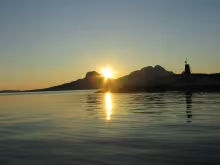
Looking to plan a romantic honeymoon or couples trip to Lofoten? Here is what you need to know, the best romantic accommodations, and what you can expect in terms of cost.
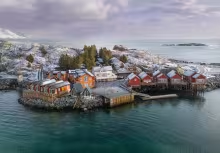
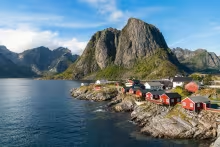
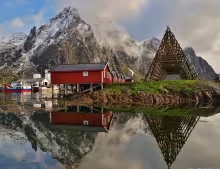
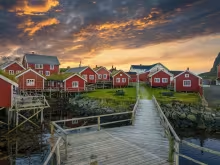
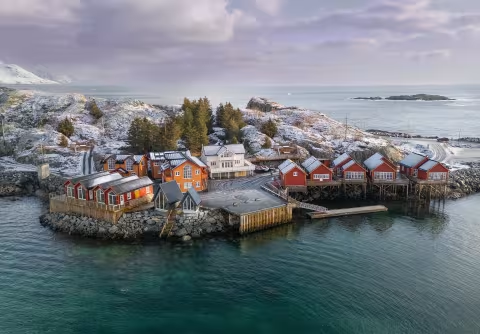
Romance in Lofoten is not the same as at a resort in the Mediterranean or Maldives. There's no poolside champagne service, no turn-down chocolates, nor any grand lobbies with marble and a resident pianist. What Lofoten has instead is harder to manufacture: wooden cabins over black water, mountains filling every window, magnificent scenery, some of the best hiking in the world, and silence that lets you hear the water moving under the floor. Most accommodation in take the form of these seaside wooden cabins called rorbu.
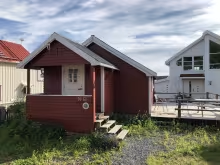
Forget tower hotels and reception lobbies. Here the hotel is a collection of converted fishermen's cabins on stilts, called a rorbu, rebuilt with modern comforts but still creaking in the wind and smelling faintly of the sea. Strip away the usual luxury hotel choreography and what's left is a place where the two of you are actually alone with each other, the weather, and some of the most dramatic scenery in northern Europe. As a honeymoon destination, it's the opposite of the Maldives, and better for it.
It's not for everyone though. If your idea of a honeymoon involves cocktail bars, warm sand under your feet, a choice between three pools, and room service 24/7, just stop reading, hit the back button, and search for Maldives instead. Lofoten has none of those things. Weather is generally cool and unpredictable, with rare summer days above 20 degrees. There are no pools here and the sea is freezing cold even in summer.
Still here? Good.
When to go
There are distinct seasons and the character of the place shifts dramatically by season.
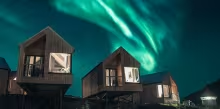
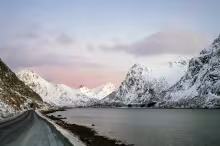
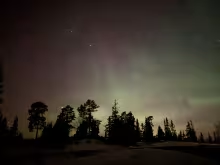
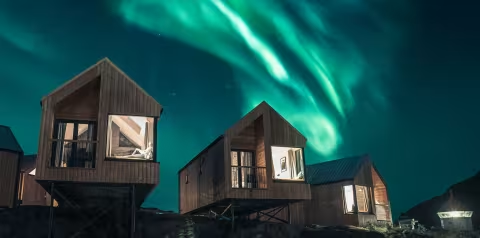
February and early March are the peak romantic window. The days are short with long blue twilights, and you can see the northern lights overhead on clear nights. Several of the properties below have cabins where you can watch the aurora from bed (Hattvika Hillside Cabins particularly recommended for this purpose). Snow covers the mountains, and the fishing villages are quiet. There are not many tourists here at this time. The downside: temperatures are between -2°C and 5°C, daylight is short from about 09:00 to 15:00 in February, and some activities (eg. kayaking and certain hikes) aren't available. Roads are well maintained, but winter driving in Lofoten requires confidence and winter driving skills.
Late May and September are the shoulder months. There are fewer people, lower prices and better availability at the top cabins than during the peak summer season. Late May you get the start of the midnight sun season without the July crowds. September delivers autumn colour and the return of dark skies (and, if you're lucky, the first northern lights of the season) with most restaurants and operators still running. These are arguably the smartest months for a romantic couples' trip.
Late June through mid-August is peak summer and midnight sun season. Lofoten is warm by Lofoten standards (avg daytime temp about 15 degrees) and everything is open. But also the busiest period with lots of individual travellers, tour groups and camper vans. The best cabins book out months ahead, and prices are at it´s peak. If you come in July, you'll share Lofoten with a lot of other people.
How to structure the trip
Lofoten stretches out over 100 km, and the best properties are spread across different villages with different characters. Just picking one base and driving back and forth across the islands for a week would be a mistake, you would spend way too much time driving.
At least split the trip between two places. Three nights in the central islands (Ballstad or Svolvær) and three nights further southwest (Reine, Hamnøy, or Nusfjord). The landscapes shift considerably as the islands narrow toward the southwest. The southwest delivers the typical postcard views.
A typical day could look something like this: a morning hike (nothing extreme, Lofoten has plenty of short walks with absurd views, and most hikes can be done in a couple of hours), get back to the cabin by early afternoon, eat lunch, have a sauna session in the late afternoon, and dinner at the on-site restaurant or a short drive to a neighbouring village. Then hit the outdoor hot tub at 10pm watching the northern lights..
For getting to Lofoten and getting around once you're there, read How to get to Lofoten: Car, ferry or flight? and Do I need a car in Lofoten?
For tips on what to do and structuring the trip, see our 7-day itinerary to Lofoten.
Staying in a village
These are the properties for couples who want atmosphere beyond their own cabin walls. Real fishing harbours, proper restaurants on-site, other things to walk to without getting in a car. Both work well as the "central islands" half of a split trip.
Hattvika Lodge in Ballstad is the obvious choice if food is important. Restaurant FANGST operates its own fish landing quay and builds the menu from what comes off the boats. Nearby Lofoten Food Studio is the best restaurant in the whole archipelago, with a price tag to match. The property is family-run by a couple whose roots in Ballstad go back six generations. For the specific cabin to book and the details on the pier sauna, read the full section below.
Svinøya Rorbuer in Svolvær is the choice if you want to be near a proper town. Here you have galleries, guided tours, several shops, and the closest thing Lofoten has to a bar scene. The property itself is on its own small island, so you don't feel like you're in a town, although you're only a 15-minute walk from the town centre. This is the best option if you don't have a rental car, since most guided tours depart from Svolvær.
Remote accommodations
These will feel much more isolated. Both are further southwest, both are quiet by design, and they work well as the second half of a split trip after a few nights somewhere more central.
Nusfjord Arctic Resort is the curated version of remote. The entire preserved fishing village functions as the hotel, complete with three restaurants, a Nordic spa, and the possibility of booking a private cabin on its own island reachable only by boat. It's a member of Small Luxury Hotels of the World, which tells you the level. The seclusion is real, yet you won't be bored here.
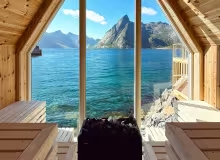
Reinefjorden Sjøhus in Hamnøy is the more understated place. Here there's no reception desk, no restaurant on-site, no full spa or any activities programme. What you have here are glass-walled cabins on the fjord with a waterfront sauna and direct access to the water. If you want nothing between you and the landscape, this is the place.
Hattvika Lodge
Hattvika is run by Kristian and Guri, whose family has been in Ballstad for six generations. The cabin called Bendiksenbua is named after Guri's grandfather, who worked there for fifty years. It's also their most romantic option. The room has original timber walls, soaring ceilings, a massive double shower, and a private outdoor jacuzzi on the terrace overlooking the harbour. Just imagine sitting in that jacuzzi in February with the northern lights overhead.
If you prefer more modern design over historic character, the Hillside cabins are worth a look. These are ten fairly new freestanding units built into the rock above the main lodge, with clean, minimal interiors, and floor-to-ceiling windows framing the harbour and the mountains behind it. In winter, the northern lights are visible from the bed. In summer, the midnight sun pours through the glass and the blackout drapes earn their keep.
A note about the rooms: While most rooms feature scenic outlooks over the water and mountains, the biggest negative about this place is that some rooms face industrial buildings across the bay, read more in our full article about Hattvika Lodge.
Restaurant FANGST has its own fish landing quay on the harbour, and the menu is built almost entirely from what comes off the boats that morning. Tasting menus are from three to seven courses, with separate options for seafood, meat, and vegetarian. The breakfast is equally strong, with a buffet that goes well beyond the usual hotel spread.
After dinner, the pier sauna seats eight or nine people with a wall of glass facing the bay. The full experience involves sweating until you can't take it anymore and then climbing down the ladder into water that hovers around 5-10°C most of the year.
Ballstad is a working fishing village, and the harbour looks like one. The view from the terrace includes boats unloading cod alongside the scenery.
Hattvika Lodge: Beautifully restored rorbu cabins
Nusfjord Arctic Resort
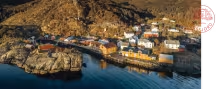
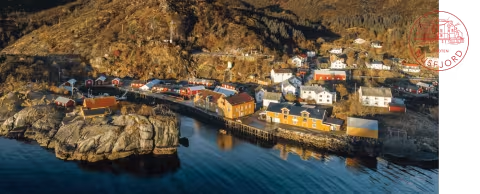
The difference between Nusfjord and everywhere else on this list is that the resort covers the entire village of Nusfjord. Nusfjord consists of a cluster of preserved fishing buildings around a sheltered harbour, which all functions as this hotel. It's a member of Small Luxury Hotels of the World, which gives some indication of the level, but walking through Nusfjord still feels more like wandering through a living museum than checking into a hotel. Five buildings carry heritage protection from the Norwegian Directorate for Cultural Heritage. A bedtime story from Arctic folklore gets placed on your nightstand each evening.
For couples, the standout booking is The Isolated Fisherman, a private cabin on its own small island, reached by a ten-minute boat ride from the village. It has a fireplace, a full kitchen, a terrace, and complete solitude. Champagne upon arrival and Sprekenhaus toiletries add to the exclusivity.
A more practical option is a Harbour Suite, built on stilts directly over the water in Nusfjord Village. Here you will get the soothing sounds of waves against the pilings underneath the cabin at night.
Three restaurants keep the evenings varied without having to leaving the village. Restaurant Karoline occupies a former dried fish loft and focuses on local seafood. Oriana Tavern has exactly three tables in an old whiskey cellar, serving pizza with a Nordic slant. Given the limited number of tables, ensure you book early. Finally, the Landhandleriet Café operates from the original 1907 general store (Landhandleriet means the Country store), where the antique till and weighing scales are still in use.
As befits a romantic trip, this place has a full spa. Nordic Spa sits at the edge of the village with a wood-fired hot tub filled from a natural spring, a steam room, a sauna designed by graduates of the Oslo School of Architecture, and therapist treatments.
Nusfjord is remote which is the point, but it also means no spontaneous bar-hopping or restaurant explorations beyond what the village offers. For couples who want to completely disappear for a few days, it's hard to beat.
The cabins are authentically compact. If you're used to spacious hotel rooms, the Harbour Standard cabins at 20 m² can feel tight for two people. For more space, book a Suite or Suite Plus, which will give more breathing room.
At this price tag you might expect everything to be perfect, but this is not a 5-star resort. With the correct expectations you will likely have a great time here, just don´t expect Ritz style services.
Nusfjord Village & Resort: Stay in a museum town in Lofoten
Svinøya Rorbuer
If the idea of being stranded in a remote village for four days makes one of you twitchy, Svinøya solves the problem. It's a rorbu property on its own small island, connected by a short bridge to Svolvær, the closest thing Lofoten has to a town, with galleries, shops, boat tours, and restaurants only a 15-minute walk away.
This is also the best place to book if you don´t have a rental car. Most guided tours start from Svolvær. For more read: Do I need a car in Lofoten?
The property dates back to 1828, and it's well preserved with original timber, and the faint smell of marine tar and rope. The cabins marked Rorbu S+ are the ones to book as a couple. There are only two such cabins, positioned on the best waterfront spots on the island with unobstructed views of the sea and the Lofoten wall. They fill up early, ensure you book well ahead.
The restaurant Børsen Spiseri is a reason in itself to stay here. It occupies a quayside warehouse from 1828, and the menu revolves around local sourcing, including stockfish, fresh cod and regional seafood prepared in such a way that the place has become a destination in its own right. In summer, the terrace opens for outdoor dining under the midnight sun.
Moored right outside the restaurant is a floating sauna with panoramic windows looking toward the harbour and Svolværgeita, the twin-peaked mountain that dominates the Svolvær skyline.
The property also houses the Gunnar Berg Gallery, with the largest collection of the 19th-century Lofoten painter's work in the world. It's not essential, but on a rainy afternoon it's a better option than sitting in the cabin.
Svinøya Rorbuer: Stay in a fishing village
Reinefjorden Sjøhus, Hamnøy
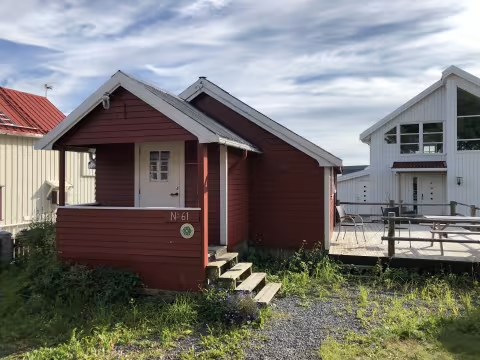
Hamnøy is right at the entrance to the Reine area, which means the scenery is the same mountains and fjord views as Reine, but without the tour buses that crowds Reine village by mid-morning. Reinefjorden Sjøhus is a small, independently run property spread across several restored fisherman's cabins and apartments.
The Sea Houses are the best rooms to book as a couple. There are four units (Veines and Tennes, two of each), built for two people, with modern, clean interiors, and floor-to-ceiling windows framing the fjord and the mountains behind Eliassen Rorbuer across the water.
Two saunas have been built right on the waterfront, both looking straight across the Reinefjorden, and there's a private jacuzzi which can be booked separately. Afternoons and evenings fill up, so grab a morning slot if you want to have it to yourselves. After the sauna you can jump right into the fjord for a cold plunge.
The cabins are self-catering and there's no breakfast included and no restaurant on-site, but Gadus at Eliassen Rorbuer is a decent option and only a 10-minute walk. Underhuset, a bit further away on Sakrisøy, is an option for a refined dinner.
The property is small enough that it remains fairly quiet even when operating at full capacity. Check-in is handled by a quick walkthrough with the host, and after that the place is yours.
Reinefjorden Sjøhus: Modern rorbuer on the fjord
Combinations
The accommodations you choose shape the trip. Here are two that will work well depending on your requirements.
Hattvika Lodge + Reinefjorden Sjøhus. First you get three nights of harbour life, fine dining at FANGST and Lofoten Food Studio, and a jacuzzi under the northern lights. Then three nights of near-total quiet in Hamnøy with the fjord filling the windows. The drive between Ballstad and Hamnøy is about 50 minutes and covers some of the best scenery on the E10.
Svinøya Rorbuer + Nusfjord Arctic Resort. Here you have the town first, remoteness second. Use Svolvær as your base for boat tours, gallery visits, and make sure you have a dinner at Børsen Spiseri. Then drive southwest to Nusfjord and spend the second half in the remote resort village. This combination also works best without a rental car for the first half, since Svolvær has an airport and is the main hub for guided excursions.
Costs for a 6-night split trip to Lofoten
Lofoten is not cheap, and a couples' trip at the level described here is a mid-to-high budget trip. Here are some guideline figures for two people, six nights, split across two properties:
Accommodation can be anything from around 2,000 to 10,000 NOK per night for the cabin categories recommended above, depending on property and season. Staying at Nusfjord will put the cost in the higher end of the range.
Meals can vary a lot. A tasting menu dinner at FANGST, Karoline or similar, will be from 800 to 1,500 NOK per person. A simpler meal at a pub or café is 250 to 400 NOK. For mid-range meals, expect roughly 1,500 to 3,000 NOK per day for two.
Car rental from Svolvær or Leknes airport is typically 1,000 to 2,000 NOK per day, depending on season and vehicle.
Flights to Lofoten (via Bodø, or direct to Leknes/Svolvær from Oslo on Widerøe) vary widely by season and how far ahead you book. You can expect somewhere around 3,000 to 5,000 NOK per person return.
Total for a 6-night couples' trip: roughly 30,000 to 60,000 NOK or more (approx. €2,600 to €5,500) for two, depending on where you eat, where you stay and which cabins you book. That's not a budget trip, but for a honeymoon in one of the most dramatic landscapes in Europe, it compares favourably to what you'd spend on a week in Santorini or the Amalfi Coast.
Explore the locations