By: Chris ⎜ Last updated
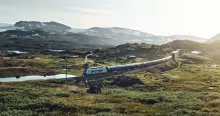
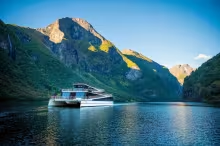
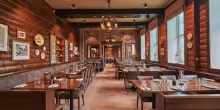
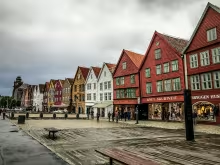
Bergen is small. You can walk from one end of the centre to the other in twenty minutes. But still it´s easy to waste time by crossing the same ground several times. This plan keeps you moving in roughly one direction each day. Day 1 covers Fløyen, Bryggen, and the museums on the waterfront. Day 2 takes you up Ulriken, through the local neighbourhoods most tourists skip, and out to the edges of the fjord landscape.
Before you plan anything, check the Bergen port schedule (it's public, on the Port of Bergen website, filter by Cruise Ships). On heavy cruise ship days, Bryggen and the Fløyen funicular are miserable between about 10:00 and 14:00. If one of your two days has fewer ships, make that Day 1.
For both days: Eat breakfast at your hotel. Most mid-range and upscale Bergen hotels include a big Scandinavian breakfast buffet. Smoked salmon, scrambled eggs, cured meats, fresh bread, brunost (the slightly sweet, caramel-tasting brown cheese), fruit, yoghurt, granola. Load up. If you eat properly at breakfast, you can skip a sit-down lunch and just grab a coffee and a pastry, which saves both money and time.
Day 1: Bryggen, Fløyen, and the Historic Centre
Coffee, then straight up the mountain
Start at Det Lille Kaffekompaniet, a tiny specialty coffee shop in a cobblestone alley right next to the Fløibanen funicular station. Easy to miss. One small room, a few outdoor tables, solid pour-over, and a carrot cake that's been the favourite order here for years. Grab a coffee and keep moving.
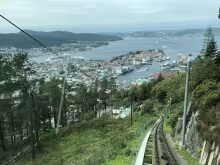
Walk straight to the Fløibanen funicular and get on the first or second departure. Six minutes to the top, 320 metres up. Buy tickets online beforehand to skip the queue. If you have a Bergen Card, the discount process is weirdly specific, see the practical section at the bottom.
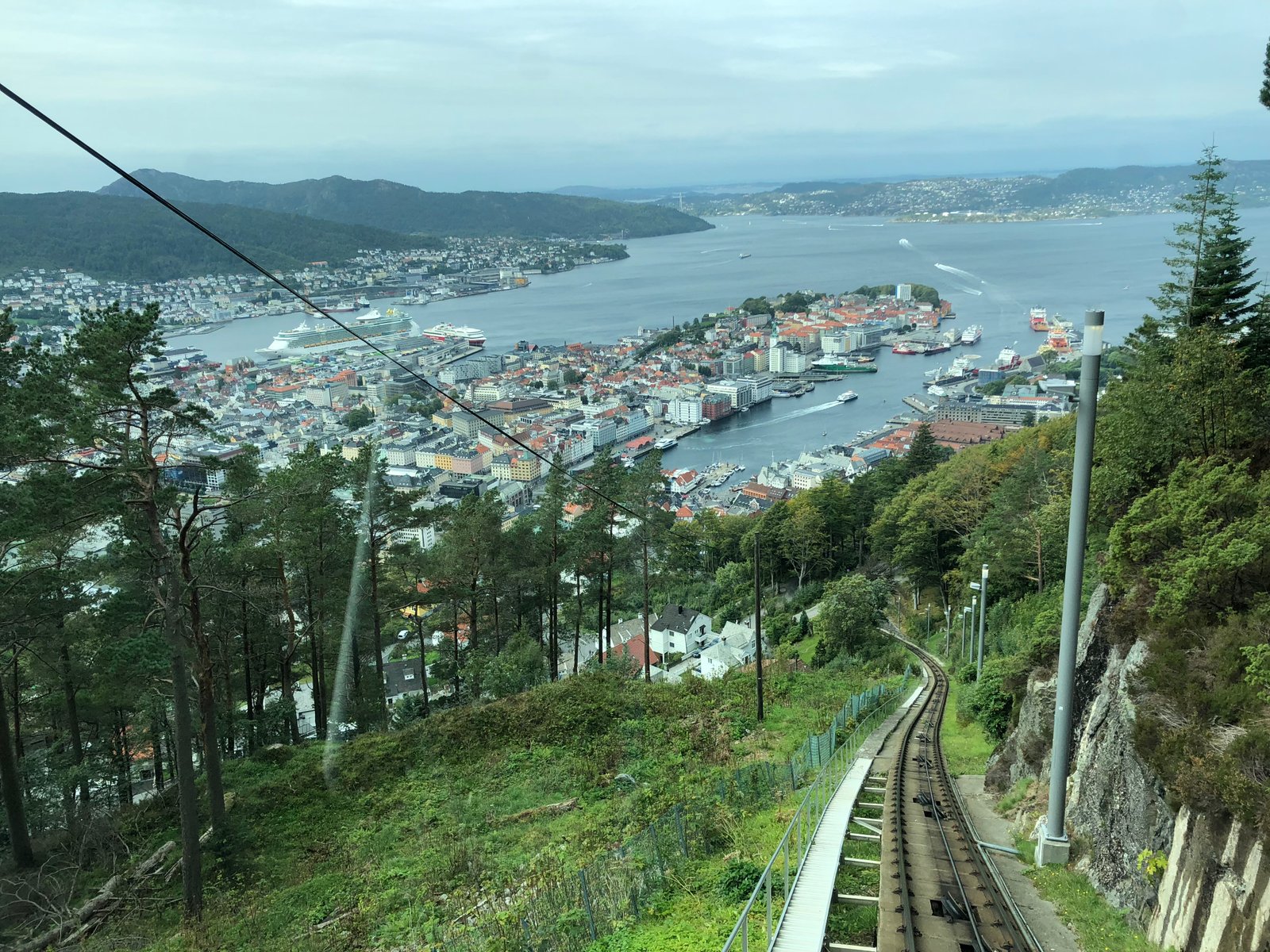
At the top, don't linger for long at the main viewing platform. Walk past it, past the restaurant, and follow the flat gravel path behind the playground towards Skomakerdiket lake. Ten minutes, completely flat and quiet, not many tourists ventures beyond the viewing platform. Late June through August, there are free canoes and paddleboards at the lake.
Then walk back down to the city instead of taking the funicular. It takes 45 to 60 minutes. You go through forest first, then down through the old residential streets of Skansen and Fjellsiden, wooden houses with crooked fences, overgrown gardens, the city appearing below you through gaps in the trees. You come out right behind Bryggen. Bring decent shoes though. The trail gets slippery after rain, and in Bergen, that's most days.
Late morning: Bryggen and the medieval waterfront
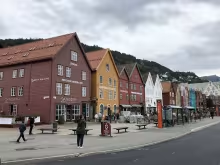
The colourful wooden buildings on the Bryggen waterfront are the real deal. UNESCO-listed, leaning at odd angles, still standing after 300 years of North Sea weather. Walk through the front row for photos, but keep going. The narrow alleyways behind the main façade are where it gets good. Workshops, textile studios, jewellers, far fewer people. Most visitors turn around at the first souvenir shop.
For museums, go to Bryggens Museum. It's built on top of the archaeological dig from after the 1955 fire. Medieval foundations still in the ground, runic inscriptions, artefacts that predate the Hanseatic traders. You get a real feel for how old this city is. Give it 45 minutes to an hour.
Bergenhus Fortress and Håkonshallen are five minutes from Bryggen. Take some time walk around and get some good views over the harbour entrance. About half an hour here.
Lunch
If breakfast did the job: Head to Kaffemisjonen (Øvre Korskirkeallmenning 5). Some of the best specialty coffee in Bergen. High ceilings, blue-tiled floor, coffee from roasters like Tim Wendelboe. The pastries and focaccia are big enough to call it lunch. Or try Blom (John Lunds plass 1), the sister café near the university quarter. It's more relaxed with a good outdoor seating.
Proper sit-down: Bryggeloftet & Stuene at Bryggen 11. Old traditional restaurant, and one of the few on the Bryggen waterfront where you'll hear Norwegian at the next table. Get the Bergensk Fiskesuppe, thick and creamy, loaded with prawns, mussels, and white fish. The open-faced shrimp sandwich is piled absurdly high. Ask for a second-floor window table when you book. It fills up with the office lunch crowd around 11:30.
Skip the outdoor Fish Market stalls which are overpriced and tourist-facing.
9 of the best restaurants in Bergen, and what to order (2026)
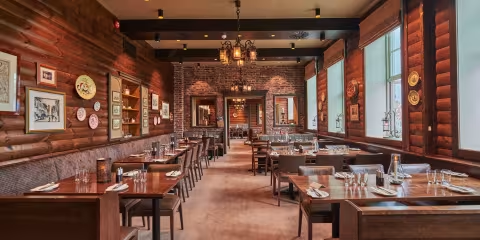
Bergen has three Michelin-starred restaurants, a legendary hot dog stand that's been grilling since 1946, and a 96-year-old fish cake recipe that was once shipped weekly to Norwegian embassy staff in Paris. You can still waste a lot of money eating badly here if you wander into the wrong place though, as Bergen is expensive. What follows will stop that from happening. Here´s a selection of 9 of the best restaurants in Bergen at all price points.
Afternoon: KODE Art Museums
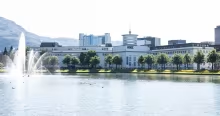
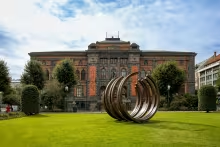
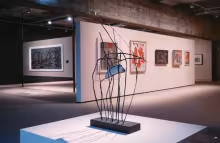
One ticket covers all four KODE buildings for 24 hours. They're along Lille Lungegårdsvannet lake, a short walk from Bryggen. Don't try to do all four.
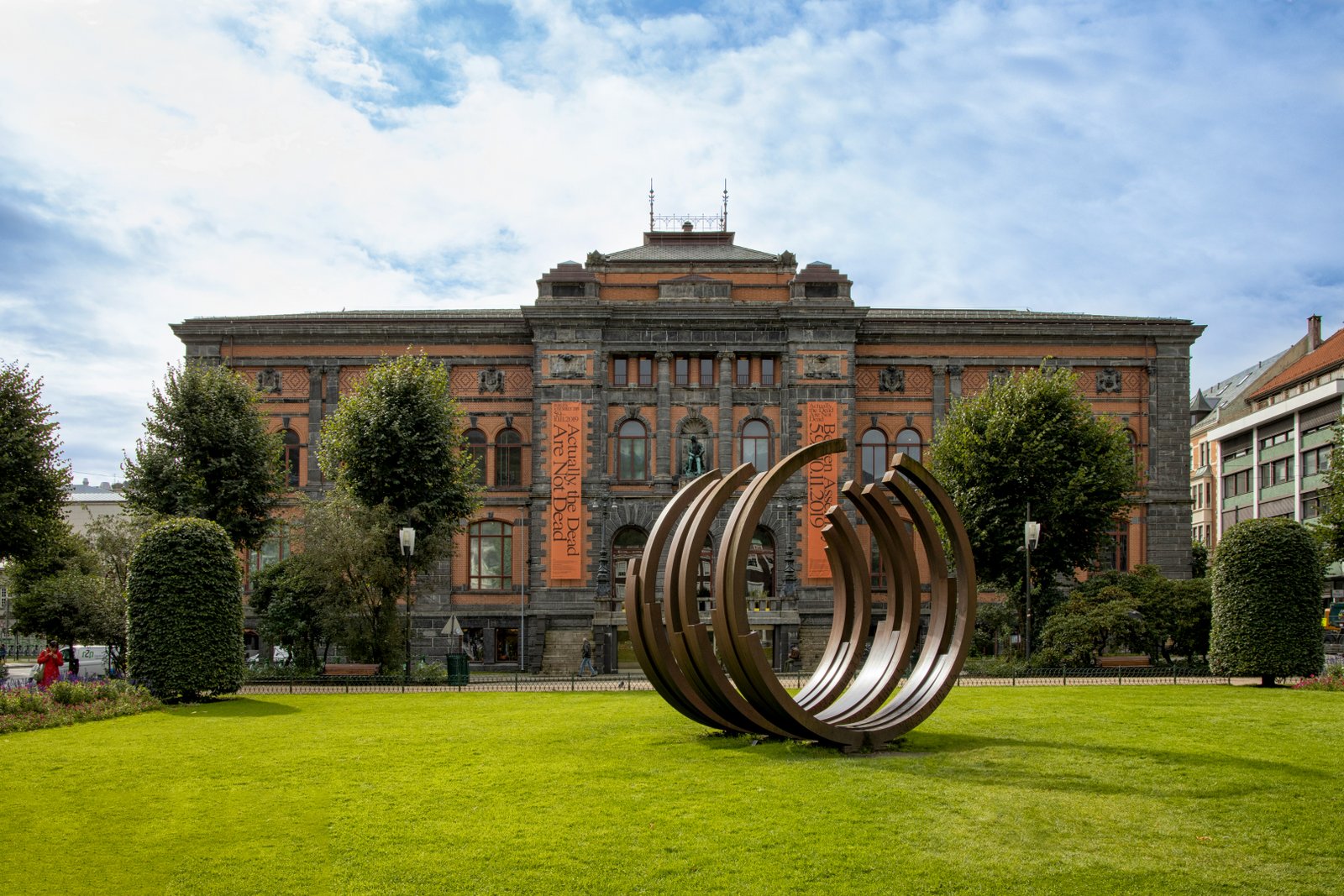
Go to KODE Rasmus Meyer. This is where the good stuff is. J.C. Dahl's landscapes, Harriet Backer's interiors, Nikolai Astrup's Jølster paintings. And the world's third-largest collection of Edvard Munch, bought by Bergen businessman Rasmus Meyer, who knew Munch personally. The building is small, so you can actually look at the paintings in peace. Jealousy, Evening on Karl Johan Street, Melancholy, all here.
The Scream is not here. It's at the National Museum and MUNCH Museum in Oslo. KODE advertises Munch heavily and people show up expecting it. What you get is less famous but better for it: room after room of Munch without the crowd.
If you have time, add KODE Permanenten for the silver and decorative arts, including the "Sølvskatten," Bergen goldsmithing going back 500 years.
KODE Lysverket is worth knowing about mostly because it houses the Michelin-starred restaurant Lysverket. The international art collection is fine but not the priority.
Evening - dinner and drinks
Splurge: Gaptrast (Baneveien 16, Nøstet). Bergen's newest Michelin star, earned in 2025. Single tasting menu, roughly 16 courses, built around Western Norwegian ingredients. You start in a dim lounge with snacks and a glass of Hardanger cider, then move to the dining room where there's a charcoal fire going in the open kitchen. Get the Hardanger cider pairing instead of wine. It matches local apple ciders to each course and works better with the food. Around 5,000 NOK per person with pairing. The entrance has no signage. Look for the anonymous door next to the Sentralbadet building. Book well ahead.
Mid-range: Marg & Bein (Fosswinckels Gate 18). Ten minutes' walk from the tourist centre, in a residential neighbourhood near the University Museum. Nose-to-tail cooking. The braised ox cheeks are the thing to order, slow-cooked until they're spoon-tender. Get the sharing menu and a bottle from the natural wine list.
Casual: Pingvinen (Vaskerelven 14). Norwegian home cooking in a loud, cosy pub. The fiskegrateng (fish pie) has a golden crust over cod in thick cream sauce, and it's the dish that keeps people coming back. Reindeer steak with mushroom sauce is the other strong order. Dark wood, penguin art everywhere, good craft beer on tap. Reserve a table or you'll be at the bar. Bergen Card holders get 10% off.
Full rundown on these plus more in our Bergen restaurant guide.
For drinks: Last Monkey (Bankgaten 6) is a small cocktail bar on a side street in the Vågsbunnen district. Creative menu built around Norwegian spirits like Bareksten gin (distilled in Bergen) and Hardanger aquavit. The Clover Club with fresh raspberries is the most popular order. Opens at 19:00, fills up on weekends. Pingvinen also works as a standalone drinks stop if you ate elsewhere. Good craft beer list on tap.
Where to stay in Bergen: a neighbourhood guide
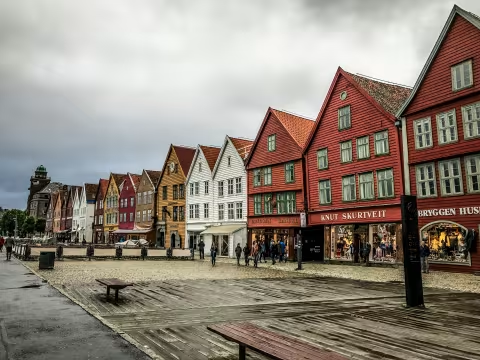
Bergen wraps itself around a single harbour. This makes choosing where to stay simple, you will stay in or close to the city center, but where? Every neighbourhood on this list is within walking distance of Bryggen, the fish market, and the Fløibanen funicular. The difference is atmosphere, not access.
Day 2: Ulriken, Neighbourhoods, and the Side of Bergen Tourists Miss
Morning: Mount Ulriken
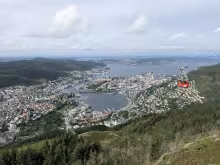
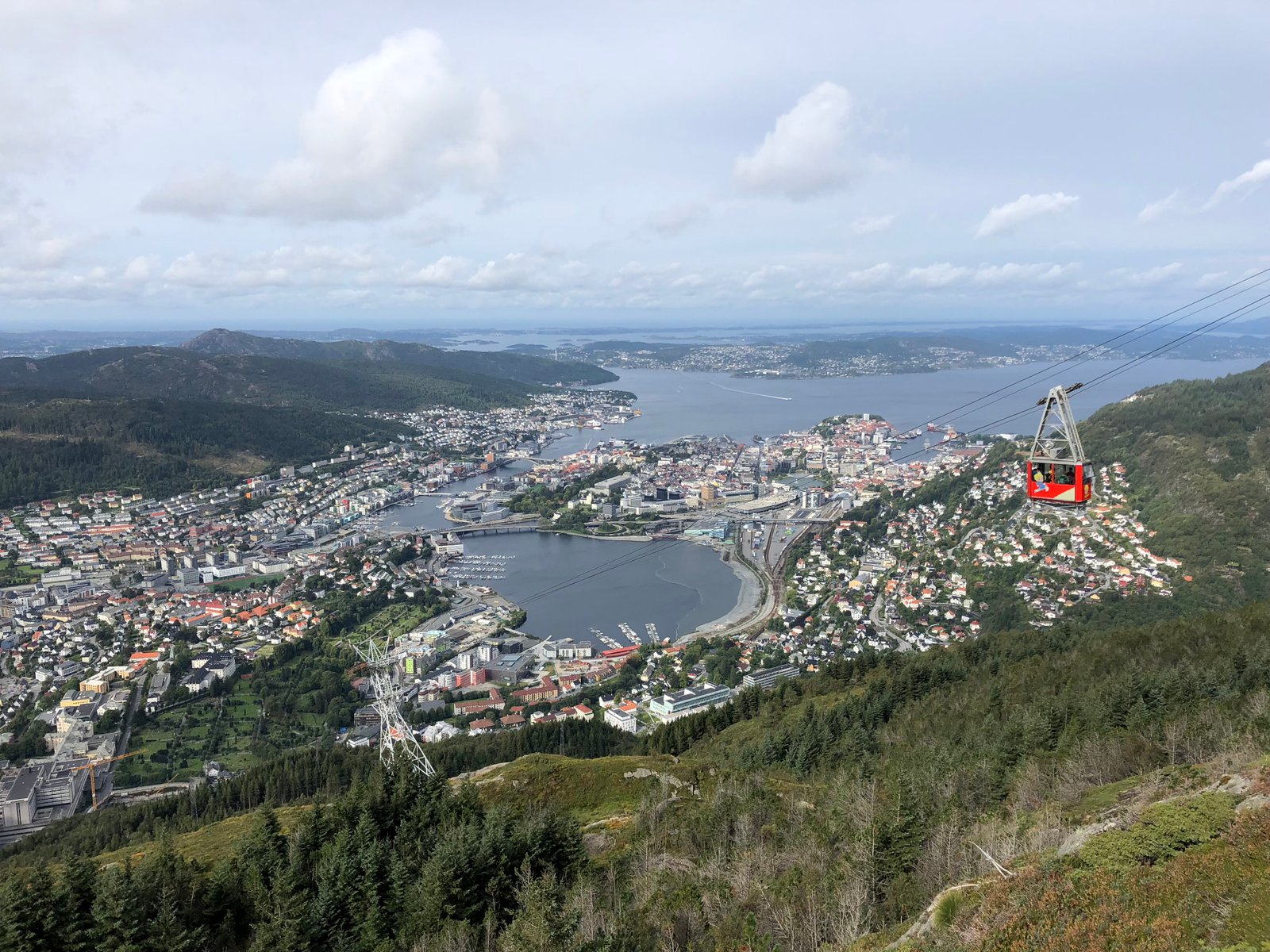
Ulriken is Bergen's highest mountain at 643 metres, nearly double the height of Fløyen. On a clear day you can see the Folgefonna glacier.
Getting there, option A: Bybanen Line 2 to Haukeland Sjukehus, about six minutes from the centre. Short uphill walk to the cable car base station.
Getting there, option B (April to October): The Ulriken Express bus runs every 30 minutes from Torgallmenningen, drops you right at the cable car. Fifteen minutes, no walking.
The cable car costs around 435 NOK return (2026). At the top, do what most people don't: walk around the back of the café to the side facing away from the city. Completely different landscape. Rugged and exposed, with snow patches well into summer. The city-view terrace is the obvious draw, but the mountain side is where Ulriken actually feels like a mountain.
If you want to earn it: The Sherpa Steps (Oppstemten) are over 1,300 stone steps built by Nepalese Sherpas. This is a serious workout. Takes 60 to 90 minutes up. Or you can cable-car up and walk down on the steps instead. This is what Bergen locals do for their daily exercise.
The Vidden Trail from Ulriken to Fløyen (13 to 15 km) is spectacular but takes five to seven hours over exposed, rugged terrain. Proper hiking boots, waterproof layers, the whole setup. It eats your entire day. Only do it May through October, and only if you're happy to skip everything else on Day 2.
Midday: Skostredet and the south harbour
Back down, head to Skostredet. It's a narrow street east of the harbour, packed with independent shops, small cafés, and local food producers.
Fjåk Chocolate (Skostredet 5) is Norway's first bean-to-bar chocolate maker. They do Nordic flavour profiles: lingonberry, brown cheese, reindeer lichen. Good hot chocolate and pastries in the café.
Bergen Kaffebrenneri (Thormøhlens Gate 45, Møhlenpris) is a short detour if you're coming back from Ulriken on that side of town. A micro-roastery in a converted shipyard. They roast coffee and process cacao on-site.
Lunch
Quick and cheap: Trekroneren on Kong Oscars Gate. Open since 1946. Barely a counter, no seating, and a queue at 2 AM on Saturday nights that's basically a Bergen tradition. Get the reindeer hot dog with lingonberry sauce, mustard, and crispy fried onions. Savoury with a mild gaminess, and the sweet-tart lingonberry cuts right through it. These are big sausages, 150 grams, reasonably priced at well under 100 NOK.
Sit-down: Søstrene Hagelin on Strandgaten 3. Two sisters from Sogndal opened this place in 1929. Their heart-shaped fiskekaker (fish cakes) got so well known that King Olav V had them delivered to the royal residence whenever he was in Bergen. The Norwegian embassy in Paris received weekly shipments. The recipes haven't changed. The fish cakes are made from fresh haddock, delicate and slightly springy, not dense. Fish soup runs around 200 NOK for a big portion. Counter service, only 32 seats. Or just grab a warm fish cake wrapped in a napkin and eat it walking.
Afternoon: Choose your path
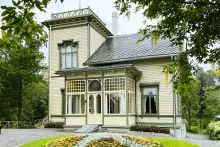
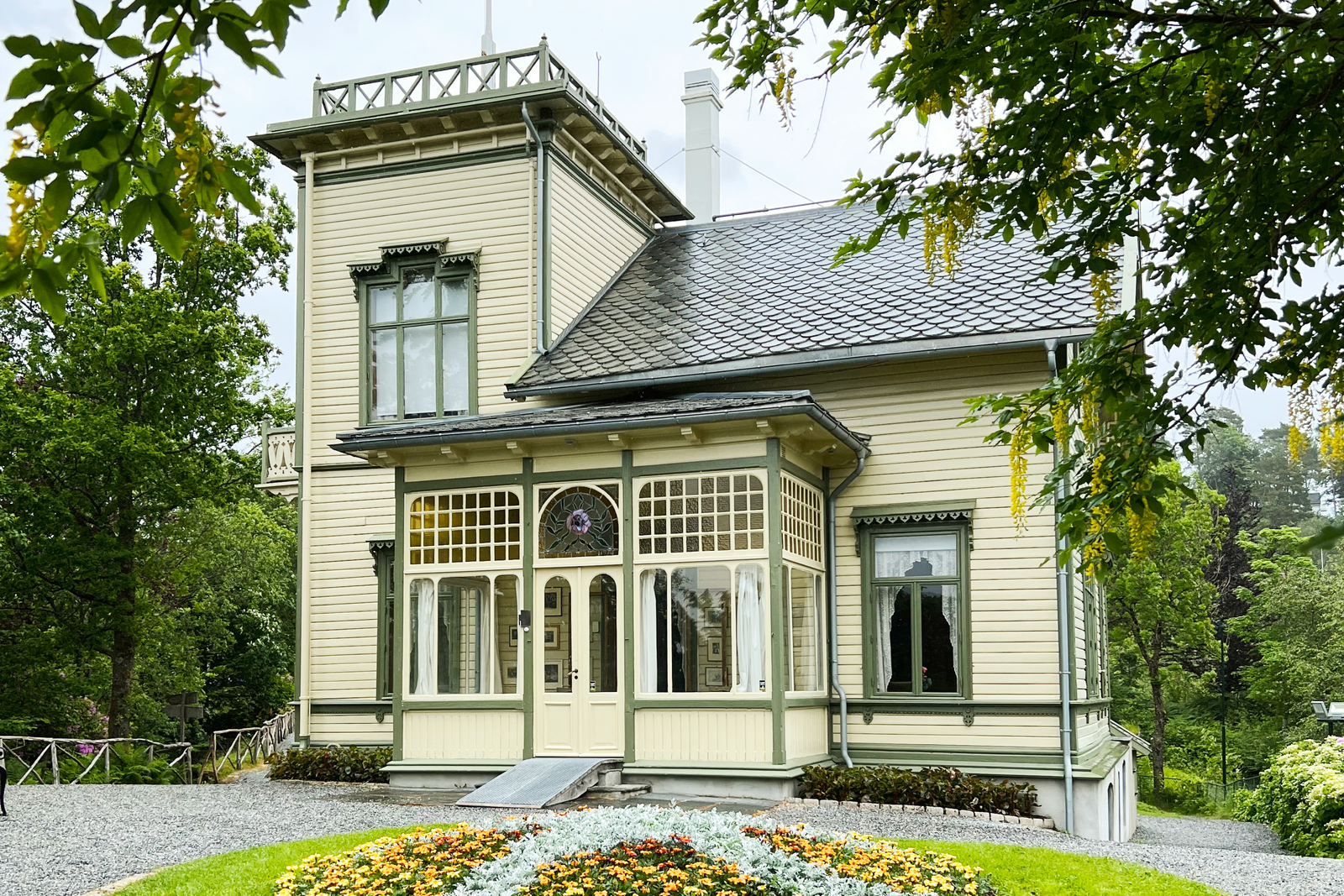
Option A: Troldhaugen (Edvard Grieg's home). The lakeside villa where Grieg composed, his tiny composer's hut on the cliff edge, and a purpose-built concert hall. Even if classical music isn't your thing, it's a beautiful spot. Summer concerts are the highlight, so check the schedule before you go. The catch is the commute. Bybanen Line 1 to Hop station, about 22 minutes. Then a 20 to 25-minute walk uphill through suburban streets. Round trip eats close to two hours just in transit. Budget three to four hours total. This is your whole afternoon if you do it.
Option B: Old Bergen Museum (Gamle Bergen). Over 50 preserved wooden houses recreating 18th and 19th-century Bergen, with actors in period dress during summer. A ten-minute bus ride from the centre (lines 3, 4, 12, or 19 to the Gamle Bergen stop), which is quicker than Troldhaugen.
Option C: Mostraumen fjord cruise (3 to 3.5 hours round trip). From the inner harbour through the Osterfjord and into the narrow Mostraumen strait. Waterfalls on both sides, mountain walls close enough to touch from the deck. The best way to see the fjord landscape without a full-day trip.
Evening - dinner and drinks
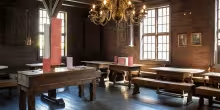
Enhjørningen (Bredsgården, Bryggen). Situated in a medieval building on Bryggen. The floors slant, the ceiling beams are crooked, and by candlelight the whole place feels like it could slide into the harbour. The mussel soup with curry, garlic, and saffron is the signature. Catch of the day changes with what comes in. The bacalao is solid. A la carte, so you can spend a couple of hundred kroner or push past 1,000 depending on appetite.
Special occasion: Cornelius Sjømatrestaurant. On a small island in the archipelago, only reachable by the restaurant's own boat from Dreggekaien quay. The 25-minute ride through the skerries is part of it. The kitchen runs a "Meteorological Menu," cooking based on the day's weather and whatever the fishermen brought in. Five courses, no fixed menu. Boat leaves at 18:00, back by 22:30, ride included. Budget well over 2,000 NOK per person. This is a full-evening commitment.
For drinks: No Stress (Hollendergaten 11). A low-key cocktail bar in an exposed-brick basement. No dress code, no attitude, possibly a video game console in the corner.
Practical Stuff
Getting from the airport. You have two options. The Bybanen light rail (Line 1) runs from under the terminal to the city centre in about 45 minutes. The Flybussen airport coach takes 20 to 30 minutes but costs significantly more. If you're tired and just want to get to your hotel, pay the extra. The Bybanen is free with a Bergen Card.
Rain. Bergen gets rain roughly 240 days a year. It sits in a basin where weather systems off the North Sea get trapped by the mountains. Pack a waterproof jacket with taped seams. Not an umbrella. The wind off the fjord will destroy an umbrella in minutes. Waterproof shoes are important too. But don't cancel outdoor plans because of a forecast. Weather can change fast here. Rain at breakfast, sun by mid-morning. Check the weather forecast.
Tipping. Not expected in Norway. Service staff earn a proper living wage with full benefits. Don't tip in cafés or casual restaurants. If you had a really good dinner, rounding up the bill or leaving 5 to 10% on the card machine is a nice gesture.
Shopping hours. Shops close early on Saturdays. Almost all retail is closed on Sundays. This is national law, not a Bergen quirk. Restaurants, cafés, and museums run normally. If you need outdoor gear, gifts, or groceries, do it on a weekday or Saturday morning.
Cruise ship days. Check the Bergen port schedule. On heavy ship days, Bryggen and the Fløyen funicular get swamped by mid-morning. Front-load those activities or shift them to whichever day has fewer ships in port.
Is the Bergen Card Worth It? (2026)
The Bergen Card covers public transport, museum entry, and a handful of restaurant discounts across Bergen and the surrounding region. Whether it's worth it depends on what month you're visiting and how many museums you plan to see. The full list of inclusions is on the Bergen Card website, but the list alone won't tell you whether it's a good deal for your trip. In short, if you visit during summer it's more difficult to get value out of the card than during winter. Read more on this and see our example calculation below.