
By: Chris ⎜ Last updated
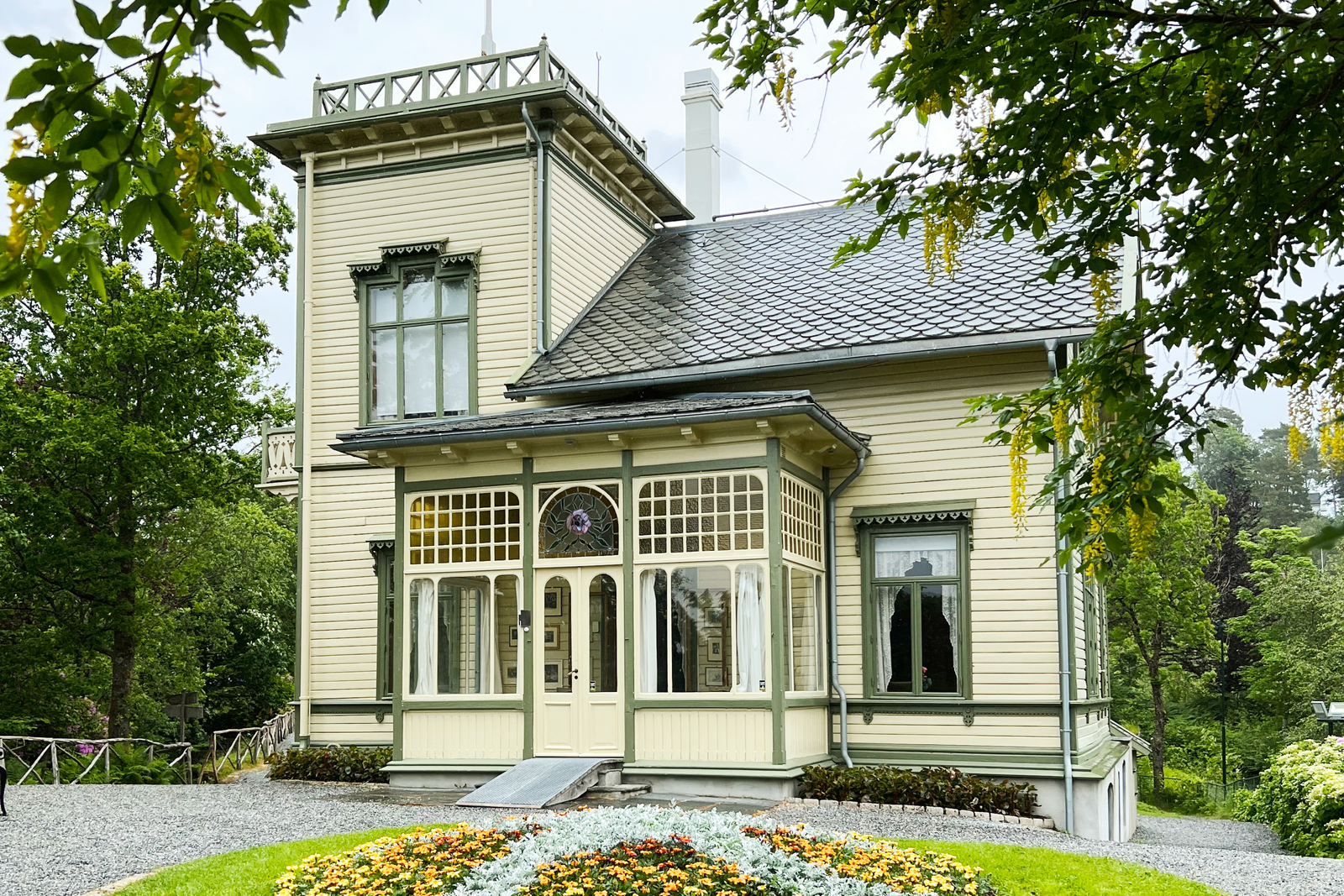
Troldhaugen was Edvard Grieg's home for the last 22 years of his life. It sits on a promontory over Lake Nordås, about 8 km south of Bergen centre. The name means "Troll's Hill," after the small valley nearby that local children apparently called the Valley of Trolls. Grieg called the house his "best opus so far."
Take the Bybanen light rail (line 1) to Hop, then follow the signs. It's a 20-minute walk through a quiet residential area. Bus 21 or 83 from Bergen Bus Station also gets you close.
The museum is closed for renovation until summer 2026. Check their website before you plan your visit.
The composer's hut
Grieg found the main villa too full of guests and noise to work in, so in 1891 he had a tiny one-room cabin built down by the lake's edge. A piano, a desk, a fireplace, a window facing the water. That was it. He used a thick edition of Beethoven's piano sonatas as a booster on the piano stool. When Troldhaugen opened as a museum in 1928, Nina Grieg, then in her eighties, carried the same book of sonatas down to the hut and placed it back on the stool herself.
The hut actually spent years in Oslo. After Grieg died in 1907, the estate was sold off and the cabin was moved to the Norwegian Folk Museum. A clause in the sale said it had to come back if Troldhaugen ever became a museum.
Troldsalen
The concert hall was built in 1985, dug into the hillside with a grass roof and a full glass wall behind the stage. The lake and the composer's hut sit right in the frame behind whoever is playing. It seats 200 people and the acoustics are excellent for the size.
Lunchtime piano recitals run daily in summer, mostly Grieg's own pieces. These sell out fast in July and August, especially on cruise ship days. Book online well ahead. An all-in-one ticket from Kode bundles return bus transport from the city centre, the concert, and entry to all Kode museums.
The gravesite
Edvard and Nina Grieg's ashes are set into the cliff face at the water's edge. Grieg picked the spot himself on a fishing trip with his friend Frants Beyer. It's a short walk from the main grounds, down through the trees and suddenly very quiet.
The museum exhibition
The modern building (added in 1995) fills in the biographical gaps with displays on Grieg's life, travels, and music. There's a 25-minute film of his most well-known pieces set against Norwegian landscapes that's better than it sounds. Budget around two hours for the hut, exhibition, grounds, and a wander, plus another hour if you're catching a concert.
Crowds
Cruise ship groups hit the site between roughly 11:00 and 14:00 in summer. Forty people shuffling through a small museum site at once changes the atmosphere completely. Arrive right at opening or come late afternoon when the groups have cleared out.
Winter visits are far quieter, though the hours shrink significantly.
Eating
The on-site café is fine for coffee and pastries, but nothing more. Eat in Bergen before you come or bring something to have by the lake.
Other Kode museums
Troldhaugen is part of the Kode museum network. If you're doing multiple museums in Bergen, the combined Kode ticket covers entry here plus the four KODE art galleries in the city centre. The Bergen Card also covers entry from October to April and gives a 25% discount in the summer months.