By: Chris ⎜ Last updated
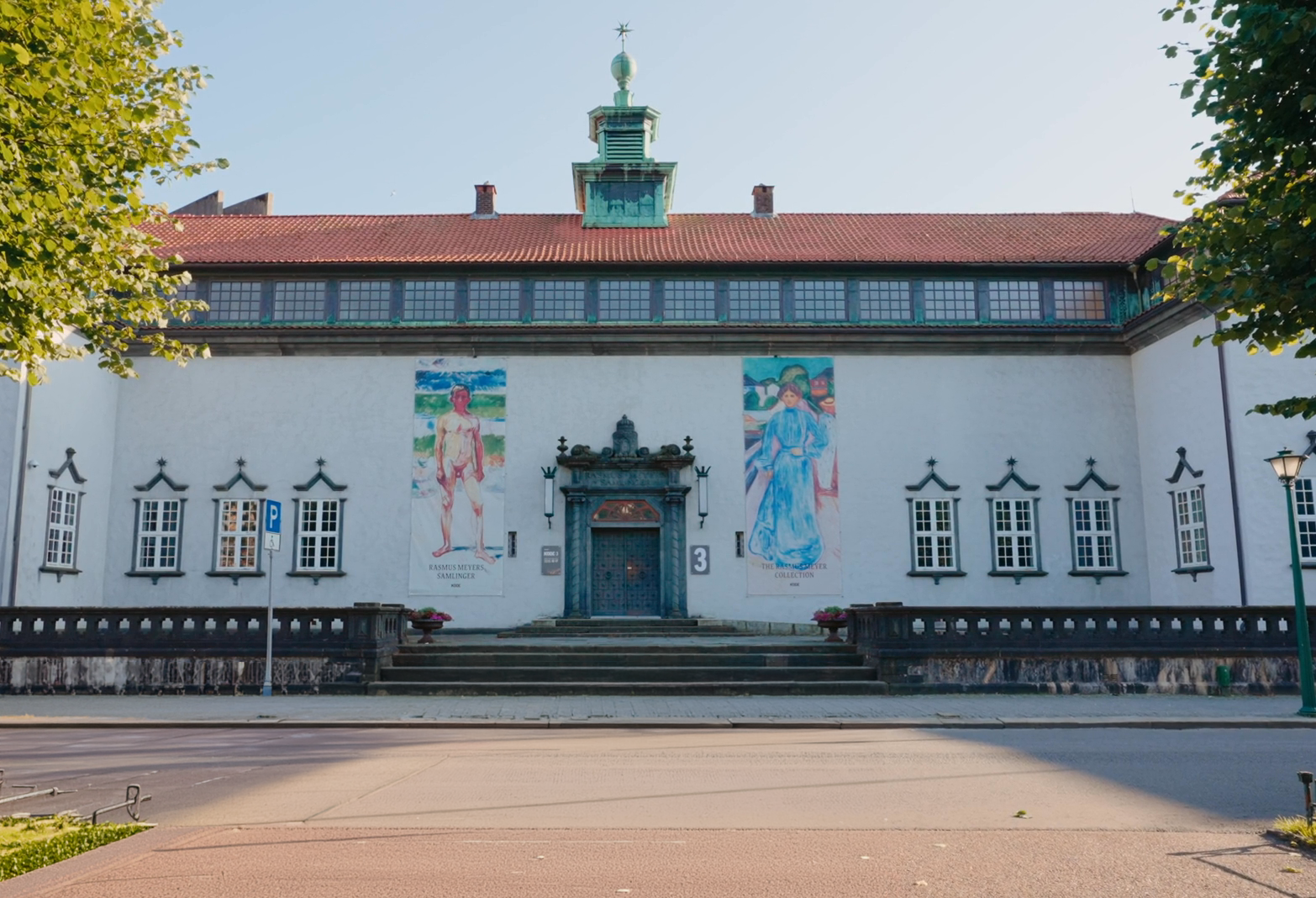
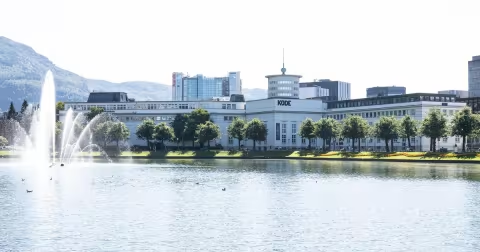
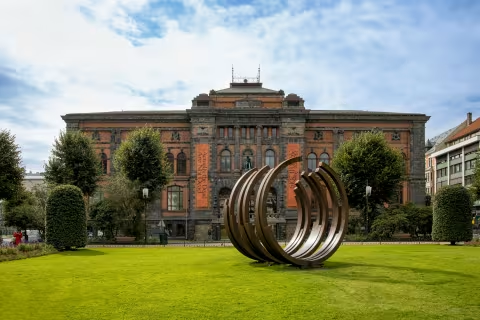
KODE has four art museums lined up along Lille Lungegårdsvann. Head straight for Rasmus Meyer, the 1924 building at the far end of the row. It's the smallest of the four and the one most worth your time.
What's inside
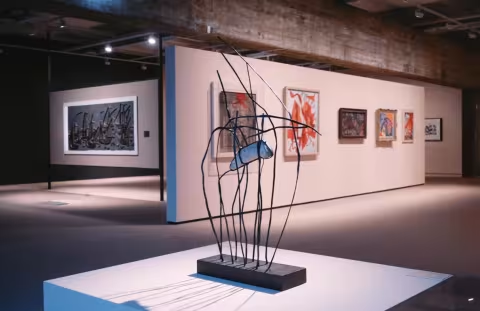
The collection covers Norwegian art from roughly 1880 to 1920, the period when Norwegian painting really found its own identity. Two floors of work by J.C. Dahl, Harriet Backer, Nikolai Astrup, Christian Krohg, and others, hung in small, quiet rooms that feel more like a private house than a gallery. The Blumenthal Room alone is worth coming here for: an entire room covered floor to ceiling in original frescoes from around 1760, preserved from a Bergen merchant's home.
But the real draw is the Munch collection. Rasmus Meyer was buying Munch's work before most people knew what to make of it, and the museum now holds over 50 paintings and more than 100 works on paper. That makes it the third-largest Munch collection in the world, after the MUNCH museum in Oslo and the National Museum in Oslo.
Better than MUNCH in Oslo?
The MUNCH museum in Oslo is an enormous building where you view major works across vast gallery spaces, often shoulder to shoulder with tour groups. At Rasmus Meyer, you're standing two metres from Jealousy, Melancholy, and Evening on Karl Johan in rooms built specifically for this collection.
The collection includes several key pieces from the Frieze of Life series, Munch's cycle exploring anxiety, love, and death. If you've seen Munch's work only in reproduction or behind crowd barriers in Oslo, this is a different experience.
The backstory
Rasmus Meyer was a Bergen businessman who spent decades collecting Norwegian art, often outbidding the National Gallery in Oslo. When he died in 1916, his heirs donated the entire collection to Bergen on one condition: the city had to build a proper museum for it. The architect Ole Landmark designed the building, and it opened in 1924. The neo-baroque interior was designed around the collection, not the other way around, and you can feel it in how naturally the work fits the space.
Practical details
Your KODE ticket covers all four museums and is valid for 48 hours. The building is right along the lake, a short walk from either the train station or Torgallmenningen.
Not all four KODE buildings are always open. Lysverket in particular has been closed for periods and reopens for specific exhibitions. Check which buildings are actually open before you plan a full KODE day. Rasmus Meyer is the first priority.
The Bergen Card includes free KODE admission from October through April. During the summer months (May to September), it gives you a 25% discount instead.
What to skip
If you only have time for one KODE building, this is the one. If you have a couple of hours to spare, add KODE Permanenten across the street for the craft and design collection. KODE Stenersen runs temporary exhibitions that vary in quality. Lysverket has no permanent exhibitions anymore, but the building still houses the Michelin-starred restaurant of the same name.
What to do nearby
Hotels nearby