By: Chris ⎜ Last updated
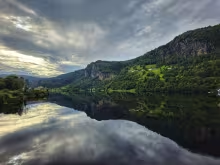
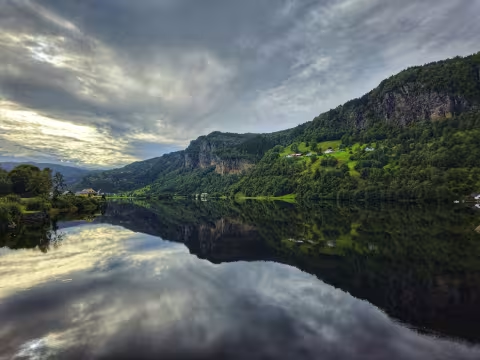
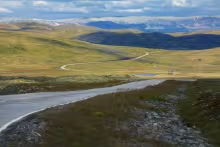
The Hardangervidda route crosses Northern Europe's largest mountain plateau, dropping from 1,250 metres above sea level to the Hardangerfjord at Eidfjord. Vast, treeless tundra gives way to the narrow Måbødalen valley, which funnels you down past Vøringsfossen, Norway's most famous waterfall.
Geilo: the eastern gateway
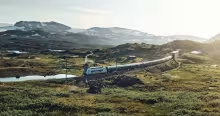
Geilo sits about 20 minutes east of Haugastøl, the formal start of the scenic route. A stop on the Bergen Railway, it's one of Norway's premier ski resorts with a dining scene more sophisticated than you might expect. The clientele is accustomed to high-end alpine standards, and restaurants have risen to meet them. If you're driving from Oslo, Geilo makes a natural overnight stop before tackling the plateau.
Accommodation
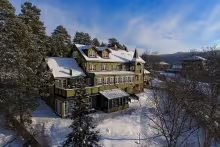
Geilo Mountain Lodge occupies a green-painted 1917 villa about a 10-minute walk from the town centre. Eight rooms and suites. The owners, Jan and Julie, live on-site and treat guests like houseguests. English country house transplanted to a Norwegian mountain valley, complete with fireplace and views toward Hallingskarvet National Park. The restaurant serves a set menu using local ingredients. Book the whole property for a private retreat if you're travelling with a group. Not suitable for families with young children.
Eating
Hallingstuene is a family-run restaurant in a rose-painted timber house, operated by TV chef Frode Aga and his wife Berit since 1988. Game is the specialty: reindeer, grouse, mountain trout, venison. The interior feels like three old Halling cottages connected together, with fireplaces and folk-art painted walls. The wine cellar holds over 1,200 labels. Reservations recommended. Closed Mondays year-round and Tuesdays outside high season.
Crossing the plateau
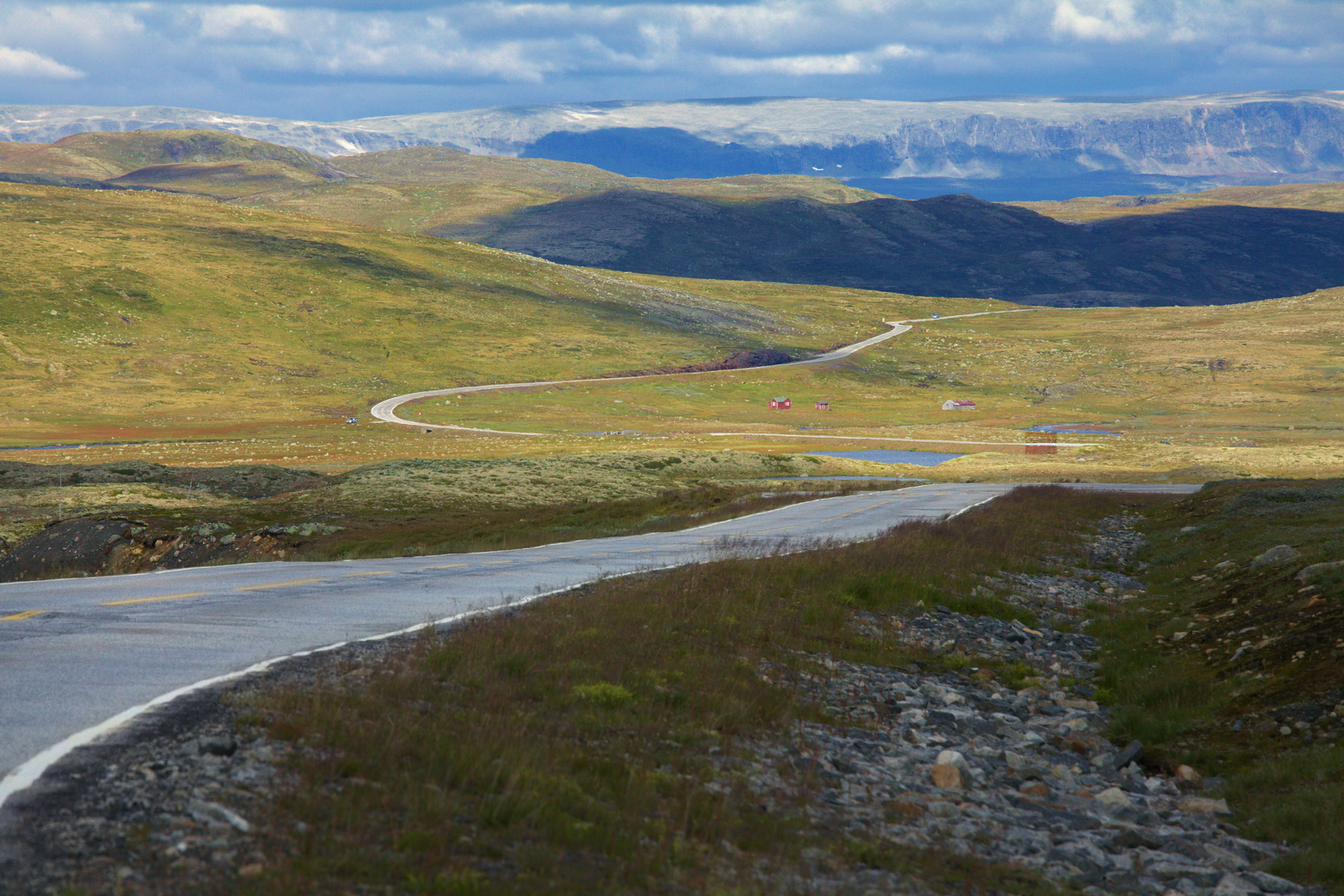
For the first 40 kilometres, the road rolls across open plateau. Lichen-covered rocks, dwarf birch, boggy patches, and an enormous sky. In good weather, the Hardangerjøkulen glacier gleams on the horizon. This is reindeer country. With patience you may spot herds moving across the terrain, though they tend to keep their distance from the road.
Ørteren and Vardestopp rest areas
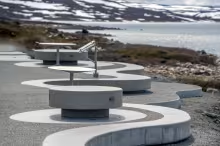
Near Ørteren lake, two newly upgraded rest areas (opened June 2025) offer views across the water toward the glacier. Designed by Bjørbekk & Lindheim, the low-carbon concrete platforms curve into the terrain. A gravel path connects to the lakeshore.
Nothing commercial for many kilometres in either direction. Stop, stretch, absorb the emptiness.
The descent into Måbødalen
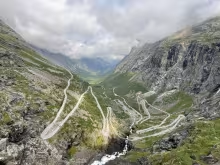
The transition happens suddenly. The road begins to descend, the plateau drops away, and you enter Måbødalen, a steep glacial valley with walls that rise hundreds of metres on either side. The old road included spiral tunnels blasted through the rock, a remarkable piece of 1930s engineering now largely bypassed by newer infrastructure.
Vøringsfossen
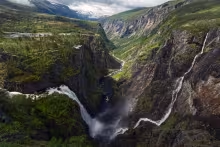
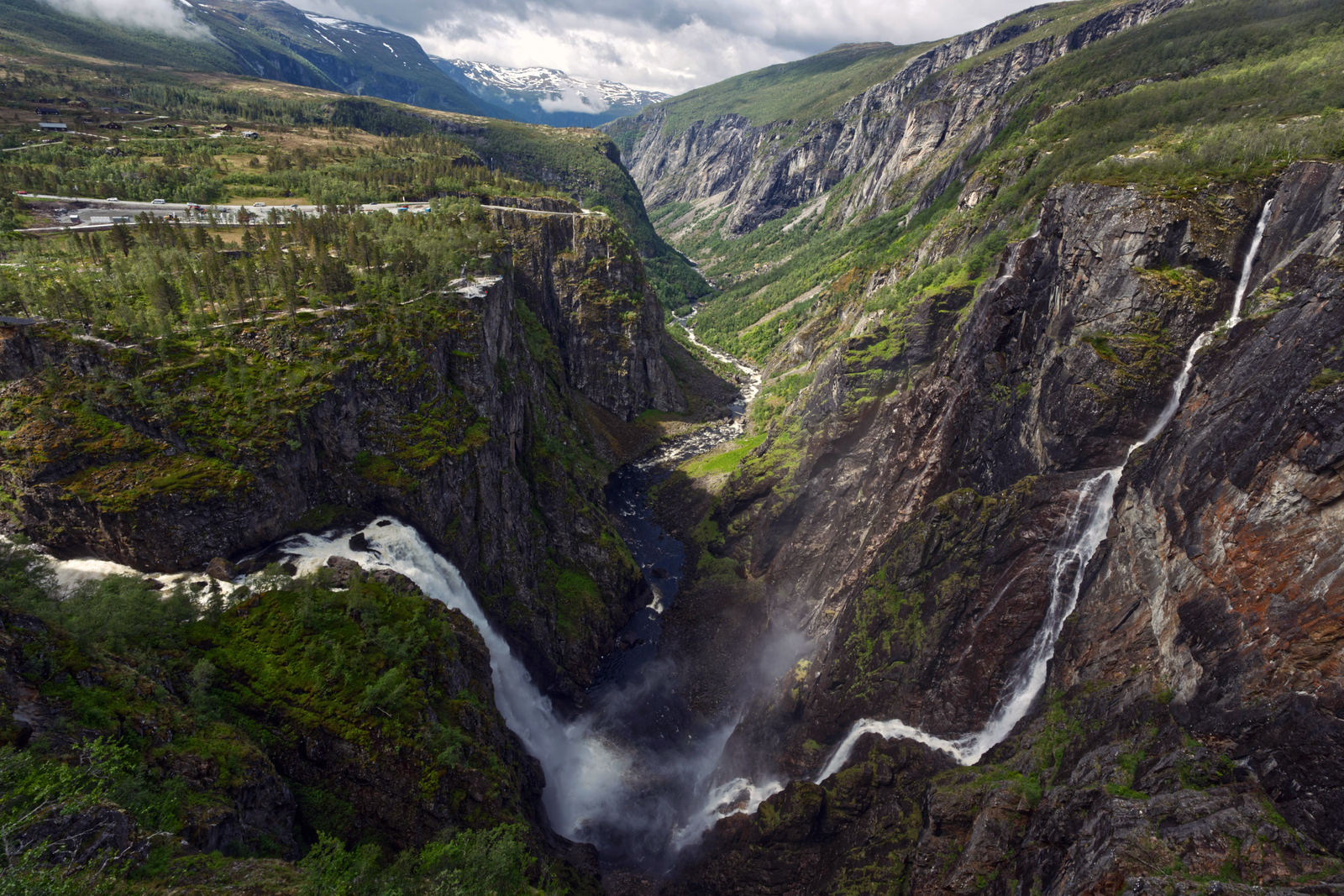
Norway's most famous waterfall drops 182 metres from the edge of the plateau into the Måbødalen gorge. The Bjoreio river drains a 90-square-kilometre catchment, creating a volume of water that thunders into the canyon with force you can feel in your chest.
The area has been developed over multiple construction phases by architect Carl-Viggo Hølmebakk. Paths, viewpoints, and a spectacular step bridge form one of the most ambitious architectural interventions along any of the scenic routes.
Fossli Hotel viewpoints (upper area)
At the top of the gorge, paths lead from the parking area to multiple viewpoints along the canyon rim. The historic Fossli Hotel, dating to 1891, overlooks the waterfall and offers both accommodation and a restaurant. The upper viewpoints are partially accessible and provide views of the full 182-metre drop.
The Step Bridge
The centrepiece is a 47-metre step bridge spanning the Bjoreio just above the point where it becomes the waterfall. Ninety-nine steps, 50 metres above the rapids with spray rising from below. The bridge connects Fossli with the lower plateau at Fossatromma.
Walking across is not for those with a fear of heights. You're standing on steel steps over the beginning of a 182-metre drop, with the roar of water surrounding you. Upstream into the canyon, downstream toward the valley, directly down into the churning water.
Fossatromma (lower area)
Below the waterfall, the Fossatromma plateau provides a different perspective. Paths, toilets, and viewpoints completed through September 2024 make this area accessible. From here, you can look back up at the waterfall and the bridge, or walk along the old pack road that connected the plateau to the valley before the modern road existed.
Hiking to the base
A 3-kilometre trail descends from the main road into the valley, passing an old car wreck along the way. Steep but rewarding, placing you at the boulder-strewn base with water crashing down above.
Måbø Bridge
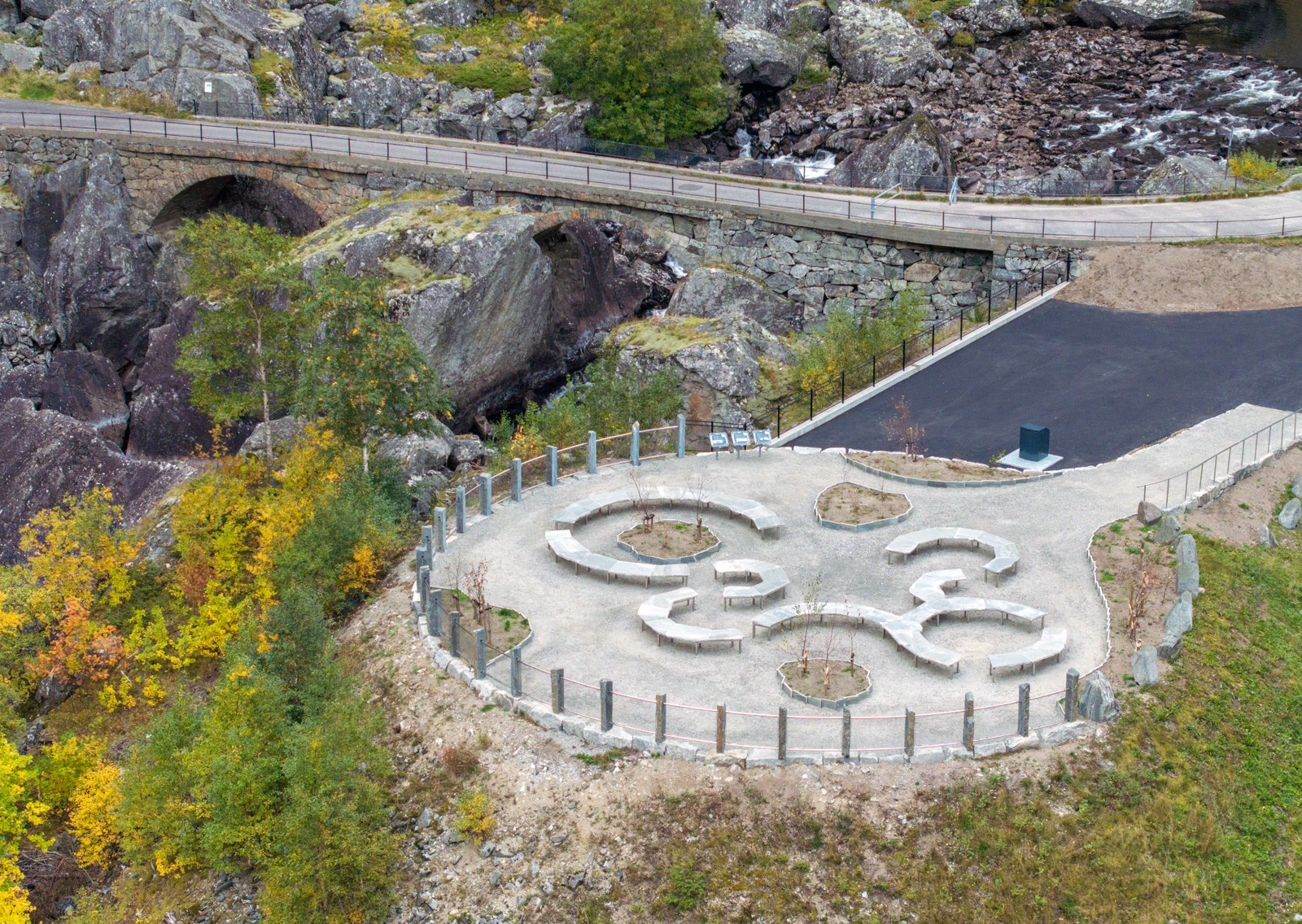
The 1910 stone arch bridge over the Bjoreio is a protected cultural monument, taken out of use when the highway was rerouted in 1986. A new rest area provides seating and views of the historic bridge and surrounding waterfalls.
Eidfjord
The route ends at Eidfjord, a small village at the head of the Hardangerfjord. You've descended from 1,250 metres to sea level in under an hour.
If you're not in a hurry to move on, book the RIB tour from the harbour. It's the fastest way to see this end of the fjord from the only angle that really makes sense, the water. You get kitted out in a thermal floating suit, which you'll need even in July. The boat runs either into Simadalsfjord towards the Sima power station or out to the Hardanger Bridge, and the captain picks based on weather conditions.
If you do get the choice, take Simadal. You pass directly under Kjeåsen farm, 600 metres up the cliff face. Seals are often out on the rocks below, and the Sima hydro plant at the head of the fjord turns out to be where all those waterfalls you drove past on the plateau actually end up.
Vik Cafe & Restaurant
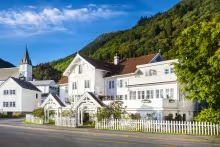
Vik Café & Restaurant operates out of a historic guesthouse run by the same family for generations. The kitchen blends international influences with traditional Hardanger dishes. A small bakery turns out organic sourdough and cardamom buns. They brew their own beer in the cellar and serve cider from the garden. Outdoor seating faces the fjord. It's the best option in Eidfjord.
What next
Hardangerfjord scenic route
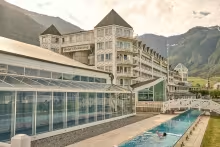
If continuing to the Hardangerfjord scenic route or the Trolltunga hike, Hotel Ullensvang in Lofthus makes an excellent choice to stay overnight: 170 rooms, views of the Folgefonna Glacier, and a spa with indoor and outdoor pools connected by a swimming channel. Family-run since 1846, now into its fifth generation. More resort than boutique, but the location directly on the Sørfjorden with glacier views is hard to beat.
Read the complete guide to the Hardangerfjord scenic route.
Toward Voss
If you're continuing west toward Bergen, two hotels near Voss make excellent stops.
Elva Hotel sits on the shores of Lundarvatnet lake, about 10 minutes from central Voss. Fourteen rooms spread across a main building and five detached mini-houses, each named after a local river. Floor-to-ceiling windows frame the lake. No TVs. The restaurant earned a Michelin Key in 2025. Outdoor hot tubs and a wood-fired sauna overlook the water.
Store Ringheim Hotel is a historic farm in the same family since 1778, now a 15-room boutique hotel. Buildings cluster around a courtyard: the old farmhouse has rooms with exposed timber walls, while the converted barn houses Restaurant Flor'n serving farm-to-table dishes. About 1.4 km from central Voss.
Read more about a stopover in Voss which is covered in the Bergensbanen article.
Or just simply head straight to Bergen, about a 2.5 hour drive. If so, check out our city guide to Bergen for recommendations.
Route-specific logistics
Year-round driving: Unlike most mountain pass routes, Hardangervidda stays open through winter. Expect convoy driving behind snow ploughs in bad weather, and be prepared for temporary closures during severe storms.
Vøringsfossen access: The upper viewpoints at Fossli are free. The step bridge is open during summer months (typically May through October). Check road conditions before visiting in shoulder seasons.
Hardangerfjord scenic route from Bergen