By: Chris ⎜ Last updated
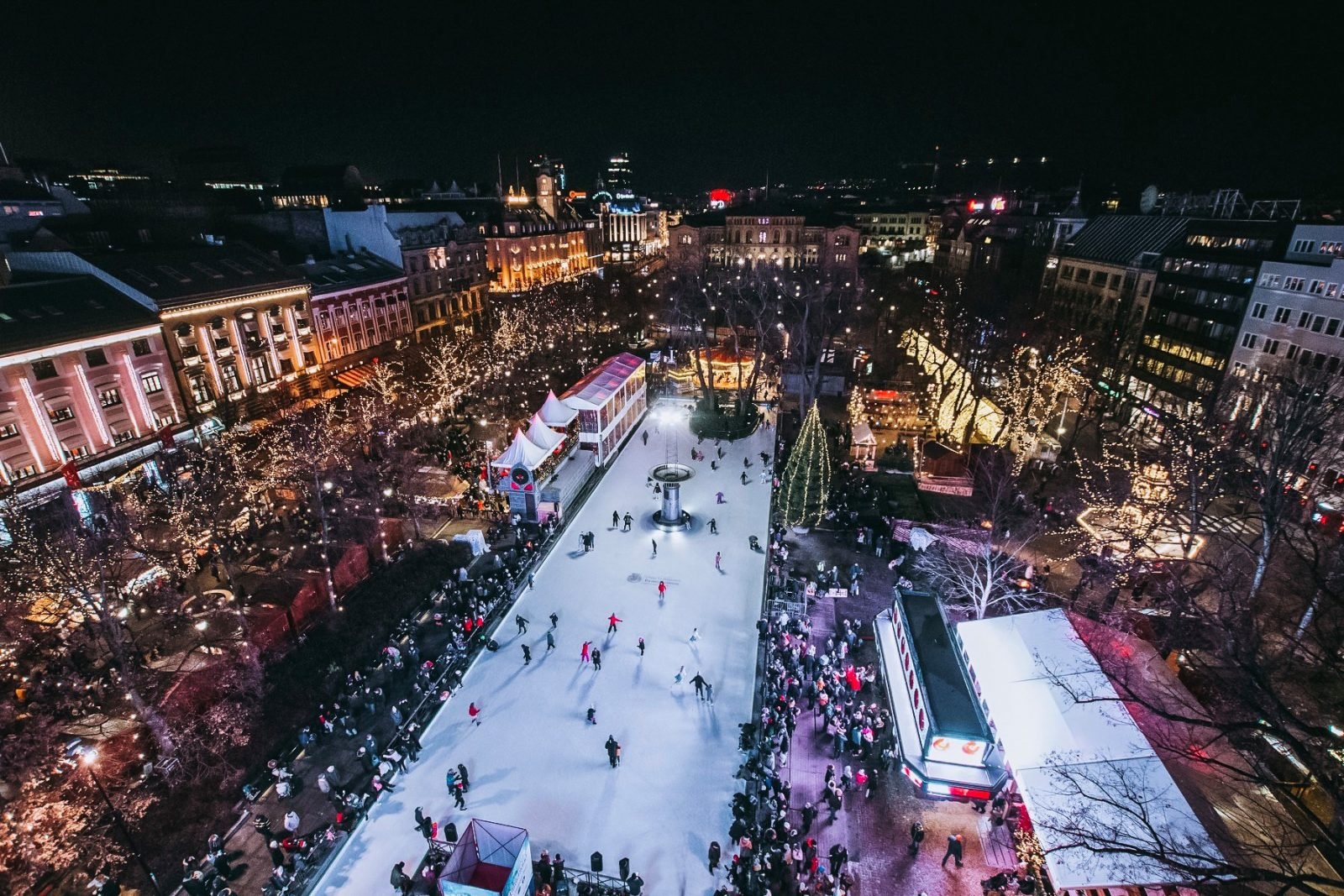
Jul i Vinterland is Oslo’s main, central Christmas market. If you're in Oslo between the end of November and beginning of January you should go here at least once. It´s in the middle of the city so it´s not like you can avoid it anyway. But ensure you go after dark, the lighting is part of the experience.
Do not expect a big German-style Christmas market. Jul i Vinterland is smaller, more mainstream and commercial. That´s not necessarily bad, but it's not a place you would go for the full evening.
The market is in Spikersuppa on Karl Johans gate, between Nationaltheatret and the Parliament, and entry is free. Details change annually so check out the official Jul i Vinterland website.
Best time to go
The best time to go is on a weekday evening. Jul i Vinterland looks much better after dark, and it gets dark early in Oslo during winter, around 16:00. This means late afternoon or early evening is usually the best time slot: the lights are on, but the market is not filled with people yet.
Friday and Saturday evenings are the most crowded. The market sits in a narrow strip, so it will feel crowded quickly. People stop for photos, queues build at the food stalls, and you will have to squeeze yourself through the crowds.
If you are visiting with small children, go earlier in the day. It is less atmospheric, but easier. Strollers are fine when it is quiet, but a real hassle when the lane is packed.
The days during and after Christmas when the market is still open will be calmer.
Most visitors need about an hour. That will be enough time to walk the market, get food or gløgg and see the lights. Add more time if you want to skate, ride the Ferris wheel or sit dine or enjoy a drink indoors in Gløgghuset. It works well as a before dinner activity.
What to do first
Start with Stjernehimmelen, the light canopy along Stortingsgata. It is free, quick and usually the best-looking part of the whole market. Fairly Instagram-friendly if you´re into that kind of stuff. For this you need to go after dark. In daylight, it is just a row of lights above a shopping street. After dark, it gives the market the Christmas feeling people are looking for.
Food and drink
The vendors change annually, but the basics are pretty much the same every year.
Raclette is usually a good choice when it is there. Melted cheese, bread or potatoes, cold hands, December evening. Simple, filling and hard to mess up.
For sausages, look for the stalls grilling over an open flame. Julepølse (Christmas sausage), bratwurst and curry sausage are common options, but make sure its newly grilled and has not been kept warm for too long.
If a moose burger or other elg option is available, it is worth considering. It gives you something more Norwegian than the standard Christmas market mix of churros, waffles and sausages.
For sweets, go for fresh smultringer or roasted almonds. Smultringer are small Norwegian Christmas doughnuts. Ensure they are fresh and eat them immediately, they are best warm, and nothing to get excited about if they have been sitting around.
Gløgg is part of the Christmas experience. It is a fairly sweet, warm Christmas drink made with red wine and a spiced cordial. Alcohol rules in Norway are stricter than in many countries, so you cannot walk around the market with the gløgg in your hands like you're able to in continental Europe.
Gløgghuset
Julenissens Gløgghus is the indoor place to warm up. It usually serves gløgg, cocoa, coffee, tea, porridge, simple sausages, wine and beer.
Use it for a short break if you are cold. The upstairs seats are better if you can get one, especially with a view over the rink. On busy evenings getting a seat might be problematic.
Ice skating
The skating rink is one of the nicest parts of Jul i Vinterland after dark. It´s situated in the middle of Spikersuppa, with the market around it.
It is small though. Think short festive skate, not a proper skating session. Check the official activities page for more information.
The Ferris wheel
The Ferris wheel, Julestjernen, is the big visual marker at the market. Like most of the market it is best after dark, when you can see the lights, Karl Johans gate and central Oslo from above.
Shopping
The shopping is a mixed bag. Some stalls sell handmade or locally designed goods, including wool, glass, food gifts and Christmas decorations. Others are more like generic market products. In general, Jul i Vinterland is better for the atmosphere and snacks than serious craft shopping.
For a more traditional Christmas market
If you want to visit a more traditional Christmas market, check whether you are in Oslo during Norsk Folkemuseum’s Christmas Fair on Bygdøy. It usually runs only on the first two weekends of December.
The setting and the size are the biggest differences. Norsk Folkemuseum is an open-air museum with old buildings, hosts in traditional dress, genuine craft stalls, food, music and Norwegian Christmas customs. It feels much more genuine than Jul i Vinterland.
The downside is that there´s an entrance fee. You need to get to Bygdøy, buy a museum ticket and set aside enough time. It´s popular so you need to reserve tickets in advance.
What to do nearby
Hotels nearby