By: Chris ⎜ Last updated
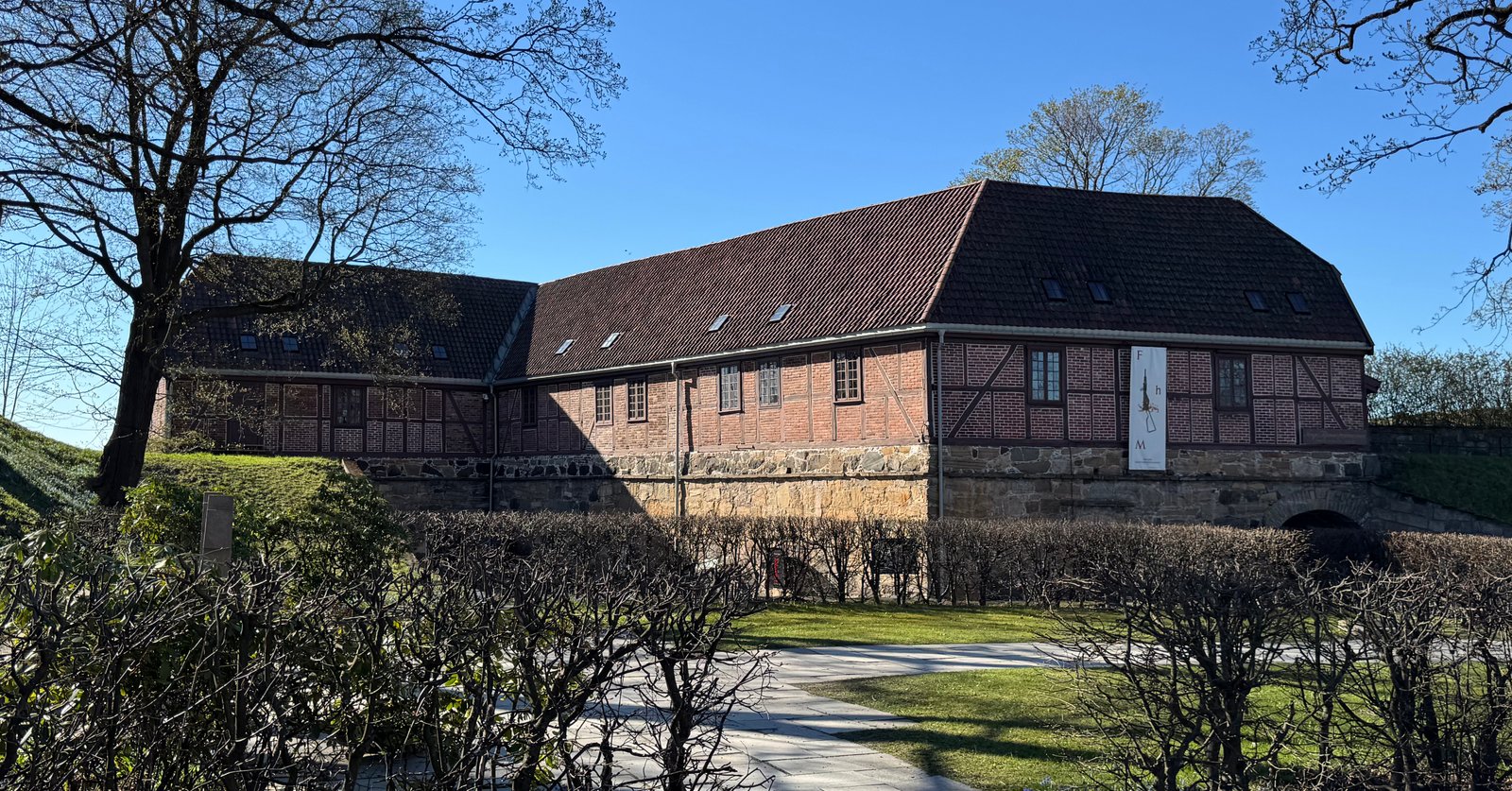
The building itself is part of the story. This 17th-century fortification at Akershus Fortress was used by the Nazis as a prison and torture centre during the occupation, and Norwegian resistance fighters were executed in the courtyard just outside the entrance. After liberation, Vidkun Quisling faced a firing squad in the same fortress grounds. So when you step inside and the thick stone walls close in around you, and the lighting drops to something oppressive and dim, it's the actual place where some of what you will read about happened.
The museum runs chronologically across two floors, from the shock of the German invasion on 9 April 1940 through to liberation in May 1945. You start in near-darkness and end in rooms that are noticeably brighter.
What to expect inside
This is an old-fashioned museum, and that's meant as a compliment. No flashy interactive screens or slick multimedia. Instead, you get original documents, photographs, underground newspapers, clandestine radio equipment, and hand-built dioramas with scale models of wartime operations. Some of the dioramas use cotton wool for smoke and tiny figurines for soldiers. They look like they were made by someone who cared deeply about the details, which they were: the museum was designed in collaboration with actual resistance veterans and opened in 1970 on the 25th anniversary of liberation.
A few things stand out. There's a sculpture assembled from captured German Mauser rifles shaped into a swastika. You can press a button to hear Quisling's original radio broadcast ordering Norwegians to accept the German invasion. The panel beside it labels this simply as "betrayal." The heavy water sabotage at Vemork, probably the most famous Norwegian resistance operation of the war, gets its own section with a model of the plant and what is reportedly the only surviving original heavy-water production cell. There's also a life-size mock-up of an underground printing shop, and an Auschwitz scale model that stops being quaint the moment you look closely at it.
One of the stranger artefacts: a set of dentures that Norwegian officers modified to pick up BBC radio signals while imprisoned.
Practical information
The museum is open daily from 10:00 to 17:00 in summer (May to August) and 10:00 to 16:00 the rest of the year. Closed on 1 January, 17 May (Constitution Day), 24–26 December, and 31 December. Check the official museum website for current hours and admission prices before you go, as these shift occasionally.
Admission is included with the Oslo Pass. There's also a combo ticket covering this museum, the Armed Forces Museum, and Akershus Castle if you're planning to see all three, which saves a bit over buying separately.
Most signage is in both Norwegian and English, though some original wartime documents and newspaper reproductions are Norwegian only. That's not a problem for following the story, but if you want to read every artefact label, having a translation app on your phone helps.
If you have trouble reading in dim conditions, you should be aware that the lighting inside is deliberately low and some text panels have poor contrast.
Getting there
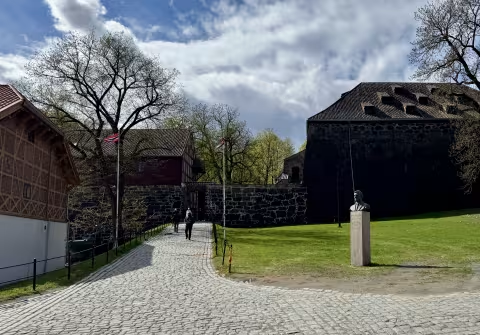
You'll need to walk up through the Akershus Fortress grounds to reach the museum. The path is cobblestone and fairly steep. There are stairs at the entrance, but a ramp route is available too. Taxis can only stop at the fortress gate.
The memorial and bookshop
Just outside the entrance, a memorial lists the names of resistance fighters who were executed at the fortress. Fresh flowers appear there regularly. Spare a few minutes for it, especially after what you've just seen inside.
The bookshop is small but surprisingly good, particularly the English-language selection. It's almost entirely books about the occupation and resistance, and the range goes well beyond what you'd expect from a museum gift shop this size.
Combining with the Armed Forces Museum
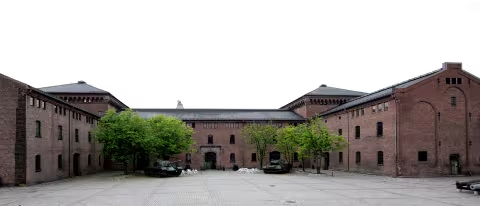
The Norwegian Armed Forces Museum (Forsvarsmuseet) sits further into the fortress grounds, a short walk from here. Where the Resistance Museum focuses on civilian defiance and the human cost of occupation, the Armed Forces Museum covers centuries of Norwegian military history with vehicles, weapons, and strategic exhibits. The two museums complement each other well if you have a morning to spend at the fortress, though you could easily fill two hours in each if the subject matter interests you.
Out of the two museums, the Resistance Museum is the most interesting one unless you're really into military history.
What to do nearby
Hotels nearby