By: Chris ⎜ Last updated
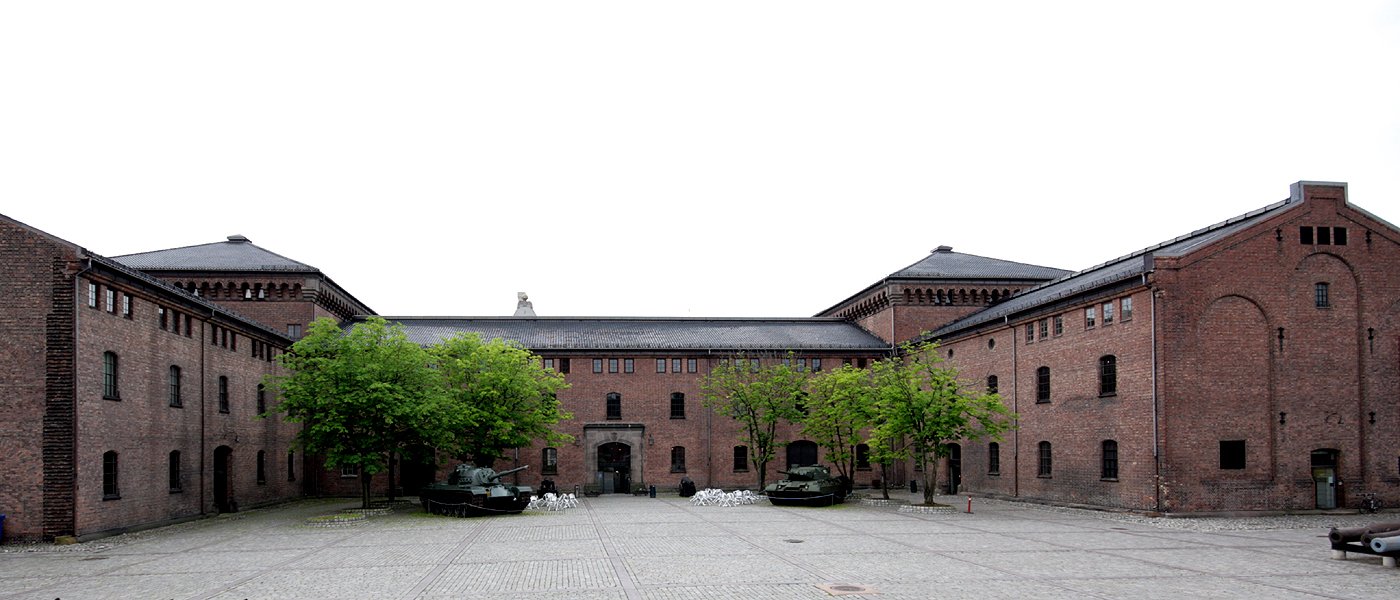
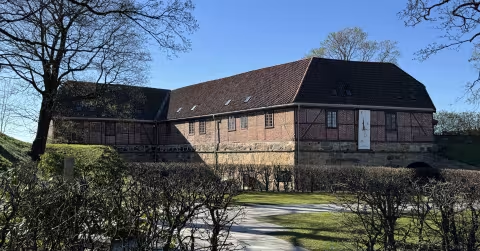
This museum doesn't look like much from the outside. It's housed in a squat red-brick arsenal building (Bygning 62) at the lower end of Akershus Fortress, tucked behind the Ministry of Defence near the cruise ship quay. Walk in, and you're suddenly standing in front of a thousand years of Norwegian military history, from Viking-era swords to the body armour Norwegian soldiers wore in Afghanistan.
The scope is the main draw here. Where the nearby Resistance Museum zooms in on the WWII occupation and resistance, Forsvarsmuseet pulls the camera back to cover everything: medieval coastal defence, the centuries-long tug-of-war between Denmark and Sweden over Norwegian territory, the scramble toward independence in 1905, both World Wars, the Cold War, and Norway's modern role in NATO and international peacekeeping. It's ambitious, and the best sections pull it off remarkably well.
Visit the Armed Forces Museum before the Resistance Museum if doing both. The strategic big picture here provides context for the personal human stories and civilian resistance detailed in the Resistance Museum next door. Together they cover military strategy plus lived occupation experience.
What to expect inside
The museum is spread across two floors, laid out chronologically. You start with the early stuff (Viking weapons, medieval armour, the long union periods) and work your way toward the present day. The earlier sections can feel a bit old-fashioned in places, more traditional glass cases and wall panels than immersive design. That changes as you move forward in time.
The WWII section takes up the most space and gets the most attention from visitors for good reason. Life-size dioramas depict the German invasion of April 1940, and scale models recreate key battles including Narvik. The whole first floor is largely dedicated to the Second World War, and the density of artefacts, photographs, and equipment on display is impressive.
One story the museum tells particularly well is the sinking of the German heavy cruiser Blücher on the morning of 9 April 1940. Oscarsborg Fortress, an ageing coastal installation in the Drøbak narrows south of Oslo, was manned by fresh conscripts and a handful of officers, one of them a 61-year-old retired naval commander recalled from his house across the fjord. The fortress's main guns were 1890s-era Krupp cannons. Its torpedo battery, armed with 40-year-old Austro-Hungarian torpedoes, was so well hidden that German intelligence didn't know it existed. Colonel Birger Eriksen ordered his gunners to fire on the approaching German fleet without waiting for higher authorisation. The ancient guns crippled the Blücher, and the torpedoes sank it. Over a thousand German personnel went down with the ship. The rest of the invasion fleet turned back, buying enough time for King Haakon VII, the government, the parliament, and Norway's gold reserves to escape Oslo by special train. Without that delay, Norway's legitimate government would have been captured on day one. The museum covers this well, with models and documentation that bring the sequence of events to life.
The sea war section rounds out the WWII coverage with large-scale naval hardware, including guns and torpedoes, alongside models showing the broader Atlantic theatre where the Norwegian merchant fleet played a critical role.
Cold War and modern operations
The Cold War section is the surprising part. Norway sat on NATO's northern flank for four decades, sharing a land border with the Soviet Union in the Arctic. The exhibits cover the strategic position in detail: surveillance operations, civil defence preparations, and the constant tension of being a small country standing directly between two superpowers. For anyone with even a passing interest in Cold War history, this section alone makes the visit worthwhile.
The INTOPS (International Operations) exhibition covers Norwegian military deployments from 1947 onward, including UN peacekeeping, the Balkans, and Afghanistan. The scale is striking: over 100,000 Norwegian soldiers have served in roughly 100 international operations over the decades. The displays include equipment, uniforms, and documentation from recent deployments. It's a perspective on modern Norway that most visitors never encounter elsewhere.
The English problem
This is the biggest catch for non-Norwegian visitors, and you should know about it before you go. English signage across the museum is inconsistent. The upper floor and the WWII sections tend to have more English text, with overview cards and translated panels. The ground floor, particularly the earlier historical periods, is heavier on Norwegian-only labels. Some areas have laminated English translation sheets available, but coverage varies.
You can still get a lot from the displays themselves, the artefacts, uniforms, weapons, and dioramas are visual enough to follow without reading every panel. But if you want the full context, bring your phone with a translation app. Google Translate's camera mode works well for scanning wall text on the spot.
Opening hours and admission
May to August: daily 10:00–17:00
September to April: daily 10:00–16:00
Closed 1 January, 17 May (Constitution Day), 24–26 December, and 31 December. Occasional maintenance closures happen, so check the official website before you go.
Forsvarsmuseet vs. the Resistance Museum
These two museums sit within a few minutes' walk of each other on the Akershus Fortress grounds, and it's natural to wonder which one to visit if you only have time for one.
The Resistance Museum is tighter in scope and hits harder emotionally. It focuses entirely on the German occupation and Norwegian resistance from 1940 to 1945, with excellent English throughout. If WWII is your primary interest and you want a focused, well-translated experience, that's the one to pick.
Forsvarsmuseet is broader and rewards a different kind of curiosity. You get the full arc of Norwegian defence history, and the Cold War and modern operations sections cover ground no other museum in Oslo touches.
If you have the time and are interested in military history, do both, if you want to do only one we recommend the Resistance Museum. A combined ticket covers Forsvarsmuseet, the Resistance Museum, and Akershus Castle, and a full morning at the fortress hitting all three is a solid way to spend a rainy Oslo day. The Oslo Pass covers all of them.
What to do nearby
Hotels nearby