By: Chris ⎜ Last updated
Seven minutes on the ferry from Aker Brygge, and you're standing on an island with 12th-century monastery ruins, Napoleonic cannon batteries, swimming rocks dropping into the Oslofjord, and the kind of quiet you normally don´t find in a capital city. Hovedøya sits 800 metres from downtown Oslo.
Don't expect resort beaches or turquoise water. What you get is a 40-hectare nature reserve with walking trails through old-growth forest, a seasonal café serving surprisingly good seafood next to crumbling monastery walls, and flat rock shelves where you can lower yourself straight into chest-deep water. For a half-day escape from the city without leaving it, Hovedøya is hard to beat.
Getting there
The ferry departs from Aker Brygge on the Ruter B1 line, which runs year-round. In summer, the dedicated B1X shuttle goes direct to Hovedøya in about seven minutes. The regular B1 makes additional island stops and takes a bit longer, but still under 15 minutes.
This is regular Oslo public transport. A standard Ruter ticket covers the crossing. If you already have a day pass for the metro, trams, and buses, you're set. The Oslo Pass works too. No special boat ticket, no surcharge. You just walk on with the same ticket you used on the T-bane.
Buy your ticket through the Ruter app before you board. Summer ferries run at least every 20 minutes during peak hours, with the first departure around 06:30 and the last in the early evening. Winter drops to roughly hourly, and that's where you need to be careful: check the return times before you go, or you could watch the last ferry pull away without you.
On busy summer weekends, the queue at Aker Brygge can get long. Ruter runs extra ferries if the last scheduled departure fills up, so you won't get stranded, but you might wait longer than you'd like. Grab the upper deck on a clear day. The view back toward Akershus Fortress, City Hall and Aker Brygge is part of the experience.
The monastery ruins
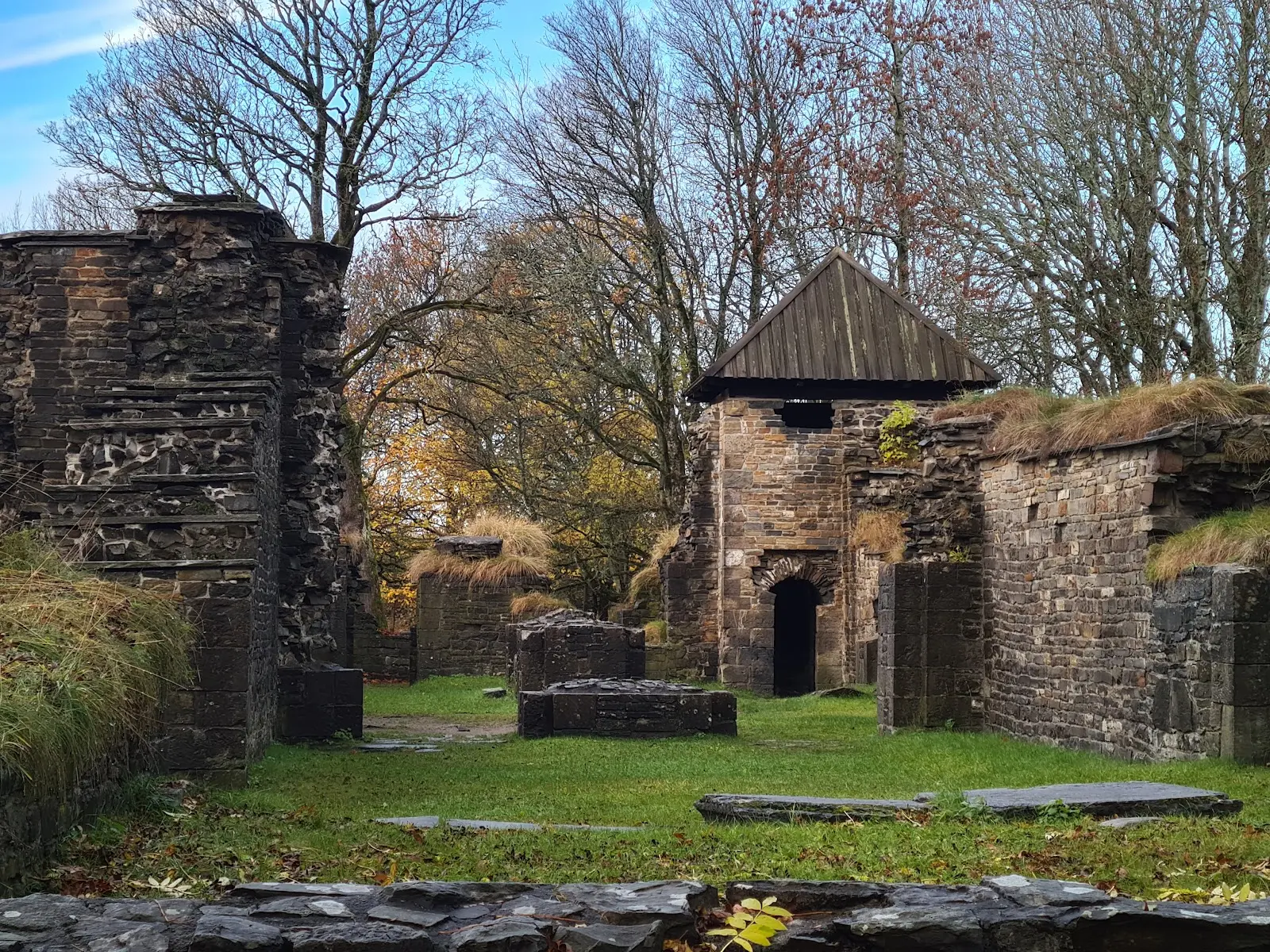
Cistercian monks from England founded an abbey here in 1147. Over four centuries, it became one of the wealthiest institutions in Norway, controlling hundreds of properties across the Oslo region, including land at Bygdøy, Frogner, and Ullern, some of the most expensive neighbourhoods in the city today. During the Reformation in 1532, the monastery was looted, torched, and its stones quarried to reinforce Akershus Fortress. The castle you can see from Hovedøya's western shore was partly built with stone stripped from this island.
What remains are among the most complete medieval monastery ruins in Norway. The church walls stand to shoulder height in places. You can trace the outline of the cloister, the chapter house, and the refectory. Information boards around the perimeter explain what each section was. One doorway linking the cloister to the south transept still has decorative stonework intact.
The ruins are free, open at all times, with no admission or hours. Some sections may be fenced off for ongoing conservation work. Expect 10 to 20 minutes if you read the boards.
The honest take: the ruins are the most interesting thing on the island, but they're modest in scale. Treat them as the highlight of a broader visit rather than a reason to come on their own. If you're eating lunch at Klosterkroa, they're right next door, and there's no reason not to wander through.
Swimming
In high summer, swimming is the main reason most Oslo locals take the ferry. There's a sandy beach on the south west side. Set your expectations right and you'll enjoy it. The sandy beach is coarse rather than fine, and the water isn't Caribbean blue.
The rocks on the seabed can be sharp underfoot, especially around the sandy beach area. Consider bringing water shoes, particularly if you're visiting with children.
Walking the island
A loop trail circles the whole island in roughly 45 minutes to an hour at a comfortable pace, or up to 90 minutes depending on pace and stops along the way. The total distance is about 4.3 km. Wear proper shoes if you plan to do the walk.
The forest is impressive for an island this size. Lime, oak, elm, and hazel form a canopy that blocks the city out completely. In early July, the lime trees flower and fill the paths with a heavy, sweet scent. Parts of the island have been a designated nature reserve since 1947, so stick to the marked paths in protected areas. No picking flowers, no fires and no camping.
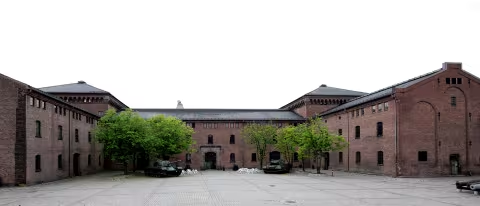
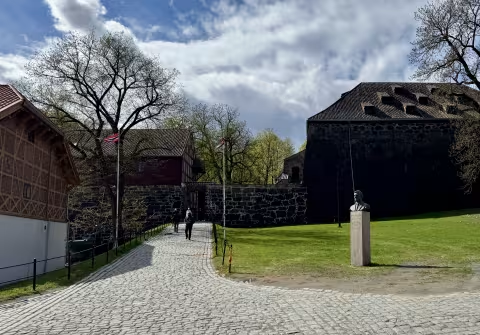
Along the route you'll pass the monastery ruins, two cannon batteries from the Napoleonic Wars, several 19th-century military gunpowder magazines, and a handful of other historical buildings. A lot of history compressed into a very small space, and the information boards along the trail do a good job of explaining what you're looking at.
Klosterkroa café
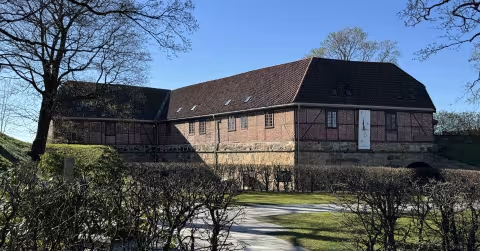
The island's seasonal café sits in a converted former officer's barracks right next to the monastery ruins. The consistent reaction from visitors is surprise at the quality.
Order the seafood. The creamy mussels get the most enthusiastic praise across the board, and they're the closest thing to a consensus must-order on the island. The shrimp bowl, served shell-on in generous portions, is the second-best bet. The Skagen sandwich (open-faced with prawns and cream) is excellent. The Caesar salad is big enough to share, is rated highly, and according to the local newspaper perhaps the best Caesar salad in the city.
For something lighter, the traditional Norwegian waffles are self-serve after you pay, and you apply your own toppings from a spread of jams, butter, sugar, and brunost (brown cheese). The waffles with brunost combination is worth trying if you haven't had Norwegian brown cheese before.
Coffee is the one weak spot. If you care about your espresso, set your expectations low.
Pricing is fair for the location. You'll pay a small premium over city prices, but it's not extortionate and the food quality justifies the cost. Outdoor seating under trees, looking across the old cloister grounds toward the monastery ruins, is the main draw. On warm weekends the place fills up by early afternoon, so arriving with the morning ferry is a smart move.
Opening hours: The café is seasonally open. Check their Instagram (@klosterkroa) before visiting to avoid disappointment.
What about Revierhavnen Kro?
If you spot a second restaurant on Google Maps, down by the water on the north side, that's Revierhavnen Kro. It looks appealing. It's also not open to you unless you arrive by private boat to their guest pier, you're a member of one of the Hovedøya boat associations, or you've pre-booked a table for at least 10 people by email. Regular ferry passengers cannot drop in.
Grilling and picnicking
The main reason many Oslo locals take the ferry on a warm weekend isn't the ruins or the café. It's grilling. Designated picnic spots with benches are scattered around the island, and you'll see groups with portable barbecues, cool boxes, and blankets settled in for the afternoon. Bring a BBQ if you want, but only use it on sand or gravel to protect the nature reserve.
There's no shop on the island beyond Klosterkroa, so bring everything you'll need.
Winter visits
The ferry still runs in winter, but on a reduced schedule. Klosterkroa is closed. Trails are unlit. Daylight is short. The island is quiet to the point of lonely. It´s better to visit during summer.
When to visit
The best time to visit is a weekday morning in June, July, or August. The café is most likely open, good swimming, wildflowers in the meadows, and far fewer people than a sunny weekend afternoon. Ferry queues can get very long on a warm, sunny weekend day.
Getting back: Some B1 ferries continue to other islands before looping back, so make sure you board one heading to Aker Brygge unless you're planning to island-hop. On peak summer days, if the last scheduled ferry fills up, Ruter will keep running until everyone at the dock has been collected.
What to do nearby
Hotels nearby