By: Chris ⎜ Last updated
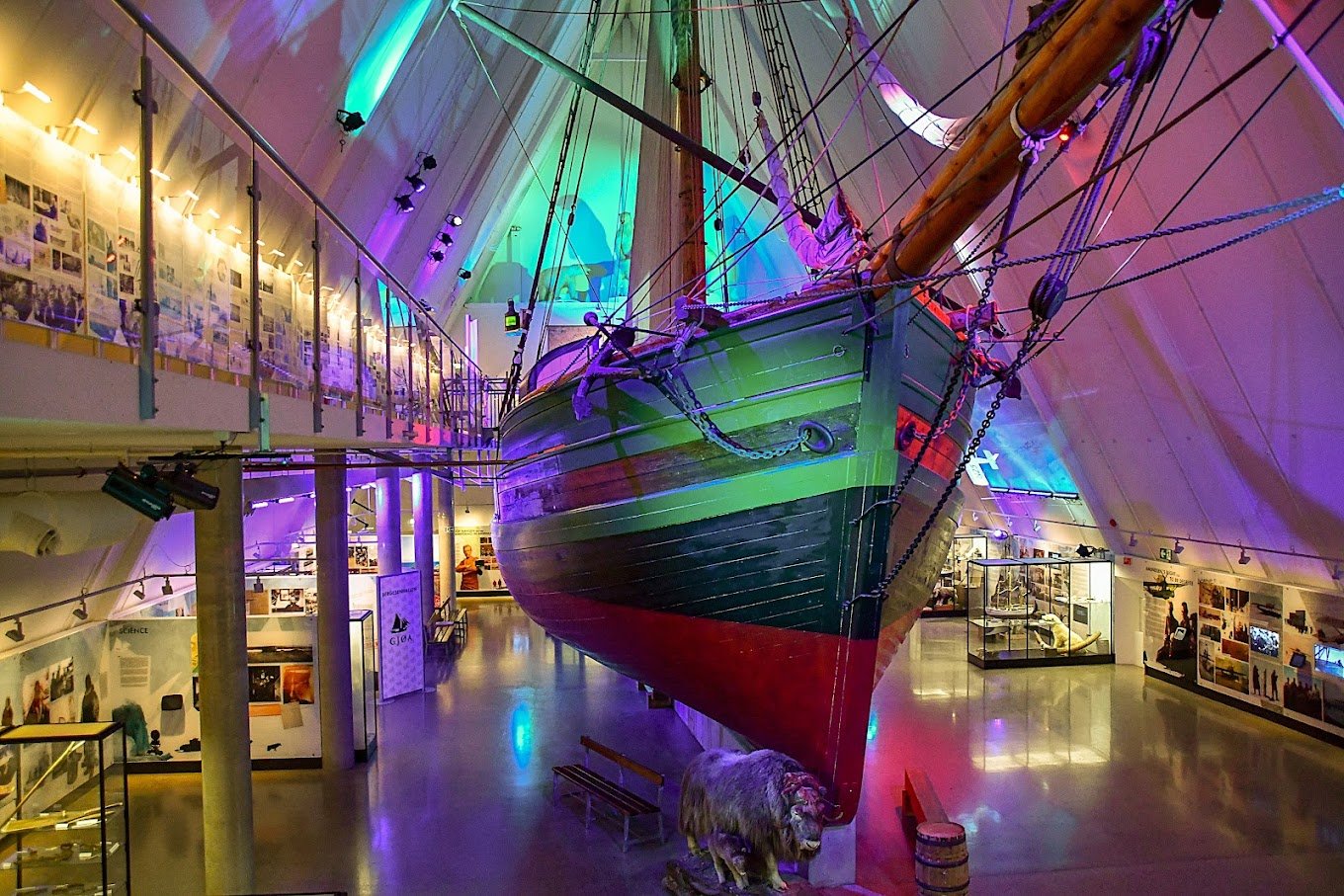
The Fram Museum is a giant triangular building on the Bygdøy peninsula that looks like a glass-and-wood tent. The Museum of the Viking Age gets the fame (and is closed until late 2027), but the Fram Museum delivers the experience. It houses the Fram, at the time the strongest wooden ship ever built in order to withstand the polar ice, used by polar explorers Nansen, Sverdrup, and Amundsen to reach the furthest points north and south on the globe. It also houses the Gjøa, the first ship to navigate the entire Northwest Passage.
What makes this place different from most maritime museums is that you can actually board the ships. You can walk the deck where Amundsen stood before conquering the South Pole, duck into the cramped cabins where crews lived for years in freezing conditions, and climb down steep ladders into cargo holds that still smell of tar and century-old oak. The museum won a themed entertainment award for the immersive treatment of its exhibits, and it shows.
What to do first
Start on the ground floor with the five-minute introductory film. It gives you a crash course in the three Fram expeditions and the key explorers. After the film, work your way around the hull of the Fram at ground level, where the main expedition exhibits are laid out chronologically.
Head to the third floor to board the ship itself. This is the centrepiece. The interiors are restored to their appearance during Sverdrup's 1890s expedition, with personal belongings laid out in the bunks and original navigational instruments still in place. The lower decks are cramped and the stairs are steep, narrow ladders.
The storm projection
While you're on the ship's deck, wait the storm projection. Every few minutes, the museum runs a 270-degree projection on the ceiling and walls around the Fram: a 90-second simulated polar storm with howling wind and crashing waves. Standing on the deck of the polar exploration ship while a storm rages around you is the best thing in the museum. If you get up there and it's quiet, just grab a spot by the railing and wait. The cycle repeats on a loop.
If you're visiting midday during peak summer (around 12:00 to 14:00), the ship's deck fills with tour groups and the narrow interior corridors feel like a rush-hour metro. It's just not the same when you're wedged between forty people on deck. If you g et there at opening (10:00 from October to April, 09:30 from May to September) and head straight for the upper floors, you'll have the deck nearly to yourself, and you can get clean photos of the ship without tourists in every frame.
The Gjøa building
Connected by an underground tunnel on the ground floor, this separate wing houses the Gjøa, the first vessel to transit the Northwest Passage under Amundsen's command. It's smaller, and often empty when the main hall is packed.
The flight simulator
The Gjøa building also has two of the museum's newer additions. The N25 Flight Simulator, installed in 2025 to mark the centenary of Amundsen's polar flight attempt, is a 4D experience that recreates the 1925 flight toward the North Pole. You sit in a theatre-style seat and fly over Arctic ice, experience the emergency landing, and feel the sub-zero temperatures in a chilled chamber. It's short (about five minutes), and included in the ticket price. Don't skip it.
How much time to spend
Budget up to two hours. The museum is text-heavy, with detailed English displays on every wall, you shouldn't try to absorb everything. Skim the panels, and focus on the cabins and the physical artifacts, and on the stories that grab you.
Polar sub-zero simulator
Besides the N25 flight experience, there's a walk-through polar cold chamber that drops you into sub-zero temperatures with the sound of cracking ice around you. It's brief but effective, especially if you're visiting in summer and have no idea what minus-thirty feels like.
The museum shop
The museum shop claims to have the world's largest selection of polar literature for sale, and it's not just an idle boast. If you're the type who walks out of a museum wanting to read more, this is a dangerous place to linger. The book selection is serious, including many titles published by the museum itself.
The gift shop souvenirs (hats, stuffed polar bears, flags) are the usual museum fare. The books are the exception, and worth browsing, but the rest is skippable unless you collect fridge magnets.
What to skip
Don't try to read every information panel. There are hundreds of them, and you won't remember most of it anyway. Focus on the physical experiences, including boarding the ships, the storm projection, the simulators and the restored cabins. The panels are there if you want to know more about a particular story.
Kon-Tiki Museum next door
The Kon-Tiki Museum is right next door, about a 30-second walk. They sell combined tickets at a small discount (check the Fram Museum website for current combo pricing across two or three museums). If you're planning to visit both, do the Fram first. It's the bigger, more immersive experience, and you'll want your energy and attention fresh for it. The Kon-Tiki is lighter and faster.
What to do nearby

Hotels nearby