By: Chris ⎜ Last updated
Akershus Fortress is worth visiting, but not in the way most first-time visitors expect.
The best part is free: the ramparts, the courtyards, the harbour views, and a walk through a site that's been standing here since the 1290s. The paid Castle and museums can be good, but you don't need to do all of them, and most people on a short Oslo trip shouldn't try.
Fortress or Castle?
Akershus Fortress is the whole walled area: gates, ramparts, lawns, old military buildings, viewpoints and museums. You can walk through most of it for free during opening hours.
Akershus Castle is the medieval and Renaissance building at the top of the fortress. That's the ticketed interior with the dungeons, Royal Mausoleum, Castle Church and formal halls. It's still used for official state functions, which means the opening hours can shift or close entirely with limited notice.
You can have a very good visit without going inside the Castle at all.
The visit
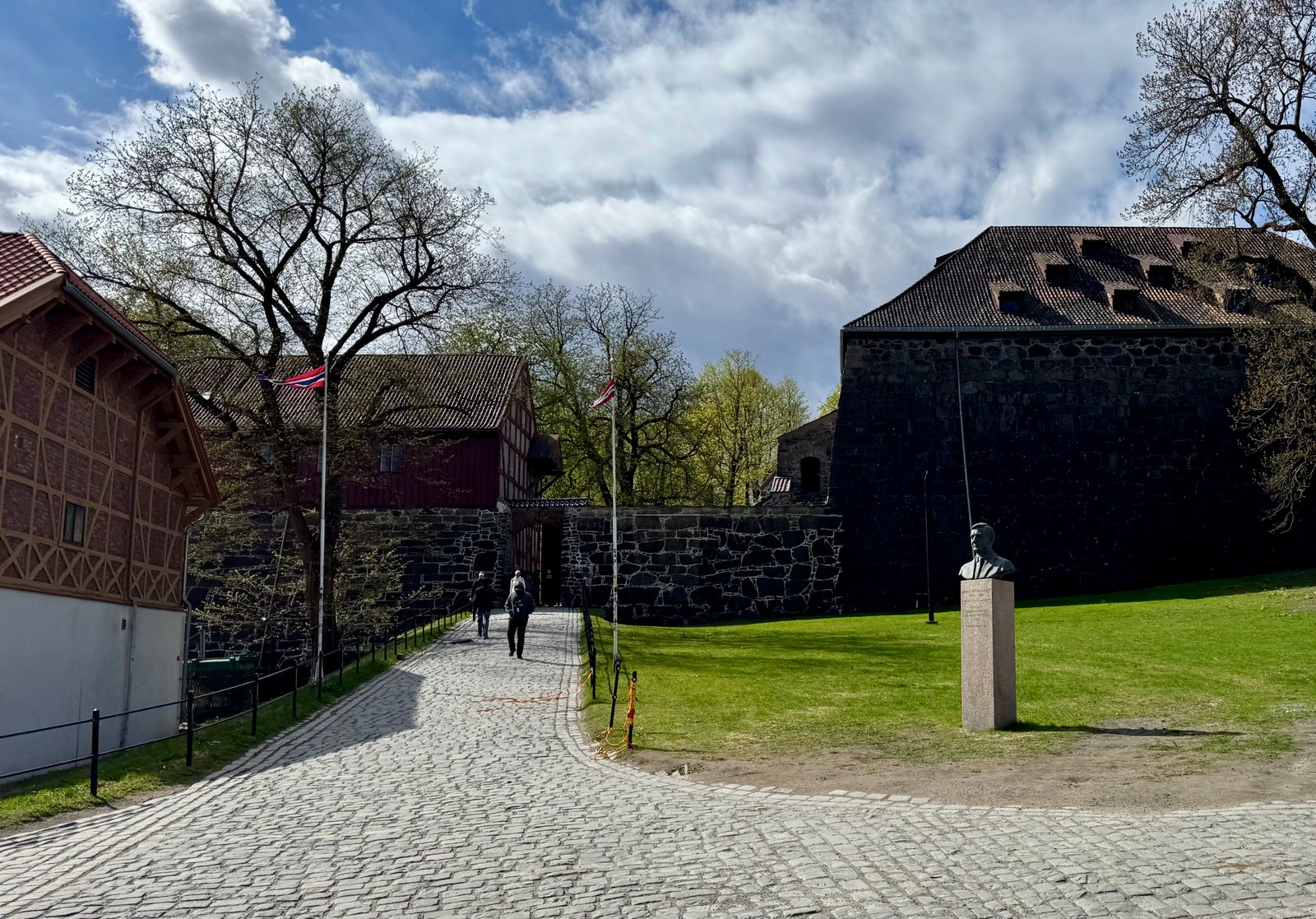
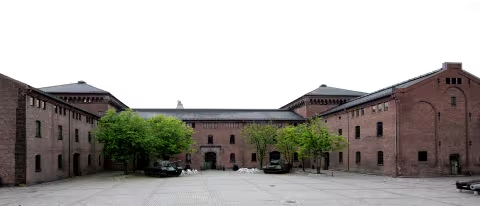
Start at the Visitor Centre, the red building by the Karpedammen pond inside the fortress grounds. The image above shows the main gates, which is also pinned on the above map, turn left after entering through the gates. Pick up a map, check what's open that day, and find out if any rooms are closed for government events.
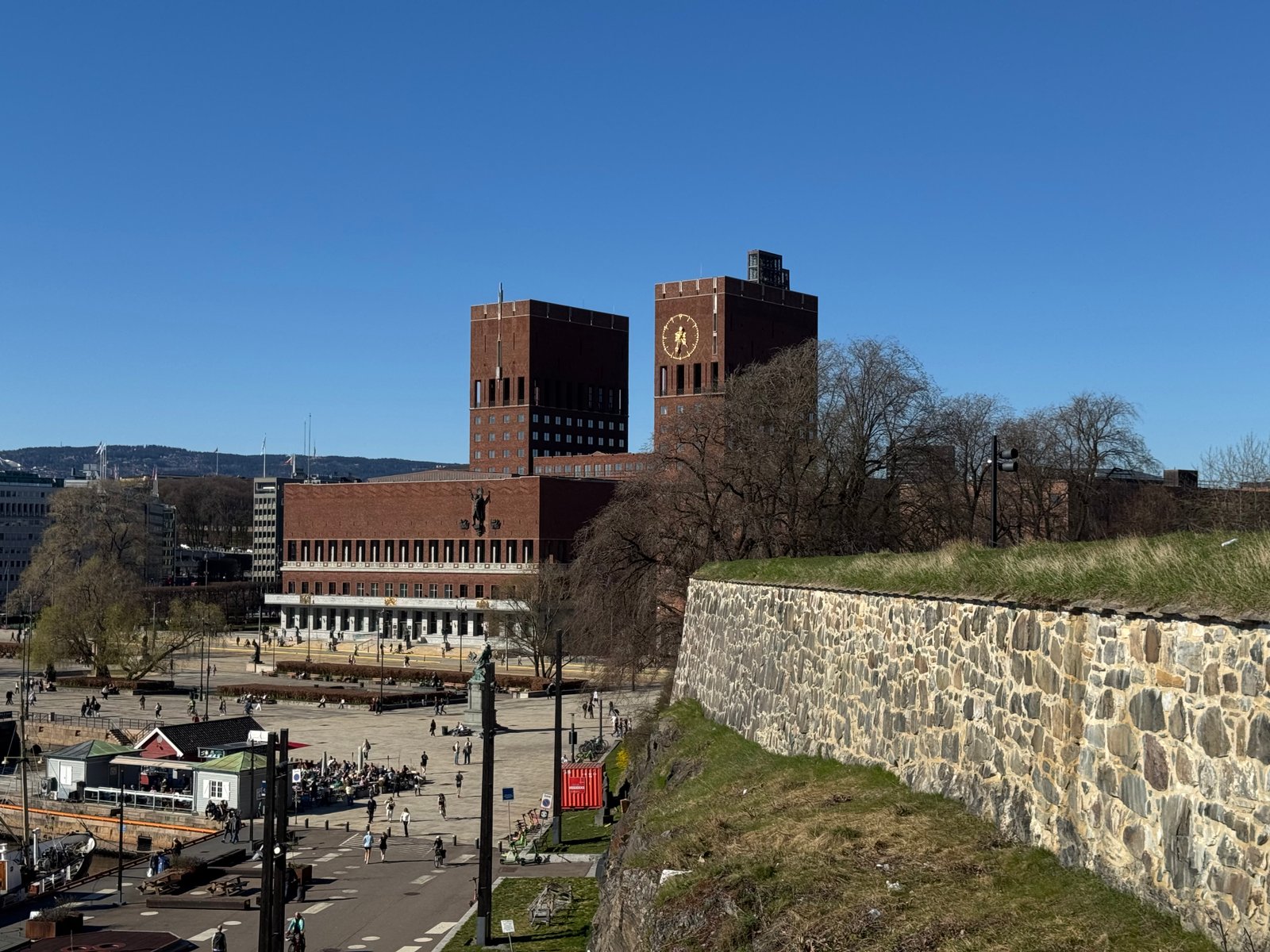
From there, head for the ramparts and the water-facing bastions first. This is the part everyone should do regardless of what else is on the day's plan. The whole fortress layout clicks when you can see Oslo's old defensive position: the harbour, Aker Brygge, the Opera House across the water, the fjord stretching out beyond. Late afternoon is best when the light softens. In summer, the lawns feel like a relaxed city park. In winter, the same walk is cold, slippery and over in ten minutes, which is fine.
Wear shoes that handle cobblestones. The surfaces are rough enough to punish sandals or anything with no grip.
After the outdoor circuit, choose you indoor stop(s):
Norway's Resistance Museum is the strongest pick for most culturally curious visitors. It covers the occupation from 1940 to 1945: censorship, daily life, sabotage, illegal newspapers, arrests. It's not a sleek modern museum. Some of the displays feel like they haven't changed in decades, and there's a lot to read. But the material is strong, and telling the story here, inside the fortress where resistance fighters were actually executed, carries more weight than it would in a neutral building across town. An hour if you read selectively, 90 minutes if WWII history matters to you.
Norway's Resistance Museum is the most moving experience here. The atmospheric sound and lighting design recreating Nazi occupation oppression hits harder than typical military museums. The homemade radio and secret weapons collection shows desperate resistance ingenuity under brutal conditions.
Akershus Castle is the right choice if you want the medieval rooms, the dungeons, the Royal Mausoleum and the state halls. Don't go in expecting Versailles. It's darker, more compact and more austere than most European castles. That's part of what makes it Norwegian. Check that same day's opening before you commit. The Castle may close for official functions.
The Armed Forces Museum covers Norwegian military history from the Viking era onward, with a heavy emphasis on WWII. It's good if you're specifically interested in military hardware and strategy, but for a short city break it's the easiest of the three to skip. Combine it with the Resistance Museum only if you're really into military history. For most people, the Resistance Museum is the best pick of the two.
When to go
For the free grounds, late afternoon in decent weather. The harbour view is better when the light is warm.
Morning works if you want quieter photos. Most indoor attractions don't open until 10:00, but the fortress grounds open at 06:00, so you can walk the ramparts with almost nobody around.
In winter, treat it as a short outdoor stop unless you're adding one of the museums. The fortress is exposed, dark early and can be awkward underfoot on ice. The side gates close earlier outside summer too, so check the official hours if you're planning to cut through the site late in the day.
On 17 May, Norway's Constitution Day, the whole centre is busy with parades and ceremony. The fortress may have official salutes on selected national and royal dates. Interesting to stumble into, but not a normal sightseeing day.
Practical notes
The fortress grounds are free. The Castle and museums have separate tickets and hours. All three paid attractions are included with the Oslo Pass. Check the official pages before going, especially for current Castle hours, combined ticket options and any event closures.
The closest tram stop is Kontraskjæret on line 12. From there, it's a 5 minute walk uphill into the fortress. Taxis can only drive to the fortress entrance, they cannot drive you straight to the museums.
Wheelchair users and anyone with mobility concerns should contact the Visitor Centre before committing to the Castle interior. There are lifts and ramps in some areas, but this is still a medieval fortress with slopes, cobblestones, steps and uneven surfaces throughout. Strollers can manage parts of the grounds but it's not a smooth ride.
What to do before/afterwards
Nearby: City Hall, Nobel Peace Center, Aker Brygge or the National Museum, are all within a 10 minute walk from the fortress gates.
For a history-focused half-day: The fortress grounds, Norway's Resistance Museum, the castle and then City Hall.
For a waterfront architecture route: Start at Bjørvika, the Opera House and Deichman library, walk toward the fortress, then finish at Aker Brygge or Tjuvholmen.
For a rainy day: While you should probably skip the fortress on a rainy day you could choose one or more of the museums here and pair it with the National Museum, MUNCH or Deichman.
What to do nearby
Hotels nearby