By: Chris ⎜ Last updated
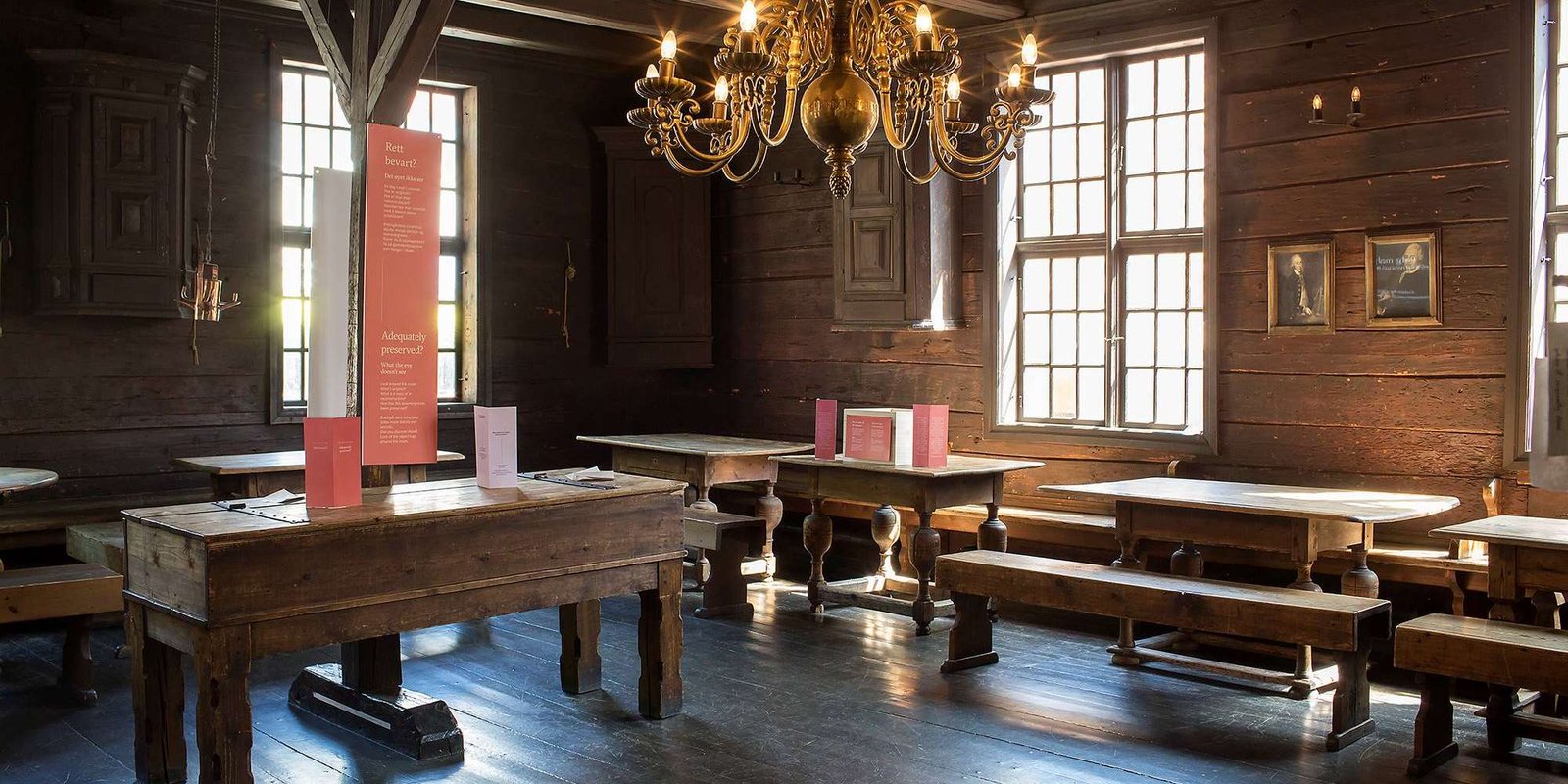
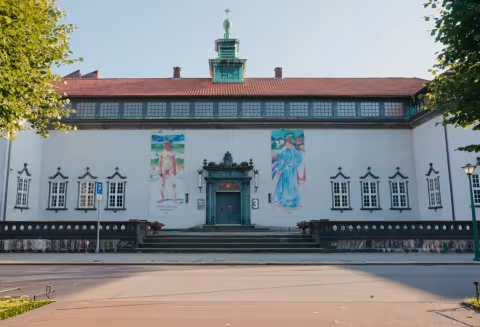
Bryggens Museum works best before you walk Bryggen, to give you some background and history. It is small, indoors, and built around the archaeological finds under the old wharf. Go for the foundations, the rune sticks, the fire story, and the sense that the wooden buildings outside have a lot more underneath them than the harbour front suggests.
The building remains are from the first half of the 1100s, so you are in medieval Bergen, with trade, fires, rebuilding, daily life, and the story that leads naturally toward Hanseatic Bryggen.
Before you walk Bryggen
The front of Bryggen is what most visitors photograph. Bryggens Museum explains what you are standing on.
The main exhibition, Below Ground, uses archaeological finds from Bryggen and Western Norway to show everyday life in medieval Bergen. You get old building remains, ceramics, trade objects, runic inscriptions, and small things people used, repaired, lost, and threw away. Bymuseet keeps the current exhibition details on its official Bryggens Museum page.
The museum is not trying to overwhelm you. Some visitors love that. Others find it smaller than expected. The difference usually comes down to pace. If you skim the glass cases, it can feel thin. If you slow down at the excavations and rune translations, it starts to work.
The order of the visit
Go downstairs first
Start with the archaeological remains. This is the part worth paying for.
You are not just looking at objects brought in from somewhere else. The museum is built over remains of Bergen’s oldest buildings. It gives context to Bryggen before you go back outside to the wooden alleys.
Read the rune translations
The rune sticks are amongst the best part of the museum. Not because they look dramatic, but because the messages feel so ordinary.
One short message in the museum’s official audio material says: “Gyda says you should go home.” That is the hook. These are not just mysterious symbols. They are notes, jokes, gossip, poems, spells, and practical messages from people who lived here. You can see the official audio page at Gyda says you should go home. Do not just look at the sticks and move on. Read the translations, it`s the most interesting part.
Find the fire story
The fire timeline and city map are worth a few minutes. Bergen has burned and rebuilt so many times that the story matters when you walk Bryggen afterwards. This is also one of the clearer parts of the museum. It gives you the basic shape of the city without making you read a wall of dates.
Audio or guided tour
Bring headphones and use the audio if you are visiting on your own, it helps understand what you're looking at. Some displays are dim, some labels are awkward to read, and the route can feel a bit loose if you are just wandering. The audio gives the small objects more weight.
The better option is the guided walk if the timing works. Bryggen Guiding starts at Bryggens Museum, runs through Bryggen’s past, and includes same-day entry to Bryggens Museum and Schøtstuene.
How long to spend
Most visitors should allow 45 to 90 minutes for the museum itself. 45 minutes is sufficient for the essentials: downstairs remains, rune sticks, fire story, quick look upstairs.
If you have kids, note that this is not a children’s museum, but there are some activities for children, and children are admitted for free.
Bryggen route
The best order is:
- Bryggens Museum for the background story.
- St Mary’s Church is a quick stop nearby.
- Bryggen’s back passages, not just the harbour-facing front.
- Schøtstuene if you want the Hanseatic merchant-life side of the story.
- Coffee or lunch once you are done with the history part.
St Mary’s Church, Mariakirken, sits close to the museum and Schøtstuene and is the oldest existing building in Bergen, probably built between 1130 and 1170. Treat it as a short stop unless it is open and you care about medieval church interiors.
After that, walk the passages behind Bryggen’s wooden fronts. This is where the museum visit starts paying off. The buildings are not just a photo backdrop but start looking like a working wooden quarter shaped by trade, fire, storage, rebuilding, and preservation.
Schøtstuene is the natural next stop if you still want more history. It covers the German merchants’ assembly rooms and kitchen buildings, and it sits right beside St Mary’s Church. Add it if you want the merchant side of Bryggen. Otherwise skip it and head to lunch.
What to do nearby
Hotels nearby