By: Chris ⎜ Last updated
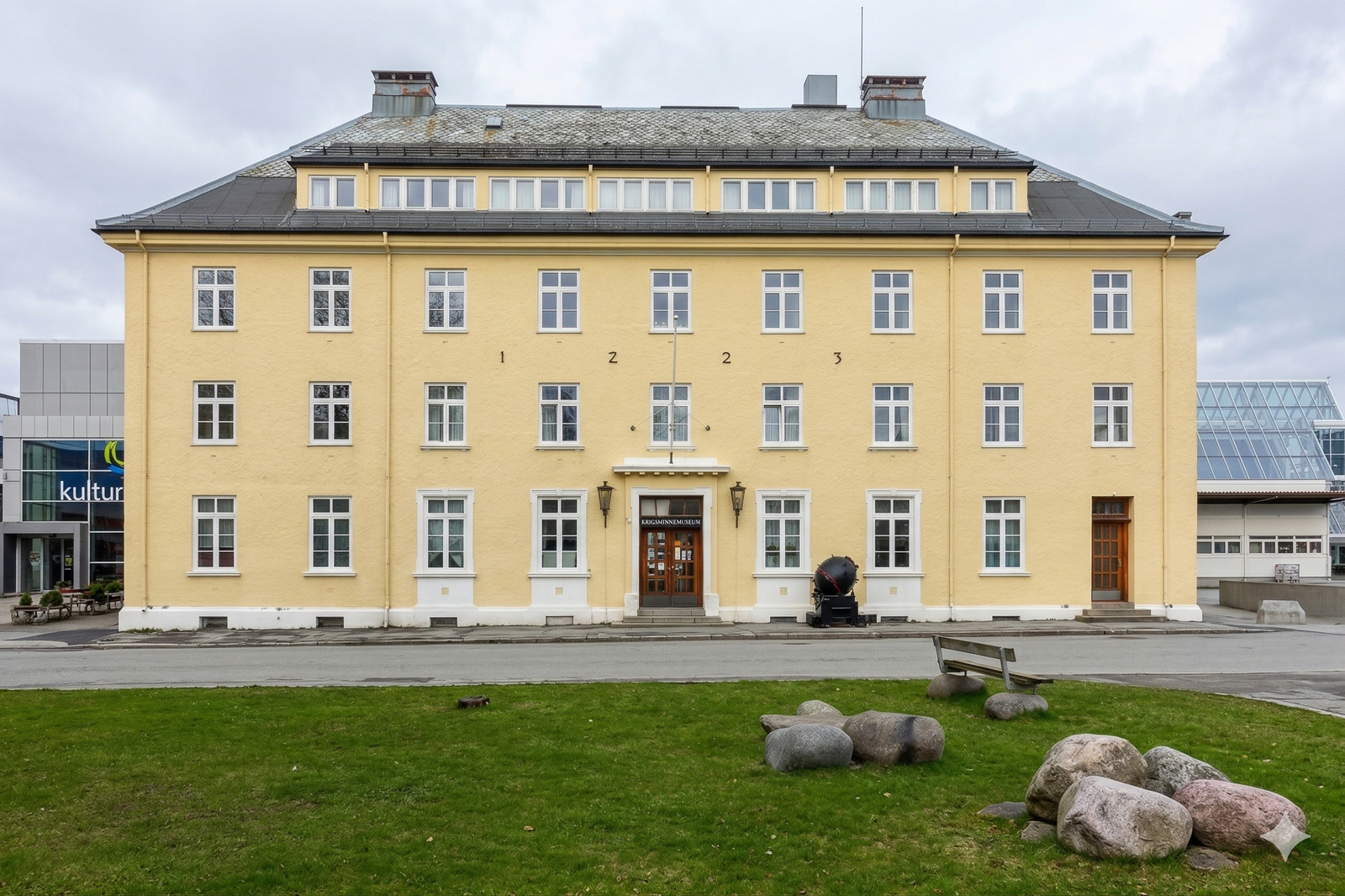
A privately owned World War II museum in central Svolvær, packed floor to ceiling with occupation-era artifacts. Kind of an obsessive collector's life work crammed into a small building. Every surface holds something: Gestapo uniforms, SS insignia, civilian letters, weapons, ration cards, personal effects. There are no interactive screens or slick multimedia displays. Narrow aisles lined with glass cases so full they border on chaotic.
The collection focuses heavily on the German occupation of Northern Norway and the Lofoten Raid (Operation Claymore), a British commando operation that targeted Svolvær and surrounding areas early in the war. Artifacts tied directly to that raid sit alongside everyday objects from occupied civilian life, including personal letters, worn clothing and household items.
Then there are the controversial watercolours allegedly painted by Adolf Hitler. The museum displays them without excessive fanfare, and you can form your own opinion on their provenance.
The owner and curator, William Hakvaag, is frequently on-site and will talk at length about individual pieces, their origins, and the local stories behind them. The written placards throughout the museum are limited. Hakvaag's narration fills enormous gaps. If he is there and available, engage him. His personal anecdotes add context a cluttered room of objects cannot provide on its own. Without that narration, you may find the volume of stuff overwhelming and hard to parse.
The physical space is tight. Two people can barely pass each other in some places. When a cruise ship docks in Svolvær and passengers flood in, the experience degrades fast. Bodies pressed against display cases, no room to linger, conversations drowned out. The museum sits steps from the Hurtigruten terminal, so cruise traffic funnels directly here.
This is a niche museum. If World War II history or the occupation of Norway interests you, the localized perspective here is more granular than what you will find in Oslo's larger institutions. Visitors who know their military history consistently note pieces they have never seen elsewhere. If you prefer curated, spacious exhibitions with clear narrative arcs, this will feel disorganized.
Timing Your Visit
Go right at opening or late afternoon. Midday is cruise ship territory. Crowd levels at 10:00 versus 13:00 can be quite different. Budget one to two hours. The space is small enough that you will not need a full half-day.
The museum operates year-round, useful during Lofoten's frequent rain or winter storms. Between October and April, opening hours are often reduced. Check the current schedule before showing up. Do not assume summer hours apply.
Practical Details
Entry runs about 150 NOK per adult. The museum is walkable from anywhere in central Svolvær. No transport needed. Wheelchair access is poor due to the narrow, cluttered layout. Same goes for strollers.
What to do nearby
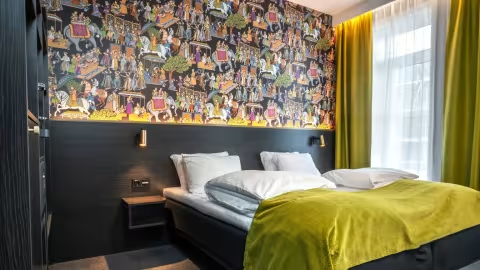
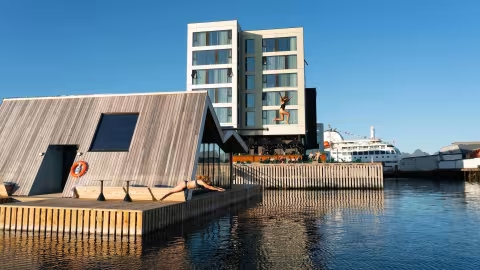
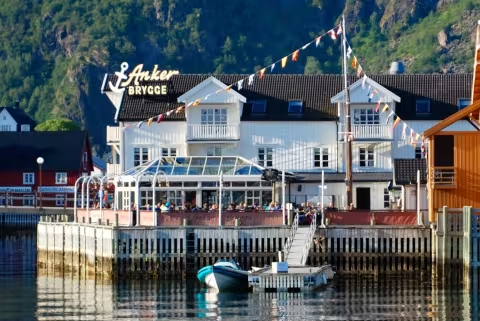
Hotels nearby