
By: Chris ⎜ Last updated
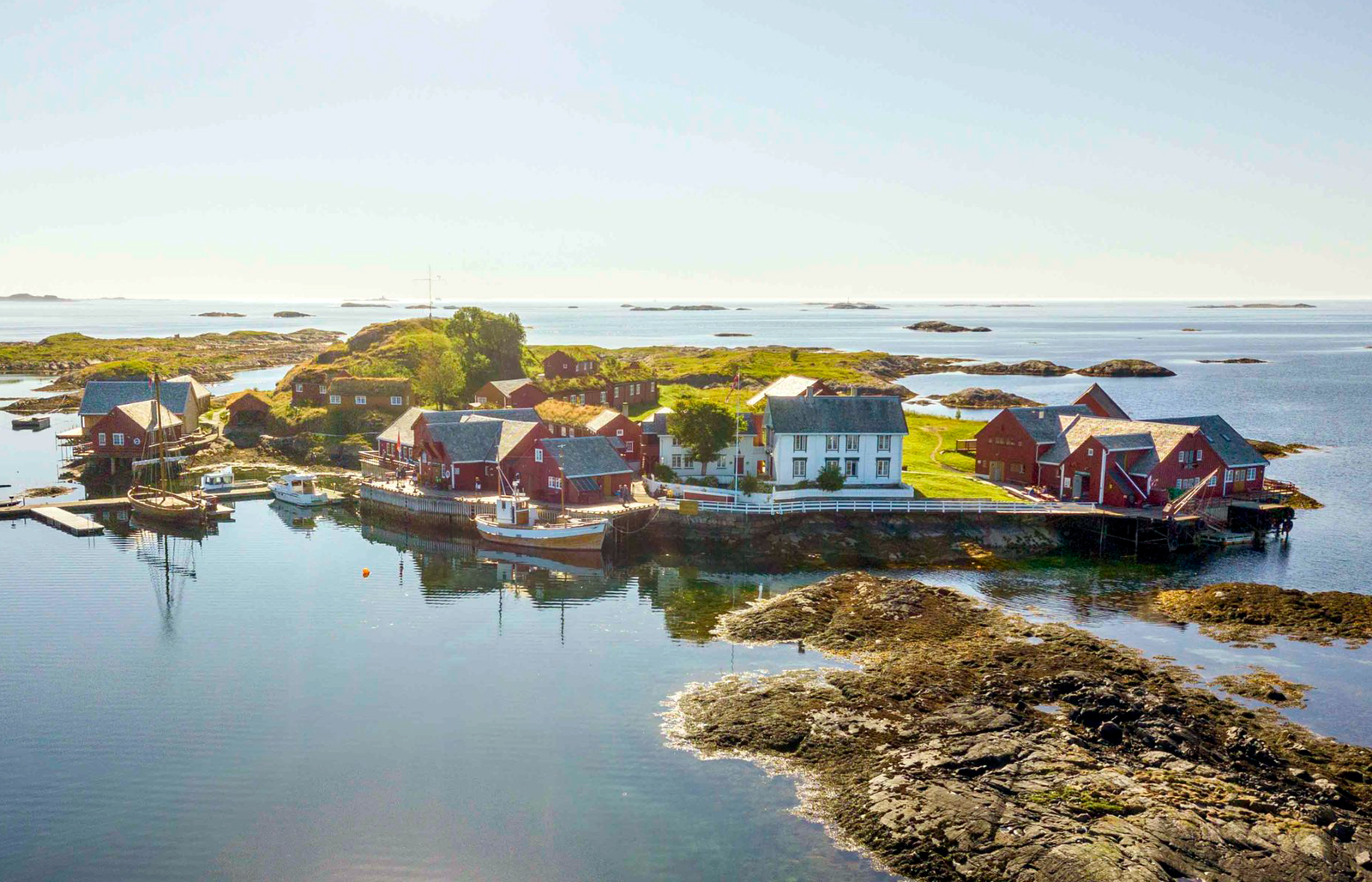
You park your car on an islet right at the tail end of the Atlantic Road. Then you wait for a boat. Seven minutes later, you step onto Håholmen, a cluster of 30 weathered wooden buildings from the 1700s where fishermen once salted cod and cursed the weather. No roads or cars, just timber walkways connecting structures that have stood here for three centuries.
The moment you leave your vehicle behind and cross open water, you're not at a hotel adjacent to an attraction. You're on the attraction. And for the next 12 or 24 hours, you're staying in what is essentially a living museum.
Håholmen Havstuer is a preserved 18th-century fishing village converted into 47 rooms. The buildings are original. The low doorways and creaking floorboards are original. What's not original: Wonderland mattresses, Norwegian down duvets, Nespresso machines, and Molton Brown toiletries.
The season runs from early May to late September. Outside of that, the Atlantic has the island to itself.
The Thorseth Family
The reason Håholmen looks the way it does, with its historic buildings intact rather than modernised into anonymity, traces directly to one family's century-long connection to this island.
Ragnar Thorseth's grandfather, Bård Bergseth, bought Håholmen in 1898. The family lived here permanently until 1978. When Ragnar and his wife Kari took over and opened Håholmen Havstuer in 1989, they were restoring their family's place.
Ragnar Thorseth is a Norwegian explorer of some renown. Between 1984 and 1986, he circumnavigated the globe in a Viking ship replica called Saga Siglar. The vessel sank in the Mediterranean in 1992, but the story lives on in the Saga Siglar Hall, an on-site museum that covers both the global voyage and the grimmer history of shipwrecks along the Hustadvika coast.
The low ceilings in these buildings are accurate to how fishermen actually lived. The absence of televisions is deliberate choice to keep the focus on where you are. Thorseth's vision was preservation.
Getting There
From June 1 to August 31, boats run hourly between Geitøya and Håholmen, departing from 08:00 until 22:00. Outside high summer, in May and September, transfers operate by appointment only. Confirm your arrival time with the hotel in advance and coordinate pickup.
Parking at Geitøya is free. The boat crossing takes five to seven minutes and is included in your room rate. Day visitors pay a small fee for the transfer.
Luggage comes with you on the boat. The crew will help you load and unload, but pack with the knowledge that you're hauling bags across a gangway, not wheeling them through a lobby.
The rooms
Håholmen has 47 rooms spread across roughly 30 buildings, totalling around 100 beds. The structures date from the 17th and 18th centuries, with a few newer buildings constructed in the same traditional style. No two rooms are identical.
Historic Double Rooms are the authentic experience, dating to around 1870. Low ceiling beams, vintage wood panelling, traditional bunk beds. At roughly 35 square metres, they're surprisingly spacious despite the period features. The trade-off is light: small historic windows mean dimmer interiors, especially on overcast days.
Sjømannshusa (The Seaman's Houses) pack standard doubles or twins into around 12 to 15 square metres. Sea views, functional bathrooms, modern feel. Tight on space, but fine if you're out exploring all day.
The Tranheim rooms split the difference between history and comfort. The Tranheim Double offers around 25 square metres with a private veranda and sea views. The Family Room spans two levels with multiple bedrooms and a sitting area, sleeping up to five. Larger windows, brighter interiors, but still within the historic village footprint.
Draksehuset Suite gives you 40 square metres in a private cottage: veranda, king bed, panoramic ocean views. The most spacious option on the island. Skjærgårdsheimen sleeps up to seven across five bedrooms in a large standalone house, good for families or groups who want shared space with separate sleeping quarters.
Amenities
Every room gets Wonderland beds, Norwegian duvets, free Wi-Fi, Nespresso machine, Molton Brown products. No televisions anywhere on the island.
Accessibility
Many of the historic buildings have steep, narrow wooden staircases. If mobility is a concern, ask specifically about accessible options when booking. This is a rocky island with 300-year-old structures. Wheelchair access is extremely limited, and some buildings won't work for guests with mobility challenges. The hotel can advise, but expectations should be realistic.
Food and Drink
You're on an island with one restaurant and one pub. Everything arrives by boat.
Restaurant Ytterbrygga focuses on seafood executed with care and local sourcing. The signature dish is klippfisk, the salt-dried cod that was the entire reason this fishing village existed. They source it from Sigurd Folland, a local producer. If you're going to eat klippfisk anywhere, a preserved klippfisk trading post is probably the right place.
Dinner is à la carte, with a menu that changes seasonally. Pricing sits at the high end of Norwegian restaurant standards.
Book your dinner table before you arrive. Make sure to secure your table as there are no other alternatives.
Silver Bell Kro is the pub: lunch, light meals, casual atmosphere. Open during summer months.
Breakfast is a buffet built around local products and fresh ingredients, thoughtfully selected rather than mass-catered.
On the Island
This is Hustadvika, one of the most exposed stretches of the Norwegian coast. A calm July evening, with the sun low over the Atlantic and the sea like glass, is one of those moments you'll remember long after you leave Norway. A stormy afternoon means horizontal rain, wind rattling the timber walls, and watching the weather through small windows with a drink in hand. You don't get to choose which one you get.
Atlantic bathing is the signature activity. Swim in the sea, then warm up by the fire in Thecla, an 18th-century bakery building converted into a fireplace lounge with baked goods and hot beverages. There's no prepared swimming area with ladders and platforms. You're navigating rocky shoreline to enter the water, as people have done here for centuries. Thecla is also where groups gather for post-dinner drinks.
Boat trips with seal snorkelling run to Orskjæra. You take a boat out, get in the water with seals, and discover that seals are significantly more graceful swimmers than you. This is distinctive.
Fishing trips last around three hours. Deep-sea or fjord fishing, depending on conditions. Equipment provided.
Kayaks and rowing boats are available for exploring the surrounding waters at your own pace.
Picnics can be arranged: open-faced focaccia with local ingredients, wine or coffee, packed for wherever you want to sit on the island.
Håholmen also rewards doing very little. Walk around the island. It takes about 15 minutes. Watch the sea. Read a book in a building that predates your country's constitution. Sit with a coffee and let the hours pass. If you need structured entertainment, you may find the island limiting.
Korsholmen is a separate private island near Håholmen, available for exclusive rental. Two houses, a sauna, an outdoor jacuzzi, a private dock. Sleeps up to ten guests across four double bedrooms and two singles. You can arrange a private chef or have food delivered from Håholmen.
The Atlantic Road and Nearby
Håholmen sits just off the Atlantic Road. A stay here makes an excellent endpoint or midpoint for driving the route. Park at Geitøya, take the boat, decompress after the drive.
Kvernes Stave Church is a 25-minute drive from Geitøya and worth the detour. In 2020, dendrochronological research confirmed something remarkable: the church was built between 1631 and 1633. That makes it Norway's only stave church constructed after the Middle Ages. For centuries, everyone assumed it was medieval. Inside, you'll find a baroque pulpit, painted acanthus decorations, and an altarpiece from 1475. Open daily in summer.
Kristiansund is 33 kilometres away. Molde is 52 kilometres. Both work as starting or ending points for an Atlantic Road drive.
Who Should Stay Here
What makes Håholmen exceptional is the combination of authenticity and comfort. You're sleeping in buildings where fishermen actually lived and worked, walking paths they walked, looking at the same sea they watched for weather and fish. The Thorseth family's preservation effort means this isn't a reconstruction or a themed hotel. It's the real thing, maintained with care, with modern beds and good food added thoughtfully. The breakfast is excellent. The service is warm and attentive. The setting, on a clear evening, is hard to match anywhere in Norway.
What requires the right mindset: you're captive to the island once you arrive. The weather will be what it is. Dining options are singular. The historic buildings have quirks that come with age.
Couples do well here. So do small groups, history enthusiasts, and Atlantic Road travellers who want one memorable overnight rather than another Thon or Scandic roadside hotel.
Families needing flexibility may find the limited options frustrating. Anyone who feels trapped without backup plans should probably stay on the mainland.
Book ahead, especially for summer and for the historic room categories.