By: Chris ⎜ Last updated
Fifteen minutes on the waterfront. A photo of the colourful facades from across the harbour. A quick duck into a souvenir shop. Done. That would be a mistake.
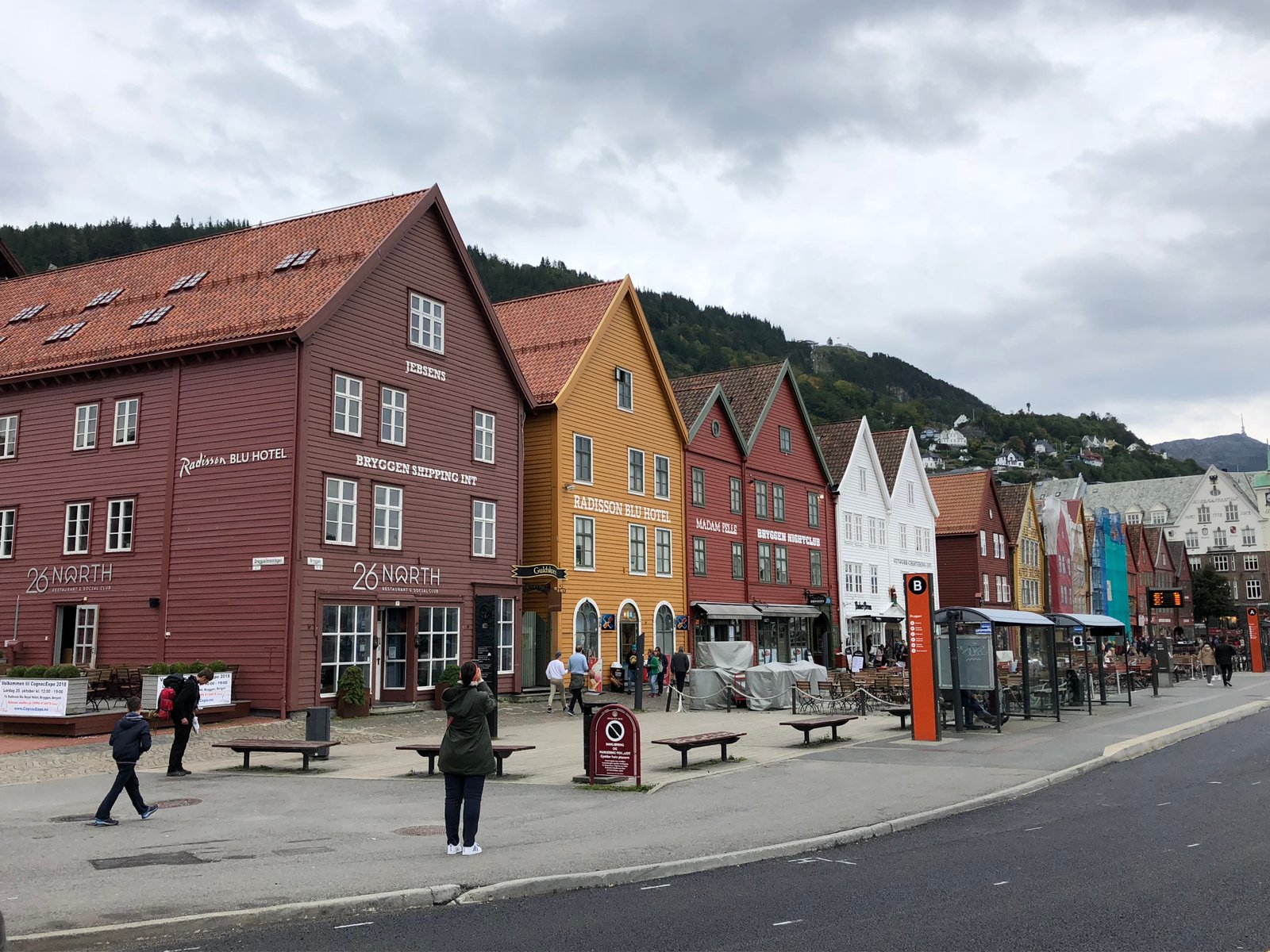
Make sure you walk behind the outer facades. Bryggen's waterfront is a row of peaked wooden buildings, gently leaning after centuries of settling foundations, painted in reds and ochres and whites. It photographs well. But at street level, the front is mostly souvenir shops selling the same mass-produced troll figurines and reindeer pelts you'll find at every souvenir shop in the country. The exception is Bryggen Husflid, which carries Norway's largest selection of handknitted sweaters from Bergen-based brands like Dale of Norway, Oleana and Janus. Everything else on the front row you can skip.
Find a gap between those waterfront buildings and walk through it. That is where the real Bryggen starts.
The alleyways
Behind the facades, a network of narrow wooden passages, overhanging galleries and crooked staircases connects the buildings that most visitors never see. The moment you step inside, the harbour noise drops away and you get hit by the smell of pine tar. The buildings are maintained using traditional methods, and the resinous, smoky scent is immediate and distinctive.
The passages are barely shoulder-width in places. Floors slope. Walls tilt inward at angles that would worry a building inspector anywhere else. You can feel the age of these structures in a way the tidy waterfront doesn't convey. This is a UNESCO World Heritage Site that has been continuously rebuilt on the same foundations since the 12th century, after fires in 1702 and 1955, always following the original patterns and methods.
The alleyways also house working artisan studios and craft workshops. These are not tourist concessions. Jewellers, potters, illustrators and textile designers have set up here because the atmosphere suits their work and the cultural identity of the site supports it. A few worth seeking out:
Myte Illustrations in the Jacobsfjorden passageway is a shared gallery run by three artists, full of mythology, folklore and fairytale-themed prints. The kind of thing you'd buy as an actual gift rather than a shelf-filler.
Norsemen Miniatures, tucked into one of the back buildings, sells handcrafted tin soldiers.
Sigfrid Sannes in Holmedalsgården crafts jewellery from silver and gold with hand-painted Colorit imagery of Frida Kahlo, Munch and flowers.
Just behind Bryggen, between St. Mary's Church and Bergenhus Fortress, the Arven Gold and Silver Factory has been operating for over 150 years. You can watch goldsmiths and silversmiths at work through a long glass wall. The whole room shakes when the press machines fire up. They run workshop tours, book directly through their website rather than through cruise-ship excursion desks where the markup is steep.
If you get nothing else from this article: walk past the souvenir shops on the front. Keep going into the narrow alleys behind. That is where you'll find the artisan studios, the atmosphere, and the reason this place is on the UNESCO list.
The guided tour at Schøtstuene
If you do one paid thing at Bryggen, make it this. The guided tour at Schøtstuene starts in the last Hanseatic assembly rooms still standing anywhere in the world, then continues through the passages of the Bryggen World Heritage site itself. It runs about 40 to 45 minutes with English-language options available. The guides are excellent, the kind of people who make 500-year-old trade disputes sound gripping. You'll leave understanding why this particular patch of Bergen mattered to half of northern Europe.
The main Hanseatic Museum building (Finnegården) is closed for a major restoration and has been for several years. The Schøtstuene guided tour and exhibition are the way to experience Hanseatic Bergen right now. Just don't turn up expecting the full museum and you certainly won't be disappointed.
After the tour, Bryggens Museum sits nearby on top of the archaeological excavation site from 1955 to 1968. It's built directly over the foundations of Bergen's earliest settlement and houses the world's largest collection of medieval rune sticks. Worth an hour if history is your thing.
Where to eat at Bryggen
Dining at Bryggen (and Bergen) is expensive. There's no way around it. But the gap between a memorable meal in a 300-year-old room and an overpriced bowl of reheated fish soup is enormous, and knowing where to book will save you both money and regret.
Bryggeloftet & Stuene is the strongest all-round choice in the Bryggen area. Bergen's oldest continuously operating restaurant, over a century in the same spot on the wharf. The fish soup is what they're known for, made the traditional Bergen way, and the reindeer fillet with juniper and lingonberries is consistently excellent. The upstairs dining room has views out over Vågen harbour. Book ahead, particularly for dinner. bryggeloftet.no
Enhjørningen (The Unicorn) is a seafood-focused restaurant at Enhjørningsgården 29, in one of the most intact historic alleys left at Bryggen. The setting alone is worth the visit: actual Hanseatic merchant rooms with low ceilings and creaking timber. The à la carte menu covers fish soup, mussels, bacalao and catch of the day. Pricey, but the fish is good and the room is extraordinary. enhjorningen.no
To Kokker is upstairs in the same building as Enhjørningen, reached by climbing a crooked, creaky historic staircase. Set-menu format, slightly less known, run by the same group. tokokker.no
Bryggen Tracteursted occupies the Svensgården Schøtstue from 1708, the only one still standing in its original location. They specialise in stockfish and are one of the few restaurants in Bergen that always has it on the menu. Their Bacalà alla Vicentina has an official endorsement from the Italian fraternity that preserves the recipe, one of only two restaurants in Norway with that distinction. Their "Smakfulle Småtterier" (small dishes, basically Norwegian tapas) lets you sample across a range of seafood and game. The outdoor terrace in summer is a draw. Consistency across visits can be uneven, but the setting and the stockfish story are worth it. bryggentracteursted.no
For a quick stop, Kaf Kafe in the Jacobsfjorden alley is the spot. Inside a 300-year-old wooden building, surrounded by small independent businesses. The waffles with brown cheese and jam are exactly what you want after an hour in the rain. The coffee is solid.
The fish market
The Fisketorget borders Bryggen but isn't technically part of it. Nearly every Bryggen visitor ends up there though, so here's the honest version.
The visual spectacle is real. King crab, scallops, whole salmon, whale meat and reindeer sausage piled high across the stalls. As a sensory experience, it delivers. The freshness is good. The prices are not. Two dishes and a couple of small drinks can easily run over 80 euros, and the gap between what you pay and what you get has widened over the years. It's the most common complaint people have about the market.
The market splits into two sections: an indoor food hall that operates year-round, and a seasonal outdoor section from May to September with more atmosphere but smaller than it used to be.
The smart approach is to treat it as a snack stop rather than a meal. Fiskekaker (fish cakes) are cheap and satisfying. Fjord shrimps are the standout, and you'll see locals eating them too. Salmon is consistently good. Reindeer sausage with mustard and onions is a popular quick bite. Avoid the pre-cooked fish and chips sitting under heat lamps, and always confirm prices before ordering. Drinks in particular can shock you.
One practical note: there are currently no indoor toilets for market customers. You'll need to go upstairs to the Information Centre, which has a separate entrance outside and charges a small fee.
Where to stay
Although not directly on Bryggen, these are your best options right at the edge of Bryggen.
Thon Hotel Rosenkrantz sits right behind Bryggen, tucked between the historic wharf and Bergenhus Fortress. You can be in the alleyways within two minutes of walking out the front door. The location means you can visit early morning before the crowds or again in the evening when things quiet down. It's a solid, well-run Norwegian chain hotel without pretensions, which is exactly what works as a base here.
Home Hotel Havnekontoret occupies a striking old harbourmaster's building directly on the waterfront at Bradbenken, at the northern end of Bryggen. The building has more character than most Bergen hotels, and the position means you step straight into the Bryggen atmosphere without crossing the city.
If you want something more upmarket you have to venture a bit further away from Bryggen. Read our guide to our recommended hotels in Bergen for every budget. But not to worry, Bergen is a tiny city, most of these options are within walking distance of Bryggen.
When to go
Early morning and late afternoon are the sweet spots. The light is better for photos at those times too, since midday summer sun creates harsh glare off the wooden facades. Evenings shift the mood entirely. The restaurants and bars come alive after the day-trippers leave. Mid-day on when there are cruise ships in port are the worst.
Off-season visits are underrated. Visit during winter and you will discover empty alleyways, no cruise ships, and the weight of the place comes through in a way that summer crowds prevent. The trade-off is that some shops close, museums run reduced hours, and daylight is limited. But if you want to feel the age of Bryggen without fighting for space, November through March delivers.
Practical details
Bergen averages over 250 days of precipitation a year. A waterproof jacket beats an umbrella every time because the harbour wind will destroy it.
Bryggen itself is free to walk. No ticket required for the alleyways, the exterior or the shops. You only pay for the museums and the food.
Fløibanen, the funicular to the top of Mount Fløyen, is about 150 metres from Bryggen and pairs naturally with a visit. The view from the top looking back down over Bryggen and the harbour is one of Bergen's defining images.
Bergenhus Fortress sits immediately adjacent to Bryggen and is free to walk around. The Rosenkrantz Tower is climbable for a small fee with solid views over the harbour. It's calm and quiet and works as a counterpoint if you need a break from the crowds.
What to do nearby
Hotels nearby