By: Chris ⎜ Last updated
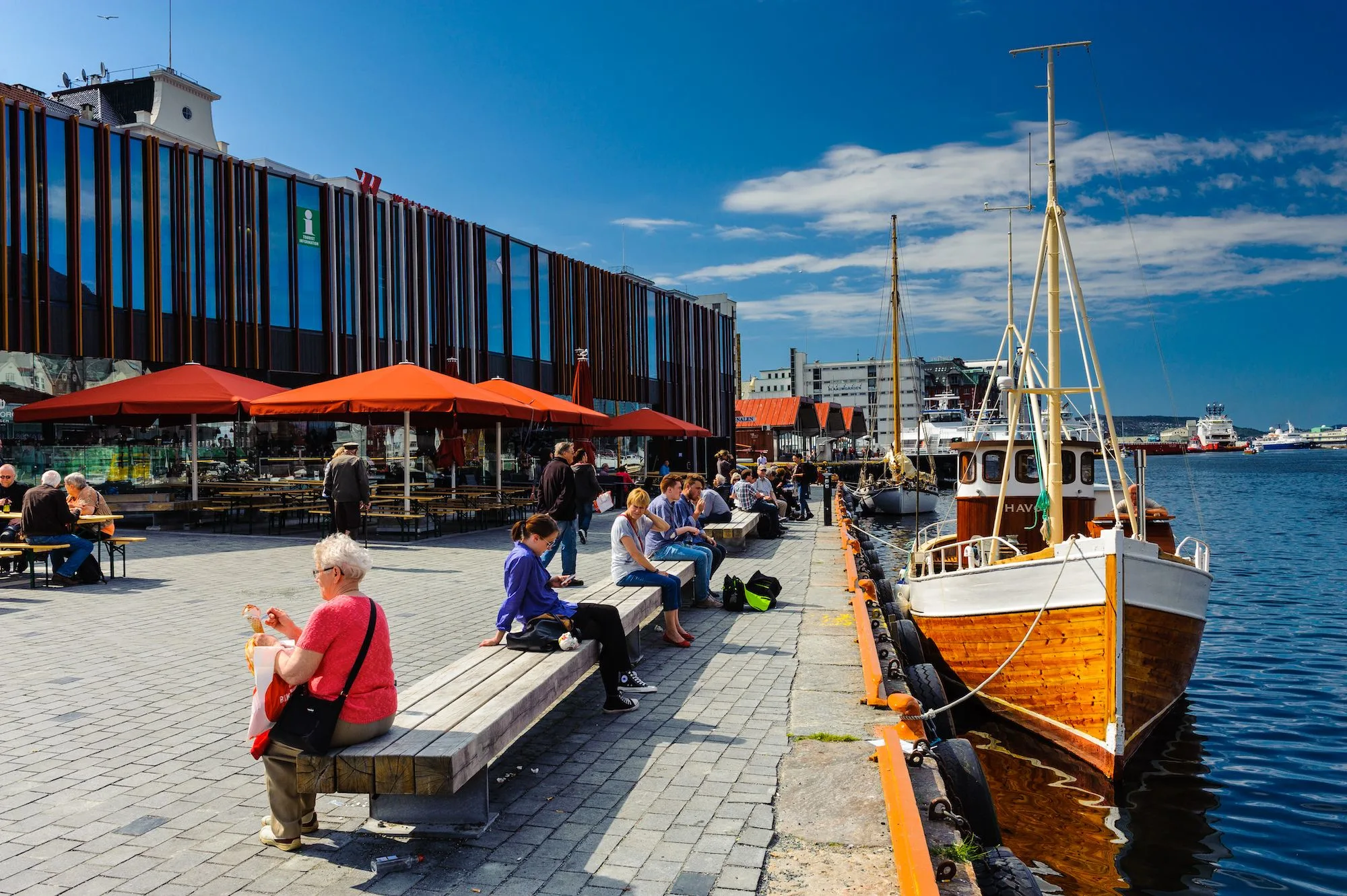
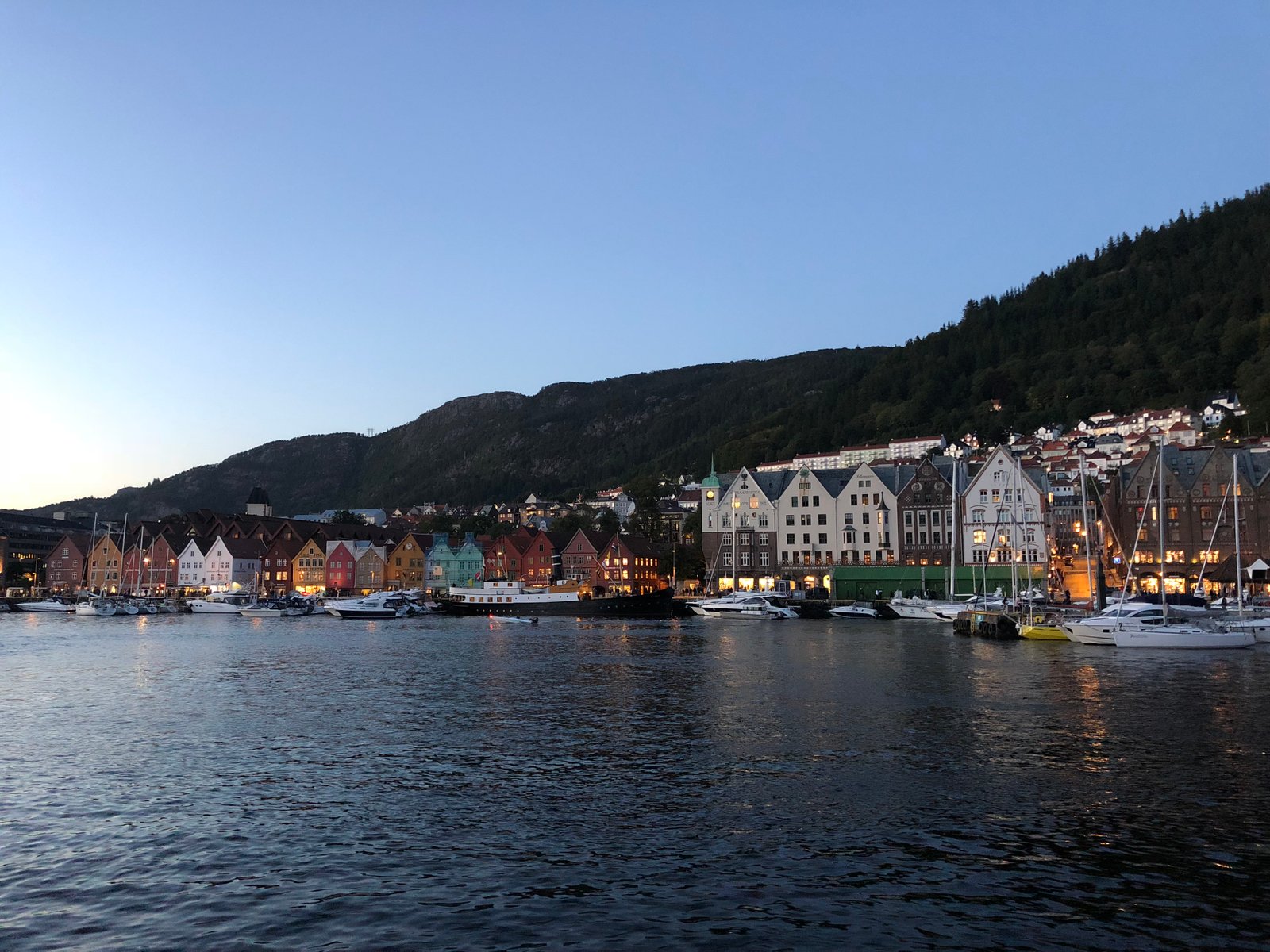
Vågen is what locals call Bergen's inner harbour, and everything in the city centre orbits around it. On the eastern shore, the UNESCO-listed Bryggen wharf lines up in a row of colourful wooden facades leaning gently into each other after centuries of settling foundations. On the southern shore, the fish market. Between them, a compact horseshoe of water you can walk around in about 20 minutes.
Walking the harbour
To photograph Bryggen properly, cross to the Strandkaien side. The full row of coloured buildings reflects in the water, and before 08:00 the surface is often glass-still because boat traffic hasn't started.
The Bryggen side is covered in depth in the separate Bryggen guide, including the artisan alleyways behind the facades and where to eat along the wharf. To cross over from Bryggen to Stradkaien you can either calk 20 minutes or take the small passenger ferry called Beffen that crosses the harbour from the Bryggen side to Strandkaien. It costs very little, takes a few minutes, and puts you at water level with the city rising on both sides. Even if you don't mind walking it´s worth doing once for the perspective.
The fish market
When talking about the fish market, there are actually two distinct markets. The outdoor Fisketorget is the seasonal one, running from 1 May through 30 September: tented stalls on the harbour square with trestle tables under canvas. The indoor Mathallen is the glass-fronted building right beside it, open year-round, with permanent seafood counters and two proper sit-down restaurants. They share a name and a location but the experience is completely different, and the advice for each is almost opposite.
The outdoor stalls
The tented stalls on the harbour square are what you see in the postcard photos. Vendors behind refrigerated cases piled with salmon, king crab legs, shrimp and dried cod. Some stalls serve cooked food at communal trestle tables with plastic plates and disposable cutlery. Others sell fruit, summer berries and souvenirs.
That's the good part. The prices are marked up well beyond what you'd pay inside Mathallen or at a restaurant elsewhere in Bergen. The outdoor stalls seem to cater primarily to cruise ship passengers with a few hours in port and no time to compare. In other words, it´s become a tourist trap.
Food quality at the outdoor stalls is uneven. Some of the cooked seafood sits pre-prepared for hours and gets reheated to order, which explains the chewy textures that keep coming up. The fish soup varies wildly between batches, some of it tasting more like rehydrated powder than anything that was near a fish.
The seagulls are a story for themselves. Bergen's harbour gulls are enormous, fearless and specifically trained by years of tourist lunches to swoop on anything held at arm's length. If you're eating a prawn baguette or a reindeer sausage at one of the outdoor tables, keep it close and keep your head on a swivel. It sounds funny until a gull takes your 200 NOK lunch in a single pass.
If the outdoor stalls are the only fish market you visit, you'll leave Bergen thinking it was an overpriced tourist trap. That's a fair assessment of the outdoor section. Walk ten metres through the doors into Mathallen.
Mathallen
The indoor market hall opened in 2012 and operates year-round. Glass walls face the harbour with Bryggen and Fløyen visible across the water. Inside: seafood retail counters running the length of the building, a bakery, a bar, and two anchor restaurants, Fjellskål and Fish Me, each with their own counter displays and dining areas spilling into the shared hall space.
The atmosphere is calmer than outside, the food is better, and while prices are still Bergen prices, they're not the inflated harbour-stall rates. Fish counters generally open around 10:00. Restaurant kitchens serve from 11:00. Summer hours extend into the evening.
Fjellskål | Seafood restaurant
This is the more traditional of the two restaurants and the one to choose if you're here for a proper seafood meal. The centrepiece is what might be Norway's largest seafood counter: over 70 species of fish and shellfish laid out on ice. You can point at what you want from the counter and have it prepared in the restaurant, which is a different experience from ordering off a menu. Watching the kitchen pull a live lobster from the tank and plate it twenty minutes later is part of the appeal.
The shellfish platter is the signature order, a substantial spread of live Norwegian lobster, king crab, scallops, langoustine and oysters. It's the most expensive thing on the menu by a wide margin, but the quality of the raw ingredients is hard to argue with and the portions are generous. If you're going to do one splurge meal in Bergen, this is a defensible place to do it. The fish and chips are the more affordable (affordable being relative) entry point, made with properly fresh cod.
The glass-enclosed harbour-view seating is the best spot. It can get noisy inside when full. Service is generally attentive. Expect to pay restaurant-level prices: a main course runs well above what you'd pay at a casual Bergen restaurant, and the shellfish platters are significantly more than that. Worth it for the quality and the setting, but check their menu first to avoid a sticker shock.
Fish Me | Casual seafood, sushi, bakery
Fish Me occupies the other end of Mathallen with a more casual setting: seafood restaurant, sushi counter, fishmonger, bakery and bar all under one roof. The vibe is more fast-casual than Fjellskål.
The sushi is the standout. Made on-site with market-fresh fish by dedicated sushi chefs, it's some of the best sushi you'll find in Bergen. Baguettes, open-faced sandwiches and the daily fish special are solid for a quicker, lighter meal. The smoked products counter is worth browsing even if you're not eating in: cognac-and-pepper marinated gravlaks, hot-smoked mackerel, various smoked salmon preparations, all produced on-site using traditional open smoker ovens.
Fish Me works better as a lunch stop or a casual meal than as a full evening dining experience. For that, Fjellskål is the stronger choice.
That said, you'll find better options in other parts of the city. Check out our guide to some of the best restaurants in Bergen that are also frequented by locals.
Buying from the counter
The best-value move at the fish market isn't eating at a restaurant at all. Both Fjellskål and Fish Me operate retail seafood counters alongside their restaurants. You can buy raw and prepared seafood by weight and either take it home to cook or eat it on a harbour bench with your hands.
Fresh shrimp (reker) bought by weight from the counter cost a fraction of what a plated shrimp dish costs at either restaurant, let alone the outdoor stalls. The quality is identical. Buy a bag (at least 500 grams per person), grab some white bread, mayonnaise and a lemon, and head back to your apartment. Peel the shrimps, pile them on the bread with mayo and a squeeze of lemon on the top. This is the way locals have eaten shrimps for generations.
Smoked salmon from the counters is excellent and packs well for travel. The specialty preparations at Fish Me, particularly the cognac-and-pepper variety and the hot-smoked versions, is something you won't find at the airport or a supermarket. Good souvenir if you're flying home within a day or two.
If you're staying somewhere with even a basic kitchen, buy the raw ingredients at the Mathallen counters and prepare them yourself. The retail seafood is priced competitively for the quality. It's the prepared-and-served food that carries the tourist markup.
What to skip
The outdoor "seafood platters" at the tented stalls look impressive on the plate and on Instagram. They're overpriced assemblages of items you can buy at the indoor counters for far less. The presentation is designed for photographs, not for value.
Fish soup at the outdoor stalls is a gamble. Quality control is minimal and the results range from passable to outright bad. If you want fish soup, get it inside at Fjellskål or, better yet, at one of Bergen's dedicated restaurants where it's a house speciality rather than a tourist line item.
Whale meat is available at both the outdoor stalls and inside Mathallen. If you're curious, the smoked whale at the indoor counters is the way to try it. It tastes closer to a salty cured beef than anything fishy. The hot-cooked whale preparations at the outdoor stalls tend to be tough and overcooked. Most people who try whale out of obligation are underwhelmed regardless of preparation.
Souvenirs at the fish market are the same mass-produced troll figurines, fridge magnets and "Norway" branded items sold at every tourist-facing shop in the country. If you want actual Norwegian craft goods, the artisan studios in the Bryggen alleyways are a five-minute walk.
Bondens Marked (the farmers market)
Separate from the daily fish market, Bondens Marked sets up at Fisketorget on select Saturdays throughout the year. Local farmers and food producers sell direct: artisanal cheeses, cured and smoked meats, bread, pastries, honey, seasonal fruit and vegetables.
This is what most people picture when they imagine a "market" experience, the kind where the person behind the table grew or made what they're selling. Lamb sausage (lammepølse) and svele (a thick Bergen-style pancake) are worth seeking out. The atmosphere is completely different from the tourist-facing fish market: locals shopping for the week, producers happy to talk about their cheese or their smoked meats, no cruise ship energy.
Check the Bondens Marked schedule for exact dates. They don't run every Saturday, and the frequency varies by season. If your visit happens to fall on a market Saturday, prioritise this over the regular outdoor stalls.
Timing and practical details
Best daily window: Before 10:30 or after 15:30 to avoid the mid-day peak, which is especially bad when there are cruise ships in port. Mathallen opens around 10:00 for the counters, 11:00 for restaurant kitchens.
Toilets: Mathallen does not have convenient indoor toilets for restaurant or market customers. The building has toilets upstairs, but those belong to the tourist information centre and require payment via a separate entrance outside. For market and restaurant customers, the only option is temporary facilities around the back of the building, accessed with a code card you need to request from staff.
What to do nearby
Hotels nearby