
By: Chris ⎜ Last updated
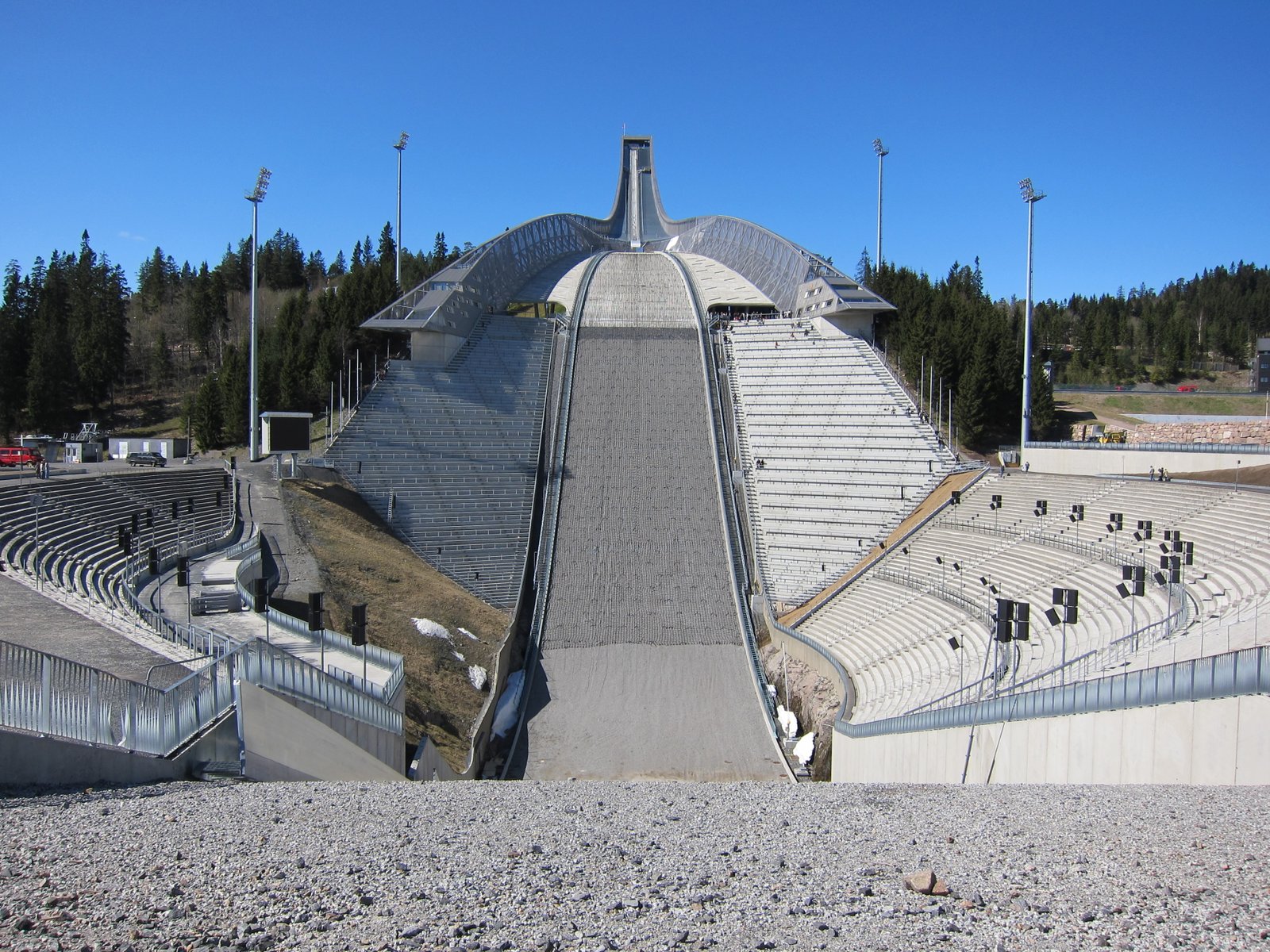
Holmenkollen is Norway's most visited sporting venue and one of Oslo's most recognisable structures. The ski jump has been rebuilt 19 times since it first appeared in 1892. The current version, completed in 2010, is a 1,000-tonne steel construction that looks like something between a ramp and a spacecraft perched on a hillside above the city. Underneath it sits the Holmenkollen Ski Museum, the world's oldest museum dedicated to skiing.
Whether it's worth the half-day trip from the city centre depends almost entirely on the weather. On a clear day, the view from the top of the jump tower is the best panorama in Oslo, stretching across the Oslofjord, the city skyline, and the forests of Nordmarka. On a foggy day, you're paying for a compact museum and a 30-minute metro ride each way.
The whole visit, museum and tower and a café stop, takes around 1.5 to 2.5 hours depending on queues. Add the zipline and you're looking at a proper half day.
Check the weather first
The view is the reason most people make the trip, and fog at Holmenkollen's altitude can settle in even when the city centre below is perfectly clear. The museum website has a live webcam showing current conditions at the jump. Check it before you leave your hotel. If the webcam shows grey, reschedule for another day.
The tower also closes in strong wind, and this isn't always flagged on the website in advance. You're better off waiting until the next day.
Clear mornings tend to be most reliable for visibility. The fjord and city are often at their sharpest before midday haze builds in summer.
The view
A diagonal elevator, more funicular than lift, carries 13 people at a time up through the ski jump structure. Two large windows give you views of the steel and concrete framework as you rise. At the top, an open observation platform wraps around the starting gate with 360-degree views over the Oslofjord, the city, and the forest stretching north.
You're standing at the starting gate where ski jumpers sit before they push off, looking down a slope so steep your brain won't fully accept the angle. Television doesn't prepare you for it. Standing there trying to imagine pushing off on skis is enough to make your palms sweat, and you're behind a railing.
The queue for the elevator is the main potential frustration you will have here. Thirteen people per load, roughly three minutes per cycle, and no way to skip it regardless of how you bought your ticket. On a weekday morning, you'll often walk straight on. On a summer weekend, waits of 30 to 90 minutes are common. Just don't come here on a weekend midday in summer.
Dress for wind at the top, even in July. The platform is open and exposed, and it's noticeably colder up there than at ground level. In winter, the metal surfaces can be icy.
The ski museum
The museum is compact. An hour covers it at a comfortable pace, and you don't need any particular interest in skiing to find it worthwhile. The entire museum was comprehensively renovated in recent years, with a new foyer and café area designed by Snøhetta and refreshed exhibitions throughout.
The polar exploration section is the standout, even if you have zero interest in skiing. Equipment, sledges, photographs, and expedition accounts from Fridtjof Nansen and Roald Amundsen. If you're also planning to visit the Fram Museum on Bygdøy, be aware there's some overlap in polar content.
The oldest skis in the collection go back thousands of years. Seeing the progression from crude survival tools to competition equipment gives the whole museum a narrative that connects skiing to Norwegian identity in a way that makes sense even if you've never been on a slope.
Blåkollen, the children's play area inside the museum, is also pretty good. It's built around a Norwegian children's book universe: caves to crawl through, slides, blue gnomes, fog trolls. It's tucked away on a floor that's easy to walk past if you don't know it's there, but beware, your kids might not want to leave, which is not something you hear often about museums.
The museum leans heavily Norwegian and Nordic: cross-country, ski jumping, biathlon. Alpine skiing gets less attention. Text panels are in Norwegian and English, with no audio guide available in any language, which feels like an odd gap for a museum that draws this many international visitors.
There's a cafe but it´s not a proper lunch spot. If you want a full meal, Frognerseteren restaurant is a better option, a few stops away on the metro or a 45 minutes walk.
The ski simulator
The ski simulator requires a separate ticket from the museum entry. It holds 12 people, lasts about five minutes, and is a motion-seat film experience rather than VR. You watch helmet-camera footage of a ski jump and a downhill race while the seat tilts and rumbles. It's average at best. Unless you're visiting with children who'd get a kick out of it, the money is better spent elsewhere.
Kollensvevet zipline
The Kollensvevet zipline launches from the top of the jump tower, drops 107 metres over 361 metres of cable, and lands at the bottom of the ski jump slope. No age restriction. Maximum weight is 120 kg including the harness and helmet (which weigh about 2.5 kg). The zipline runs roughly April through November but weekends only in the shoulder months, daily from mid-June through August. Check current opening times before you go.
Staff strap you into a harness at the top, you shuffle to the edge, and they push you off. For the first few seconds the ski jump slope drops away beneath you and you pick up speed. After that initial rush, the ride settles into a long glide and becomes more about the panoramic view of Oslo spreading out below than any real adrenaline hit. Automatic braking brings you to a stop at the bottom. The whole thing is over in about 30 seconds.
If you've done ziplines other places, manage your expectations on speed. It's slower than most people expect, and not much of a thrill in the traditional sense. The appeal is the setting: you're riding down one of the most famous ski jumps in the world, and the view during the ride is spectacular. Speed seekers looking for an extreme experience will find it tame.
The cost
The zipline has its own pricing, but note that you must also buy a museum and tower entry ticket to access it, since the only way up is through the museum and the elevator. These are two separate purchases from two separate operators. At 2026 prices, one adult is looking at close to 1,000 NOK for what amounts to a 30-second ride. Check current zipline pricing for exact figures.
Whether it's worth it depends on how you think about these things. Those who waited hours in a queue on a summer Saturday tend to be less charitable about the value.
Queue strategy
On summer weekends, the combined wait for the elevator queue plus a separate zipline queue at the top can eat two to three hours. Weekday visits change this completely, where you might walk straight from elevator to zipline with no wait at all. Early mornings are better than afternoons.
Buying tickets online doesn't help, since you still join the same elevator queue as everyone else. The only real way to avoid long waits is to pick the right day and time.
What is free
You don't need to pay anything to walk around the ski jump area, look up at the structure from the base, explore the outdoor grounds, or visit the café and gift shop. The lower portion of the jump is fully accessible and the sheer scale of the thing is impressive from ground level. Standing at the bottom and looking up at 64 metres of steel tower is enough for some visitors, particularly if the weather has closed the observation platform.
The Holmenkollen arena grounds include the cross-country stadium and biathlon venue, all open to walk. In summer, there's an 18-hole frisbee golf course that's apparently one of the most popular in the world. In winter, the surrounding trails fill with locals on cross-country skis and the atmosphere shifts from tourist attraction to a neighbourhood outdoor area. The whole character of the place changes with the season.
Combine it with Frognerseteren
Frognerseteren is only two metro stops up the line from Holmenkollen, and it has what might be the best terrace in Oslo: a big, ornate wooden restaurant building looking out over the fjord, where the traditional order is apple cake with whipped cream. After a morning of queuing for elevators and squinting at distant fjords, sitting down to it with a coffee feels properly earned.
The easy way to get there: get back on line 1 at Holmenkollen station and ride to the end of the line. The better option if you have the legs for it: walk uphill through the forest. About 45-60 minutes on well-signed paths through a stretch of Nordmarka woods that most tourists never see. Take the metro back to the city centre from Frognerseteren.
This turns what could be a rushed museum visit into a proper half-day outing.