
By: Chris ⎜ Last updated
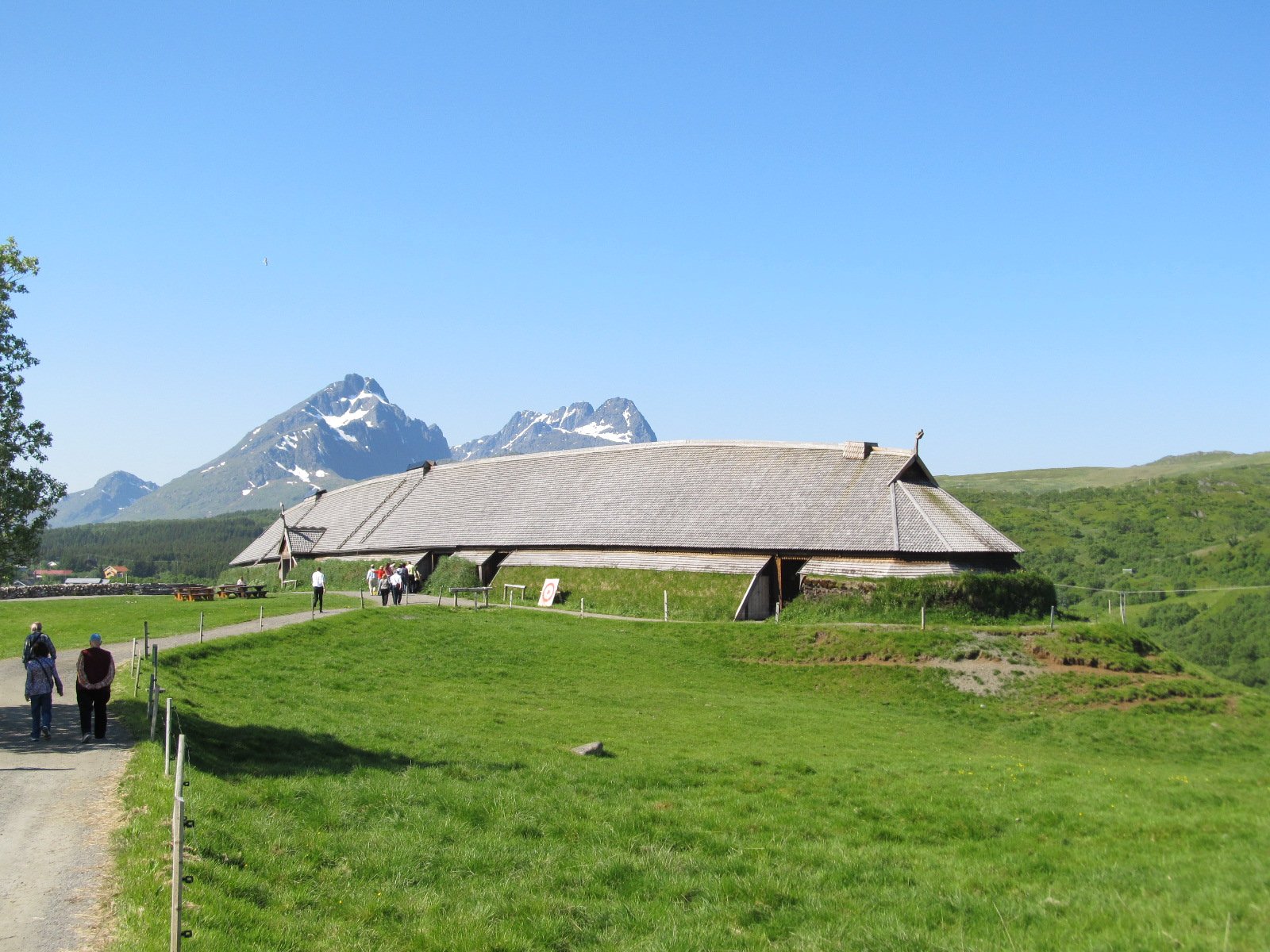
The largest Viking Age longhouse ever excavated, reconstructed at full scale just meters from where the original foundations were dug up in the 1980s. The building stretches 83 meters, filled with smoke from open hearth fires, the smell of tar and burning birch, and staff in period clothing going about daily Viking-era tasks. They're craftspeople working leather, tending animals, explaining textile techniques with enough depth that you'll forget you're in a museum. The interior runs from sleeping quarters to the feasting hall, and the way light filters through the turf-and-timber structure makes the scale feel genuinely disorienting.
Outside, green hills slope down to Borgpollen, the sheltered bay where two replica Viking ships sit at the harbour. One is a full-scale copy of the famous Gokstad ship. The other, Vargfotr, is smaller (about two-thirds the size) and the one you can board if you're here in summer. The walk from the longhouse down to the ship harbour takes a good 15 to 20 minutes on gravel paths, so wear proper shoes.
The modern exhibition halls in the visitor centre house the original archaeological finds from the site, including gold-foil figures, pottery, and jewellery that trace the chieftain's connections across Scandinavia. Spend time here before heading into the reconstruction. Seeing what was actually pulled out of the ground gives you a different perspective on the Longhouse.
Summer vs. winter
Summer means there´s a full programme: axe throwing, archery, sailing Borgpollen on the Viking ship, animals on site, and craft demonstrations scattered around the grounds. The ship sails multiple times daily from mid-June through August. Come outside that window and these activities will not be running.
Winter visits centre on the longhouse and the indoor exhibitions. The craftspeople are still there, the hearth fires still burn, and the Viking feast runs year-round. Check the museum's website before you go, as off-season opening days and hours are reduced.
If you're coming in July or August, the site gets congested. Tour buses roll in midday and the longhouse fills up fast. Arrive right at opening or come late afternoon for less crowds. You'll actually be able to hear the staff explain what they're doing instead of straining over the noise of forty people crammed into a wooden hall.
There's an audio guide which runs through a QR code on your phone. Bring your own headphones if you have. Headsets are available at the museum, but your own earbuds are more comfortable for a two-hour visit.
The Viking feast
Lofotr runs a traditional Viking feast in the longhouse with local ingredients, mead, and storytelling. It books out weeks in advance. If this interests you, email the museum in advance. The feast is a separate cost on top of general admission, and museum entry is included in the feast ticket. Check the museum website for current pricing.
Budget two to four hours for a full visit depending on how many activities you do. The indoor exhibits and film take about an hour. Add the longhouse walkthrough and the hike down to the ship harbour and you're at two hours minimum. Throw in axe throwing or archery and the afternoon disappears.
Getting there
The museum sits directly on the E10 in Borg, 13 km north of Leknes and about 53 km south of Svolvær. You'll drive past it if you're heading between Svolvær and the western villages. There's a large car park right off the highway, with separate bus and motorhome parking.
If you're relying on public transport, local buses connect with Leknes and Svolvær, but the buses are infrequent and a car gives you much more flexibility with timing.
What makes it worth the stop
Real archaeological artefacts displayed next to a full-scale Viking Age reconstruction. Staff knowledge runs deep, especially on the trade networks, the gold-foil figures, and the building techniques. Most of the craftspeople are specialists in their particular trade, not generalists rotating through stations. Ask questions and they'll go well beyond the surface material.
If you're here in summer, the rowing trip on Borgpollen is a must do. Fifteen or so people pulling oars on a wooden ship built to the same specifications as the one in the Viking Ship Museum in Oslo. The sailing trip is included in the museum ticket, no reservation needed, but weather permitting.