By: Chris ⎜ Last updated
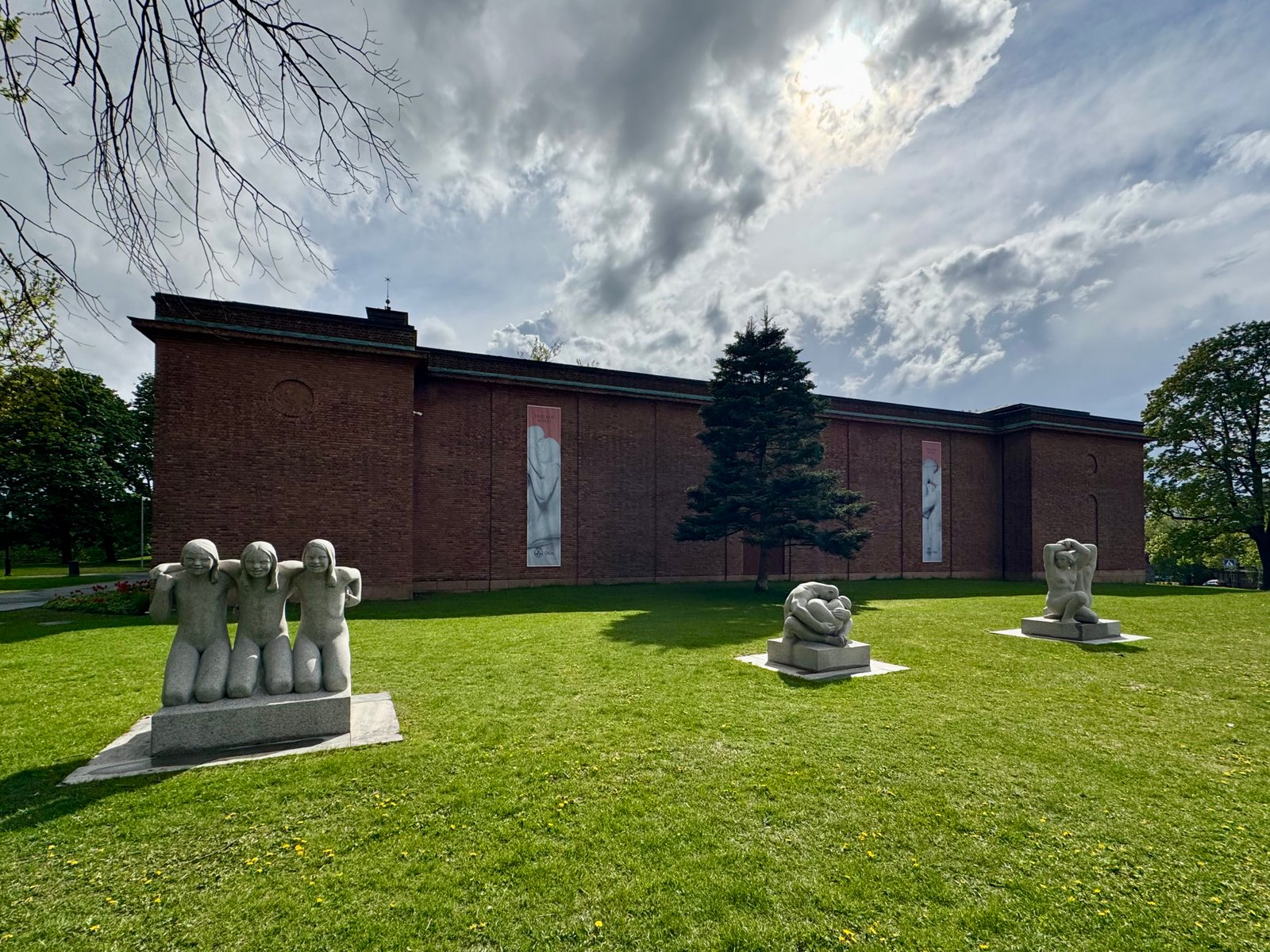
The museum hold the original plaster models for almost all sculptures in the Vigeland Sculpture Park, plus tools and sketches that show how each piece was made. You can examine the full-scale plaster Monolith and see individual figures in a way that´s impossible in the park due to the height of the column. You can see Sinnataggen (Angry Boy) evolve from a sketch through multiple plaster iterations. After a visit here you will understand the decades of work that went into the creation of the statues.
The museum is free with the Oslo Pass. Without it, check the official visitor information page for pricing. The park itself is just across the road and is free and always open.
The building
Oslo built this for Vigeland in the 1920s as part of an unusual deal. The city gave him a studio and residence, and in return he donated every piece of art he ever made to the city. This includes sculptures, woodcuts, drawings, photographs, letters and his entire personal library. This means the collection is complete, it's his whole body of work.
Vigeland lived and worked here until his death in 1943 and the building opened as a public museum in 1947.
The architecture is worth noticing. It's one of Norway's foremost examples of neoclassical design, with beautiful light falling through skylights into the halls. The north wing was built first in neoclassical style, while the south wing was finished later in a more functionalist mode. The contrast might be subtle, but visible if you're paying attention.
Inside, the layout is simple: everything is on one level around a central courtyard. You walk through the rooms in sequence and end up back where you started. The ground floor is wheelchair-accessible with spacious rooms, but there's no lift in the building. The second-floor sketch gallery and the third-floor apartment are stairs only. In any case, the ground floor holds the best of the collection.
What you will see
The park outside draws a million-plus visitors a year. The museum, right next to it, is often quite empty. The halls are quiet and echoey, and you can spend as long as you want in front of a piece without fighting with others for position.
No food or drinks are permitted inside. The plaster sculptures are porous and sensitive to moisture, so they are strict about this. You can leave water bottles in the cloakroom by the entrance.
The Fountain Hall
This green-walled room holds full-size plaster originals for the bronze fountain that sits in the park. The central group of six giants supporting a large basin is surrounded by 20 "tree of life" sculptures, each depicting a stage of the human life cycle. The cycle starts with a tree entwined with newborn babies and ends with a skeleton figure almost indistinguishable from the tree itself. In between: childhood, love, old age, death. Sixty relief panels on the walls repeat the cycle with more detail.
The room has a meditative quality, partly because of the quiet, partly because of the subject matter.
The Monolith Hall
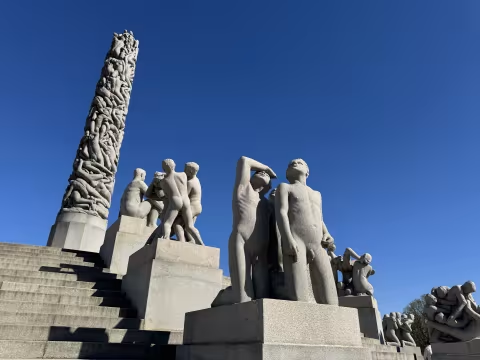
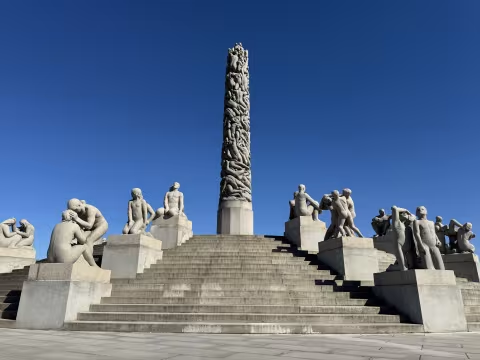
The full-scale plaster Monolith stands in here alongside plaster models for 18 of the 36 granite groups from the Monolith Plateau in the park. Outdoors, the Monolith is 17 metres tall and you're looking up, not able to see the details due to the distance. Inside, you can walk around the plaster model and see the 121 figures, men, women, children, old, young, clinging and floating together, at eye level.
On the wall, a photo series documents the journey of the 260-ton stone block from the quarry at Iddefjorden to the park. It took three stone carvers fourteen years to turn that block into the finished sculpture.
From sketch to sculpture
The rooms tracing Vigeland's process are where the museum gets more interesting for anyone who doesn't consider themselves a sculpture enthusiast. You can follow a piece from pencil sketch to small clay model to full-size plaster to the finished bronze or granite version in the park. Not every design made it. There are abandoned concepts and failed iterations in here too.
The tools are also on display, and there's a scale model of the entire park layout as Vigeland originally envisioned it, which doesn´t match the final result. The park went through years of political debate before the final location at Frogner was settled in 1924.
Vigeland also designed the Nobel Peace Prize medal in 1901, when he was 32 and still early in his career. He competed against three other Norwegian artists and won. The museum documents the medal's creation, and you can see how he worked at a much larger scale in plaster before the design was reduced to medal size by a Swedish engraver. The same medal design is still awarded today at Oslo City Hall every December.
The second floor sketch gallery
On the second floor you will find smaller models and drawings. It is less interesting than the ground-floor halls, easily skippable it if you're short on time. But if you're interested in how Vigeland's style evolved or want to see a different side of his work beyond the monumental human figures, it´s worth checking out. Some English-language information are available in each room throughout the museum.
Vigeland's apartment | Guided tours only
Vigeland and his wife Ingerid lived in a 300 square metre apartment on the third floor. He designed the entire interior himself including lamps, pillows, fabrics, tablecloths and the wrought-iron fixtures. The apartment has two living rooms, a dining room, a bedroom, a large library, and a bathroom that was modern for the 1920s.
The apartment is only accessible by guided tour, and the schedule is limited. Most public tours are held in Norwegian, usually on Sundays. Capacity is low due to preservation rules, you should check the events calendar before you go.
What to do nearby
Hotels nearby