Emanuel Vigeland Museum

A sealed, barrel-vaulted mausoleum where an 800 square metre fresco cycle about the human life cycle envelopes the walls and ceiling and where the room’s extreme acoustics alter perception of both image and sound.

A compact, windowless mausoleum built by the artist Emanuel Vigeland (the brother of Gustav Vigeland who built the massive Vigeland Scuplture Park) that he called Tomba Emmanuelle and intended as both a museum and his burial chamber. Construction began in the 1920s and Vigeland later had the hall’s windows filled with brick so the space would become a sealed, church-like chamber; after his death the building opened to the public as a museum. 

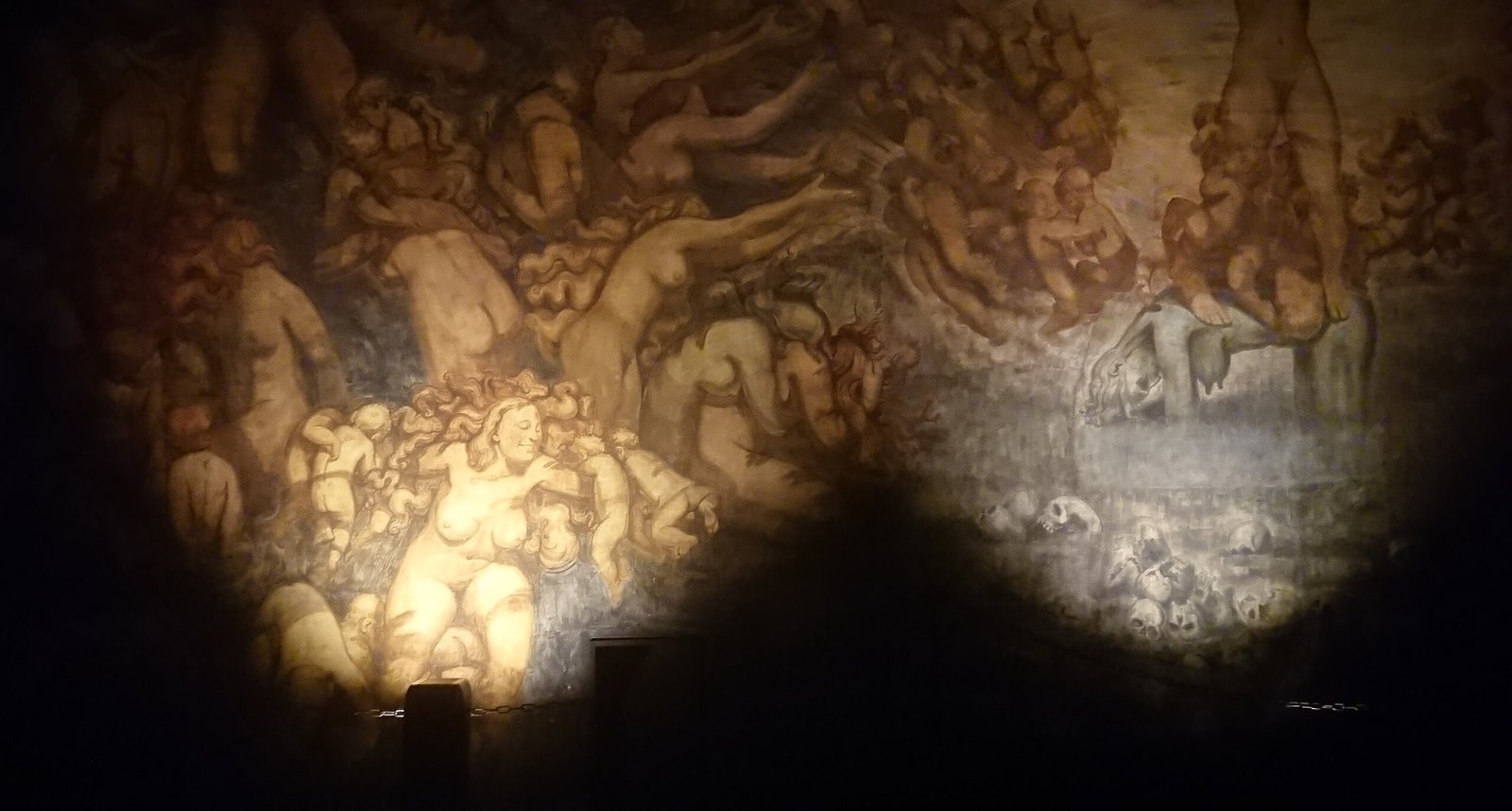
Once you step inside, you are plunged into near-total darkness. As your eyes adjust, a massive 800-square-meter fresco called Vita (Life) emerges on the walls, depicting hundreds of naked figures in various stages of life, death, and reproduction. The interior is defined by dense figurative painting and sculptural groups that probe birth, love and death in a style that draws on Art Nouveau, Italian Renaissance models and symbolist imagery. The painted surface totals roughly 800 square metres and the room’s waxed floor and plastered vault produce unusually long reverberation times for a space of this scale, a quality that has attracted experimental musicians as well as art visitors. The artist’s ashes rest in an egg-shaped urn placed in a niche above the low entrance door, an installation detail that shapes how visitors leave the hall.


The artist’s ashes are contained in an egg-shaped stone urn set in a niche above the low exit door so that visitors pass beneath the urn on leaving; the low lintel is a deliberate architectural gesture by Vigeland.

Highlights


Study the Vita fresco that completely covers the walls and ceiling and note its narrative sequence from conception to death.
Test the Acoustics: Hum a single low note and listen to how the room amplifies it into a choir-like sound (but do it quietly so you don't annoy the other 10 people there).
Observe the urn set above the low doorway and the sculptural groups on the floor that reinforce the mausoleum’s funerary program.


Best time to go


It is only open on Sundays (usually 11:30–16:00). You must book your ticket online in advance; they rarely accept walk-ins because the capacity is capped to keep the atmosphere intimate.

Time needed


30–60 minutes

Getting there


Take the Oslo Metro to Slemdal station and proceed on foot along Grimelundsveien to the museum entrance.

What to do nearby


2.2km Insider pick
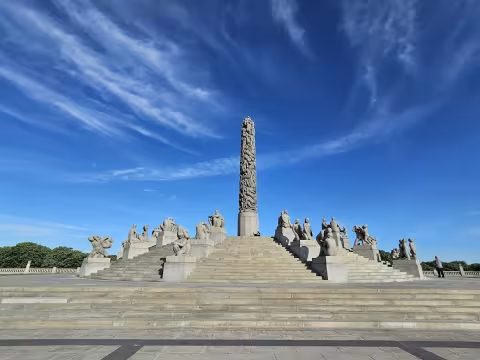
A single-block granite column that compacts over a hundred interlocked human figures into the park's central, monumental focal point, offering close-up study of Vigeland's figure work.
2.3km Insider pick
A concentrated, ordered presentation of a single sculptor´s entire public programme that lets you study material, form and expression across more than 200 works. It is free, open 24/7, and captures the universal human experience (joy, anger, grief) so perfectly that you don't need to know anything about art to feel it.
2.4km Insider pick
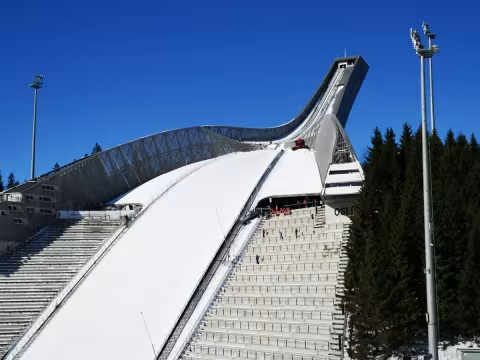
Learn why it's said that "Norwegians are born with skis on their feet" through an exhibits documenting Norway's ski technology and competition history. See the panoramic view of the city from the ski jump tower.

Hotels nearby


2.2km
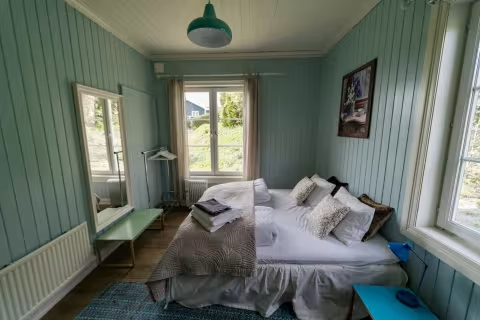
Direct access to cross-country ski trails and Nordmarka forest right from the door, and cheaper than in the city center.
2.4km
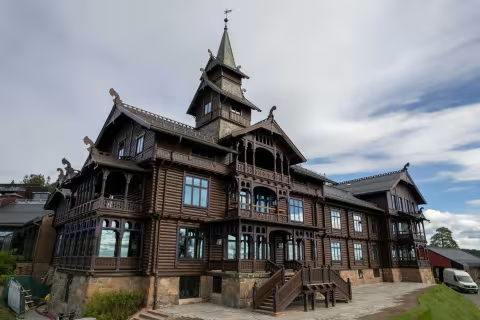
Panoramic views over the Oslo fjord from a historic building with trails right outside the door.
2.9km
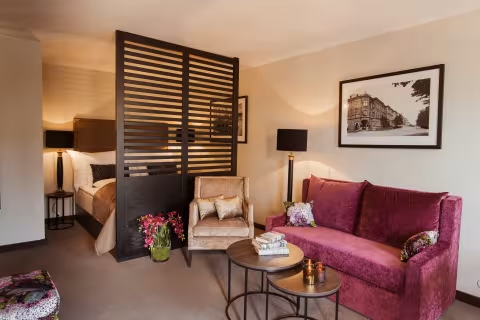
Spacious apartments with full kitchens in one of Oslo's best residential neighborhoods.