By: Chris ⎜ Last updated
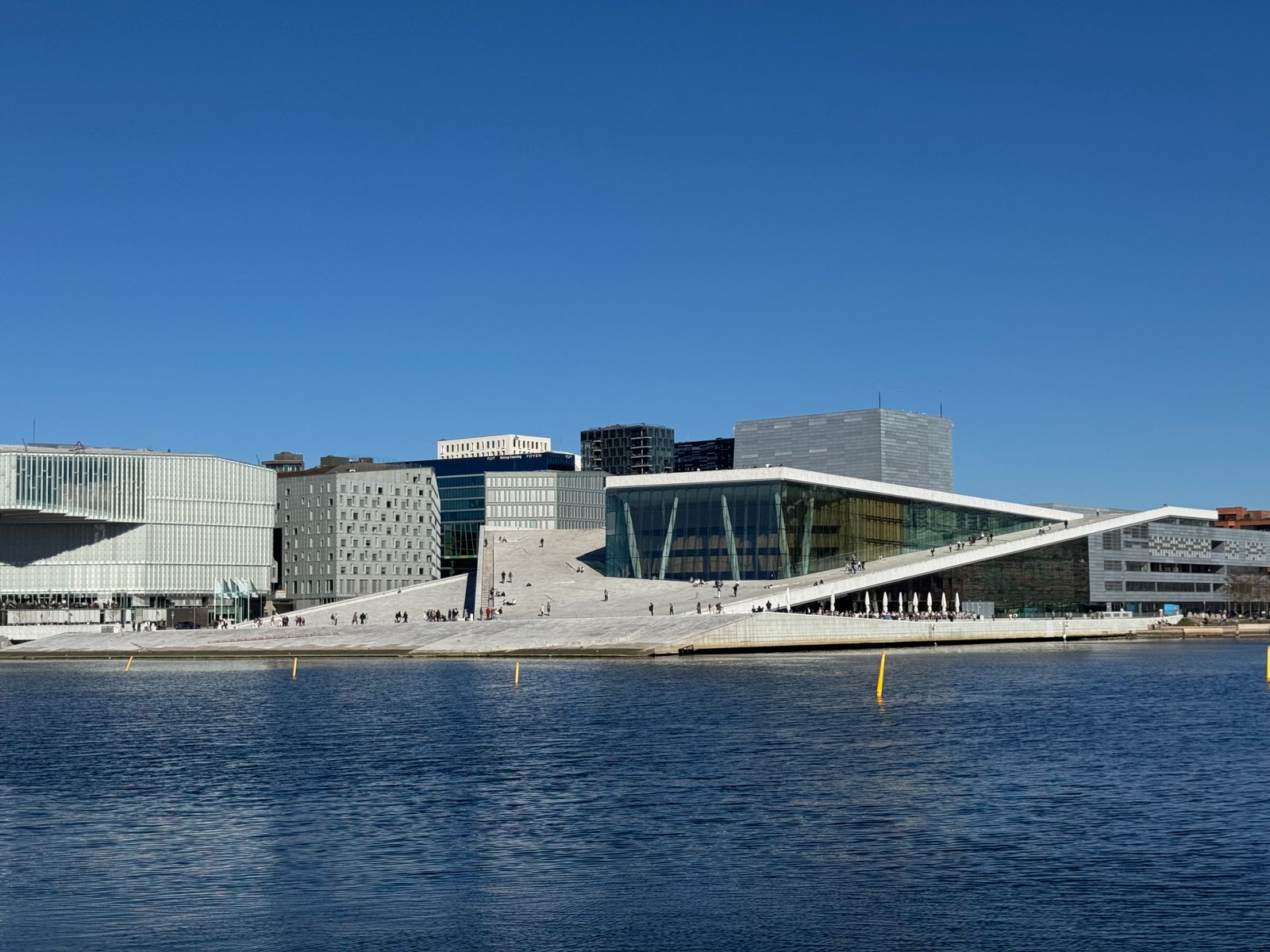
The Oslo Opera House is worth visiting even if you have no interest in opera. It's a five-minute walk from Oslo Central Station, and the roof may be the best first stop in the city. You do not need an opera ticket to enjoy it: the sloping roof is free, and you can walk all over it. On the top you will see Akershus Fortress to the west, the Munch museum to the south-east and Bjørvika all around you. Afterwards step inside to see the oak-lined foyer.
The roof
As you walk from Oslo Central Station towards the fjord, you will immediately see the white sloping roof. Walk up the roof, and even though it's not Oslo's highest viewpoint, you get a good view around the area.
When done, go down on the fjord side. Before you go inside, look at the sea near the base of the building for Monica Bonvicini's She Lies, a glass and steel sculpture that floats and rotates with wind and tide. You might confuse it for a floating scrap heap. Most people walk straight past it.
Note that the marble can be slippery when wet, icy or snow-dusted. In winter, parts of the roof may be restricted or even fully closed.
The foyer
The oak is what hits you first, a contrast to the completely white exterior. A large undulating wall wraps the main auditorium, and it softens the whole interior.
Olafur Eliasson's The Other Wall, 340 m2 of white light panels, is easy to miss if you are only scanning for the main staircase or toilets. Take the time to look.
You do not need a performance ticket to enter the foyer during public opening hours.
In a city where you often have to pay 20 NOK to use a public toilet, the Opera House lobby has excellent, clean, free facilities.
Where to go next
The Opera House sits at the centre of Bjørvika with several attractions nearby.
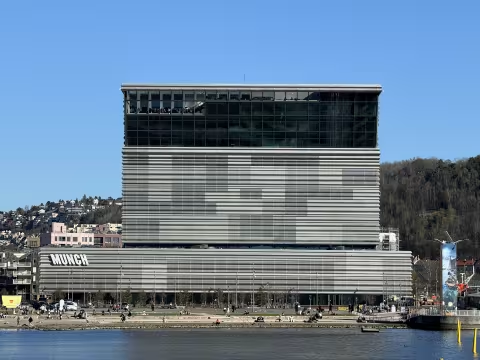
MUNCH is right next door and is natural to combine with a visit to the Opera House.
Deichman Bjørvika, the public library, is across the street and is the best free follow-up. Deichman is a better bad-weather option than a long waterfront walk. This is not your standard public library, worth a visit even if you're not that into books.
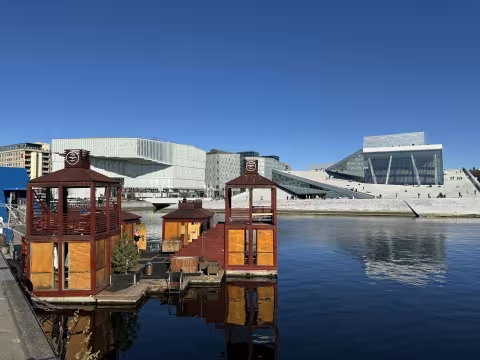
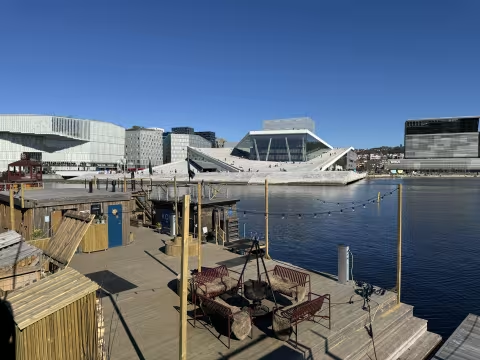
If the weather is good, continue south towards Sørenga for a longer harbour walk, and outdoor swimming areas at the far end. The floating fjord saunas of which there are several nearby are good for any weather, especially so for a cold, rainy day. Heading west towards Akershus Fortress (approx 15 minutes walk) takes you straight from new Oslo to medieval and military Oslo.
Tours and performances
The guided tour is worth it if you care about architecture, stage machinery or backstage spaces. Skip it if you are just filling time. English tours usually run on weekends, last about 50 minutes and have limited capacity. Tickets are released on Tuesdays for tours that same week, so check early if you are visiting on a weekend. Travellers who leave everything until the night before tend to find them sold out.
If you like opera or ballet, seeing a performance is a better experience than just photographing the exterior. The building changes at night, when the oak foyer glows behind the glass facade, and the harbour outside goes dark.
The dress code is practical (smart casual) more so than formal, but you will not look out of place if you prefer to dress up.
What to do nearby
Hotels nearby