Gressholmen Kro

Hike to a red-topped wooden lighthouse that looks like a Wes Anderson set, swim from flat rocks with clearer water than closer to the city, then eat your lunch at the charming Gressholmen Kro.

Unlike Hovedøya's manicured lawns or Lindøya's cabin villages, Gressholmen feels wilder with forest trails, sea cliffs, and fascinating aviation history. From 1927-1939, this was Oslo's main seaplane airport before Fornebu and Gardermoen existed. You can still see the original hangar and slipway where planes were hauled out of the water. Today, the old airport area is a flat grassy plain perfect for picnics and ball games, while the rest is hilly and forested. 

Large parts of the area are protected as a nature reserve while a marina, a handful of houses and a seasonal island restaurant occupy the more developed shorelines. Heggholmen Lighthouse sits at the western island's tip—one of the inner fjord's oldest lighthouses. The incredibly photogenic wooden building with red top perches on a rocky outcrop. The view from here back toward the city skyline and Opera House is fantastic.

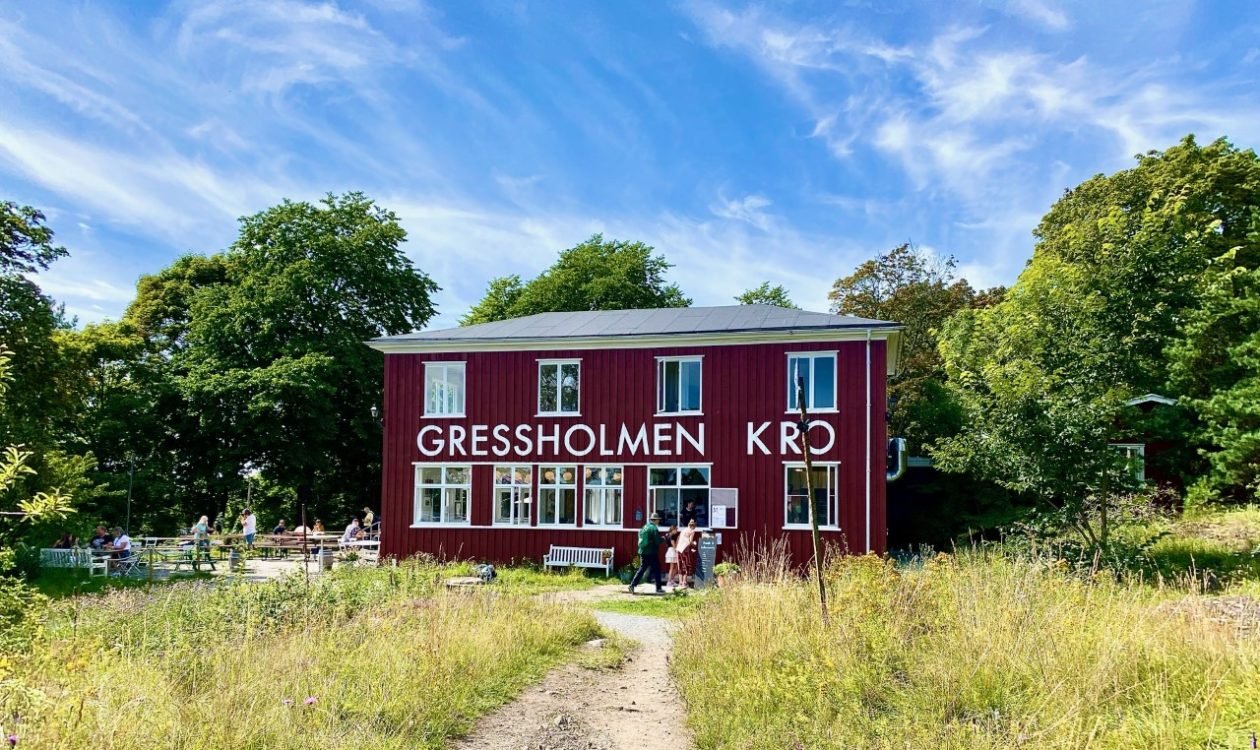
Gressholmen Kro operates in a charming yellow wooden house near the ferry dock, a historic summer restaurant with large outdoor seating serving classic Norwegian summer food like mussels, shrimp sandwiches, and cold beer. Often less crowded than Hovedøya cafés but weekends create 20+ minute drink waits and 50+ minute food waits as it becomes a "tourist trap" on sunny days.


The famous rabbits are gone. For decades Gressholmen was "Rabbit Island" with massive wild rabbit populations. They destroyed rare flora so the municipality removed them years ago. Old guidebooks mentioning rabbits are outdated.

Highlights


Hike to Heggholmen Lighthouse following dirt paths west from Gressholmen to the connected island. The red-topped wooden lighthouse on rocky outcrop looks like a Wes Anderson film set. The view back toward Oslo skyline and Opera House from this point is the island's best panorama.
Swim at Rambergøya's southern tip from wonderful flat sunbathing rocks with a small diving board. The rocky shoreline here has clearer water than areas closer to the city. The nature reserve protection keeps this section pristine.
Visit Gressholmen Kro near the ferry dock for mussels, shrimp sandwiches, and cold beer in the yellow wooden historic summer restaurant. The large outdoor seating area is less crowded than Hovedøya options, though sunny weekends create 20-50 minute wait times.

Best time to go


Weekday afternoons (1-5pm) June through August for swimming at Rambergøya's southern tip and Gressholmen Kro dining without weekend crowds. Avoid sunny warm weekends when locals flock to the islands.

Time needed


1–4 hours (short visit to a relaxed half-day outing)

Getting there


Ferry B1 or B2 from Aker Brygge (Rådhusbrygge 4) to Gressholmen stop, roughly 15-20 minutes depending on which islands the ferry visits before yours, uses standard Ruter Zone 1 ticket (included with Oslo Pass or day pass). The ferry loops between multiple islands so listen for announcements to know when to disembark. With a day ticket you can ferry hop between several of the islands.

What to do nearby


1.3km
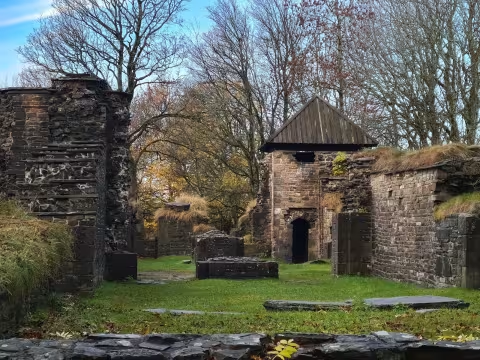
Inner-Oslo island where substantial 12th-century Cistercian monastery ruins sit alongside visible quarry geology and 19th-century military remains, all reachable by a short ferry from the city.
1.5km
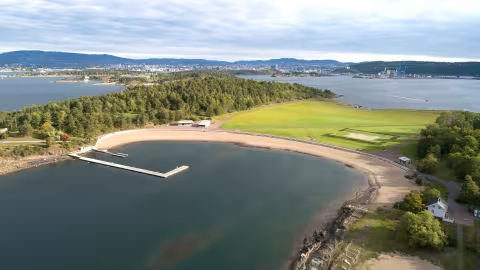
Swim at Oslo´s only sandy beach, sunbathe, play volleyball, and camp up to a maximum of 2 days.
2.4km Insider pick
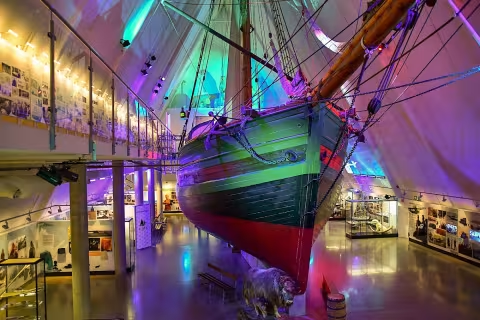
A preserved polar exploration ship with connected exhibition galleries that let visitors board the vessel and examine original expedition equipment and ship construction in close detail.

Hotels nearby


2.6km Insider pick
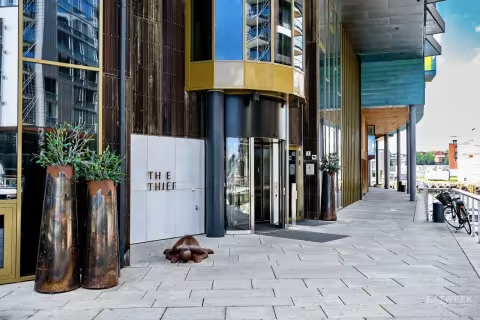
A design hotel with a real art collection and fjord views. It´s the most atmospheric splurge in the city.
2.9km
Apartment-style rooms with kitchens in a prime Oslo location, at rates well below traditional hotels.
3.0km
Three included meals a day, with a location five minutes from Oslo Central Station.