Norwegian Museum of Cultural History

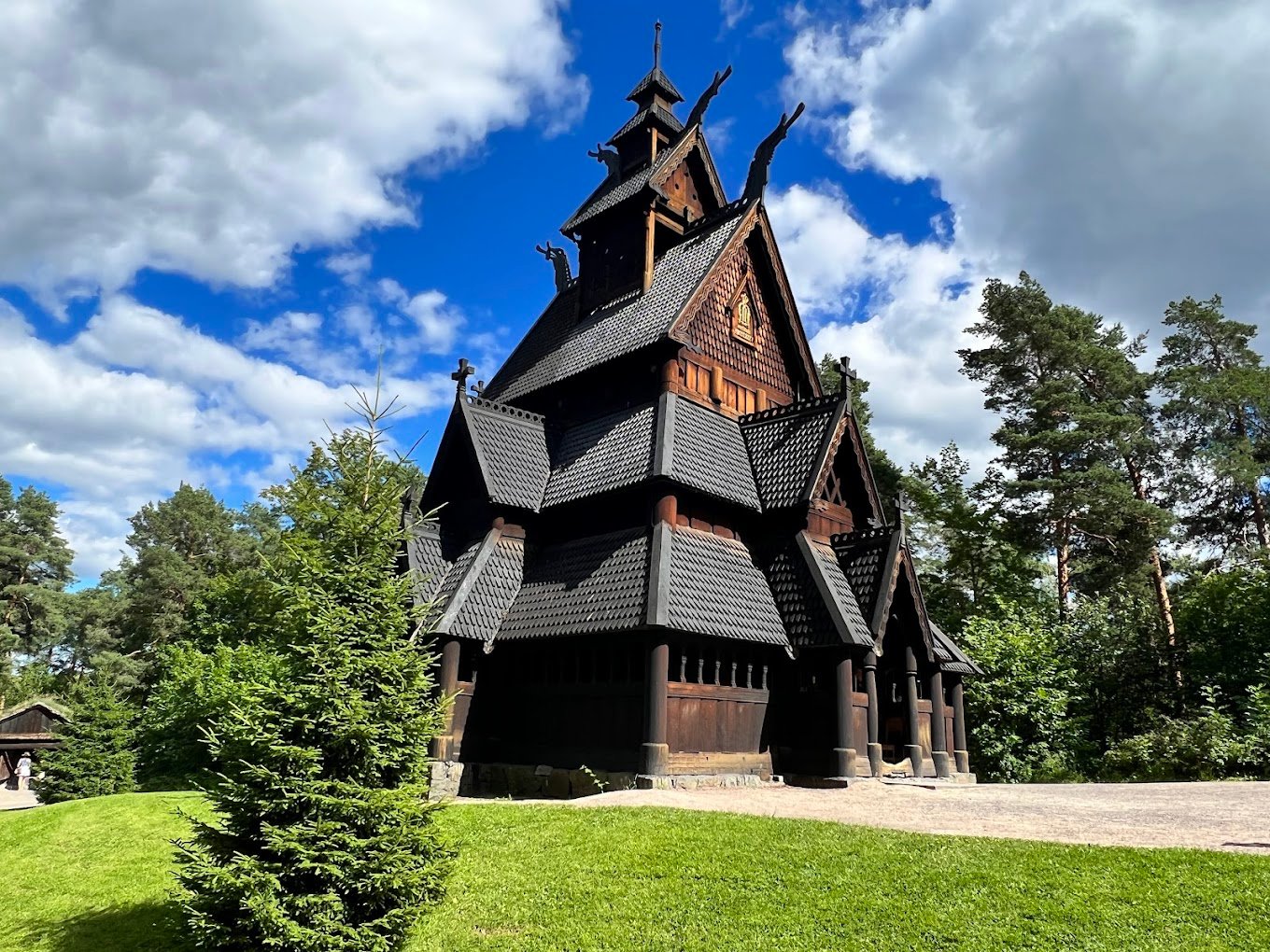
A largely 12th-century stave construction preserved through 19th-century relocation and restoration. It is the most accessible stave church in Norway.

A 12th-century Hallingdal stave church reconstructed at the open-air museum on Bygdøy after being dismantled in the 1880s. Located inside the Norwegian Museum of Cultural History, you need a ticket to the museum to see the church. 

The Society for the Preservation of Norwegian Ancient Monuments bought the old church when Gol replaced it with a new building; King Oscar II financed the re-erection at Bygdøy in 1884–85. Conservators in the 1880s restored the building toward an imagined medieval appearance, using Borgund as a model for missing details, so much of the visible exterior dates from the 1884–85 restoration while large parts of the main timber framework are original medieval material. 

What makes this building distinct are the surviving medieval carpentry, a preserved west portal with carved dragon and plant motifs, runic inscriptions cut into interior staves, and a chancel that retains 17th-century painted decoration. The restoration removed later additions such as galleries and pulpits so the interior reads as a layered historic object rather than a single-period reconstruction. Practical note for research and interpretation: concentrate on the nave staves and chancel paintings to see the mix of original medieval fabric and post-medieval interventions; the building is also the central piece of the former King Oscar II collection and one of the surviving stave churches from Norway’s medieval period.


Technically, this church doesn't belong to the museum. It belongs to the King of Norway. It was King Oscar II who saved it from demolition with his own money, and it remains the private property of the reigning monarch.

Highlights


Find the "Kiss Me" Rune: Look for the runic inscription on one of the main columns in the nave that translates to: "Kiss me, because I struggle." It is a rare, human cry for help (or love) frozen in time.
Smell the Tar: Seriously, take a deep breath. The wood is coated in tar to preserve it, creating a distinct, smoky scent that stays in your nose for hours. It is the "smell of history."
Spot the "Dead" Lutheran Art: Walk toward the altar to see faint wall paintings from 1652. They were painted over the Catholic decor after the Reformation but have been partially revealed, showing how the church changed religions without changing buildings.


Best time to go


Late spring to early autumn for the full museum experience; weekdays in peak or shoulder season to avoid crowds.

Time needed


A few hours when combined with the Norwegian Museum of of Cultural History

Getting there


The Gol Stave Church is inside the Museum of Norwegian Cultural History. Take Bus 30 to Folkemuseet

What to do nearby


2.7km
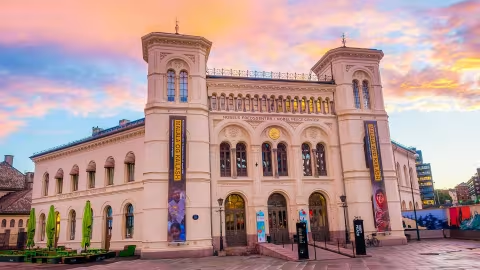
Experience the public storytelling side of the Nobel Peace Prize through an immersive dark room with 1,000 fiber-optic laureate portraits, see an actual gold peace medal, and engage with current year exhibitions about conflict resolution 50 meters from where the actual prize ceremony happens.
2.7km
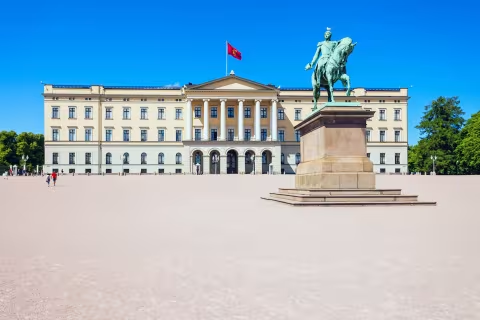
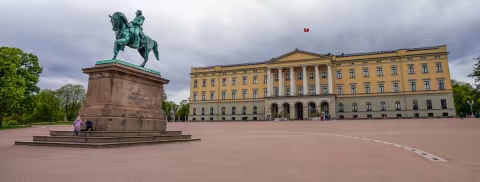
The working residence of Norway's King and Queen through lavish 19th-century state chambers during summer, or year-round you can watch the daily Changing of the Guard ceremony.
2.7km
A compact ceremonial forecourt that provides the classic axial view along Karl Johans gate and direct access to the Royal Palace and Palace Park.

Hotels nearby


3.0km
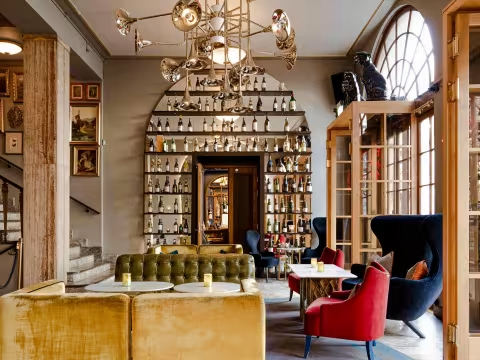
The antidote to bland Nordic hotel design, with a location that puts every major Oslo sight within walking distance.