Last updated
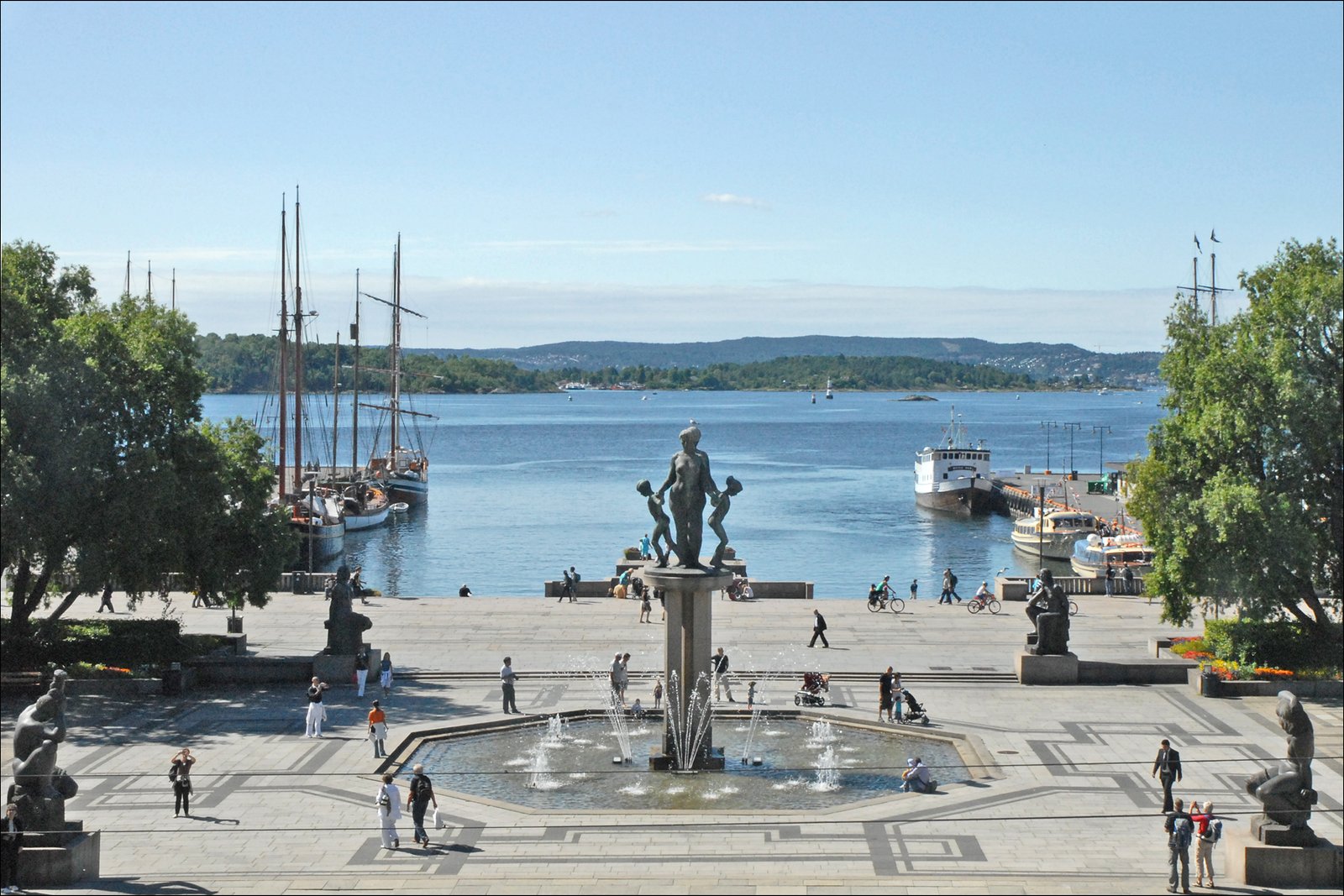
This massive granite-paved plaza sits between Oslo City Hall's twin towers and the Pipervika harbor. Once a traffic-clogged highway, it became a car-free pedestrian space in 1994. Now it serves as a commuter crossing, festival venue (like the annual free "VG lista" concert in June), and the departure point for ferries to Bygdøy museums. The square connects the city center to the fjord waterfront, with walking routes east toward Akershus Fortress and west toward Aker Brygge.
The City Hall dominates the square. Its twin towers and dark brick Functionalist facade earned it the local nickname "Brunosten" (Brown Cheese) because of its shape and color. The building holds the Nobel Peace Prize ceremony in the Main Hall every December 10th. The carillon in the eastern tower has 49 bells that play hourly melodies ranging from classical pieces to pop songs (they've played David Bowie and Motörhead).
The square's art celebrates workers, not royalty. "The Six Construction Workers" (De seks som bygde Rådhuset) by Per Palle Storm depicts the tradesmen who built City Hall: stonebreaker, carpenter, bricklayer, stonecutter, electrician, and handyman. Emil Lie's granite sculptures and Per Hurum's bronze "Mother and Child" statues form fountains in the center and toward the water. These become popular sitting spots in summer when the water runs.
The Nobel Peace Center sits on the western edge in the old yellow railway station building, hosting exhibitions about Peace Prize laureates and their work. The museum ferry to Bygdøy departs from Pier 3 (Rådhusbrygge 3), running year-round (less frequently in winter). The 10-15 minute ride drops you near the Fram Museum and Kon-Tiki Museum.
City Hall's interior is free to enter and open generally 9am-4pm daily (subject to events). Most tourists photograph the exterior and leave. The Main Hall inside features massive murals by Henrik Sørensen and Alf Rolfsen depicting Norwegian history and culture. This is where the Nobel ceremony actually happens. Free guided tours in English run multiple times daily in summer (June-August), taking you upstairs to political chambers and the "Munch Room" (containing an Edvard Munch painting) that's otherwise often closed.
Highlights
Best time to go
Time needed
Getting there
What to do nearby
Hotels nearby