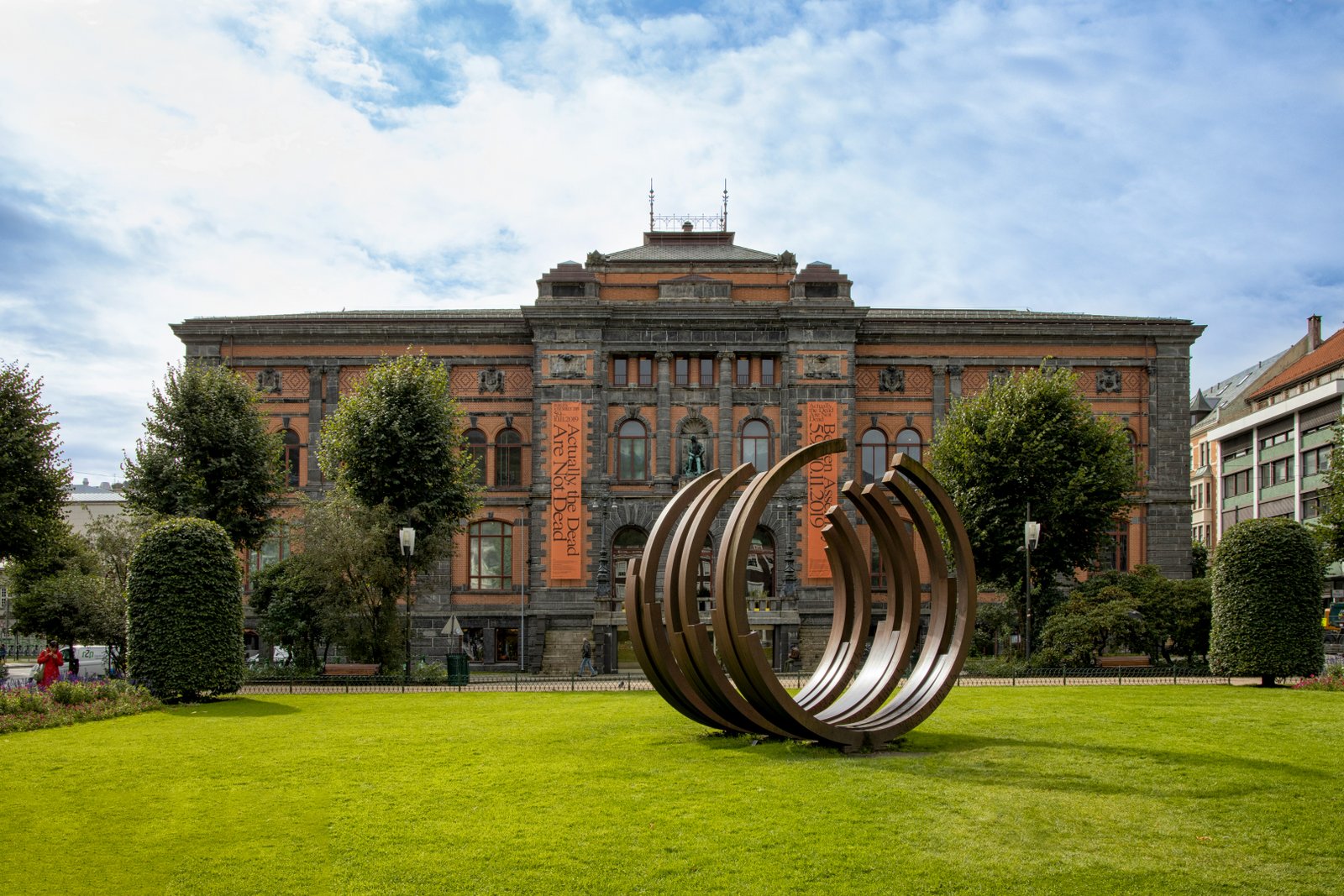
While most visitors flock to Kode Rasmus Meyer to admire the Munch paintings, this museum holds a very different kind of appeal. Permanenten is the oldest of Kode's four downtown Bergen museums, and this is the one to visit if you have any interest in decorative arts, Scandinavian craft, or one of the stranger true-crime stories in European museum history.
The building
The building itself dates to 1896, designed by architect Henry Bucher when he was just 27 years old. It's a hulking Italian Neo-Renaissance structure in carved stone, all grand staircases and high ceilings, and it looks nothing like the rest of Bergen's wooden waterfront. It caught fire during the devastating Bergen fire of 1916 that levelled much of the city centre, but was saved. You'll spot it at the end of Rasmus Meyers allé, just across Christies gate from the other three Kode buildings.
What's inside
The permanent collections cover 500 years of Norwegian craft and decorative art. The silver collection is a highlight, beautifully presented, alongside furniture, glass, porcelain, and textiles. After Kode merged its Bergen institutions, Permanenten shifted toward hosting more temporary exhibitions alongside the permanent displays.
The ground floor has a family workshop (open weekends) and the Italian restaurant Bien Centro, which is a reasonable lunch stop if you're museum-hopping and don't want to leave the building.
The China collection
The museum holds one of the largest Chinese art collections in Europe, around 2,500 pieces amassed by Johan Wilhelm Normann Munthe, a Norwegian cavalry officer and military adviser who lived in China from his early twenties until his death in 1935. The collection includes porcelain, jade, textiles, and a set of white marble columns looted from Beijing's Old Summer Palace during the Second Opium War.
The China collection heists
Permanenten was robbed twice in three years, both times targeting the China collection. In 2010, thieves broke in through a glass ceiling, rappelled into the gallery, and took more than 50 objects, including imperial seals and vases.
In January 2013, two men broke in early on a Saturday morning, wearing headlamps and carrying crowbars. Surveillance cameras caught them smashing display cases. They grabbed several more objects and were gone within minutes. Car fires were reported elsewhere in Bergen at the same time, likely set as a diversion. Police arrested six men but described them as foot soldiers working for clients seeking repatriated Chinese artifacts. The robberies were part of a wider pattern of thefts from European museums holding Chinese collections, from Stockholm to Cambridge to the Château de Fontainebleau.
The China collection gallery was closed for years after the thefts for a major security overhaul.
Pepperkakebyen
If you're in Bergen in late November or December, Permanenten transforms into the home of Pepperkakebyen, the world's largest gingerbread town. Thousands of locals contribute gingerbread buildings each year, from kindergarten classes to office teams, and the whole thing takes over the museum's grand hall. It's been a Bergen tradition since the early 90s and draws 10s of thousands of visitors a season. Entry is free for children and school groups on weekdays.
Getting there
All four Kode buildings sit along Lille Lungegårdsvann in central Bergen. Permanenten is closest if you're walking from Torgallmenningen. The Bergen Light Rail stops at Byparken and Nonneseter, both a short walk away. One Kode ticket covers all four downtown museums plus the three composer homes.
Highlights
Best time to go
Time needed
Getting there
Hotels nearby