Munch Museum Oslo

The world's largest Munch collection, 13 floors of it, with free entry on Wednesday evenings and three versions of The Scream rotating throughout the day.

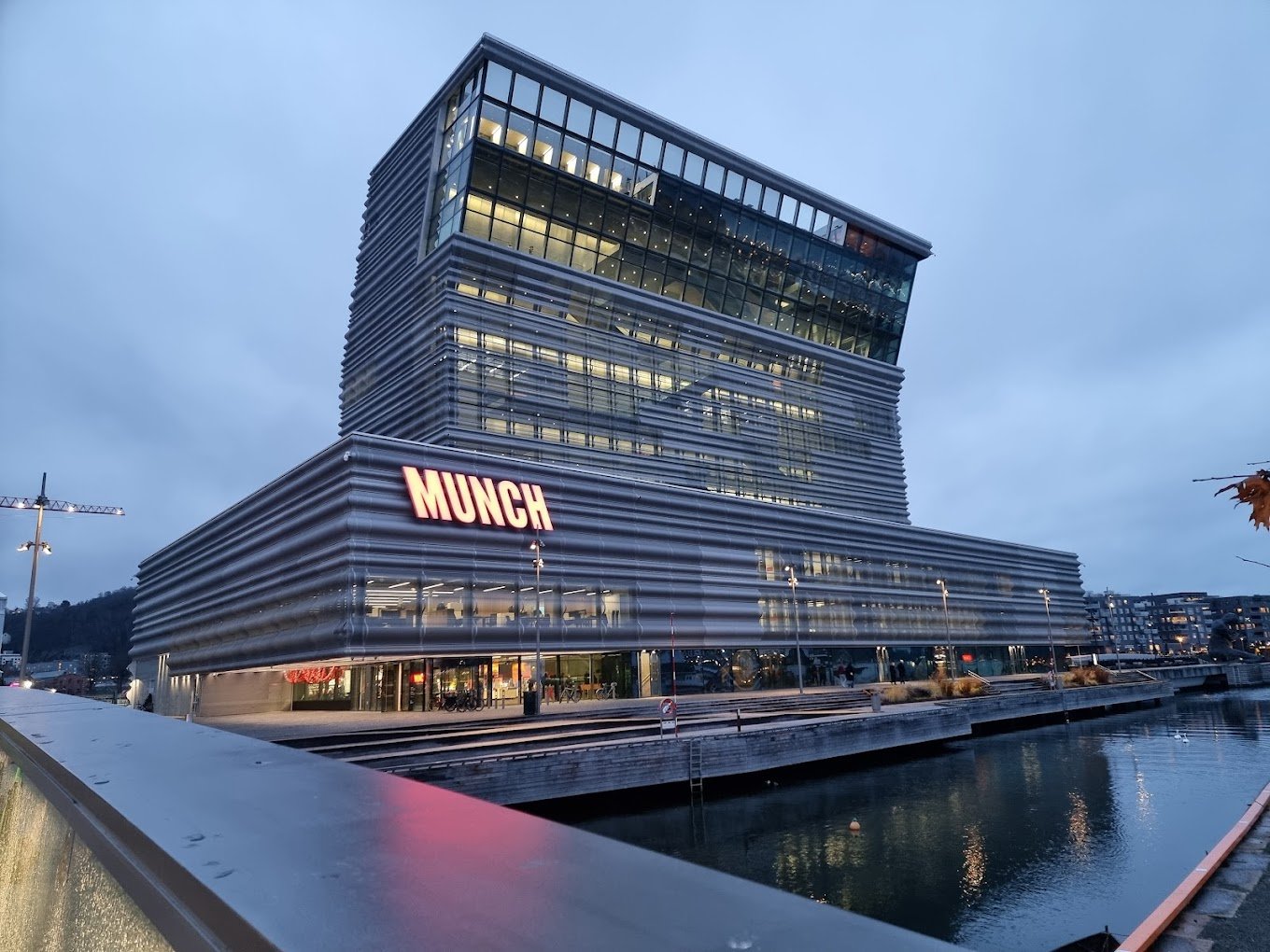
MUNCH holds around 27,000 works by Edvard Munch, making it the largest collection of his art anywhere. The building is a 13-storey tower on the Bjørvika waterfront that locals call "Lambda", and opinions on the exterior range from love to genuine hostility. The inside is a different story. You move upward through the collection by escalator, floor by floor, with the fjord appearing through the windows at intervals as you climb.

The Scream

MUNCH has three versions of The Scream: a painting, a pastel drawing, and a lithograph. Because they're all on cardboard or paper, they're too fragile to stay out permanently, so the museum rotates them throughout the day. One version goes on display for about 60 minutes, then the shutters close and the next one comes out. You'll find them on the 4th floor in the Edvard Munch Infinite exhibition. 

If you arrive more than two hours before closing, you can see all three by visiting the room, exploring another floor, and coming back for the next rotation. There's a small crowd surge every time the shutters open, but it settles within a few minutes.

The version most people picture when they think of The Scream, the 1893 oil painting with the orange swirling sky, is not here. It's at the National Museum across town. If seeing that specific painting matters to you, go there instead or as well. MUNCH's versions are the 1910 painting (tempera on cardboard), a pastel drawing, and the lithograph prints.

The Rest of the Collection

The Scream gets most of the attention, but Munch spent decades producing work that goes well beyond that single image. The collection is organised thematically across the floors, covering his recurring subjects of anxiety, love, death, and isolation. Madonna, The Dance of Life, and Vampire are all here, along with self-portraits spanning most of his adult life. There are also rooms that recreate his home and studio at Ekely, which give you a sense of how he actually worked.

Practical Details

There's airport-style security at the entrance with bag scanners. Anything larger than about 40 × 35 × 10 cm has to go in the free lockers in the basement, which use a QR code system on your phone. Don't bring a large backpack unless you're happy to stow it.

Bistro Tolvte on the 12th floor and the Kranen rooftop bar on the 13th both have fjord views. The bar takes walk-ins but expect a wait on warm evenings.


The Sun and The Researchers in The Monumental Room had canvases so huge they had to be lowered into the building by crane before the roof was put on.

Highlights


Wait for the rotation: Stand in the dark "Scream Room" (Floor 4) and watch the wall panels mechanically shift to reveal a different version of the masterpiece.
The "Secret" Peepholes: As you ride the escalators, look for small holes in the grey walls, they offer curated, framed mini-views of Oslo’s streets that many visitors miss.
Visit the 12th Floor: Step out onto the observation deck (or visit the Sky Bar) for a stunning view over the Oslofjord and the Opera House.


Best time to go


Wednesday evenings between 18:00 and 21:00 are free, except in July and August. In winter you can often just show up, but in busier months the free tickets go quickly. The rest of the week, the museum is open 10:00 to 18:00 on Monday, Tuesday, and Sunday, and 10:00 to 21:00 Wednesday through Saturday. Check the MUNCH websitefor holiday exceptions.

Time needed


Around 90 minutes (Allow 2 hours if you stop at the Sky Bar)

Getting there


From Jernbanetorget metro station or Oslo S train station (Oslo Central Station) walk east along the waterfront past the Opera House into the Bjørvika area. The tram and bus stop Bjørvika serves the neighbourhood and is a short walk from the museum entrance.

What to do nearby


1.8km
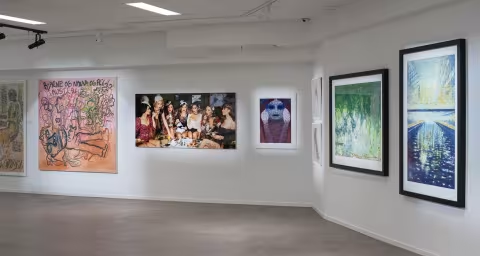
Oslo's largest commercial gallery by exhibition space with multiple rooms and a retail stock of thousands of works available for purchase.
1.9km
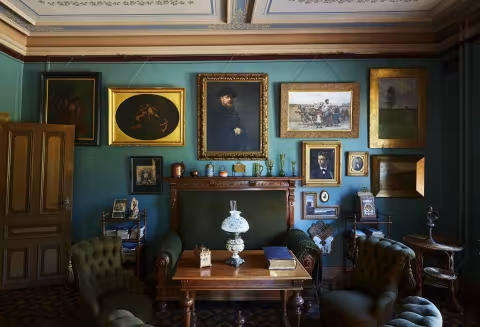
See the late-19th-century apartment where Henrik Ibsen lived and worked in his final years, now paired with a small theatre programme that brings his world into performance.
1.9km
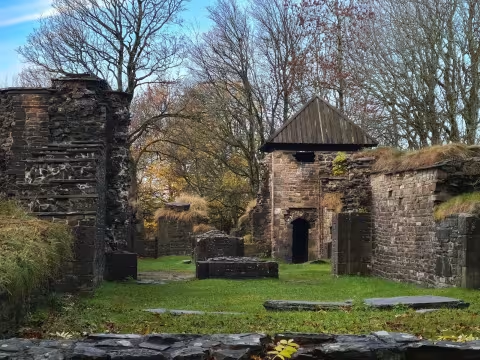
Inner-Oslo island where substantial 12th-century Cistercian monastery ruins sit alongside visible quarry geology and 19th-century military remains, all reachable by a short ferry from the city.

Hotels nearby


1.3km
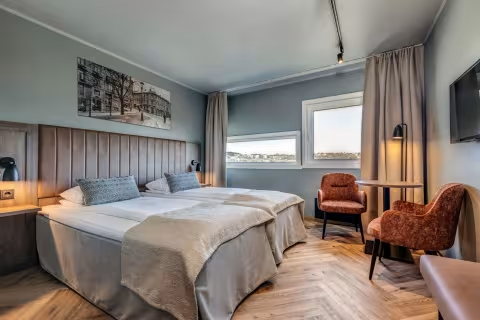
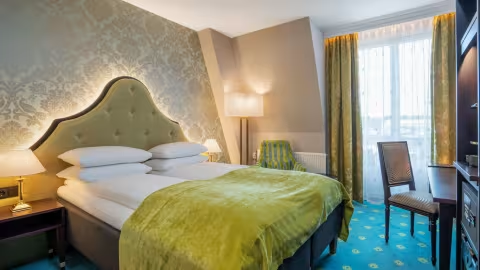
Centrally located, a tram stop at the door and Grünerløkka within walking distance make it a solid launchpad for exploring Oslo on a budget.
1.3km Insider pick
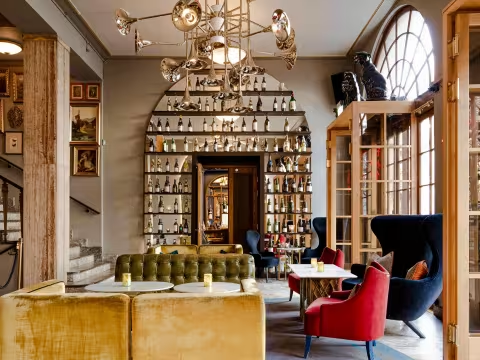
Opened in 1920, and walking through the lobby you feel every year of it. Dark wood, chandeliers a real atmosphere. The Library Bar has live piano music and has been a gathering spot for Oslo's cultural crowd for decades. Bristol Grill does solid seasonal Norwegian cooking. A new spa opened across three floors in late 2025. The breakfast is enormous and varied.
1.4km
The antidote to bland Nordic hotel design, with a location that puts every major Oslo sight within walking distance.