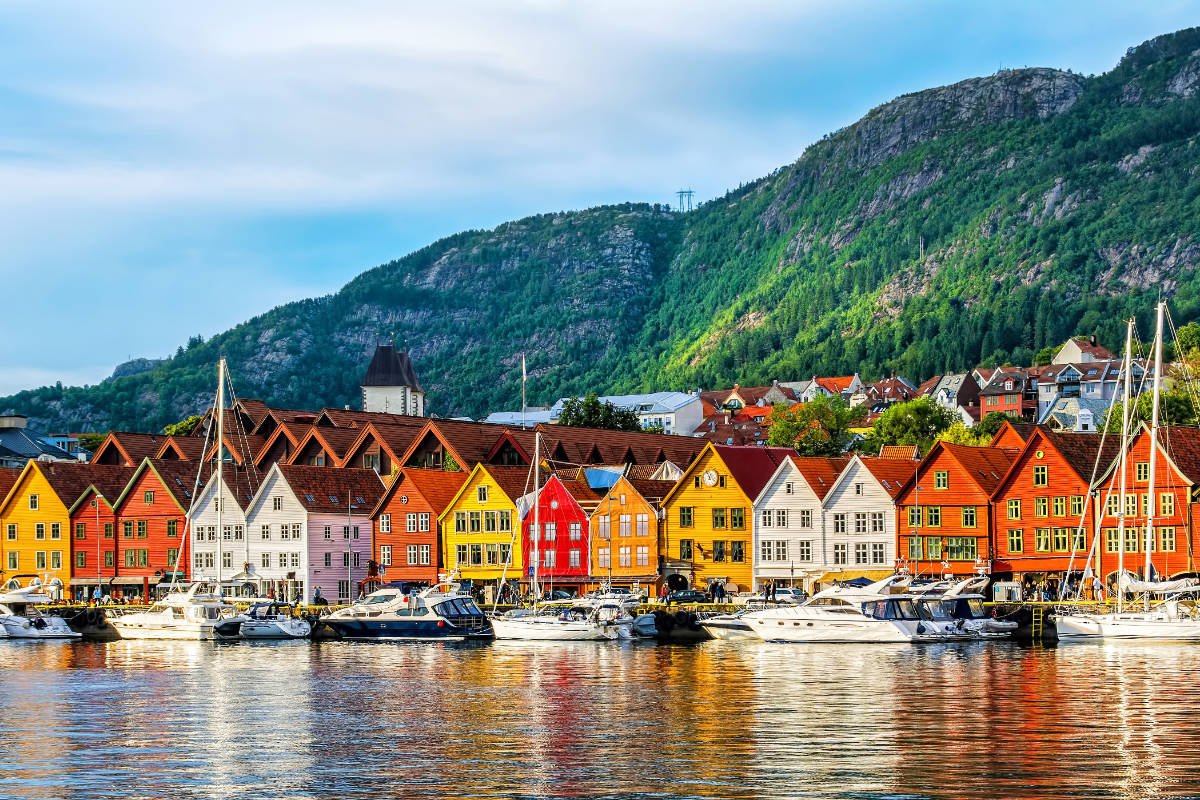
Bryggen is Bergen's old Hanseatic wharf. A row of colorful wooden commercial buildings lines the Vågen harbor, preserved as a UNESCO World Heritage site.
The waterfront facade is where most people stop. Don't. The front-facing shops sell generic souvenirs at inflated prices. The restaurants directly on the water charge a steep premium for mediocre food. Walk past all of it.
Go deeper into the alleyways behind the main row. Narrow wooden passages run between leaning, centuries-old structures. The walls tilt inward. The planks creak. You'll find artisan studios, small galleries selling locally made jewelry and crafts, and quiet cafes tucked into the wooden framework. The density of the architecture creates a compressed, almost claustrophobic atmosphere that feels old.
The Hanseatic Museum and Schøtstuene cost roughly 15 to 20 EUR for entry. They show how German merchants lived and worked in these buildings. Budget about 45 minutes for a walk-through of the alleys alone. Add two hours if you're doing the museums and stopping for food.
For dining, skip the waterfront entirely. Walk a few streets inland. If you want something quick inside the complex itself, grab a skillingsbolle (Bergen's take on a cinnamon roll) from one of the small cafes in the back passages.
Crowds and timing
Summer brings cruise ships. Multiple ships dock on the same day, and Bryggen absorbs the full impact. The area gets packed. Arrive before 8:00 AM or visit late evening when Bergen's summer daylight stretches past 10:00 PM. Winter is quieter but the wooden planks get icy and some artisan shops reduce their hours. Bergen's rain is constant year-round. Wear proper shoes. The old wooden walkways get slippery fast.
The full waterfront row photographs well from the Strandkaien side of the harbor, or from the top of the Fløibanen funicular.
Highlights
Best time to go
Time needed
Getting there
Hotels nearby